This Must Be the Place: New Books and Documentaries to Stoke Your Musical Nostalgia

There’s this article from The Onion that my husband and I keep chuckling over. The joke headline is “Cool Dad Raising Daughter on Media That Will Put Her Entirely Out of Touch with Her Generation,” and it’s followed by a photo of a middle-aged man presenting a girl with a vinyl copy of the Talking Heads Remain in Light as she regards the album in her hands with utter skepticism. We may or may not have played that very album for our kids before heading to New Haven to watch former Talking Heads members—now septuagenarians—perform it live. That joke article is about us.

Anyone who’s interrupted a Disney playlist to subject their progeny to a few excruciating minutes of A Very Important Music Thing can relate. We want to share the things we love with the people we love. We want them to know who we are. It could be music or movies, hobbies, sports teams, longtime vacation spots. For me, it’s reggae and Joni Mitchell’s Blue and Neil Young’s Harvest, all of which I heard as a kid on weekend mornings. It’s hurtling down the interstate in a car full of teenagers scream-singing along to Jimmy Eat World’s “Sweetness” or Jay-Z’s “Dirt Off Your Shoulder” or Underworld’s “Born Slippy.” It’s the first two Decemberists albums, played as my future husband and I aimlessly wandered the backroads near the town we were so very desperate to leave. This music is as much me as the cells in my body. So now I sing “Heart of Gold” and “The Crane Wife” to my kids as bedtime lullabies, and for background noise I play Bob Marley and classic R&B songs that were sampled by rappers.

Until the kids are old enough for evening concerts, I’m passing my limited free time by reading and watching documentaries about music, especially the scenes and artists that have dimmed the stage lights for the last time. Did you know that emo was a product of the suburbs? (Thanks, Andy Greenwald!) Or that Carrie Brownstein, half of the hilarious duo on Portlandia, was part of Olympia’s feminist Riot Grrrl movement in the early 90’s? Here’s some recent media if you’re feeling nostalgic for the sounds of the past.

Night People: How to be a DJ in ’90s NYC by Mark Ronson (2025)

From the publisher: Organized around the venues that defined his experience of the downtown scene, Ronson evokes the specific rush of that decade and those spaces—where fashion folks and rappers on the rise danced alongside club kids and 9-to-5’ers—and invites us into the tribe of creatives and partiers who came alive when the sun went down. A heartfelt coming-of-age tale, Night People is the definitive account of ’90s New York nightlife and the making of a musical mastermind.

Tonight in Jungleland: The Making of Born to Run by Peter Ames Carlin (2025)

From the publisher: From the opening piano notes of “Thunder Road,” to the final outro of “Jungleland”—with American anthems like “Born to Run” and “Tenth Avenue Freeze Out” in between—Bruce Springsteen’s seminal album, Born to Run, established Springsteen as a creative force in rock and roll. With his back against the wall, he wrote what has been hailed as a perfect album, a defining moment, and a roadmap for what would become a legendary career. Peter Ames Carlin, whose bestselling biography, Bruce, gave him rare access to Springsteen’s inner circle, now returns with the full story of the making of this epic album. Released in August, 1975, Born to Run now celebrates its 50th anniversary.

Hip-Hop Is History by Questlove (2024)

From the publisher: Questlove traces the creative and cultural forces that made and shaped hip-hop, highlighting both the forgotten but influential gems and the undeniable chart-topping hits-and weaves it all together with the stories no one else knows. It is at once an intimate, sharply observed story and a sweeping theory of the evolution of the great artistic movement of our time. Questlove approaches it with both the encyclopedic fluency of an obsessive fan and the unique expertise of an innovative participant. Hip-hop is history, and also his history.

Psst: If you prefer to watch a documentary, Questlove’s Hip-Hop Evolution (2016) runs along similar lines. It’s available on Netflix.

Sharing in the Groove: The Untold Story of the ’90s Jam Band Explosion and the Scene that Followed by Mike Ayers (2025) 
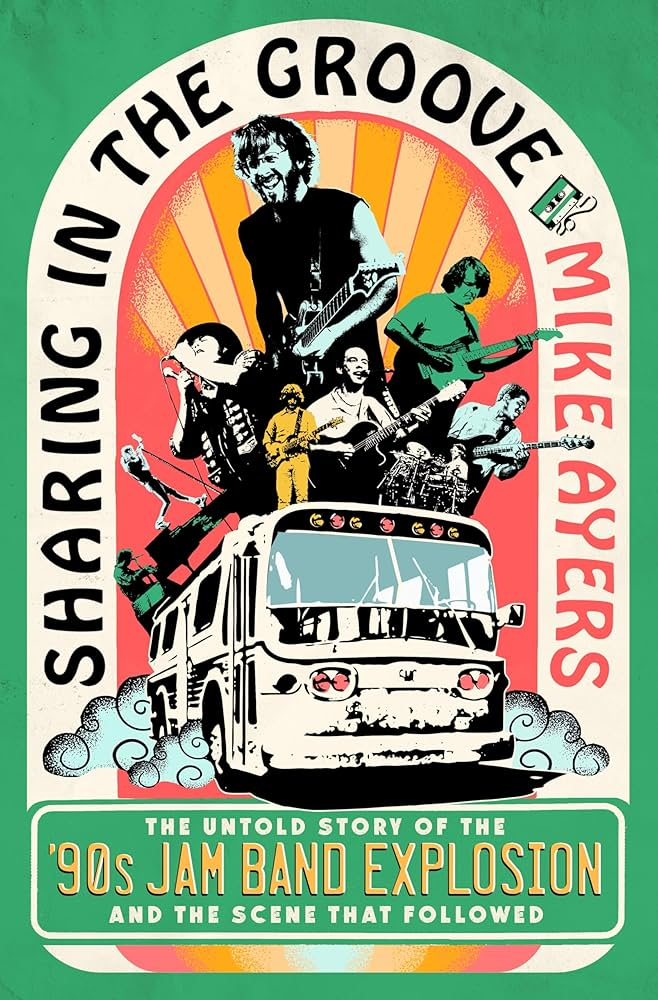
From the publisher: Sharing in the Groove is a rich examination of an underdog genre that helped define the 1990s musical landscape―a scene that paved the way for modern-day cultural institutions such as the Bonnaroo Music Festival and kept the Grateful Dead ethos alive. It was also a world with its own values and its own unique interactions with fame, record labels, MTV, drugs, and success.

The Name of This band is R.E.M.: A Biography by Peter James Carlin (2024)
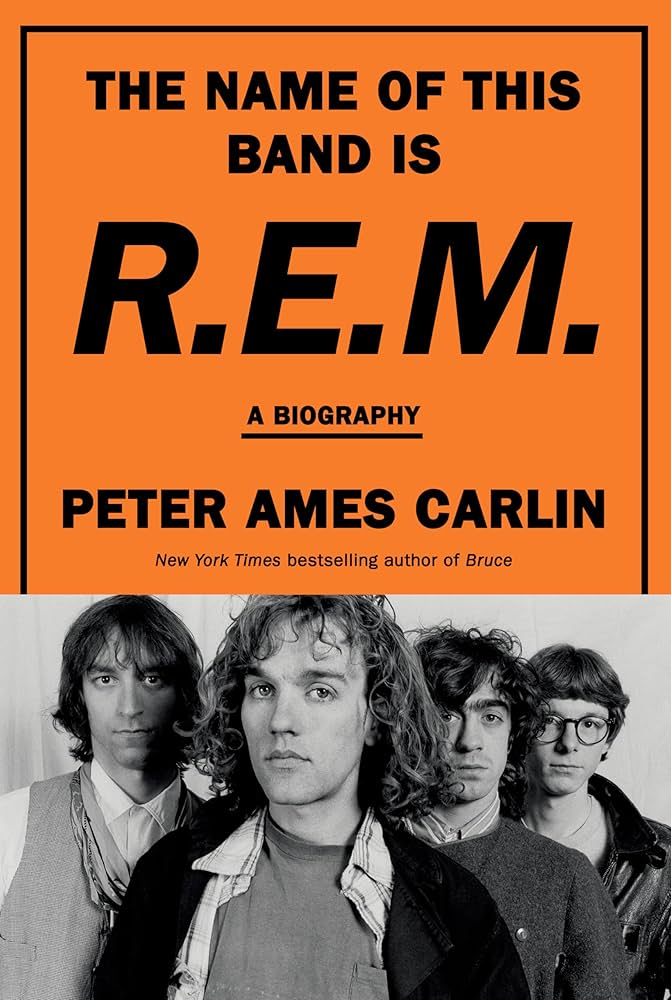
From the publisher: Deeply descriptive and remarkably poetic, steeped in 80s and 90s nostalgia, The Name of This Band is R.E.M. paints a cultural history of the commercial peak and near-total collapse of a great music era, and the story of the generation that came of age at the apotheosis of rock.

The Harder I Fight the More I Love You by Neko Case (2025)

From the publisher: Case brings her trademark candor and precision to a memoir that traces her evolution from an invisible girl “raised by two dogs and a space heater” in rural Washington state to her improbable emergence as an internationally-acclaimed talent. In luminous, sharp-edged prose, Case shows readers what it’s like to be left alone for hours and hours as a child, to take refuge in the woods around her home, and to channel the monotony and loneliness and joy that comes from music, camaraderie, and shared experience into art.

How Women Made Music: A Revolutionary History from NPR Music edited by Alison Fensterstock (2024)

From the publisher: Drawn from NPR Music’s acclaimed, groundbreaking series Turning the Tables, the definitive book on the vital role of Women in Music—from Beyoncé to Odetta, Taylor Swift to Joan Baez, Joan Jett to Dolly Parton—featuring archival interviews, essays, photographs, and illustrations.

The Jazzmen: How Duke Ellington, Louis Armstrong, and Count Basie Transformed America by Larry Tye (2024)

From the publisher: This is the story of three revolutionary American musicians, the maestro jazzmen who orchestrated the chords that throb at the soul of twentieth-century America… What is far less known about these groundbreakers is that they were bound not just by their music or even the discrimination that they, like nearly all Black performers of their day, routinely encountered. Each defied and ultimately overcame racial boundaries by opening America’s eyes and souls to the magnificence of their music. In the process they wrote the soundtrack for the civil rights movement.

Rebel Girl: My Life as a Feminist Punk by Kathleen Hanna (2024)

From the publisher: An electric, searing memoir by the original rebel girl and legendary front woman of Bikini Kill and Le Tigre… As Hanna makes clear, being in a “girl band,” especially a punk girl band, in those years was not a simple or safe prospect. Male violence and antagonism threatened at every turn, and surviving as a singer who was a lightning rod for controversy took limitless amounts of determination. But the relationships she developed during those years buoyed her–including with her bandmates, Tobi Vail, Kathi Wilcox, and Johanna Fateman; her friendships with Kurt Cobain and Ian MacKaye; and her introduction to Joan Jett- were all a testament to how the punk world could nurture and care for its own.

Music by John Williams (2024) Produced and directed by Laurent Bouzereau

My favorite music documentaries fill me to the brim with joy (see: Twenty Feet from Stardom)  and this journey through the most iconic music in cinema history does just that. Williams wrote the scores for Star Wars, Jurassic Park, Indiana Jones, E.T., Harry Potter, Jaws, and lots of other movies that are memorable in part due to Williams’ mastery. It’s only available on Disney+, but it’s worth a trial if you aren’t already a subscriber.

Summer of Soul: (…Or, When the Revolution Could Not Be Televised) (2022) Directed by Questlove

I’m cheating a little here when it comes to “recent” releases, but this is another piece of joy. It follows the 1969 Harlem Cultural Festival, which was overshadowed by Woodstock and hardly made a blip on the radar. You’ll get the context of the almost-forgotten festival, along with footage of Stevie Wonder, Nina Simone, the 5th Dimension, and Sly and the Family Stone (rest in peace) doing what they do best. If you don’t start moving to Gladys Knight and the Pips’ upbeat rendition of “I Heard It Through the Grapevine,” then I can’t help you. Borrow the DVD from the library or stream it from your preferred service.

Plant Intelligence

For thousands of years, Man considered himself the only sentient being in the universe, the only one capable of higher thought, understanding, and language and communication.

We now know that isn’t true. Higher primates, such as gorillas and chimps, are certainly capable of learning not only their own forms of communication, but American Sign Language as well. Dogs, it turns out, are capable of understanding human language at the level of a three year old human child, with some breeds (like German Shepherds) able to differentiate up to a thousand different words. We know that octopi can perform complex tasks (of their own planning, nonetheless), recognize people, and have a functional IQ of about 40. Dolphins and whales have complex languages and not only communicate, but show empathy.

Hence, many people choose not to eat animals, and dine only on plants.

But what about plants? What about their feelings?

Plants? What does a plant know? Corn has ears, but that doesn’t mean it’s listening.

Turns out, plants know more than you think. Plants have been caught communicating in numerous ways, understand when danger is near, and sympathize with other plants.

Yes, really.

This communication is known as phytosemiotics. One way is through chemical signals. A wounded plant will give off a volatile chemical compound (something you can smell) that other plants can sense. The receiving plant can then roll up its leaves or lean away. That wonderful fresh-cut grass smell we love in the summer? Yeah, that’s a hundred thousand blades of grass screaming in agony and warning other plants to beware that something is damaging them. Plants also communicate through ultrasonics – noises above our hearing range but which can be detected and recorded on audio equipment (ultrasonic vibration of 20–105 kHz). Some of this may be due to tiny air bubbles being released due to chemicals triggered during stress. Trees, it turns out, communicate under the soil as well, using certain types of fungi in the dirt to communicate through their roots. Are they discussing algebra? No. But they can tell each other about dangers, or fresh rain, or the pain of bark beetles, and other plants can ‘arm’ themselves accordingly. Just the sound of insects chewing can cause plants to release chemicals that deter insects (caffeine, by the way, exists in plants as a natural insect repellent).

Perhaps the Druids were on to something, thanking plants for sacrificing their leaves.

If that’s not weird enough, plants – even those without ears – apparently respond to music. Sure, houseplant lovers will tell you they’ve always known this, but numerous studies have turned up actual results. As early as 1962, studies showed that plants exposed to classical music had a 20% growth increase and a 72% increase in biomass over controls. Violins gave the best result. This was repeated by a Canadian researcher, with 66% increase in wheat yields using Bach’s violin sonatas. Duckweed, a water plant, exposed to Bandri’s Purple Butterfly, five hours a day for seven days at 60-70 decibels, showed a 10% increase in leaf growth and a slightly higher protein content compared to silent plants. Roses love violin music. Heavy metal tends to induce stress. Devendra Varol of the Institute of Integrated Study in India found that plants can not only distinguish between genres of music, but also nature sounds and traffic noises.

Oh, those poor weeds on the highway!

And while you laugh and scoff, know that in 2004 the TV show MythBusters attempted similar experiments in seven greenhouses. In their experience, Death Metal produced the best growth, second was classical, and third was positive spoken words. The silent greenhouse had the worst growth.

How can this possibly be?

The best theory is that the vibration of music may aid plants in transporting their nutrients more efficiently, shaking things through faster. 

Next time you pull a carrot, remember those mandrakes in Harry Potter shrieking piteously when pulled from the pot.

In the meantime, check out these books on the wisdom of plants, and be kind to your root-footed friends!

Finding the Mother Tree by Suzanne Simard

The Serviceberry by Robin Wall Kimmerer

Listen to the Language of Trees by Tera Kelley

Aromatherapy Garden by Kathi Keville

Secret Wisdom of Nature by Peter Wohlleben

Flora by Helen Fewster

The Light Eaters by Zoe Schlanger

I Heard There Was a Secret Chord: Music as Medicine by Daniel Levitin

Healing at the Speed of Sound by Don Campbell

How Shostakovich changed my mind by Stephen Johnson

Violin Music:

Shatter Me by Lindsey Stirling

David Garrett by David Garret

Vivaldi for Dummies

The Ultimate Most Relaxing Mozart in the Universe

Mondegreens

Say What?

We’ve all been there, singing along with Elton John on the radio:

“Hold me closer, Tony Danza. Count the head lice on the highwaaaayyyy….”

Right?

But the song is Tiny Dancer, and they count the head lights on the highway.

Mishearing lyrics is as common as listening to music – and popular music is full of garbled lyrics open to guesswork. Does anyone really know (or understand) Springsteen’s (or Manfred Mann’s cover) Blinded by the Light? For years I swore Dolly Parton said Jolene had Ivorish skin and eyes of Bilbo green. Made no sense, but try as I might, that’s what I heard. Other people swear The Beatles are singing about the girl with colitis going by, Creedence Clearwater Revival wails about being “Stuck with an old diaper pin,” or “There’s a bathroom on the right.”

Mishearing lyrics like that is called a Mondegreen, a term coined by Sylvia Wright in 1954, when she insisted the lyrics to “The Bonnie Earl o’ Moray” were not “laid him on the green” but “Lady Mondegreen.” If you continue to insist your misheard lyrics are correct, even when given the correct ones, it’s called a mumpsimus (in case you needed a new word today). Of course, sometimes the misheard lyrics are just more fun to sing (such as headlice on the highway), and you sing it that way anyway.

Mondegreens aren’t limited to modern music. One of the more common ones is hearing “Gladly the cross-eyed bear” for the line “Gladly the cross I’d bear” in the hymn Keep Thou My Way. Mondegreens are made by our own brains by substituting things that make more sense to us, whether by word or experience. If you don’t know the actual word, your brain substitutes one it already knows that is similar. If you’ve got no experience with something, you might automatically substitute something you do know: the folksong Golden Vanity talks about the lowland, lowland sea, but if you’re from Appalachia, and have no idea what a lowland sea is, the words became lonesome sea. Thankfully more of us are familiar with head lights than head lice.

Some mondegreens were so popular and universal that the bands themselves started singing them that way. ELO’s Don’t Bring Me Down is almost universally sung as “Don’t bring me down. Bruce!” but the word was originally groose, which was a nonsense placeholder word during the writing that was liked so much, it was left in the final song. Eventually they, too, sang it as bruce. Jimi Hendrix and John Fogerty also embraced and sang their own mondegreens.

Mondegreens bleed over into books – Vivian Walsh’s book, Olive, the Other Reindeer plays on misheard lyrics of Rudolph the Red Nosed Reindeer, and A Monk Swimming by Malachy McCourt is taken from the misheard prayer line, amongst women. The Lonely Planet travel guides are taken from the misheard lyric lovely planet from Joe Cocker’s rendition of “Space Captain.” Ed McBain has a mystery novel, Gladly the Cross-Eyed Bear.

Here are some of the more common mondegreens in modern music. Check out the songs, and listen for yourself. Can you hear both versions? What are some lyrics you mishear all the time?

Purple Haze, Jimmy Hendrix: I want to kiss this guy, is really, I want to kiss the sky.

Lodi, Creedence Clearwater Revival: Stuck with an old diaper pin for Stuck in Lodi again.

Bad Moon Rising, Creedence Clearwater Revival: There’s a bathroom on the right/ There’s a bad moon on the rise.

Lucy in the Sky with Diamonds, The Beatles: A girl with colitis goes by/ A girl with kaleidoscope eyes.

Stairway to Heaven, Led Zeppelin: And there’s a wino down the road/ And as we wind on down the road.

Blinded by the Light, Bruce Springsteen: Wrapped up like a douche with a Corona in the night/ Wrapped up like a deuce, another runner in the night.

Higher Love, Steve Winwood: Bake me a pie of love/ Bring me a higher love.

Dancing Queen, ABBA: See that girl, watch her scream, kicking the dancing queen.
/See that girl, watch that scene, digging the dancing queen.

Joy to the World, Three Dog Night:  Joy to the visions that the people see/ Joy to the fishes in the deep blue sea.

The Sidewinder Sleeps Tonite, R.E.M.:  Calling Jamaica/ Call me when you try to wake her (Wait – it’s NOT Jamaica?)

Smells Like Teen Spirit, Nirvana: Here we are now, in containers/ Here we are now, entertain us

Blank Space, Taylor Swift: Got a lot of Starbucks lovers/Got a long list of ex-lovers

THIS is a deuce coupe, running in the night

Movie Magic

When we talk about the powerhouses of music, we think of The Beatles or Michael Jackson or Reba MacIntyre or Beyonce, among others. People who have multiple-decade careers, whose very touch seems to turn to gold, who sell records just walking down the street. Everyone knows their name.

So if I said, Guess which musician has won four Oscars, four Golden Globes, seven BAFTAs (the British equivalent of the Oscar), 25 Grammys, was Knighted by Queen Elizabeth even though he was born in Queens, and has had 52 Oscar nominations – second only to Walt Disney, who would you pick?  Someone with a net worth of between $300 million and $50 billion, depending on how many assets you count?

Would you believe it’s composer John Williams?

Williams, who is 91 and still going strong, has a Master’s touch when it comes to composing music, and he’s written more film and television music than you realize. An alumni of the prestigious Juilliard School, Williams’ career has spanned more than six decades, and he’s written the scores for everything from the pilot of Gilligan’s Island and Lost in Space  to Schindler’s List (his fifth Oscar for score).  Although he didn’t write the music or win the Oscars, Williams played piano for the score for Bernstein’s West Side Story. His scoring of Jerry Bock’s music for the film adaption of Fiddler on the Roof won him his first Oscar. That iconic Jaws DA-dunt, DA-dunt that scared everyone from the water, won him his second. Spielberg then recommended him to his buddy George Lucas, who needed a composer for the movie he was working on. Star Wars became Williams’s third Oscar, a soundtrack among the most widely recognized music in history, and remains the highest grossing non-popular music of all time (interactive fun fact: you can dance the Macarena perfectly to Darth Vader’s theme music. Go ahead. Try it.). Williams went back to Spielberg for his fourth Oscar – the soundtrack to E.T.  Harry Potter? Yep, Williams wrote that. Superman? Home Alone? Jurassic Park? The Post? Sometimes, it seems as if a movie is destined for greatness if Williams writes the score.

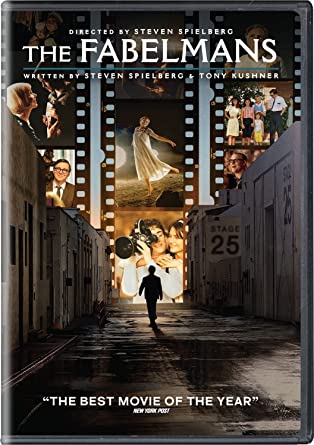
March is Oscar month, and this year John Williams is the oldest Oscar nominee for the score to Spielberg’s The Fabelmans. So cheer for Williams on March 12, and in the meantime, check out one of his dozens of utterly amazing scores on the following films:

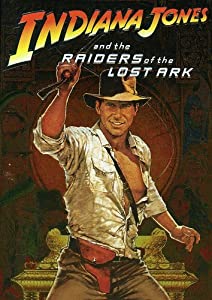
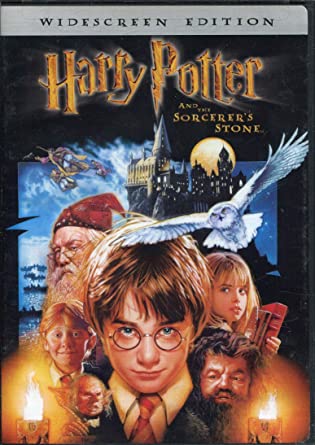
The BFG / Star Wars / Raiders of the Lost Ark / Schindler’s List / ET / Jaws / Harry Potter and the Sorceror’s Stone /

Superman / Jurassic Park / Saving Private Ryan / Towering Inferno / Close Encounters / Hook / JFK /

Memoirs of a Geisha / Minority Report


Yacht Me On the Water

Yacht Rock? What the daylights is Yacht Rock?

Chances are you’ve heard it, and maybe even liked it. Yacht Rock is a music subgroup (yes, another) that focuses on the soft rock/jazz fusion/easy listening sound that was found on FM stations from around 1975 to 1984. It’s the kind of music you might expect to hear on a yacht as you cruise around the southern California coast, music that often evokes themes of sailing, or escape to somewhere else – songs like Rupert Holmes’s Escape (The Pina Colada Song) or Christopher Cross’s Sailing.

Yacht Rock, of course, can trace its roots back to The Beach Boys and surf rock, but more directly is the result of J.D. Ryznar’s comedy web series Yacht Rock, which ran in L.A. back in 2005. The show imagined the lives of the real yacht rock stars as a group of friends hanging out and writing music as they lounged around Marina del Rey, and it brought back all the music. Yacht rock emphasizes the Southern California sound, and almost all of the musicians were working from California (the exception being Hall and Oates, who stayed in Philadelphia).

Like anything subject to opinion, there’s always an argument to be made if something belongs in a category or not (and there’s “Classic” yacht rock and “Newer” yacht rock, which expands the genre). Myself, I don’t see Foreigner (too heavy) or Billy Joel (too pop) as part of that scene, but they are included under “newer.” Certainly, many artists have at least one song that could be included. Generally speaking, yacht rock is defined by:

  • Strong production and direction
  • Electronic piano
  • Breezy, light lyrics
  • Light emotions – she left you, but that’s okay
  • Emphasis on melody over beat
  • Catchy tunes
  • Too often full of syrupy sincerity
  • Upbeat rhythm (sometimes termed “The Doobie Bounce”)

Often the song is about a heartbroken man, and the words fool or foolish are thrown around (The Doobie’s What a Fool Believes, Steve Perry’s Foolish Hearts, Elvin Bishop’s Fooled Around and Fell in Love). Many of the songs are about sailing (Chris Cross’s Sailing, Crosby Stills and Nash’s Southern Cross) or the thrill of an escape (Little River Band’s Cool Change, Robbie Dupree’s Steal Away, Toto’s Africa).

You can say various resurgences in music are caused by films (Queen’s Bohemian Rhapsody hit the charts four times, twice from the films Wayne’s World and the biopic Bohemian Rhapsody) or television (Kate Bush), or sometimes social media drives a song (Rick Astley’s Never Gonna Give You Up), or Baby Boomer (and now Gen X) nostalgia, but the swelling of yacht rock popularity since 2015 (both IHeart Radio and Sirius XM have Yacht Rock stations, and Amazon Alexa will also tune in) is often attributed to a desire to escape from the negativity and stresses of the last several years. Yacht rock is calm and upbeat, evoking a sunny carefree day of lounging on a yacht gently swaying on the water, a fresh breeze ruffling your hair, not a care to be had. Your girl left you? Your job went sour? Your town on quarantine? Don’t let it get you down. Come on, we can steal away and find something better.

Yacht Rock is the highlighted music feature for July. Check out songs by these and other soft rock/jazz musicians: