Book Recommendations Based on Your Favorite Marvel Superheroes

The Marvel Universe has never been more popular, with more movie and television adaptations being produced every year. But in between movies and TV seasons, what’s a superhero superfan to do? These YA books can help to fill the void your hero has left behind:

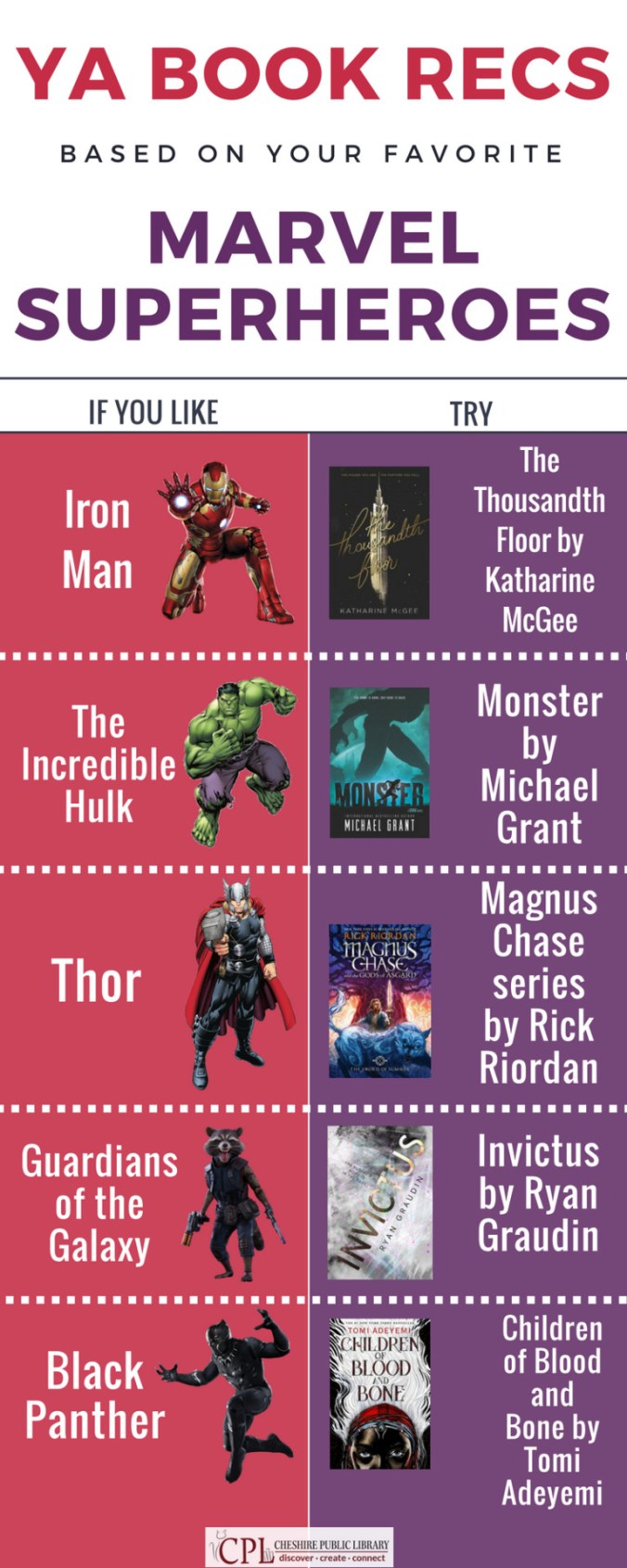
If you’re an Iron Man fan, try The Thousandth Floor by Katherine McGee. A tale set in a luxury tower 100 years in the future follows the experiences of an addicted perfectionist, a betrayed teen, a financially strapped girl, a socialite with an illegal A.I., and a genetically perfect girl. In this world, the higher you go, the farther there is to fall.

If The Incredible Hulk is your guy,  Monster by Michael Grant is also pretty incredible. When  meteorite strikes introduce an alien virus that gives humans unique superpowers, it triggers an epic battle between teen hero defenders and out-of-control supermonsters.

Need more like Thor? Try the Magnus Chase series by Rick Riordan. After the death of his mother, Magnus finds out that he is the son of a Norse god and must track down a lost ancient sword to stop a war being waged by mythical monsters.

If you love Guardians of the Galaxy, give Invictus by Ryan Graudin a try. Born outside of time as the son of a time-traveler from the 24th century and a first-century gladiator, Farway takes a position commanding a ship that smuggles valuables from different eras before meeting a mysterious girl with knowledge that places his existence in question.

If you can’t wait for the next Black Panther movie,  try Children of Blood and Bone by Tomi Adeyemi in the meantime. Zâelie, her brother Tzain, and princess Amari fight to restore magic to the land and activate a new generation of magi, but they are pursued by the crown prince, who believes the return of magic will mean the end of the monarchy.


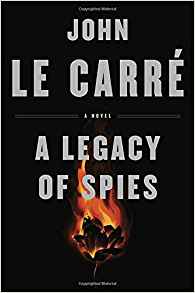
A Legacy of Spies

The other year, in preparation for a novel I hoped would have more intrigue and action than I was used to writing, I decided to break with my comfort zone and read a few spy novels to deconstruct the genre and see how the action was set up and paced. I’d read a James Bond novel once and was less than impressed; the movies I loved so much were horribly dull novels, and the book-Bond looked much more like Truman Capote than any pretty-boy actor.

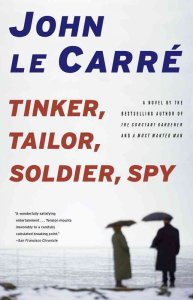
I didn’t want to waste time, so I Googled “best spy novels”, and one of the top two on almost every list was John LeCarré’s 1974 novel Tinker, Tailor, Soldier, Spy, so that was the one I read first.

The lists were right. The book was brilliant, and I couldn’t put it down. After that I rushed out to watch the 2012 BBC film version, an incredible cast including Toby Jones, Gary Oldman, Benedict Cumberbatch, John Hurt, Tom Hardy, and more – which was still excellent, though some people prefer the 1979 mini-series adaption with Alec Guinness (that’s Obi Wan Kenobi to some of you). The strangest part was that, while reading the book, I had already cast Toby Jones in one of the roles in my head  –  but as Peter Guillam, though, not Percy Alleline as he was in the film.

Why so good? Well, see – like Ian Fleming, John LeCarré (real name: David Cornwell; spies aren’t allowed to use their real names to publish novels) was an actual British spy in World War II, so he knows the ins and outs and tiny little details of how the game is played, layers upon layers of secrets and trades and double-dealings. He’s lived it first hand, and that makes all the believable difference. He began writing novels in 1961 (Call for the Dead), but it wasn’t until his third novel in 1963, The Spy Who Came In From the Cold, that he hit the best-seller list and wound up quitting MI6 (the British Secret Intelligence Service) to pursue writing full time.

While all of us sit here and think, why would you quit being an awesome spy to write books?

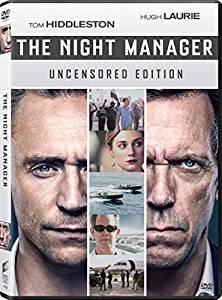
But LeCarré certainly is good at it, with more than 24 novels to his name, almost all of them best-sellers. Several have been made into successful film adaptions, including The Constant Gardener (2005), starring Ralph Fiennes and Rachel Weisz, The Spy Who Came in From the Cold (1965) starring Richard Burton, and the recent delicious adaption of The Night Manager (2016), starring Tom Hiddleston and Hugh Laurie, a book that reads more like a James Bond adaption than a Bond novel does.

Unable to sit still in retirement, LeCarré, now 86, has pumped out yet another novel last year, A Legacy of Spies, a conclusion of sorts for George Smiley’s people, his ex-agent who keeps coming back. Pulling his best-loved characters from so many of his novels, LeCarré manages to weave them together with new characters in present-day, finding new depths and bringing new truths to light, even after 50 years. LeCarré shows that time has not diminished him nor his characters, and if you think you know how it will end, like all of his works, it’s pretty well guaranteed you don’t.

Give le Carré a try. If you like mystery, espionage, intrigue, and unraveling puzzles with characters who won’t let you go, then you’ll love his work. If you haven’t tried him, he’s a wonderful place to begin to explore the genre. For modern novels, he’s rather clean, without a lot of graphic violence or sex or language, perhaps making the stories even more remarkable. Start with Legacy of Spies and work backward, or start at the beginning and work forward. If you prefer to watch rather than read, there are more than ten films, five television adaptions, and four radio plays to keep you entertained. You’ll be so glad you did.

18 Books Hitting the Big Screen in 2018

Film adaptations of books have hit the ground running in 2018, with bestsellers Horse Soldiers, The Death Cure, and Fifty Shades Freed released in theaters already, and we’re barely into the year. Here’s some of what’s in store for the rest of 2018 (release dates may be subject to change), if you want to read them before you see them:

This slideshow requires JavaScript.

  1. Every Day by David Levithan (release date Feb. 23). A 16-year-old girl falls in love with a spirit named “A”, a traveling soul who wakes each morning in a different body.
  2. Annihilation by Jeff Vandermeer (release date Feb. 23).  A group of female scientists undertakes an expedition to “Area X”, a portion of land in the United States that has been secretly quarantined due to abnormal activity.
  3. Red Sparrow by Jason Matthews (release date Mar. 2).  Ballerina Dominika Egorova (Jennifer Lawrence) is recruited to ‘Sparrow School’ a Russian intelligence service where she is forced to use her body as a weapon.
  4. A Wrinkle in Time by Madeleine L’Engle (release date Mar. 9). After the disappearance of her scientist father, three peculiar beings send Meg, her brother, and her friend across the barriers of space and time to find him. The all-star cast includes Oprah Winfrey, Reese Witherspoon, Mindy Kaling, and Chris Pine.
  5. The Leisure Seeker by Michael Zadoorian (release date Mar. 9). An elderly couple suffering from cancer and Alzheimer’s decide to sneak away from their doctors for one last hurrah and escape on a cross-country trip.
  6. Simon vs. the Homo Sapiens Agenda by Becky Albertelli (release date Mar. 16).  Everyone deserves a great love story, but for 17-year-old Simon Spier, it’s a little more complicated. He hasn’t told his family or friends that he’s gay, and he doesn’t know the identity of the anonymous classmate that he’s fallen for online.
  7. Ready Player One by Ernest Cline (release date Mar. 30). The buzz about this film adaptation began almost before the book was even published.  Directed by Steven Spielberg, this dystopian thriller takes place in a future where more and more people are escaping into a virtual reality world that’s more bearable than the real one. Expect a kind of Matrix-y vibe with a bunch of 80’s pop culture references.
  8. The Guernsey Literary and Potato Peel Pie Society by Annie Barrows (release date Apr. 19).  A writer doing research learns about a unique book club that the residents of Guernsey formed as a front during German occupation in WWII.
  9. Where’d You Go, Bernadette by Maria Semple (release date May 11). after her eccentric, agoraphobic mother disappears, 15-year-old Bee does everything she can to track her down, discovering her troubled past in the process. Starring Cate Blanchett in the title role.
  10. Crazy Rich Asians by Kevin Kwan (release date Aug. 17).  American-born Chinese economics professor Rachel Chu  accompanies her boyfriend to Singapore for his best friend’s wedding only to get thrust into the lives of Asia’s rich and famous.
  11. The Little Stranger by Sarah Waters (release date Aug. 31). After being summoned to treat a patient at dilapidated Hundreds Hall, Dr. Faraday finds himself becoming entangled in the lives of the owners, and the supernatural presences in the house in this horror-thriller.
  12. The Darkest Minds by Alexandra Bracken (release date Sep. 14). In this sci-fi thriller, sixteen-year-old Ruby breaks out of a government-run “rehabilitation camp” for teens who acquired dangerous powers after surviving a virus that wiped out most American children.
  13. The House With a Clock in Its Walls by John Bellairs (release date Sep. 21). A young orphan aids his magical uncle in locating a clock with the power to bring about the end of the world. Starring Cate Blanchett (again), Jack Black, and Kyle MacLachlan.
  14. Boy Erased by Garrard Conley (release date Sep. 28).  In the film adaptation of thie memoir, the son of a baptist preacher is forced to participate in a church-supported gay conversion program. Starring Lucas Hedges in the title role, with Russell Crowe and Nicole Kidman as his parents.
  15. First Man: The Life of Neil A. Armstrong by James R. Hansen (release date Oct. 12). Ryan Gosling stars in the title role in this true story of NASA’s mission to land a man on the moon, focusing on Neil Armstrong and the years 1961–1969.
  16. The Girl in the Spider’s Web by David Lagercrantz (release date Oct. 19). Young computer hacker Lisbeth Salander and journalist Mikael Blomkvist find themselves caught in a web of spies, cybercriminals and corrupt government officials.
  17. The Jungle Book by Rudyard Kipling (release date Oct. 19). Young and adventurous Mowgli meets Bagheera (Christian Bale), Shere Khan (Benedict Cumberbatch), and other animals while growing up in the jungle.
  18. Mortal Engines by Philip Reeve (release date Dec. 14). Millennia after much of the world was destroyed in a cataclysmic event,  cities survive a now desolate Earth by moving around on giant wheels attacking and devouring smaller towns to replenish their resources.

Tracking Black Panther

One of the more controversial topics in Hollywood is the concept of whitewashing – casting a white actor in a role meant to be Black, Asian, Native American, Latin, or other ethnic group. Some of the more egregious examples are Laurence Olivier (and Orson Welles) playing  Othello – in blackface, Ralph Fiennes playing Michael Jackson; Mickey Rooney (Breakfast at Tiffany’s), Katharine Hepburn (Dragon Seed), and John Wayne (The Conqueror) as Asians; Johnny Depp as Tonto (Lone Ranger); Tilda Swinton as an Asian man (Dr. Strange), or the one that ruined my childhood: finding out that Native American Iron Eyes Cody of the 1970’s Keep America Beautiful campaign was actually a man of Italian descent.

Big-Budget Black-Lead Films

In fact, serious big-budget black films are hard to come by. Indeed, most of the highest-grossing black-lead films are comedies (Eddie Murphy has 5 of the top 7, not including Beverly Hills Cop), despite some very top-quality dramas (The Color Purple, Fences, Moonlight, The Help, Soul Food). Yet Samuel L. Jackson – I’ll see anything he’s in – ranks number TWO on the list of actors with top box office revenues, pulling in a combined domestic gross of more than 7 BILLION dollars for his 126+ films (#1 is Stan Lee. He has a cameo in every movie he makes). Even Hollywood protested the lack of serious roles for black actors, and stirred a controversy over a glaring absence in Oscar nominations despite worthy black films, a problem starting to be rectified in 2017. Not great if you’re a black kid looking for role models. The Adventures of Pluto Nash just doesn’t cut it.

A New Superhero

Now, Hollywood may be on the verge of a true black superhero blockbuster with the release of February’s Black Panther, Marvel’s 18th release into its megahit superhero franchise. Following his debut in 2016’s Captain America: Civil War, T’Challa – holding the title Black Panther – is the king of the fictional African country of Wakanda, who gains superpowers from a heart-shaped herb and connections to a mystical Panther God. When his father is assassinated in Civil War, T’Challa returns to Wakanda to discover his claim to the throne being challenged. T’Challa must team up with a CIA agent and the Wakanda Special Forces to prevent a world war.

The History of Black Panther

Black Panther was the first black comic book superhero, ever (1966), so early he predates the political party. Chadwick Boseman does a phenomenal job as T’Challa, and the movie promises to have the same serious craft and attention as the rest of the Marvel films. The previews are visually stunning, with rich ethnic textiles and cultural details that leap off the screen, drawn from no fewer than five different African cultures. Not only a superhero, but a culturally relevant one as well – which of course, immediately started another controversy whether or not the movie is celebrating African culture or trying to appropriate it. The movie was originally green-lighted in 2011, and the script approved in 2015. Hollywood doesn’t get better than this.

Of course there are now other black superheroes. Luke Cage’s TV series has had luke-warm reviews. As the XMen movies progressed, Storm played less and less of a role. Sam Wilson is a great sidekick, but no Captain America. Iron Man’s buddy Rhodey Rhodes/War Machine/Iron Patriot may be Don Cheadle, but he’s still just a sidekick called in when an extra guy is needed (at least, in the films). In Black Panther, black youth – and everyone else – may finally have found a superhero they can look up to, in full, serious, big-screen, big-budget glory, and he is Marvel-ous.

Return Ticket for the Orient Express

  Sometimes a literary character – and an author – just doesn’t quit, staying popular generation after generation. Sometimes we call that a classic – Scarlett O’Hara, Oliver Twist, Jane Eyre, Robin Hood and Maid Marian. Sometimes we call that Hercule Poirot.

Agatha Christie is the modern world’s most successful author (yes, even more than J.K. Rowling and Nora Roberts), third only to The Bible and Shakespeare, and has sold over two BILLION copies of her works (that’s 165 stories). Rowling only ranks ninth or so, with an estimated 500 million in sales. Sure, you can use the Gone With the Wind excuse that Rowling only hit big in 1997, while Christie’s first novel was published in 1920, so it has had a lot more years to gather sales (GWTW remains the highest-grossing film of all time, adjusted for inflation, due to its 1939 release date. Yes, more than Star Wars). Either way, there’s a reason for that.

Christie’s first and most popular detective is Hercule Poirot (the other being Miss Marple), a retired Belgian police officer with peculiarly meticulous habits and a brilliant mind for solving crimes, well-known for his thick black curling mustache – the only fictional character to ever have an obituary on the front of the New York Times. Poirot first appears in The Mysterious Affair at Styles (1920)and goes on for more than 33 novels, 50 short stories, and a stage play. You may have heard of his most famous case: Murder on the Orient Express.

Originally published in 1934, Orient Express tells the story of a murder (obviously) that occurs on a train going from Istanbul to Calais, France, which Poirot, a passenger on the train, slowly unravels. The Orient Express is a real train service that began in 1883 and ran from Turkey to France, ending its official run in 2009 – operating in three centuries!

Numerous film and television adaptions of both Orient Express and Poirot’s mysteries have been made over the years, most notably the 1974 film adaption of Orient Express starring Albert Finney – the only actor to receive an Oscar Nomination for playing Poirot, though he didn’t win (Ingrid Bergman won as Supporting Actress for the role of Greta Ohlsson). The library has many volumes of television adaptions of Poirot’s mysteries. If comedy and spoofs are more your style, check out 1976’s Murder by Death, with James Coco as Milo Perrier (Poirot), Elsa Lanchester as Jessica Marbles (Miss Marple) and a host of top-name stars poking fun at all the famous detectives.

Low and behold, Murder on the Orient Express is once again returning to the big screen on November 10, 2017, with a – dare I say it? – killer cast. Kenneth Branagh, British superstar of myriad films including Henry V, Harry Potter and the Chamber of Secrets, Dunkirk, Jack Ryan: Shadow Recruit and so many more, takes the lead as Poirot – not as short as Poirot is supposed to be, but ever since Hollywood ridiculously cast 5’6” Tom Cruise as 6’5” Jack Reacher, all rules are off. Add in Penelope Cruz, Dame Judy Dench, Willem Dafoe, Derek Jacobi, Johnny Depp, Leslie Odom Jr., Michelle Pfeiffer and more, and it’s worth the price of admission just for the cast and the gorgeous period costumes and vehicles. Of course there’s already a furor raging among the purists about his mustache.

Kenneth Branagh is a superb actor but an even superior director, and with him in the director’s seat  and the blessings of Agatha Christie’s estate, the film promises to be everything we want it to be. So prepare by reading a couple of Poirot’s mysteries, or check out a couple of other adaptions, and then watch the film. Or, give the movie a shot and then follow up with a binge of Poirot stories. When you run out, there’s always Miss Marple.