Three Holidays to Celebrate, Three Shows to Binge Watch

There are sparkly decorations everywhere, peppermint mochas are appearing at the coffee shop, and your mailbox is crammed with ads for door-buster sales. Yep, it’s the season for the gift-giving celebrations of Christmas and Hanukkah! But you don’t have to belong to any religion to have some fun this season. Here are a few cultural holidays that anyone can enjoy, along with television series to watch for hours on end while you’re off from work and school.

December 23

Festivus

Way back in December of 1997, millions of Seinfeld fans tuned in to watch the episode “The Strike” and were introduced to Festivus, a made-up holiday celebrated by Frank Costanza as a rebellion against the commercialism of Christmas. Fast forward to the present, and lots of people have taken to celebrating Festivus in their homes, dorms, and workplaces. The common rituals of Festivus are as follows:

1) Displaying the Festivus Pole – an unadorned aluminum pole. (You can actually buy these online!)
2) A celebratory Dinner – make anything you like, as long as it’s celebratory.
3) Airing of Grievances – this takes place immediately after dinner is served. Participants take turns complaining about how everyone has disappointed them in the past year.
4) Feats of Strength – after dinner, the head of the household selects a person to challenge to a wrestling match. Festivus officially ends when the head of the household is pinned.

Fun fact: Festivus actually goes back to 1966 when Seinfeld writer Dan O’Keefe’s father first instituted the tradition to celebrate an anniversary, and the family continued to celebrate it whenever Papa O’Keefe felt like it. Instead of an aluminum pole they had a clock in a bag, and they shared a Pepperidge Farm cake decorated with M&Ms

Binge Watch: Seinfeld. What else?

December 26

Boxing Day

Maybe you’ve seen Boxing Day on your wall calendar and had no idea what it was. Let’s Return Unwanted Gifts Day? A fisticuffs tournament over the last piece of pie? Nope! It’s a holiday in Great Britain and almost every place the British settled, except for the U.S. Nobody is sure where the name originated, though some believe it comes from the alms boxes set up in churches during the Advent season (which were then broken open and distributed on the 26th), or from the gift boxes presented to servants who had to work on Christmas but had the following day off.

Whatever purpose it once had, Boxing Day is now a relaxing day off to visit relatives, sit around and eat leftovers, and watch soccer. Among the wealthy, fox hunting used to be a popular Boxing Day activity before the practice was banned in 2004. Those with disposable income now hunt for bargains instead – it has become a huge shopping day, comparable to our Black Friday.

Binge Watch: If you’re not going to tune in to one of 10 Premier League games, pick up a Blu-Ray of The Paradise, a BBC series following a shop girl in Britain’s first department store.

December 26-January 1

Kwanzaa

Born out of the Black nationalist movement, Kwanzaa is a relatively young holiday, created in 1966 by Black Studies professor and activist Maulana Karenga as a way for African American to celebrate their heritage and connect to their community. It fuses elements from numerous African cultures – the term Kwanzaa derives from the Swahili phrase “matunda ya Kwanza” or “first fruits of the harvest,” and draws from the harvest celebrations of the Ashanti, Yoruba, Ibo, and other West African tribes (from which most African Americans have descended). There’s feasting and singing, of course, but the most important part of Kwanzaa is celebration of the seven principles – things like creativity and self-determination – that are represented by lighting one candle each night of the holiday.

Kwanzaa reached its height in the 1980s and 1990s, and about 2% of the U.S. population celebrates the holiday today. However, Americans of any heritage can set out a kinara on the mantle and celebrate our country’s diverse history.

Binge Watch: Roots, Alex Haley’s award-winning exploration of his family’s background.


Which holidays are you celebrating this year?
Beat Them at their Own Game!

Are you tired of feeling boggled when that internet meme comes around, pretending that it’s SOOOO impossible to think up a movie title without the letter “T” in it?  Beat them at their own game and look super-smart to all your friends: here’s 100 easy movie titles that never use the letter T – and there’s a lot more than that!  How many have you seen?  If you haven’t seen them all, check out our catalog and watch one today!

Apolarge_pPOc430Jm7lpJH6M4nqGbH2QBEhcalypse Now
Life of Pi
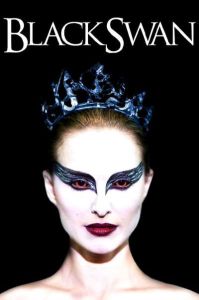
Black Swan
Blood Diamond
Million Dollar Baby
Donnie Darko
Ghandi
High Noon
Fanny and Alexander
Groundhog Day

Roman Holiday
Slumdog Millionaire
Alien
Scarface
Up
Die Hard                             large_zh9DXJhBdHVVaWiDURTipADamcK
Elysium
Blade Runner
Rebecca
Casino

Fargo
Cool Hand Luke
Kill Bill
Annie Hall
Wizard of Oz
Life of Brian
Ben-Hur
Django Unchained
Amelie
Rush

x-men-dvdA Clockwork Orange
Lawrence of Arabia
Godzilla
X Men
Anchorman
2001: A Space Oddysey
Raging Bull
Rocky
On Golden Pond
Halloween

Ordinary People
Freaks
Avengers
Superman
Frenzy
Jaws
Son of God
Dumb and Dumber
Casablanca
A Boy and his Dog

Iron Man
Pride and Prejudice
Eraser Head
Cinderella
Pinocchio
Cars
Shane
Duck Soup
Unforgiven
Amadeus

Princess Mononokeimages
King Kong
Bonnie and Clyde
Wall-E
Finding Nemo
Free Willy
Born Free
Space Jam
Mary Poppins
Psycho

Mulan
Speed
Bambi
Frozen
Planes
Goodfellas
Seven Samurai
Hell Boy
Rear Window
Jurassic Park

Ocean’s Eleven
Saw
Jailhouse Rock
Help
Scream
RED
Juno
Unbreakable
Speed Racer
Hairspray

imagesBeing John Malkovich
Spider Man
American Psycho
Jerry McGuire
Zelig
Robocop
Rain Man
Children of Men
Airplane!
Nebraska

10 Books We’re Looking Forward to in August

Thrills, history, fantasy, and a bit of romance are all coming to Cheshire Library shelves in August. Just the thing to get us through the lazy, hazy days of summer!

Every month, librarians from around the country pick the top ten new books they’d most like to share with readers. The results are published on LibraryReads.org. One of the goals of LibraryReads is to highlight the important role public libraries play in building buzz for new books and new authors. Click through to read more about what new and upcoming books librarians consider buzzworthy this month. The top ten titles for August are:

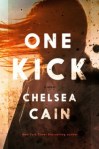
  1. One Kick by Chelsea Cain
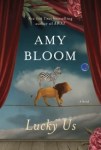
  2. Lucky Us by Amy Bloom
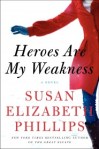
  3. Heroes Are My Weakness by Susan Elizabeth Phillips
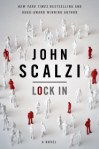
  4. Lock In by John Scalzi
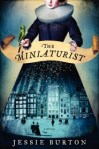
  5. The Miniaturist by Jessie Burton
  6. Big Little Lies by Liane Moriarty
  7. The Truth about Leo by Katie MacAlister
  8. An Unwilling Accomplice by Charles Todd
  9. The Magician’s Land by Lev Grossman
  10. The Story Hour by Thrity Umrigar

Happy Birthday Paperback Books!

birthday

On July 30, 1935, a new technology was born that provided knowledge, stories, entertainment (with text and pictures, no less) that was convenient and cheap.  It was light enough to carry anywhere and you could tag specific areas to penguinre-read at a later date.  An early e-reader?  Nope – the paperback book!  Penquin Publishers, in England, was the first to successfully publish respectable, quality writing without a hard cover.  (There were earlier paperback books called penny dreadfuls, yellow-backs, and dime novels that generally featured lurid stories and were printed on cheap pulp paper.)

pocketPartnering with Simon & Schuster, Robert de Graff introduced the first paperbacks in America on June 19, 1939 called Pocket Books.  The first American paperback book to be printed in the United States was The Good Earth by Pearl Buck.  The cost to purchase these new books – 25 cents versus $2.75 for a hardcover.  In order to make a profit on paperbacks, de Graff had to print 100,000 copies at a time.  He couldn’t rely on bookstores to sell that many copies so he began using magazine distributors to place Pocket Books in newsstands, subway stations, drugstores and any other outlet to reach suburban and rural populations.  He designed bold, colorful, eye-catching book covers to catch people’s eyes.  By September 1944, 100 million books were sold in more than 70,000 outlets across the United States.   By the end of the 1940’s, the paperback industry began publishing original stories.  Previously, the industry only reprinted hardcover titles.  There are now more than 20 major publishers producing high quality, original and reprinted paperbacks.


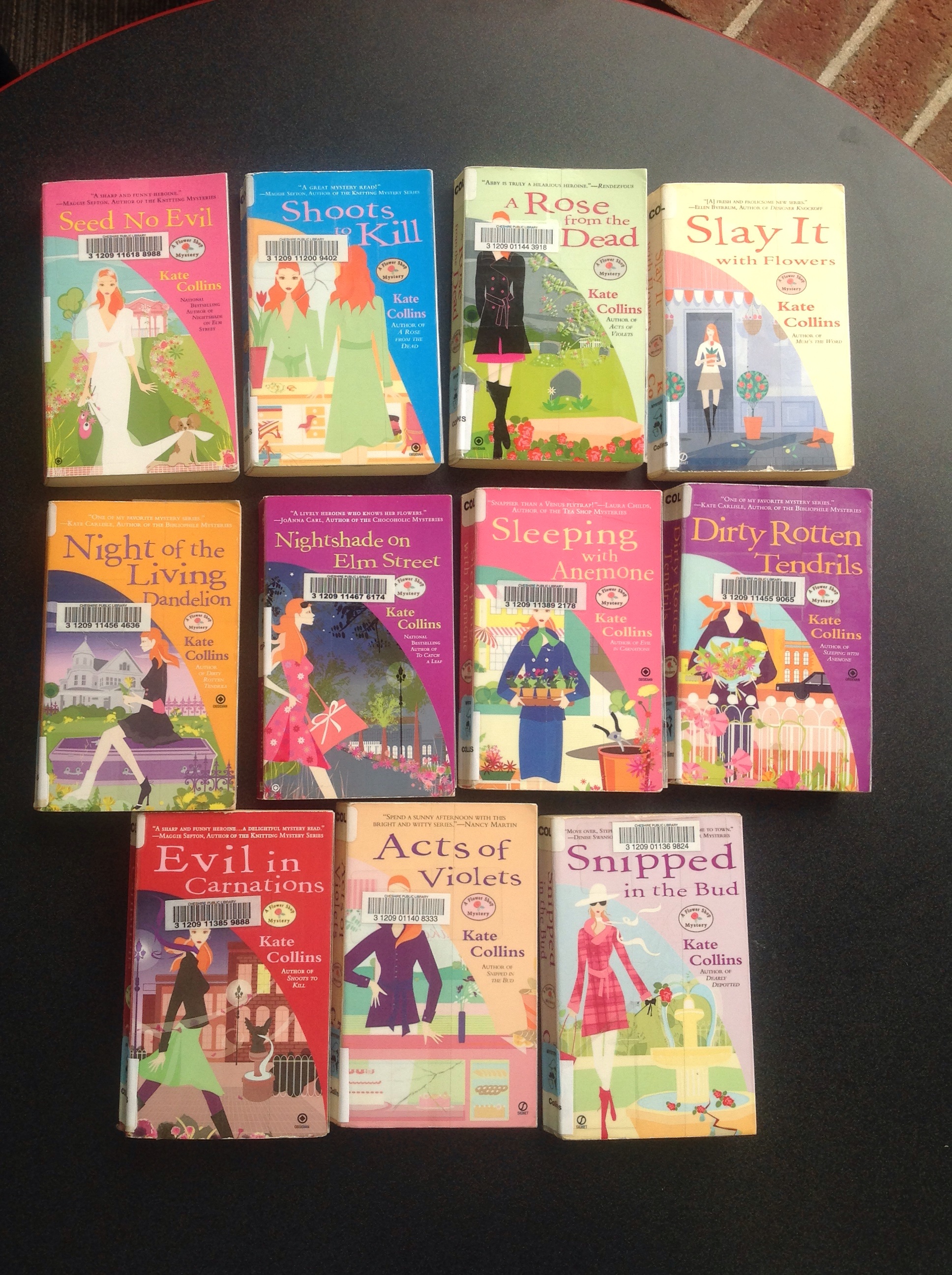
Today, there are many sizes of paperback books and all different prices, but the two major sizes are mass-market and trade.  Authors originally wrote stories for publications in magazines, but soon shifted their attention to mass-market paperbacks.  They could write longer, more in-depth, entertaining novels that boasted beautiful, bold, color covers and were prominently displayed in all types of venues.  They were affordable and easy to carry and proved to be a huge hit.  Mass-market paperback readers have a large selection of genres of original stories to choose from, in addition to best-selling hardcovers republished in paperback form.  In the beginning, Westerns were the biggest selling genre, followed by Crime and Science Fiction.   The most popular genre for mass-market today is Romance.  Within this genre you will find many sub-genres including contemporary romance, historical romance, small town romance, and paranormal romance.  The Cheshire Library has a separate section dedicated to mass-market Romance Books located towards the front of the library, near the large windows.    Another very popular genre for mass-market paperbacks are Cozy Mysteries.  The Cheshire Library has a large selection of these interfiled among the hardcovers in the Mystery section of the library.  You can also find regular Fiction, Science Fiction and Fantasy paperbacks in the library’s collection.

COZY MYSTERIES

COZY MYSTERIES

Some literary authors, critics and bookstore owners turned their noses up at mass market paperbacks.  When Doubleday’s Jason Epstein was a college student, he lamented the fact that he and his fellow students couldn’t afford hardcover editions and envisioned a line of upscale paperbacks of hardcover bestsellers and classics.  By 1953, Trade paperbacks were introduced.  These were larger, more durable, with attractive covers illustrated by fine artists with an appeal to a more intellectual market.  They sold for 65 cents to $1.25.    The library’s selection of Trade paperbacks are filed among the hardcover books.  They also come in a variety of genres, with the most popular genres being erotic romance – with Fifty Shades of Grey topping the charts – and Christian-themed books.


There were many who thought paperbacks would kill the publishing industry, but instead, the books proved to be quite the sensation.  As recently as 2010, paperbacks outsold hardcover books.  Although the ebook has taken some of the market away from paperbacks, they still continue to be a much beloved tool for readers everywhere.  The look, feel, texture, smell, size, and portability makes the paperback book very inviting.


Memoirs, Humor, and More About Fatherhood

In honor of Father’s Day, let’s take a look at some dad related humor, memoirs, and related collections of letters that can be great reads for dads new to the wonders of parenthood, those that are not quite as new to its wonders, and just about anyone.

Too Good to be True: a Memoir by Benjamin Anastas. When he was three, Anastas found himself in his mother’s fringe-therapy group in Massachusetts, a sign around his neck: Too Good to Be True. The phrase haunted him through his life. This is his deeply moving memoir of fathers and sons, crushing debt and infidelity– and the first, cautious steps taken toward piecing a life back together.

A Father First: How my Life Became Bigger than Basketball by Dwyane Wade.
NBA star Dwyane Wade discusses the rewarding responsibilities of being a single dad to his two sons, Zaire and Zion and highlights of his basketball career.

The Ticking is the Bomb: a Memoir by Nick Flynn. A dazzling, searing, and inventive memoir about becoming a father in the age of terror.

Fatherhood by Bill Cosby. A collection of ruminations, anecdotes, and vignettes based on Cosby’s experiences as a son and father.

Manhood for Amateurs by Michael Chabon. An entertaining omnibus of opinionated essays previously published mostly in Details magazine spotlights novelist Chabon’s (The Yiddish Policemen’s Union) model of being an attentive, honest father and a fairly observant Jew.

Lamentations of the Father by Ian Frazier. More serious than a “gag” writer and funnier than most essayists, Frazier has a classical originality. This collection, a companion to his previous humor collections “Dating Your Mom” and “Coyote v. Acme,” contains 33 pieces gathered from the last 13 years.

Don’t Make Me Stop this Car!: Adventures in Fatherhood by Al Roker. Al provides an unprecedented, intimate look into his experiences with infertility treatments, adoption, and the normal fears and wonders of an expecting parent. As Al manages the needs of his daughters from two marriages and the demands of a high-profile career, he is like millions of others who fantasize about the newest sport utility vehicle, struggle with a GapKids addiction, and bask in the golden moments of first steps and special Father’s Day meals. Along the way, Al comes to a deeper understanding of his parents’ love for him and a whole new appreciation of them as grandparents.

Raising Cubby: a Father and Son’s Adventures with Asperger’s, Trains, Tractors, and High Explosives  John Elder Robison. The comic memoir of an Aspergian father raising his Aspergian son, by the bestselling author of Look Me in the Eye.

As usual, I found too many great books to stop, so if you are looking for even more you might want to check out; Dad is Fat by Jim Gaffigan, The Council of Dads: My Daughters, My Illness, and the Men Who Could be Me by Bruce S. Feiler, Sh*t My Dad Says by Justin Halpern, Wisdom of our Fathers: Lessons and Letters from Daughters and Sons by Tim Russer, No Wonder my Parents Drank: Tales from a Stand-up Dad by Jay Mohr, A Promise to Ourselves: a Journey Through Fatherhood and Divorce by Alec Baldwin, The Bastard on the Couch: 27 Men Try Really Hard to Explain their Feelings about Love, Loss, Fatherhood, and Freedom edited by Daniel Jones, and Big Russ and Me: Father and Son by Tim Russert.