
Books require readers, but they also require writers. And not just books – writers are required for things you never think of, from greeting cards to the labels on your cough syrup and face cream jars. Writers put words in the comic book superhero’s mouth. Writers help K-Mart ship their pants, the Geico Cavemen get insurance, and made Downton Abbey so intriguing.
For a small town, Cheshire has a large number of published writers, and for every published author, we have at least four who are either dreaming of writing, or struggling with the actual task. Good writing – like acting, like music, like fine art, like athletics – starts with a natural talent. You have an ear for speech. You have a knack for conversation. Grammar was easy for you. This doesn’t mean that if you’re dyslexic, or can’t spell, or have no idea when to use a semicolon, that you can’t be a writer. That’s what an editor is for. What’s important is getting that idea out.
But how? How do you know what you need to do, when you haven’t had an English class in 20 years? You don’t remember a past perfect subjunctive case? And what do you mean by third person unreliable narrator? I just want to write a story – why is this so complicated?

Writing a story your mom loved is a good start, but to reach a larger audience, you will need grit, determination, skill, and a steel spine. But I don’t know any writers! you wail. Workshops are so expensive! I can’t take three weeks off my job for a retreat in Washington State!
Few people can, and that’s why libraries are so important! Ray Bradbury – Pulitzer winner, multiple Hugo-award winner, Emmy winner, and more – told the story of how he was too poor to afford college, so instead he read every book in his hometown library – every one – and got the education he needed that way. There are so many good books out there to help you with writing, depending on what level you’re at, what you want to know, and how you need to do it. Let’s explore a few of the best ones:
This is a great resource if you’re just starting out. You’ll find helpful hints, articles by authors, agents, publishers, and vague contests (caution: most cost money to enter, which is how they get the prize money. They aren’t exactly a scam, but your chances of winning are low). You’ll learn about genres and what other authors are doing. This is great for a year, but after that, you realize they run the same information over and over again every year.
To this day, my favorite book on writing. If you only have the patience to read one book on writing, read this one. Stein will walk you through every aspect of writing, from making the characters real to creating tension to love scenes, and he does it in everyday language you will understand. This is your college class on writing. If you’re starting out or still in school, this book will turn you into a writing powerhouse.

Ursula LeGuin: Steering the Craft
This is probably the best book on the practice of writing I’ve ever read. LeGuin states this isn’t for beginners – she’s not going to give you the basics like Stein does; she digs a level deeper. This is your Writer’s Workshop in a box. LeGuin will walk you through the various aspects of writing, from multiple points of view, to tense, to use of adjectives and adverbs, dialogue, and the rest. She will assign you writing exercises, some easy, some not. Find a buddy, even online, and do the exercises. This is a full creative writing class for zero cost . I wound up buying myself a copy (a whopping $7).
Donald Maass: Writing the Breakout Novel
I went into this one with a swagger, and landed on my butt. Donald Maass, owner of one of the premiere literary agencies in the country, sent me crawling back to my manuscript like it was fit for nothing but lining the litter box. Maass discusses the death of the mid-level writer, and takes you point by point illustrating what makes a novel not just good, but brilliant. I ran right back to my manuscript and dug deeper, and was so pleased with the result. This was far more useful than I’d ever hoped, and I read it with actual interest. This is a must-read, but, published in 2001, some of it is woefully dated: He says The Handmaid’s Tale is not believable, no one can follow more than one subplot (he obviously never read Game of Thrones), and to never submit by email, when that’s all agents and publishers accept today.
Annie Dillard: The Writing Life
Dillard’s another Pulitzer Prize winner, with lofty prose that requires a lot of thinking. If you are a beginner, just starting out, trying to see if this is the career you want, this is not the book for you. You’re not going to get the deeper story. If writing is burning your soul with a searing pain that keeps you awake night and day, if you can think tangentially and in leaps and in metaphors, then you will appreciate this book and take comfort in it. In short, writing is not a straight line, and the story you think you want to write will probably not be the one you wind up with as the story twists out of your control. It’s a book for the writer’s soul.
Ray Bradbury: Zen in the Art of Writing
Bradbury, as a short story writer more than a novelist (he said the goal is to write one short story a week; going by the law of averages, at least 10 a year should be really good), isn’t going to bore you with “Do This.” Instead, this is a collection of essays delving into how he writes, and his thought processes. It’s painless and inspirational, will boost your creativity, and is one you should be reading.

Anne Lamont: Bird by Bird: Some Instructions on Writing and Life
This is another surprise book I wound up purchasing. Lamont frees you from the guilt of writer’s block by giving you permission to write one word at a time. That’s how books are written: one word at a time. She’ll drag you through all the pitfalls of writing while holding your hand, patting you on the back, and inspiring you all at the same time.
John Mullan: What Matters in Jane Austen
Okay, this isn’t a book on writing – but if you ignore the fact that it’s Austen, and the fact some of it dates from the late 1700’s, and PBS has ground the stories into the dirt, there is a LOT of writing advice to be found in this book. Mullan picks apart Austen’s stories, discussing how she shows characterization, dialogue, even class in between the lines, describing things without ever coming out and saying them. Whether or not you’re an Austen fan (I’ve only read one, and that was 40 years ago), this is a treasure-trove of writing information if you don’t mind feeling like a total failure in her shadow.
This is the first book everyone runs to, and then squeals about. I’m going to commit heresy here: Don’t bother. This book is not going to help you become a writer. It’s going to help you sympathize with King for having all the same highs and lows and writer’s blocks that you do, but primarily, this is a book on King’s journey into writing. It’s not a self-help guide. It’s a biography.
Want to improve your writing? Track down Sol Stein, Ursula LeGuinn, and Donald Maass. They will not fail you. Dean Koontz’s book, How to Write Best Selling Fiction is widely regarded as an excellent book, but is out of print and used copies go as high as $500(?!?). However, you CAN access the material (or other bits on Youtube and such) through a PDF here on Scribd.com (beware of frequent ads).

 I’m no gardener. Sure, I have flowers all over my yard, I grow enough vegetables to bother canning, but I consider that a miracle of nature, not anything I do. I throw some plants in the ground, and if they’re lucky I remember to water them in the heat of summer. If they’re REALLY lucky, I may actually fertilize them. The only thing I try hard to remember to keep fertilized is my tulips, because my soil is two steps shy of toxic, and tulips like sunlight and fertilizer, and my tulips are spectacular (my soil is so bad that the only reason my flowers look good is because in our second year, we scraped away all the soil and replaced it with 5 cubic yards of new soil. Move away from the new soil, and the plants don’t do well).
 gardens will outdo themselves (Not likely. I planted 150 croci, and 8 survived). I pour over the catalogs and dream of a yard landscaped out of a high-end advertisement, wanting to buy 50 of those beautiful flowering plants, only to sigh when the ad says they cost $30. A plant.
 I prefer to purchase my seedlings from local nurseries – they have a much better shot at living – but I dutifully fill a tray or two of seeds with the kids in late winter, hoping to inspire a love of nature, and maybe a greener thumb. It doesn’t take much – a $2 packet of carrot seeds, a glass container, and you can watch roots grow as well as green leaves. Sadly, planting seeds and watching them grow doesn’t always inspire kids to eat that vegetable. Plants can be started in egg cartons, yogurt cups, red Solo cups, even eggshells – seeds, as you can tell from the cracks of pavement, aren’t fussy on where they sprout, though you may have to move them to a bigger cup if you’re using eggshells. If nothing else, it gives the kids something to do on a dreary day.
 cheapskate in me says plant seeds for the most expensive plants you want to grow, but that doesn’t mean the seeds will take. I’ve planted enough catnip seeds for a jungle, and just five plants finally grew – outside, not in a pot. I could mention morning glories, but morning glories are a lifetime commitment; they can be invasive, and even if you plant them only once, you might be yanking up sprouts for the next 10 years. These are some of the best seeds to grow with kids, and some books to help you once they’re past their leafy infancy. Give it a try!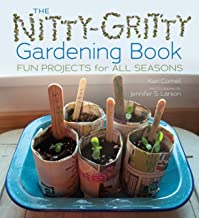
 High-Yield Vegetable Gardening
 atoes
atoes A Page Full of Freebies
 Community Service in a Virtual World
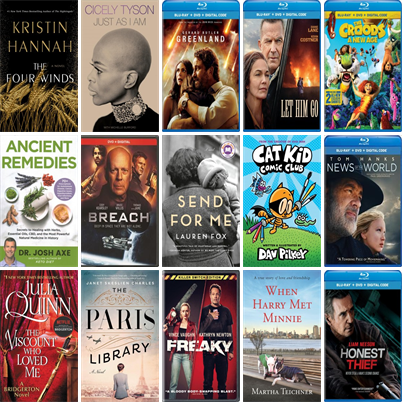 Get WOWed by Our Newest Books and Dvds
 No Printer? No Problem!
 Something Fun for Our Youngest Patrons
 Entertainment and Information in the Video Age
 As if Covid hadn’t made things complicated enough, now we’ve come to Tax Time! Lots of people are likely to be filing online this year, but some of us still need to put pencil to paper. Libraries have traditionally been places you can get tax forms and instruction booklets, but this year … not so much. Actually, the amount of CT State forms and booklets libraries receive started dwindling even before Covid times, but this year there will be no hard copies of CT State Tax materials at the library, and a very limited amount of Federal Income Tax printed materials.
 No printer? No problem. You can make an appointment to come in and use one of our computers to print up your documents (.10/page for black and white copies). Adult public computer use appointments for specified time slots may be reserved by phone (203-272-2245), up to one day in advance, and patrons may book one session per day.
 The CT Department of Revenue Services also offers a number of ways to help you file your state taxes. Upon request, patrons are welcome to contact DRS at the following phone numbers below Mon-Fri from 8:30-4:30 to request tax forms, booklets, and instructions that DRS maintains in-house, and can mail directly to the patron’s home address.
 The
The  The Cheshire Library Blog