The X Factor

imagesIndiana Jones and the Temple of Doom created an uproar in the movie industry. While it didn’t meet the criteria for an R rating, the intensity of the violence and its unrelenting action and danger freaked out so many kids and parents and caused so many complaints that the PG-13 rating was born – probably the same people that brought their six year old grandchildren to see Deadpool and didn’t think twice. Before that, there were just four ratings by the Motion Picture Association of America: G (general audience), PG (parental guidance suggested), R (no one under 17 without guardian), and X (now NC-17, meaning No One Under 17 Admitted, no way, no how, this will scar you for life).

Of course, as a kid, you can’t help but wonder, what’s in an X movie? What could be more violent than people beating each other up? What could be grosser than people naked?  How many more swear words are there? And then the internet was born and we’ve never wondered since.

Surprisingly, though, some of our favorite movies DID have an X rating at the start. Film makers want to be cutting-edge and push envelopes, but an X/NC17 rating c51q55v7qvblan sink an otherwise profitable film because it cuts out the teen crowd that hangs out at theaters every week and also makes some adult film-goers leery. After repeated trips back to the editing room, most of the movies do achieve their golden R rating.
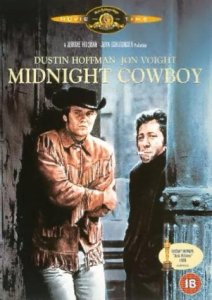
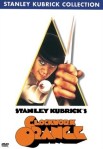
Some, however, never do. Three movies were nominated for Oscars despite their X rating: Midnight Cowboy, A Clockwork Orange, and Last Tango in Paris. Midnight Cowboy actually won the Best Picture Oscar for 1970. When rereleased in 1971, it carried only an R rating, even though not a single edit had been made. It had been given the X rating for “homosexual suggestions,” and that was no longer a criteria. Times were already changing.

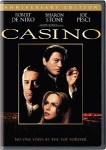
Two things are usually to blame for an X rating: extreme violence/gore, or explicit nudity/sexual content. It’s hard to believe, but for all the outcry against The Exorcist (some vi51kp0kgvmdlewers were taken away by ambulance), it only garnered an R rating. (So, in 1969, homosexuality would get you a deadly X rating, but by 1973, demonic possession, gore, blasphemy, and violent sexual situations involving children would not. Go figure.) Sometimes the fix was something so banal as toning down the brightness of the blood (Taxi Driver), which makes you wonder who is actually doing the judging and rating of the films. Others, like Cliffhanger, needed adjustments to almost every single scene. Although Casino cranks in at more than 420 utterances of the Fornication word (that’s almost 2.5 for every minute of film49), it was the violence that created its problems.
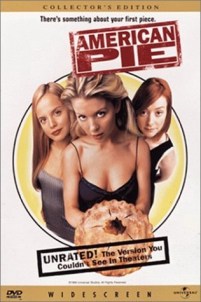
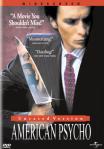
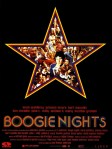
Here is a list of popular films you’ve probably heard of, and probably have seen, that were originally rated X before being edited yet again (American Pie needed four tries) to win the magic R. Some of these are very good films that just happen to be a little more graphic than others. Some of them you knew were headed for trouble just by the title (Freddy Got Fingered), but others, especially twenty years later when there sometimes doesn’t seem to be a limit on sex or violence in movies or on television (Boogie Nights drew trouble for a 10-second shot of a prosthetic penis, yet Life of Brian and Trainspotting didn’t for showing a real one), make you scratch your head at what the fuss was.
 

From Apocalypse to Zombies

imagesThe concept of dead people returning to life is probably as old as civilization. Ancient Egypt and mummies aside, Child Ballads such as The Unquiet Grave and The Usher’s Wife (Lady Gay) date back to at least the 1400’s. It’s arguable that Mary Shelley’s Frankenstein (1817) may be considered the first literary zombie (barring Lazarus), a man made of dead parts brought back to life, even if he wasn’t after brains.

The true zombie was born in 1968 with the release of George A. Romero’s cult classic Night of the Living Dead, about 0043396771796_p0_v2_s192x300grisly undead ghouls who feasted on human flesh – the term zombie hadn’t really been invented yet. Made for a paltry $114,000, filmed in black and white, it contained a level of violence and gore never before seen. There was only one problem – the MMPA rating system wouldn’t be in place for another month: Night of the Living Dead, the most gruesome movie ever made at that time, was essentially a General Audience film, and unsuspecting children (and adults) were never the same again.

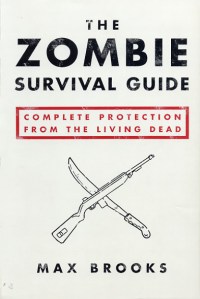
ZombiesurvivalguideFor a few decades, hard core zombies were relegated to third-rate theaters and 2 am film slots, but began to stagger slowly into the mainstream. Although you have favorites like Scooby Doo at Zombie Island (1998), “Modern” zombies – those whose roots are usually virus-oriented – surged in popularity with the graphic novel The Walking Dead (2003), which spawned the highly popular television series The Walking Dead (2010-present). This was followed by the spoof Shaun of the Dead (2004), the novel World War Z: An Oral History of the Zombie War which became a major film in 2013, and a veritable epidemic of zombie books, television shows, and films, including The Zombie Survival Guide, The Zombie Combat Manual, and The Art of Eating Through the Zombie Apocalypse. Strangely, these books are more serious than they should be. Even the Centers for Disease Control got in on it, posting their preparedness recommendations for dealing with zombies in 2011 in a push to get people to be prepared for disasters .

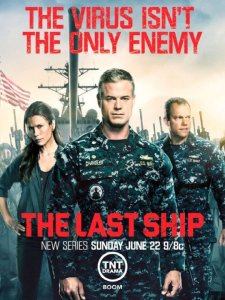
If you’re hard core, of course stick to the masters:  Night of the Living Dead, and Day of MV5BMjEyMzMxNzA5MV5BMl5BanBnXkFtZTgwOTkxNjMxMjE@._V1_SX640_SY720_the Dead. If you’re nerves can’t handle that (like mine), there are plenty of other choices that are less gory or  humorous. Zombieland is an A-list take on the issue that is full of humor and lower on gore. Maggie stars Arnold Schwartzenegger in probably his most serious role ever, as a father whose daughter is slowly becoming a zombie. Z Nation is an enjoyable TV series that isn’t quite as serious as The Walking Dead. The Last Ship is a new television series about a group who survives the apocalypse on a boat, and tries to round up survivors.

prideprejudicesmall1If you only like classical literature, fear not. Pride, Prejudice, and Zombies will not leave you behind. There is a book and a newly released DVD, which is utterly delightful, full of classic period speech and women in romantic Empire gowns slicing zombies with ninja skill. Slightly different but still in the realm of classic undead, give Abraham Lincoln: Vampire Hunter a try. Like your films completely different? No mention of zombies would be complete without some reference to Michael Jackson’s 1983 Thriller video, which, at 13 minutes, would qualify as a short film.

Whether you take them seriously ozombieland2_758_426_81_s_c1r not, whether your zombies are what they are because of curses or disease, whether you like to watch saws cut through flesh or you’re battling nuisance zombies on a quest to find the last box of Twinkies, there’s a zombie book or film for you.

Books that Defy Genre Labels and Description

Part of my job in labeling and cataloging books includes deciding if it needs a genre label and which one(s). Some books are easy. With some books I know right away that it needs a mystery, fantasy, or science fiction sticker. Particularly if the publisher is nice enough to include that information in a subtitle or in the book description. Sometimes it takes a little more research, but the author or publisher often include the intended genre pretty clearly somewhere, if you know where to look. However, there are some books that are simply beyond categorizing. Sometimes this is because the book covers so much ground very well, sometimes it is because it simply defies description, and sometimes it is because it crosses so many genre lines that there is not enough room to defygenre1include all the relevant genre stickers.

Here are a few examples of fascinating reads that defy simple genre classifications:

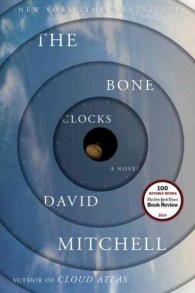
The Bone Clocks by David Mitchell
Interweaves six narratives spanning the period between 1984 and the 2030s to chronicle a secret war between a cult of soul-decanters and a small group of vigilantes who would take them down. By the award-winning author of Cloud Atlas.defygenre2

Flatland: a Romance of Many Dimensions by Edwin A. Abbott
A century-old classic of British letters that charmed and fascinated generations of readers with its witty satire of Victorian society and its unique insights, by analogy, into the fourth dimension.

Hard-boiled Wonderland and the End of the World by Haruki Murakami; translated by Alfred Birnbaumdefygenre3
Tracking one man’s descent into the Kafkaesque underworld of contemporary Tokyo, Murakami unites East and West, tragedy and farce, compassion and detachment, slang and philosophy.

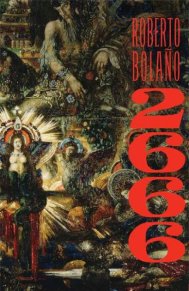
2666 by Roberto Bolaño; translated from the Spanish by Natasha Wimmer
An American sportswriter, an elusive German novelist, and a teenage student interact in an urban community on the U.S.-Mexico border where hundreds of young factory defygenres4workers have disappeared.

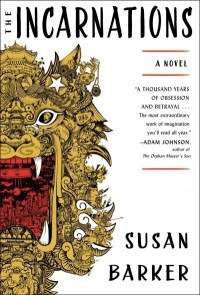
The Incarnations by Susan Barker
Receiving mysterious letters from someone claiming to be his soulmate, a Beijing taxi driver learns about their shared relationships in numerous past lives before becoming increasingly certain that someone is watching him.

defygenrebtmMore suggestions for indescribably interesting reads include: Cloud Atlas by David Mitchell, Geek Love by Katherine Dunn, Valis by Philip K. Dick, Canterbury Tales by Geoffrey Chaucer, Here, There be Dragons by James A. Owen, Frost in May by Antonia White, The Secret History by Donna Tartt, If on a Winter’s Night a Traveler by Italo Calvino,Gun, With Occasional Music by Jonathan Lethe,Jonathan Strange & Mr Norrell by Susanna Clarke,The Marvels by Brian Selznick, In the Shadow of Blackbirds by Cat Winters, and The Master and Margarita by Mikhail Bulgakov.

Have you ever read a book that left you changed but still somehow wondering what exactly it was that you just read? What is your favorite book that left you speechless when it came down to recommending it or describing it to someone else?

Here are the 2017 Nutmeg Nominees!

NUTMEG-LOGOThe Nutmeg Children’s Book Award is the “Children’s Choice” Award for Connecticut. The goal of the committee is to encourage children in grades two through twelve to read quality literature. Here is a listing of the nominees, divided by the four grade based categories. The library has purchased and cataloged multiple copies of each book. There might be a waiting list for the book(s) you are interested in most, but if you place a hold on the item we will contact you when it is your turn.

The links that I have included for each title are for searches that include all formats of the material that we own, including the print copy, audiobooks, and digital formats. How many have you already read? Are there any that you loved, hated, or are surprised by?

High School (Grades 9-12)
Mosquitoland by David Arnold
The Queen of the Tearling by Erika Johansen
Those Who Wish Me Dead by Michael Koryta
A Death-Struck Year by Makiia Lucier
How It Went Down by Kekla Magoon
I’ll Give You the Sun by Jandy Nelson
Gabi, a Girl in Pieces by Isabel Quintero
Jackaby by William Ritter
Challenger Deep by Neal Shusterman
Sway by Kat Spears

Teen (Grades 7-8)
The Night Gardener by Jonathan Auxier
Turn Left at the Cow by Lisa Bullard
The Iron Trial by Holly Black and Cassandra Clare
Swagger by Carl Deuker
Memoirs of an Imaginary Friend by Matthew Dicks
Sure Signs of Crazy by Karen Harrington
The Mark of the Dragonfly by Jaleigh Johnson
Far Far Away by Tom McNeal
Endangered by Eliot Schrefer
A Time to Dance by Padma Venkatraman

This slideshow requires JavaScript.

Intermediate (Grades 4-6)
Gaby, Lost and Found by Angela Cervantes
Red Berries, White Clouds, Blue Sky by Sandra Dallas
Space Case by Stuart Gibbs
Escape from Mr. Lemoncello’s Library by Chris Grabenstein
Roller Girl by Victoria Jamieson
Masterminds by Gordon Korman
The Misadventures of the Family Fletcher by Dana Alison Levy
A Snicker of Magic by Natalie Lloyd
The Boundless by Kenneth Oppel
Eddie Red Undercover: Mystery on Museum Mile by Marcia Wells

Elementary (Grades 2-4)
Mr. Ferris and His Wheel by Kathryn Gibbs Davis & Gilbert Ford
Phineas L. MacGuire Gets Cooking by Frances O’Roark Dowell & Preston McDaniels
Skateboard Party (The Carver Chronicles) by Karen English & Laura Freeman
Queen of the Diamond: The Lizzie Murphy Story by Emily Arnold McCully
Grandma in Blue with Red Hat by Scott Menchin & Harry Bliss
Ranger in Time: Rescue on the Oregon Trail by Kate Messner
One Plastic Bag: Isatou Ceesay and the Recycling Women of the Gambia by Miranda Paul & Elizabeth Zunon
Quinny and Hopper by Adriana Brad Schanen & Greg Swearingen
Winter Bees and Other Poems of the Cold by Joyce Sidman and Rick Allen
Star Stuff: Carl Sagan and the Mysteries of the Cosmos by Stephanie Roth Sisson
Hana Hashimoto, Sixth VIolin by Chieri Uegaki & Qin Leng
In a Village By the Sea by Muon Van & April Chu
Hamster Princess: Harriet the Invincible by Ursula Vernon
Lulu’s Mysterious Mission by Judith Viorst & Kevin Cornell
Hilo: The Boy Who Crashed to Earth by Judd Winick

This slideshow requires JavaScript.

Who do you think will win?

I (Finally) Read “It”

I am not a fan of horror. I would not shut the shower door for ten years because Kolchak: The Night Stalker scared the daylights out of me. My father’s description of the movie Killdozer made me terrified of construction equipment – as if I wasn’t already, from a preschool nightmare involving dump trucks. I watched the original 1931 Dracula and got a bloody nose in sympathy. I won’t sleep in a room with a vacuum cleaner thanks to Zenna Henderson. I like sleeping at night, and I don’t need any more anxiety in my life. I have kids for that.

ZX0AYe8 It was my mother who got me reading Stephen King. I was about twelve, sick in bed, and Night Shift, his book of short stories, came out. Wouldn’t you know it, the light from the bathroom at night struck every knob on the dresser at just the right angle so each one looked like an eye staring at me, just like the cover story. I only dared read half of them, and never enjoyed going to the dry cleaners again. But I read The Shining (I will NOT go into a hotel bathroom without a light on), read The Stand (his best, I think), Cujo, The Dead Zone (more my style), Firestarter (I needed a book for the train back from Canada) and Christine (Like I didn’t suspect that already). One thing you can say about King without ever reading his books: he doesn’t write short volumes.

Jacket.aspxBut by Christine, I was Kinged out. The books were were getting to be too similar, and I moved on. That was how I missed reading It, the book everyone seems afraid of. I avoided it for the longest time, but it popped up in a series of references this year, and I decided the time had come to tackle it. I’d re-read The Stand, and The Shining, but nothing new of King’s in 30 years.

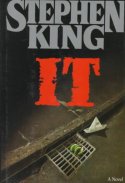
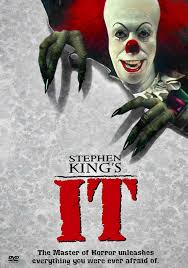
“It” tells the story of an evil presence that takes over4775612-3278691654-IT.jp the town of Derry, Maine, until a ragtag band of seven misfit children decide to take it on. Although the entity takes the shape of what scares a person most (werewolves, mummies, giant birds, etc), it often lures children to their deaths by taking the shape of a clown, Pennywise. I’ve never been afraid of clowns, though I understand the psychology behind it (like Daleks, you can’t read a clown’s frozen face, and it makes some people uneasy). I’m still not afraid of clowns; but I’m now nervous about balloons. Calling the evil “It” is a brilliant stroke of semantics – think of all the times you use the pronoun It: It was calling me. I tripped over It. It snuck up on me. I’m scared of it. You can’t help it; you can’t escape it. You talk about it all the time. Because you know it’s there. “It” can be anything, and you know it to be true.

But for everything anyone told me about the book, I think this is his worst that I’ve read. He’s written 55 novels, 200 short stories, comic books, films, has awards oozing out his ears – he knows what he’s doing. I don’t mind the back and forth nature of the story, bouncing between 1958 and 1985. The characters and style are classic King, but it is soooo long (1100+ pages), it really, really could have had sections of character description cut. It drags in places. It’s not the length: Game of Thrones is 1200 pages, scatmanbut I read it with more gusto. King’s name-dropping of characters from his other works grated on me. One is cool, but not several. Don’t stick Dick Hallorann in your book, a man with a strong sense of Shining (or, if you’re a Simpsons fan, Shinnin’), and have a catastrophe or a presence about that he doesn’t get ESP on. You laid Hallorann out in detail in The Shining; you let him drift in It. Sometimes the action is too cartoonish: having a victim’s head pop out of a box on a spring and go boing ruins my tension. I understand it might be appropriate to scare a child, but I’m not a child. Dolores Claiborne smashing my ankles with a sledgehammer makes me lie awake in a sweat all night. Cartoon boings don’t. I won’t tell the ending, but after fighting tooth and nail to wade through 1100 pages, I wanted more of a bang for my effort. The original Stand was 800 pages or so, and that ended with a nuclear explosion.

Yeah, yeah, I shouldn’t criticize King because he’s one of the most successful novelists images itof our time, and I don’t disagree with his talent. But perhaps he set his own bar too high. No one – not even Shakespeare – hits the nail of perfection every time. From the man who brought you Stand By Me, The Green Mile, Under the Dome, and so many, many wonderful tales, I just don’t think it’s his best.

What do you think is King’s best work – book or film?