Book Review: Cuba: An American History by Ada Ferrer

Sandy, our Head of Technical Services, shares this review of a recent read.

I love history. I studied it in college and in graduate school. It is the only thing I read, along with the occasional dark Scandinavian mystery.  That said, I have avoided reading any histories of Cuba. As the child of Cuban immigrants, the subject has always been too personal for me and I relied instead on the history given to me by my parents and grandparents. It was biased and it was raw and until recently, it was all that I had. I reluctantly decided to pick up Ada Ferrer’s book Cuba: An American History at the beginning of the year to see if I could rectify those gaps in my knowledge.

Ferrer was born in Cuba in June of 1962 and left the island as a baby with her mother, 10 months later. The prologue felt familiar to me. She talks about families left behind, meeting new family in “exilío” (exile), the pervasive feelings of loss, and the stories told by family members.  Stories about Cuba before the revolution, speculation about family and friends who stayed, and stories about an end to the Castro regime. She starts the history of the island in the 15th century with Columbus’ “discovery” of the region. Her discussion of this early period is thorough, outlining why Cuba became such a crucial part of trade in the region. She dives deeply into Cuba’s relationship with Spain as one of its most valuable colonies as well as Cuba’s early relationship with the United States. I think one of the most interesting things in how Ferrer tackles the history of Cuba in her work is that she puts it in the context of its relationship to the United States. The two nations have always been tightly bound to one another from their very early days, be it through trade, war, investments, and amendments that gave the US the power to intervene in the island.

Her discussion of the tumultuous period after the Cuban War of Independence in 1898 illustrates both how the US was able to further consolidate power in the island as well as how the stage was ultimately set for the revolution of 1959 and Fidel Castro’s rise to power. She takes the reader through Cuba’s resistance to the US via the Bay of Pigs invasion and the Cuban Missile Crisis, the relationship between the island and the Soviet Union in the 70s, and the fall of the Soviet Union and Cuba’s subsequent special period in the 90s; a time marked by extreme austerity measures and the mass exodus of citizens to the United States.  She talks about the hope the Cuban population felt with the thawing of relations under Barack Obama’s presidency and the despair brought on by the renewed efforts by the US government to tighten travel restrictions and the sending of remittances in 2016. The book ends in 2020 with a discussion of the effects of Covid-19 and the growing protest movements in the summer of that year.

The book is beautifully written.  Perhaps because she has spent so much of her life researching and working on this project or maybe because she is the child of Cuban immigrants, Ferrer is able to capture the essence of the Cuban people, their humor, and their ability to adapt and persevere both on and off the island. I think one of the things I appreciate most about the book is the way in which she chose to tell the history. She sums it up best when she writes, “as we ponder the sweep of centuries, it is important to pause at those lives, not just to invoke them, but to endeavor to grasp history through their eyes… It is an impossible endeavor in many ways… but the attempt itself is essential.” This book felt personal to me because of my relationship to my family and the island more broadly but I think that Ferrer’s approach to history will allow any reader without any personal stake to feel for the place as well as the people, both those that left and those that stayed behind.

9/11 – Twenty Years Later

There are several points in US history that are “fixed points,” dates and events which become so embedded in the minds and hearts of the people that they become part of our universal consciousness, whether or not we experienced them ourselves. July 4, 1776, the signing of the Declaration of Independence. April 15, 1865, Abraham Lincoln is assassinated. December 7, 1941, the Bombing of Pearl Harbor, “The Day That Will Live in Infamy.” November 22, 1963, the assassination of President John F. Kennedy.

And September 11, 2001, known simply as 9/11, when foreign nationals who had trained here in America, who bypassed airline “security,” hijacked four American jetliners and crashed them into the Twin Towers in New York City, the Pentagon in Washington, DC, and a field in Pennsylvania. The entire world stopped. On that day 2,983 Americans died, including 343 Firemen, 60 police officers, and 8 medical personnel – not counting the people who died from breathing in all the toxins released from the burning rubble. If you remember the day, you remember exactly where you were when you heard about it. People stayed glued to their TVs for days, hoping beyond hope that someone had survived the horror. So many people knew someone, or had ties to someone, who died that day. A friend of mine at Morgan Stanley by chance happened to be sent to a meeting at a different office that morning. Every one of his coworkers died. My husband’s cousin was just blocks away on her way to work when it hit, and wound up having to evacuate her apartment.

This year is the 20th anniversary of 9/11, a somber day for reflection. An entire generation has now grown up in a post-9/11 world, knowing the date as something only in a history book, no emotional ties to the day at all. Millions of New Yorkers are new to the city, with no experience of the unity the catastrophe created. Perhaps this is the most important memorial yet. 

The 9/11 Memorial and Museum at 180 Greenwich St. in New York City will be holding a ceremony for the families of the victims on that day. There will be six moments of silence, one for each of the tragedies that happened. Churches are encouraged to toll bells. The ceremony is private, but the museum will be open to the public from 1 pm until midnight. At sundown, the annual tribute in lights will commence. 

9/11 is a day that is going to be with us for a very long time, whether you remember it or not, whether you had any connection to it or not, whether you care about it or not. It’s still hanging over us, a Damoclean Sword we cannot take our eyes from. 

To honor the date, Cheshire Public Library invites you to share your 9/11 memories through our 9/11 Reflections project. As we approach the anniversary date, we are compiling the stories of local residents – where they were, what they remember, how they were affected that day. You can click on the link here, or pick up a paper form at the library. Select stories and photos will be displayed on our website on September 10. The deadline for submissions is September 3.

Be considerate about the date, even if you feel it doesn’t affect you. Hold that moment of silence, if not for the past, but for the future, that we – or anyone else – won’t have to suffer such an attack again. 

To learn more, check out some of these books and films:

Inside 9/11

Fahrenheit 9/11

In Memoriam: NYC 9/11/01

Zero Dark Thirty

The Only Plane in the Sky

Fall and Rise: The Story of 9/11

The 11th Day

The Looming Tower

Kill Bin Laden

A Nation Challenged

Cheshire Grange Fair

Did you know that the Grange has been a part of Cheshire since 1885? 

Did you know that the Grange system was founded by agricultural families in 1867, to help both the North and South recover from the terrible destruction of the Civil War? There are more than 240,000 members across the US, with more than 60 chapters in Connecticut alone.

So, outside of owning the building on Wallingford Road (where, last century, I used to take dance lessons), what exactly does the Grange do?  While there’s still some focus on agriculture, the modern Grange performs charitable community services for rural, suburban, and urban localities, and is open to everyone. Among the many community programs they run and support are Red Cross Blood Drives, quilts for AIDS babies, supporting Heifer International, gift baskets for the needy and elderly, school supplies, camperships, scholarships, equipment for police and fire departments, community education programs, and so much more. And of course, the annual Grange Fair – this year on August 21. 

See, the more people who enter – anything! – the more interesting your Grange Fair is. This is your community fair – and the more we support it, the better it is! (I’m tired of being the only entry in some categories. That’s just no fun.)

So dig through your treasures. Print that photo. Iron that placemat you made. Tuck the threads on that needlepoint you did during shutdown. Pick those tomatoes carefully. No effort is too “amateur,” so get moving and get your entry form in! 

There are a limited number of entry booklets available at the library and around town, or you can download them yourself from their website. 

Best of luck!

http://www.cheshiregrange.org/grangeagfair.asp

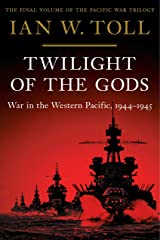
Twilight of the Gods, Ian Toll

Media has changed warfare. Thanks to Matthew Brady, photos of the brutality and hopelessness of war affected people in an entirely new way. At the time, the Civil War was the most documented war in history - yet it had nothing on World War II, just 75 years later. Movie film captured every last horror of that war, by both those who wanted to document the atrocities and those who wanted to bask in what they saw as glory. By Viet Nam, with Kodak Instamatics fitting in a soldier’s pocket, the grit was documented by everyone, not just official sources. In today’s internet era, conflicts are documented and uploaded to the world live, before officials even know they’ve happened. It will take decades to sort through available data and make viable conclusions on modern conflicts.

Media has changed warfare. Thanks to Matthew Brady, early photographer, photos of the brutality and hopelessness of war affected people in an entirely new way. At the time, the Civil War was the most documented war in history – yet it had nothing on World War II, just 75 years later. Now movie film captured every last horror of that war, by both those who wanted to document the atrocities and those who wanted to bask in what they saw as glory. By Viet Nam, with Kodak Instamatics fitting in a soldier’s pocket, the grit was documented by everyone, not just official sources. In today’s internet era, conflicts are documented and uploaded to the world live, before officials even know they’ve happened. It will take decades to sort through available data and make viable conclusions on modern conflicts.

German Sub U-755 is sunk by an RAF rocket, 1943

But World War II was no slouch. In doing a bit of research the other month on my grandmother’s little-known younger brother (they were 16 years apart), within 10 minutes, my sister and I were able to pull up information that stunned us. All anyone knew had been “Uncle Laurie was on a Coast Guard ship that was presumed lost at sea, possibly due to a German Sub, during World War II.”  Well, thanks to unfailing documentation, we found out that Laurie had been a radioman on the USS Muskeget, a weather ship, which was shot at 3 times by the German sub U-755 at 3:15 in the afternoon of September 9, 1942. Two torpedoes hit, killing all aboard. They even had the coordinates off Greenland. Not only that, but there’s a photo of U-755 being sunk by an RAF plane several months later!  No one in the family had ever known any of those facts.

With that type of minutiae now available, Ian Toll brings together his final tome on the history of the Asian Theater in WWII, Twilight of the Gods (I know, I just switched from the European front to the Asian one, but our family knows less about the Asian front: Uncle Art was a Marine at Iwo Jima, but not the famous flag raising, and my psychiatrist grandfather was stationed in California as a Navy Captain treating shell-shocked soldiers returning from the lines). In his third installment of the war, Toll covers the months between  June of 1944 and the Peace Treaty in 1945, after the dropping of the bomb. 

The Asian theater is an anomaly: this is the part of the war that actually attacked US territory, the act of aggression that finally drew us into the war despite the incomprehensible acts going on in Europe, and yet, we tend to teach only the European aspect of the war, beyond the two facts of 1) Pearl Harbor was attacked by the Japanese, and 2) we dropped the first (and only) nukes on them in retaliation. Is it because of the difference of a Navy war vs. an Army land war? It’s easy to follow Maginot lines on a map, but ships bouncing from island to island around a massive ocean isn’t as visual: We can understand where France is, but where exactly is 7.1315° N, 171.1845° E? (It’s the Marshall Islands. Can you picture them? Neither can I.) How can people fight over water, which has no country? Far more people had relatives affected somewhere in Europe, vs no one was taking up collections to send to Vanuatu. Yet the battles were the largest naval battles in history, and the cruelty and aspirations no less than that of Hitler. 

Toll spares no fact from his relentless research, and the brutality and heartbreak can inure the reader – much as it did those who lived through it. He covers the infighting among leaders – no one thought highly of Admiral Halsey – and the waste of young men literally being thrown at ships as kamikaze pilots – a tactic that eventually wore thin even among the Japanese. Good or bad, Toll covers it in a narrative style that will give you a far greater appreciation for the lesser-known side of a war that literally covered the world.  Whew.

If you don’t have time to sit and read a thousand pages, Twilight of the Gods is now available at CPL on audiobook, to make that commute just a little more interesting!

Twilight of the Gods

Audio book Print

The Conquering Tide

Audio book Print

Pacific Crucible

Twisting Tornadoes

Our first exposure to tornadoes is often watching The Wizard of Oz as a child, though no one but Dorothy has ever reported being transported to a magical land beyond the rainbow. I was 9 when I read the Reader’s Digest account of the April 3-4, 1974 Night of 100 tornadoes, a horrific Super Outbreak of 148 confirmed tornadoes in 24 hours – more than 30 F4/F5’s – which devastated the town of Xenia, Ohio, among others. That kind of thing leaves an impression, even in a magazine.

April is in the middle of tornado “season,” which runs from March to June, when the biggest outbreaks of tornadoes are likely to occur. The United States has more tornadoes, and more violent tornadoes, than any other place in the world – killing an average of eighty people a year, despite our best efforts at early warning. Can they occur in other months? Of course they can. It all depends on the weather, and the weather, as we are aware, has been kind of wacky lately, from extreme drought in California to paralyzing snow and ice in Texas.

Why the US?  When we talk of “tornado alley,” we usually mean a massive stretch of flat land in the center of the country, from Colorado to Pennsylvania, and from Texas to the Canadian border. This is where the majority of tornadoes are born. Can they occur anywhere? Of course they can – CT has had memorable destructive tornadoes (such as the EF1 that wiped out Sleeping Giant in 2018) as well as Florida, Nevada, and Portland, Oregon. Pennsylvania holds the record for the only F-5 tornado east of the Appalachians – that’s winds of 300 mph.

Why do tornadoes form? Thunderstorms form when warm, moist air (such as from the Gulf) collides with cool dry air (such as comes down from Canada). When the two fronts meet, warm air rises up through the cold, creating storms. If the winds start to rotate in the process, a tornado is formed. Spring is when the warm air starts coming north from the Gulf of Mexico, colliding with the cold Canadian fronts, setting up a highway for storms until summer’s heat chases the cold air back north.

In modern times, with doppler radar, we know when a storm is likely to be powerful enough to cause a tornado (the Wallingford tornado of 1898 killed 34 people, but they had no warning system). If you’re faced with a severe storm, or a tornado warning, if the sky gets that sickly green, get to shelter. Go to a basement if you can, away from windows, under a staircase is a bonus. If you have no basement, go to a place away from windows – a large closet, or a bathroom – many people have survived in bathtubs. If you can, take shelter under a table or something sturdy. Cover yourself with a blanket, to avoid debris or flying glass. If you’re in a car, stop and get to shelter as fast as possible – don’t try to outrun a tornado; you can’t.  And no, hiding under a bridge isn’t safe – those 200 mph winds will blow you right out from under there. Please don’t leave your animals chained outside. They’re scared, too.

Whether you’re an armchair weather-watcher, or like reading about disasters, here’s a number of tornado-related stories and films you might enjoy – with one eye out the window (No, there has never been an actual Sharknado. Frogs and fish, but no sharks. Sorry).

Books:

Videos: