Exploring the Rich History of Cheshire

Cheshire may be a small town, but it has an interesting and well documented history. Whether you have lived here all your life or just moved to Cheshire, you might have fun exploring the library’s local history collection.

You may be aware that the Farmington Canal ran through Cheshire and the rail trail goes right by Lock 12 park. If you have ever wanted to know more about the history of the Farmington Canal, we have the book: Reflections on the Canal in Cheshire, composed by Raimon L. Beard and published by the Cheshire Historical Society in June of 1976. This 81-page booklet gives a complete account of the inspiration, construction and usage of the Farmington Canal during a time when actual boats moved goods and people through the town of Cheshire. There are illustrations and some fun stories. It’s well worth the read and probably something to read while you’re sitting on one of the benches on the linear park.


If you’re curious about the earliest history of Cheshire, History of Cheshire Connecticut from 1694-1840, by Joseph Perkins Beach is a good one to read. It takes you from the arrival of the first ships in New Haven Harbor until 1840. The first half of the book is a historical narrative and the second half are records from various churches, tombstones, and the Town Hall, listing individuals who were born, baptized, married, and died in Cheshire.  The Cheshire Daughters of the American Revolution were responsible for getting this book finished and published. This is a good book for those who are looking for early history and it is also available for free online.

One book that I always love to read and reread is Landmarks of Old Cheshire, published by the Cheshire bicentennial committee in 1976. Landmarks is the go-to book for Cheshire history. It is logically laid out by geographical area and pulls from several historical accounts. It covers information and stories from the colonial area to the mid-20th century. Kathleen Gagnon did an incredible job providing about a hundred illustrations for this book. Even if you don’t read the book, just look at the pictures!

Glaciers to Greenhouses, the Changing Landscape of Cheshire Connecticut, from Mile-High Ice to Surburban Backyards is a recent book by local author Jeanne R. Stewart, our town historian from 2012-2019. This one takes quite a different spin on the history of the area. It begins with the ice age and the history of the Native Americans in our area, the Quinnipiac. The book includes many illustrations and is so wonderfully written that it is hard to put down.

The above are a few titles to get you started on your path to learn about Cheshire’s past. There are plenty of other very interesting books on Cheshire’s history that are available for checkout from the library. Come see us at the reference desk or give us a call at (203) 272-2245 ext. 33007 to learn more!

Movie Magic

When we talk about the powerhouses of music, we think of The Beatles or Michael Jackson or Reba MacIntyre or Beyonce, among others. People who have multiple-decade careers, whose very touch seems to turn to gold, who sell records just walking down the street. Everyone knows their name.

So if I said, Guess which musician has won four Oscars, four Golden Globes, seven BAFTAs (the British equivalent of the Oscar), 25 Grammys, was Knighted by Queen Elizabeth even though he was born in Queens, and has had 52 Oscar nominations – second only to Walt Disney, who would you pick?  Someone with a net worth of between $300 million and $50 billion, depending on how many assets you count?

Would you believe it’s composer John Williams?

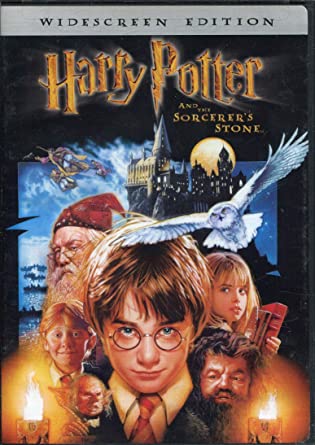
Williams, who is 91 and still going strong, has a Master’s touch when it comes to composing music, and he’s written more film and television music than you realize. An alumni of the prestigious Juilliard School, Williams’ career has spanned more than six decades, and he’s written the scores for everything from the pilot of Gilligan’s Island and Lost in Space  to Schindler’s List (his fifth Oscar for score).  Although he didn’t write the music or win the Oscars, Williams played piano for the score for Bernstein’s West Side Story. His scoring of Jerry Bock’s music for the film adaption of Fiddler on the Roof won him his first Oscar. That iconic Jaws DA-dunt, DA-dunt that scared everyone from the water, won him his second. Spielberg then recommended him to his buddy George Lucas, who needed a composer for the movie he was working on. Star Wars became Williams’s third Oscar, a soundtrack among the most widely recognized music in history, and remains the highest grossing non-popular music of all time (interactive fun fact: you can dance the Macarena perfectly to Darth Vader’s theme music. Go ahead. Try it.). Williams went back to Spielberg for his fourth Oscar – the soundtrack to E.T.  Harry Potter? Yep, Williams wrote that. Superman? Home Alone? Jurassic Park? The Post? Sometimes, it seems as if a movie is destined for greatness if Williams writes the score.

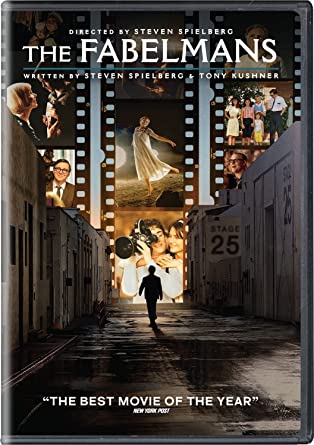
March is Oscar month, and this year John Williams is the oldest Oscar nominee for the score to Spielberg’s The Fabelmans. So cheer for Williams on March 12, and in the meantime, check out one of his dozens of utterly amazing scores on the following films:

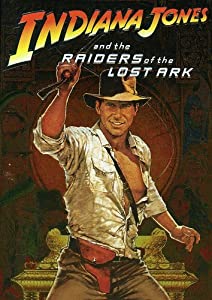
The BFG / Star Wars / Raiders of the Lost Ark / Schindler’s List / ET / Jaws / Harry Potter and the Sorceror’s Stone /

Superman / Jurassic Park / Saving Private Ryan / Towering Inferno / Close Encounters / Hook / JFK /

Memoirs of a Geisha / Minority Report


Learn a Little, Live a Little

Do love learning? Do you dream of taking college classes, but the cost and the time is too much? Are you taking a high school or college class and struggling to understand the material?  Did you cut your cable, and can’t find anything decent to watch anymore?

Fear not! The Great Courses are here!

Cheshire Public Library has always had a handful of these delightful media, but through a generous donation, we’ve been able to greatly expand our holdings to more than 70 titles.

What are the Great Courses?  Professional college-level lectures on audiobook or DVD on a variety of topics, given by actual college professors and experts (like Neil DeGrasse Tyson!), that will give you the equivalent of an entire college class in the comfort of your car or living room. Some come with study guides and questions to think about, but you will never have a test or a grade at the end!

The Great Courses was the brainchild of Thomas M. Rollins, the former Chief Counsel of the US Senate Committee on Labor and Human Resources (1985-89). Inspired by a 10-hour video lecture series he watched as a student at Harvard Law, he set about creating his own video series under the business label The Teaching Company. He recruited professors to record lectures on topics people were interested in learning about. Because the lectures were chosen by customers, they caught on quickly. There are currently more than 900 lectures available in a wide variety of topics. Some are short – four hours – while others (like the Civil War) can run to 14 discs.

Great Courses are expensive – that Civil War set is more than $500 to purchase yourself, but in 2016 the company began a $20/month streaming service, and then in 2021 rebranded itself under the name Wondrium. Wondrium not only offers more than 280 of the Great Courses, but also content from Magellan TV, Craftsy, and Kino Lorber, which carries art films, documentaries, world cinema, and classic films (silent films like Metropolis, Charlie Chaplin, and more).

If you don’t feel like yet another subscription to a streaming service, check out the library’s offerings downstairs in the adult department. We have more than 30 titles on DVD, and more than 35 on audiobook for learning on the go. As Fat Albert used to say, “If you’re not careful, you may learn something!”

Did you know that if you’ve already studied the material, you can often exempt a college class? It’s called the CLEP program – College Level Examination Program.  Basically, if you can pass the exit exam for a class, you can get college credit for that class. Not every school offers it, not every class is covered, but if a Great Courses lecture can help, you can save several hundred dollars!

Check out these great titles and more!

Some of our Audiobook titles:

Ancient Greek Civilization

Beethoven’s Sonatas

Books that Have Made History

Broadway Musicals

The New Testament

Italian Renaissance

Native People of North America

Rise and Fall of the British Empire

Some of our DVD titles:

The American Civil War

Einstein’s Relativity

Monet to Van Gogh

When Rome Ruled

Photography

The Louvre

Geology

Human Language

The Vikings

The Scandalous World of Art

Edvard Munch, The Scream

 On May 1, CPL is hosting a program on The Art of the Scandal: Thefts, Vandals and Forgeries.

 Well, that’s nice, you say, but art doesn’t interest me.

Are you sure about that? Everyone loves a good mystery, and high art is probably the most mystery-filled subject there is. Anything with that much crime circling around it means there is a bank vault of money involved. 

There are many sides to fine art – the talent side (no one disputes a da Vinci, but you can start a fight over Pollock), the artsy side (the use of light and dark in paintings creates mood and movement that symbolizes man’s desire to control the universe: discuss), the history side (Phoenician art of the 18th century BCE shows a developing amalgamation of influence of the entire Mesopotamian region), and the rarity side (there are more Roman statues than there are da Vincis). We can discuss the purpose of art, of man’s desire to create, of the abstractness of art that leads back to man as the only animal who creates art for art’s sake, despite our knowledge that apes will draw and paint for pleasure, and that elephants, dolphins, and rabbits can be taught to paint as a behavior. It often boils down to one thing: 

Money.

The price of fine art (paintings and drawings, as opposed to jewelry work, sculpture, enamelwork, etc) has a few things going for it. First is rarity – many of the greatest paintings are hundreds of years old. They are one-of-a-kinds, and not a lot of them have survived. There are only 15 authenticated da Vincis known – as opposed to 400 Rembrandts. A second consideration is fragility – light, moisture, and age can cause ancient paintings to crack, flake, and fade (Van Gogh liked using red lake pigments, which fade rather quickly). The Mona Lisa is not painted on canvas, but an old board. A third thing is authenticity, and here is where the art world goes to pieces.

Salvator Mundi, by da Vinci

Because of the money involved in fine art (Da Vinci’s Salvator Mundi sold for $450 million dollars), as in too many movies, everyone is out to steal or fake originals. Forgery rings have been around for hundreds of years – one of the biggest was by Han Van Meegeren in the late 1930’s, a talented artist who sold more than $30 million in fake Vermeers to the Nazis. In 2004,  Xiao Yuan, the Chief Librarian at an academy of fine arts, stole more than 140 paintings in his care by carefully replacing them with his own copies – only to find some of HIS copies stolen and replaced with less-skilled replacements. Forgeries (actually, they’re called counterfeits, since legally only documents can be forged) are so rampant (about 50% of the market), Sotheby’s bought their own forensics lab to weed out fakes

Modern fakes are often easy enough to spot – today’s paints and canvases and even brushes aren’t the same as the 1500’s, and simple chemistry will find them. But what if the work copied is of modern origin – say, a Picasso, or a Warhol? Because of the modernity of materials, it is incredibly difficult to prove authenticity. 

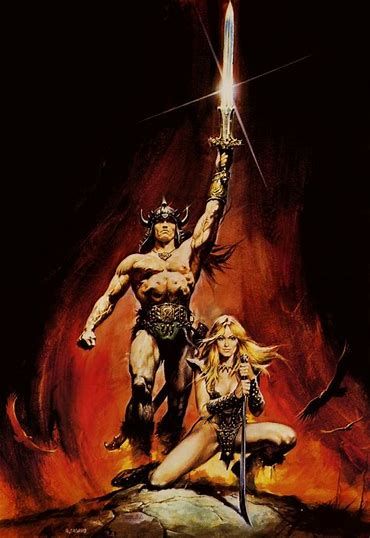
Conan the Barbarian, by Boris Vallejo

Questions still arise, though, as to what constitutes an authentic work of art. That 450 million dollar da Vinci has had so much restoration that there is more paint by restorers than by da Vinci, so is it still genuine? If a student of an artist (Rembrandt, Renoir, Reubens, etc) is so talented that a professional art historian/critic cannot tell the difference, how are you defining fine art and value? Where does the value lie – in the skill, the history, the age, or the subject matter? Why do we so value Edvard Munch’s The Scream (of which four originals exist, two of which were stolen), yet not value Boris Vallejo?

Art, by its very interpretational nature, is a scandal.

Art of the Scandal is an on-line program sure to peak your interest. You can sign up for the attendance link here.

Book Review: Cuba: An American History by Ada Ferrer

Sandy, our Head of Technical Services, shares this review of a recent read.

I love history. I studied it in college and in graduate school. It is the only thing I read, along with the occasional dark Scandinavian mystery.  That said, I have avoided reading any histories of Cuba. As the child of Cuban immigrants, the subject has always been too personal for me and I relied instead on the history given to me by my parents and grandparents. It was biased and it was raw and until recently, it was all that I had. I reluctantly decided to pick up Ada Ferrer’s book Cuba: An American History at the beginning of the year to see if I could rectify those gaps in my knowledge.

Ferrer was born in Cuba in June of 1962 and left the island as a baby with her mother, 10 months later. The prologue felt familiar to me. She talks about families left behind, meeting new family in “exilío” (exile), the pervasive feelings of loss, and the stories told by family members.  Stories about Cuba before the revolution, speculation about family and friends who stayed, and stories about an end to the Castro regime. She starts the history of the island in the 15th century with Columbus’ “discovery” of the region. Her discussion of this early period is thorough, outlining why Cuba became such a crucial part of trade in the region. She dives deeply into Cuba’s relationship with Spain as one of its most valuable colonies as well as Cuba’s early relationship with the United States. I think one of the most interesting things in how Ferrer tackles the history of Cuba in her work is that she puts it in the context of its relationship to the United States. The two nations have always been tightly bound to one another from their very early days, be it through trade, war, investments, and amendments that gave the US the power to intervene in the island.

Her discussion of the tumultuous period after the Cuban War of Independence in 1898 illustrates both how the US was able to further consolidate power in the island as well as how the stage was ultimately set for the revolution of 1959 and Fidel Castro’s rise to power. She takes the reader through Cuba’s resistance to the US via the Bay of Pigs invasion and the Cuban Missile Crisis, the relationship between the island and the Soviet Union in the 70s, and the fall of the Soviet Union and Cuba’s subsequent special period in the 90s; a time marked by extreme austerity measures and the mass exodus of citizens to the United States.  She talks about the hope the Cuban population felt with the thawing of relations under Barack Obama’s presidency and the despair brought on by the renewed efforts by the US government to tighten travel restrictions and the sending of remittances in 2016. The book ends in 2020 with a discussion of the effects of Covid-19 and the growing protest movements in the summer of that year.

The book is beautifully written.  Perhaps because she has spent so much of her life researching and working on this project or maybe because she is the child of Cuban immigrants, Ferrer is able to capture the essence of the Cuban people, their humor, and their ability to adapt and persevere both on and off the island. I think one of the things I appreciate most about the book is the way in which she chose to tell the history. She sums it up best when she writes, “as we ponder the sweep of centuries, it is important to pause at those lives, not just to invoke them, but to endeavor to grasp history through their eyes… It is an impossible endeavor in many ways… but the attempt itself is essential.” This book felt personal to me because of my relationship to my family and the island more broadly but I think that Ferrer’s approach to history will allow any reader without any personal stake to feel for the place as well as the people, both those that left and those that stayed behind.