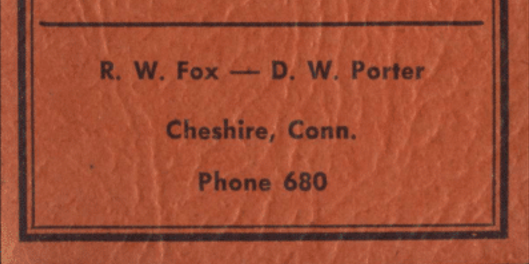
We recently uncovered some Cheshire Library memorabilia from at least 60 years ago. Though they’re regular objects you would find at any library—a bookmark, a checkout card holder, and a library card—they reveal a lot about the time they’re from and remind us of the dramatic changes that have taken place since.
First the bookmark: At the time the bookmark was printed, CPL’s hours were a bit different than they are now. They were open Monday through Friday, from 3:00 to 5:00 and 7:00 to 9:00 PM, presumably to allow for a dinner break. These days, we’re open from 9:00 AM to 8:30 PM Monday through Thursday, and 9:00 AM to 5:00 PM on Fridays. As a reminder, our summer Saturday hours for July and August are from 9:00 AM to 1:00 PM.
Maybe the most interesting part of the bookmark is the phone number for The Cheshire Insurance Agency: three digits!
The library checkout card holder is most notable for the quaint slogan of First Federal Savings and Loan Association: “You’ll find us most helpful.” The First Federal Savings and Loan Association isn’t around anymore. 218 Maple Ave changed hands several times in the late 20th century and became a branch of Naugatuck Savings Bank in 1999 (later renamed “Ion Bank” in 2013).
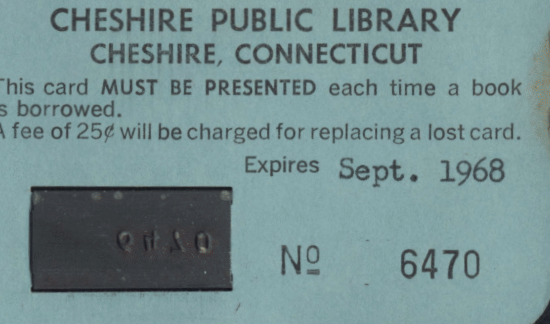
Lastly, the library card. Those who’ve been coming to the library for a while know our cards have gone through many iterations. I love when patrons come to the circulation desk with one of our old Cheshire Cat branded cards because it means they’ve been loyal patrons for some time. But I’ve never seen a card anywhere near as old as this one. In place of a barcode, there’s a stamped metal insert with only four digits.
Across the board, the United States has become a more expensive place to live in the last 57 years, but at least you don’t still have to pay 25¢ when you need to replace your card! (25¢ in 1968 is the equivalent of $2.32 today).
It can be easy to walk through today’s libraries and look at them as though they came into existence at that very moment. Historical artifacts like these remind us that we’re part of a long chain of library excellence—standing on the shoulders of giants, as they say.
Everyone knows about the Titanic since they found the wreckage and made a movie about it, but shipwreck is usually the last thing on anyone’s mind when they book a cruise. In reality, only 24 cruise ships have ever sank, and many of those had been pressed into service as warships at the time. Cruise ships, despite their top-heavy appearance, are quite safe.
There are an estimated 3,000 shipwrecks off the coastof the Outer Banks, NC
There are an estimated three million shipwrecks under the waters, not counting small craft. Some of these date back as far as 2500 BCE, when the Mediterranean Sea was a hotbed of trade from Egypt and North Africa to the coasts of Italy, Greece, and Spain. The rate of commercial shipwrecks has been declining throughout this century, from 200 in 2000 to only 26 in 2023, and most of those are cargo ships, which are often in poor repair, overloaded, badly balanced, and cross some of the most difficult waters (releasing rubber ducks and sneakers). This does not include the fishing industry, which is nearly unregulated, especially in Asia and South America. It is estimated there are 100,000 deaths from fishing each year, due to poor industry standards and almost no oversight.
When we think about historical ships, we think back to Roman biremes, Viking longboats, and primitive rafts like Thor Heyerdahl’s Kon Tikilong before we come to the glory days of Spanish, British, French, and Portuguese galleons vying for naval power, leading to spectacular – and expensive – shipwrecks. The Bermuda Triangle, The Skeleton Coast, The Cape of Good Hope, and several rocky coastal areas around the continents were famous for wrecking ships, let alone the risk – then and now – for icebergs in the North Atlantic, and the real though rare possibility of rogue waves – lone giant waves of up to 100 feet, with no warning and no precursors, which have been implicated in a number of wrecks. There’s also the 1958 Lituya Bay, Alaska tsunami, which, due to the funneling nature of the bay, created a wave 1700 (yes, one thousand seven hundred) feet high, lifting a fishing boat, whose crew miraculously survived.
Like all natural disasters, ship disasters make for fascinating reading and occasionally a great movie. Here are some excellent works on the misfortunes of ocean-bound ships, some of which you may not have heard of, but really happened.
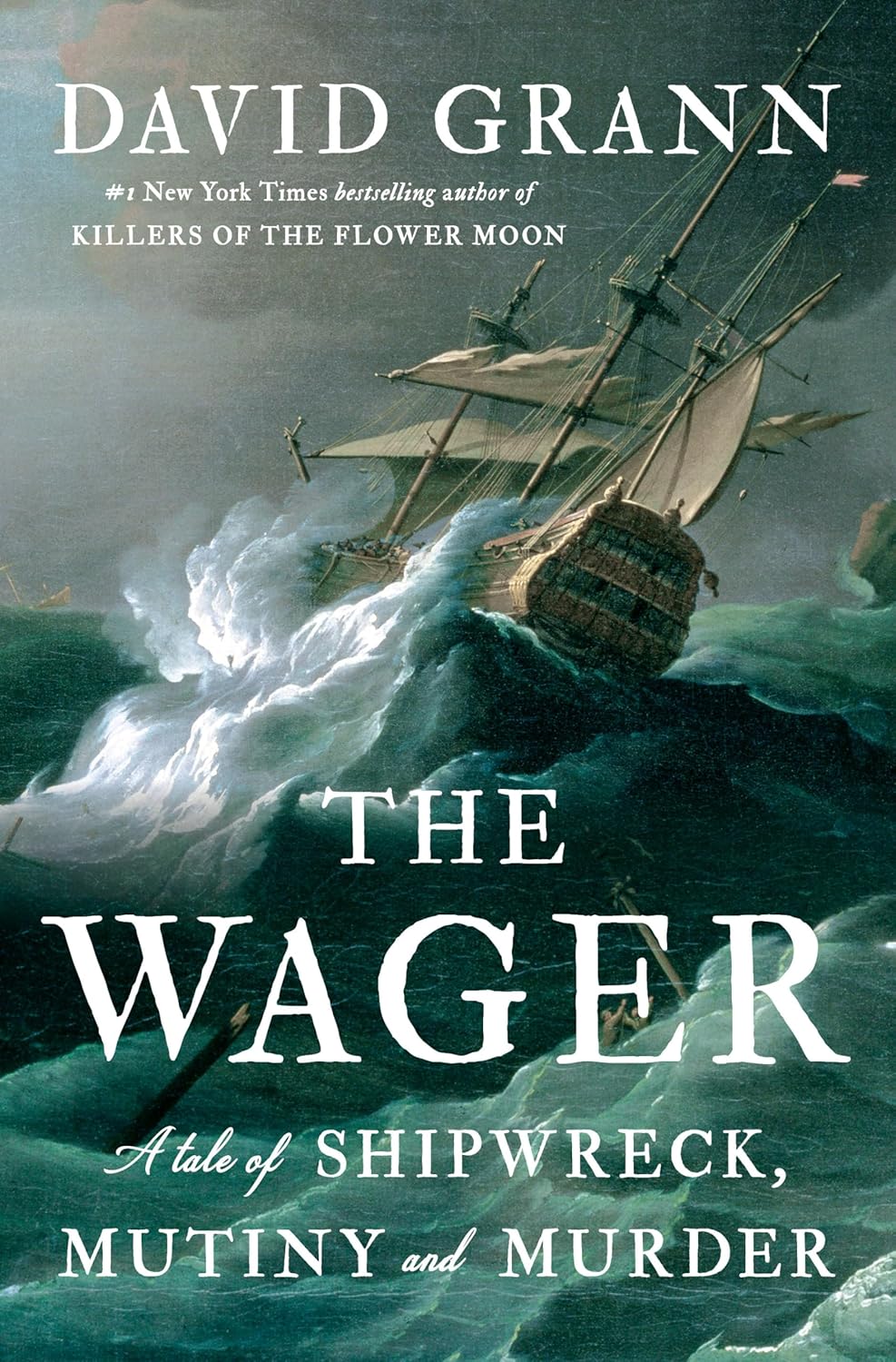
If you haven’t yet read The Wager, you need to. A true tale of murder, mutiny, greed, heroism, and unbelievable survival in the harshest of conditions. Against better judgment, the Wager tries to round the dangerous Cape Horn in 1741, smashing against rocks in a gale. In a barren wasteland, with nothing to eat, the crew splits, half commit mutiny, some commit murder, and half of them will make it back to tell the riveting tale. A must read.
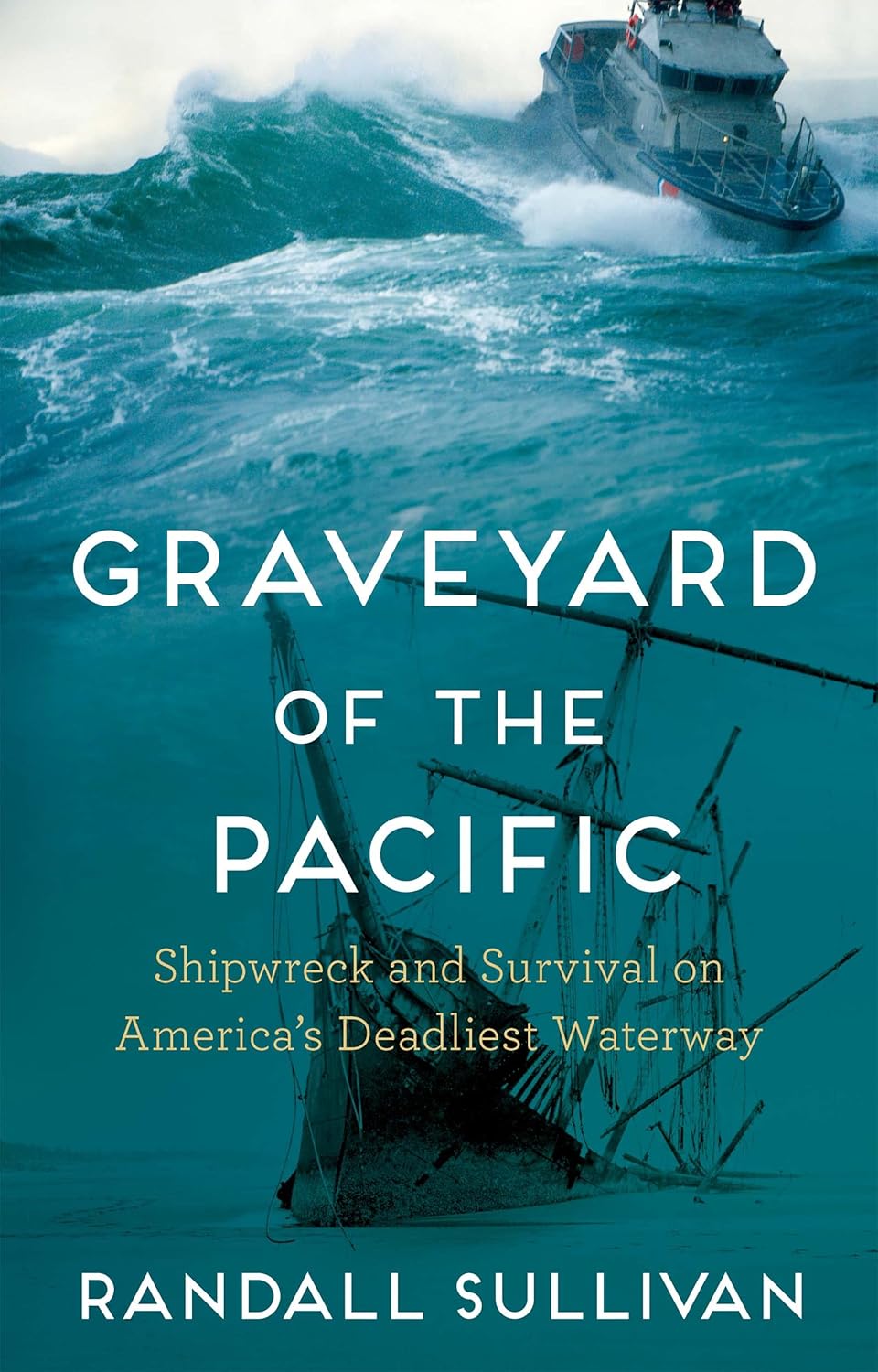
Who knew that more 2000 ships have been wrecked on the corner of the Oregon/Washington coast? Fierce storms, fog, reefs, sandbars, and tidal rips from the incoming flood of the Columbia river are so bad that there are specific ships and captains who must steer commercial ships through the area. While the book is partially taken up by one man’s quest to kayak through this deadly area, the rest of the book is quite fascinating.
There are many theories as to why the ship Mary Celeste was found abandoned at sea in 1872, with no clue as to what happened. The lifeboat was missing, and the crew abandoned ship so rapidly that food was still on the table and a sleeping child’s form was still outlined on the captain’s bed. Hicks combs through details to provide a solid, scientific reason, the best theory anyone has come up with yet, and the horrible fate of the crew.
The foundering of the whaleship Essex in 1820 became the inspiration for Melville’s novel Moby Dick. The Essex was sunk by a sperm whale in the Pacific, killing most of the crew. A handfull survived in a whaleboat for five months, surviving on cannibalism and rainwater. Melville allegedly met the son of survivor Owen Chase while at sea, and later met surviving Captain Pollard, who was considered bad luck after two lost ships, and no one would hire him. The combined diaries of the survivors were later made into a film.
If Ghost Ship wasn’t enough, Hicks covers the perfect storm of disaster on the Morro Castle, a top of the line 1934 cruise ship traveling between Cuba and New York’s Pier 13. With horrific odds, the ship faced a tropical storm gaining on them, a nor’easter barreling toward them from the opposite direction, a murdered captain, an arsonist’s chemical fire underneath a ceiling filled with gunpowder, a crew that had never performed a fire or lifeboat drill, lifeboats whose launch mechanisms were painted closed, and a crew that fell apart at the first sign of trouble. How anyone survived (besides the crew, who abandoned ship without helping passengers) is a miracle. A book that reads like a novel, and is very hard to put down.
More fish are caught in Alaskan waters than almost everywhere else, yet many fishing boats remain virtually unregulated as to safety, and there are powerful political groups that push against it. In 2008, the Alaska Ranger meets with bad weather and too much ice, loses its rudder, and starts to sink. As in every disaster, few are trained, shortcuts were taken, lifeboats don’t work properly, wetsuits have holes, and they are more than 200 miles from the Coast Guard rescue planes. Thompson creates a tense tale of survival and aggravatingly poor working conditions as the Coast Guard rushes to save the crew. A lot of names, but hard to put down.
Futility, or, The Wreck of the Titan, by Morgan Robertson
Okay, this one is short fiction, and because it’s so old it’s hard to get a copy of (you can read it for free on Project Gutenberg, here), but it’s mentioned in so many memes as “The Titanic Foretold!” that I wanted to include it here. Published in 1898, the book, yes, involves an “unsinkable” ship called the Titan, that, in its second collision in two days, hits an iceberg and capsizes. The unlikable protagonist rescues a little girl in order to get a seat on a lifeboat, then plots to use her to extort money from her family, and most of the book is about him whining about being stuck with the kid. There is almost nothing in this novella that compares with the Titanic, beyond a name (common enough. It would have been more compelling if the name was Carpathia or something) and an iceberg (also common in those waters). It’s short, you can read it, but it’s trite, simplistic, outdated, boring, and sometimes painful to read. But, truly, it in no way predicted the wreck of the Titanic.
If you’d prefer, check out these films of ocean disasters:
I never know what I’ll read next. What ever sparks my interest, either by title, by book cover, or by subject. I have no special direction or particular interest, but if I found one book on a subject interesting, I’m far more likely to read another on the subject, or by the same author. Hence I’ve read an inordinate amount of books on Ebola, fast fashion, tea, books on the making of various movies, and, well, serial killers.
We know the names. Son of Sam. Ted Bundy. Green River Killer. BTK Killer. Long Island Killer.
I have no fascination with them, find most of them repellent and frightening beyond description, and did not shed a tear when Jeffery Dahmer died in prison, but I find the psychological processes and forensics involved in tracking them down utterly intriguing. The science end, not the murder end. And there is SO much to be fascinated about.
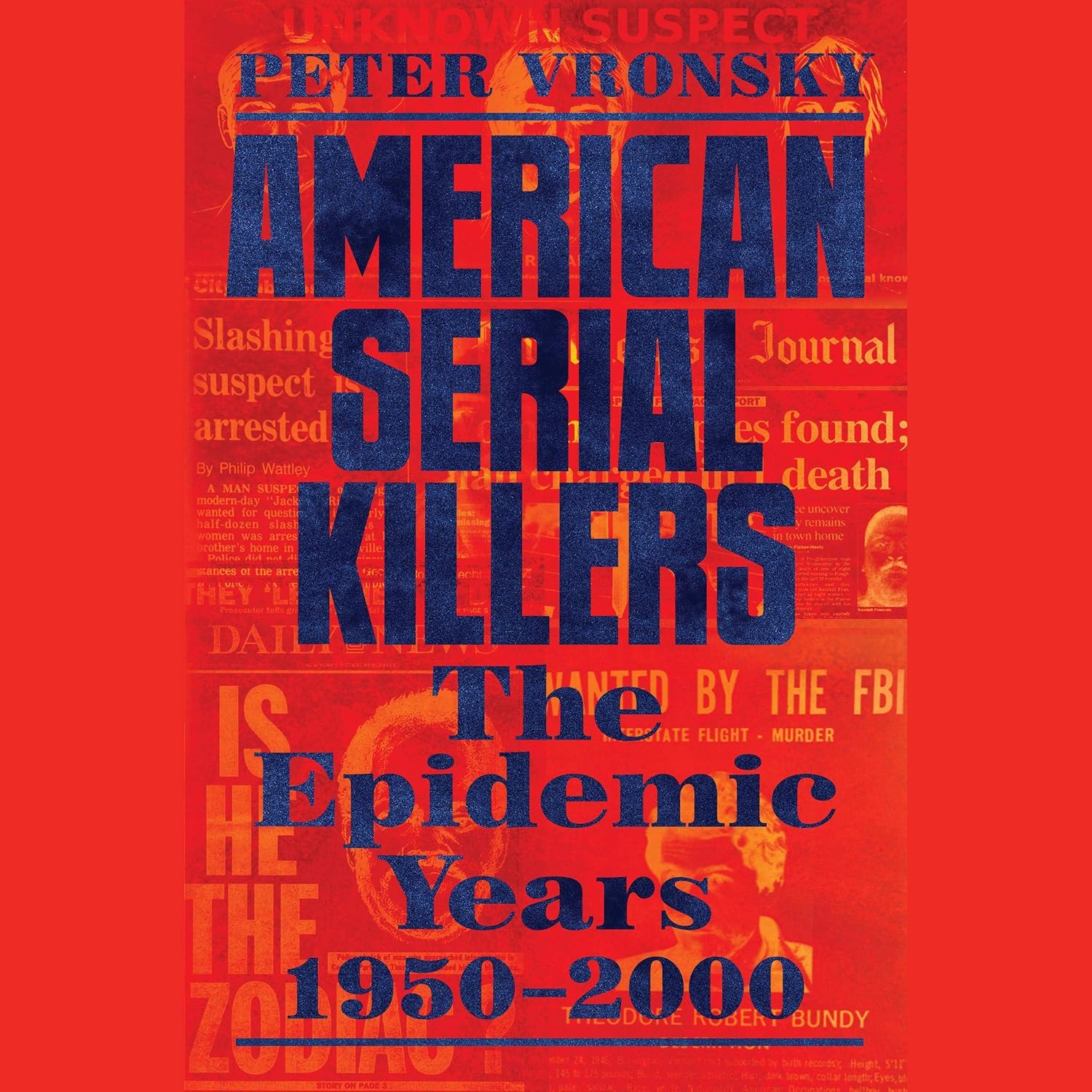
Most recently, I read the book American Serial Killers: The Epidemic Years, by Peter Vronsky, and I was blown away by the premise. America – which has more serial killers than any other country (well, that are reported and connected. Other countries have mass murders by corrupt governments, so maybe we’re better off) – had a major epidemic of serial killers (those that intermittently kill more than three people, as opposed to a spree all at once) from around 1970 to the mid 1990’s – more than 600 a year, and then it tapered off sharply. Why? Why did we have terrible trails of serial murders for 25 or 30 years, and then few? Vronsky makes a very strong, documented case for the fact that most of these killers were born in the late 40’s and early 50’s (25 or 30 by 1975) and their fathers fought in World War II. Vronsky documents that many of these fathers came back damaged from the war – PTSD, violent, depressed, alcoholic, received no help, and were unable to nurture their children. These boys – coming of age with violent sex images in men’s magazines, pulp fiction novels, and comics – grew up with attachment issues, poor self-image, and violent fantasies about sex, which they slowly began to work up the nerve to carry out. Why did things taper off? Most of those killers were either dead, in prison for other crimes, or had worn themselves out and were living a quiet life until something might trigger them again, unknown to their neighbors. Vietnam Vets received more services than soldiers in the 40’s, there was more public support, it wasn’t as big a deal to divorce a man, and those children did not have the same issues their grandfathers did. Those children of Vietnam vets would have been 25-30 in 1990-95 – years when serial killers were in decline.
Another utterly fascinating book – one that sent me down a long, long wormhole of research – is Barbara Rae-Venter’s I Know Who You Are: How an Amateur DNA Sleuth Unmasked the Golden State Killer and Changed Crime Fighting Forever. The Golden State Killer was alleged to have killed 13 people and committed more than 50 rapes across California between 1974-1986. Because police departments didn’t talk to each other or share information, no one was ever able to piece together all the information. Enter Rae-Venter. Rae-Venter spent her days helping people trace their genealogy and find their families using her home computer. Asked if she could do the same for a suspect, Rae-Venter needed 63 days and $200 to make a genetic profile of the killer from her dining room – something 30 years and $10 million of taxpayer money had never been able to do, leading directly to the apprehension of the killer. Since Rae-Venter, a huge number of backlogged, dead-end cases have been solved and cleared (like the Long Island Killer) due to the methods she used.
Spurred on by her methods, I fell down a rabbit-hole of genealogical research, aided by ancestry.com (free at the library), and in a week was able to trace my mother’s ancestry back 12 generations, connect some gaps, discover my grandmother had an older sister we never heard of (probably because she died at 5 months), and my grandmother’s younger sister was four when she died, not the two my grandmother remembered. Sometimes books are dangerous!
Through both of these books, several names kept popping up, and I realized I’d already read books by both men. John Douglas was the first real FBI criminal profiler, starting in the 1980’s, creating many of the procedures we use today. His book, Mindhunter, chronicles how he began, in a time where every department wanted the glory of solving the case, and thus no one ever shared information, and no one ever solved the cases.
Unmasked: My Life Solving America’s Cold Cases by Paul Holes, is another. Holes learned the business under Douglas, pursuing cold-case investigations from the 1990’s into the 2000’s. Some of the cold cases that perplexed them the most and they were never able to solve were later solved by Barbara Rae-Venter’s methods, like the Long Island Killer and the Golden State Killer.
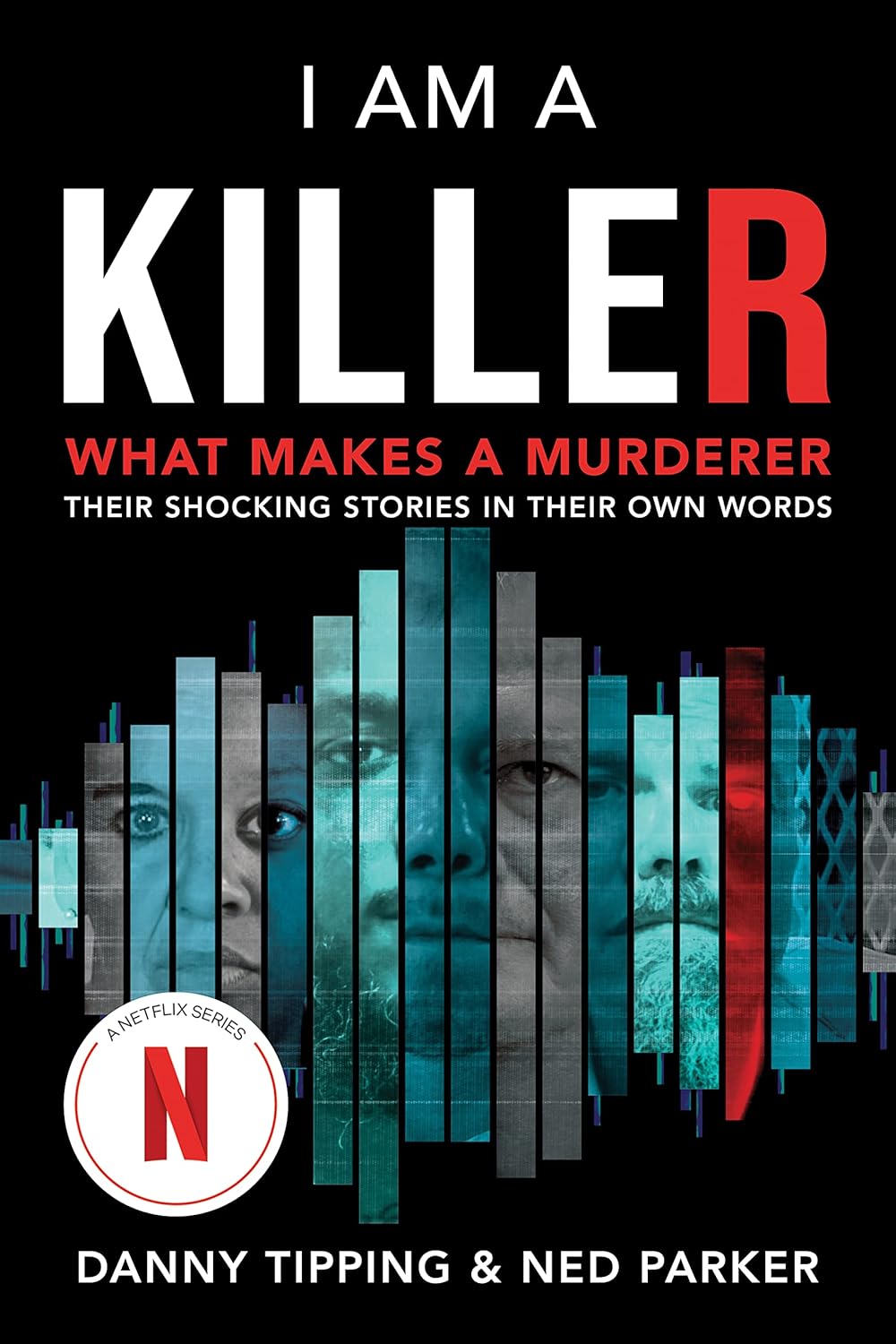
If you don’t care so much about crime but like psychology and sociology, and want to find out why people kill, try I Am a Killer, by Danny Tipping. It’s a sad book that dwells on the murderers and not so much the crime. Time after time, the horrific backgrounds of these killers are revealed (one father, to hide the bruises and welts on his kid when Social Services was coming, tied him to a mattress, poured lighter fluid on him, and set his back on fire). Many did not deserve the sentences they received, responding to unimaginable abuse. There are no winners in this book.
Though he technically didn’t kill anyone, if you want local flavor, read Incendiary: The Psychiatrist, The Mad Bomber, and the Invention of Criminal Profiling, by Michael Cannell. Many people claim to have invented criminal profiling, but this was an early case. In the 1940’s, a bomber went around exploding devices all over New York City, then teasing the police through letters. After twenty years, he was determined to be George Metesky – from Waterbury, Connecticut, and the criminal profiling was eerily correct.
If you like crime stories and investigations, these are excellent books. If you like psychology and deviant behavior, these are also excellent books. The difficult part is that they had to be written at all.
I mean, setting aside that my library degree has the word “science” in it, I could have been very happy with the hard stuff like biology and physics. My recent reading of Adam Higginbotham’s Challenger has me considering a parallel life as an engineer designing parts for the aerospace industry. Hope Jahren’s Lab Girlbrought me back to college anatomy and physiology, which I took for fun. What self-respecting English major memorizes squamous cells and zygomatic processes for fun? And why didn’t I pursue this thing that obviously called to me?
Answer: literature and the arts simply sat closer and sang louder. We had lots of books at home, but the mystery of a story’s meaning or a certain chord or color called to me more than the mystery of what existed in outer space or beneath the soil. By the time I was thinking about my future, I could more easily conceptualize myself creating worlds than uncovering the world that already existed. But, if I ever change my mind and decide to implode my professional life, it’s easy enough to channel Suzanne Simard and fill out an application for forestry school.
Many women in history never had the benefit of choice that I do, the ability to see a path beyond their sex. Their dreams – if they were even allowed to dream – were crushed because women weren’t supposed to be scientists, or run businesses, or be leaders and advocates. They were supposed to keep quiet. Well, for this Women’s History Month, I’m sharing some brand new books about women that put some alto in their voice and let themselves be heard.
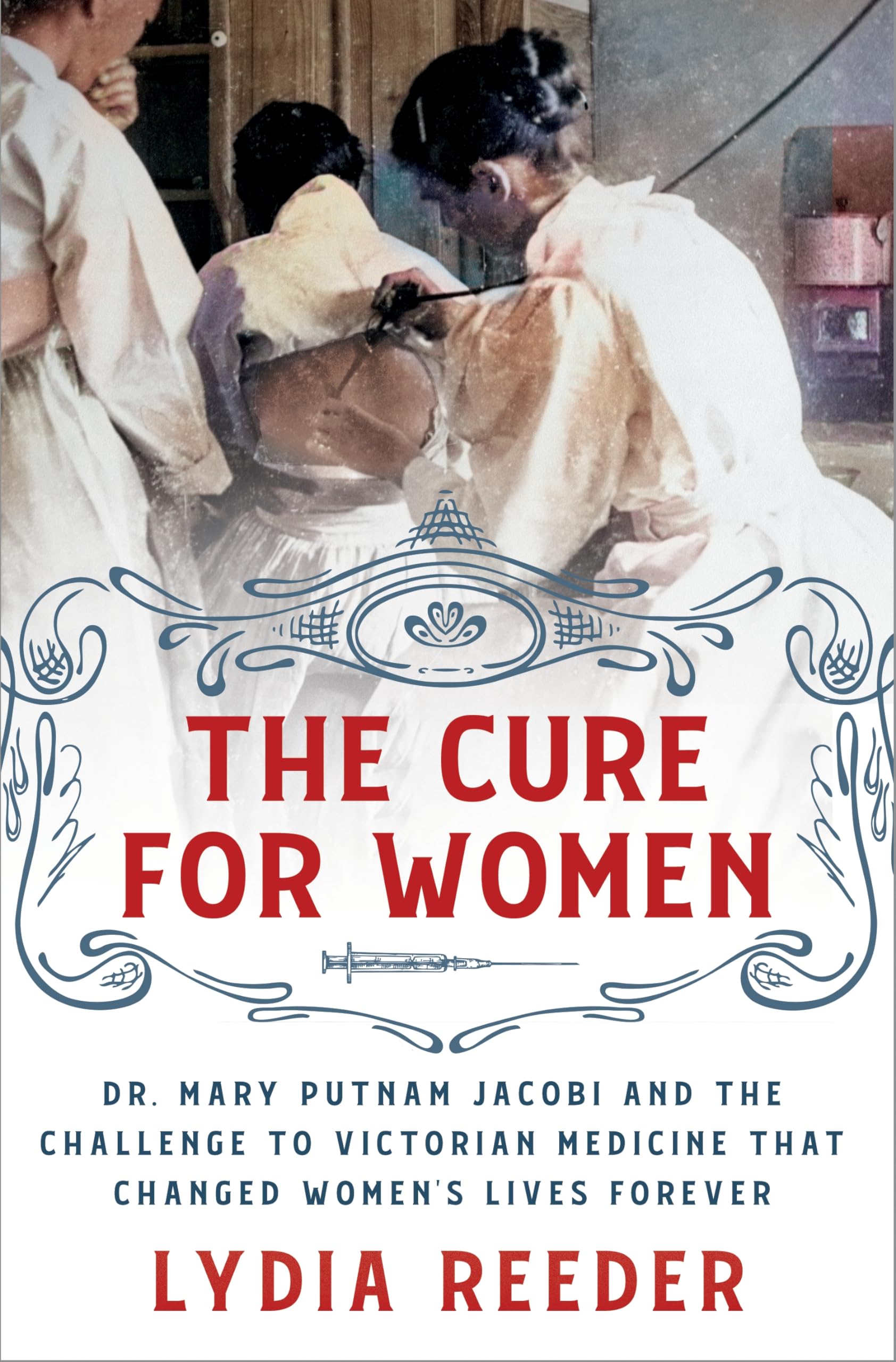
After Elizabeth Blackwell became the first woman to graduate from medical school, more women demanded a chance to study medicine. Their success spurred a chilling backlash from male physicians who distorted Darwin’s evolution theory and proclaimed that women should never be allowed to attend college or enter a profession because their menstrual cycles made them perpetually sick. Into the midst of this turmoil marched Mary Putnam Jacobi, daughter of a New York publisher and the first woman to be accepted into the world-renowned Sorbonne medical school in Paris. Aided by other prominent women physicians and suffragists, Jacobi conducted the first-ever data-backed, scientific research on women’s reproductive biology. The results of her studies shook the foundations of medical science and higher education.
Award-winning historian Paulina Bren tells the story of the first generations of women who fought their way into the bad-boy culture and lavish opulence of the finance world. If the wolves of Wall Street made a show of their ferocity, the she-wolves did so with tough-as-nails persistence. Starting at a time when “No Ladies” signs hung across the doors of Wall Street’s clubs and unapologetic sexism and racism were the norm at top firms, Bren chronicles the remarkable women who demanded a seat at the table. She-Wolves is an engaging and enraging look at the collision of women, finance, and New York from the go-go years to ground zero.
The untold story of Alice Hamilton, a trailblazing doctor and public health activist who took on the booming auto industry—and the deadly invention of leaded gasoline, which would poison millions of people across America. Hamilton had New England connections, too – she attended Miss Porter’s Finishing School in Farmington, became the first woman faculty member of Harvard, and she retired to live out her days in Hadlyme, CT.
Toler draws on extensive archival research to unearth the largely forgotten story of Sigrid Schultz’s years spent courageously reporting the news from Berlin, from the revolts of 1919 through the Nazi rise to power and Allied air raids over Berlin in 1941. At a time when women reporters rarely wrote front-page stories and her male colleagues saw a powerful unmarried woman as a “freak,” Schultz pulled back the curtain on how the Nazis misreported the news to their own people, and how they attempted to control the foreign press through bribery and threats.
Published in English for the first time, this is the memoir of the fabulous, rule-breaking, one-of-a-kind Josephine Baker. After stealing the spotlight as a teenaged Broadway performer during the height of the Harlem Renaissance, Josephine then took Paris by storm, dazzling audiences across the Roaring Twenties. When World War II broke out, Josephine became a decorated spy for the French Résistance. Her celebrity worked as her cover, as she hid spies in her entourage and secret messages in her costumes as she traveled. She later joined the Civil Rights movement in the US, boycotting segregated concert venues, and speaking at the March on Washington alongside Martin Luther King Jr.
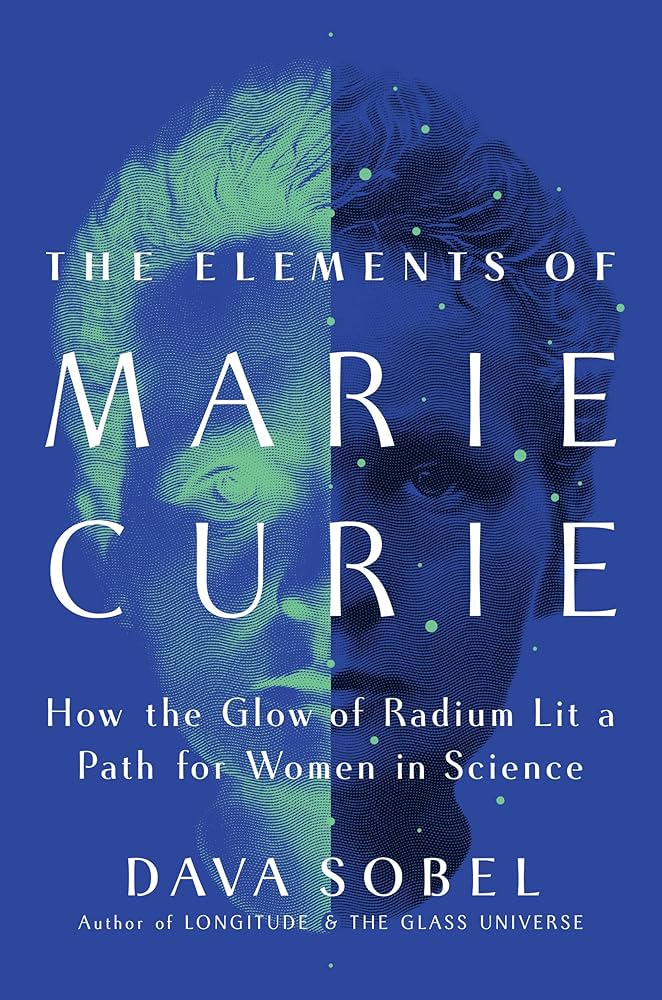
Dava Sobel approaches Marie Curie from a unique angle, narrating her remarkable life of discovery and fame alongside the women who became her legacy–from France’s Marguerite Perey and Norway’s Ellen Gleditsch to Mme. Curie’s elder daughter, Irène, winner of the 1935 Nobel Prize in Chemistry. For decades the only woman in the room at international scientific gatherings that probed new theories about the interior of the atom, Marie Curie traveled far and wide to share the secrets of radioactivity before her death at 66 from aplastic anemia.
Helen Gibson was a woman willing to do anything to give audiences a thrill. Advertised as “The Most Daring Actress in Pictures,” Helen emerged in the early days of the twentieth-century silent film scene as a rodeo rider, background actor, stunt double, and eventually one of the era’s biggest action stars. Her exploits on motorcycles, train cars, and horseback were as dangerous as they were glamorous, featured in hundreds of films and serials–yet her legacy was quickly overshadowed by the increasingly hypermasculine and male-dominated evolution of cinema in the decades that would follow her. Through the page-turning story of Helen’s pioneering legacy, Mallory O’Meara gives readers a glimpse of the Golden Age of Hollywood that could have been: an industry where women call the shots.
The twentieth century American department store: a palace of consumption where every wish could be met under one roof. It was a place where women, shopper and shopgirl alike, could stake out a newfound independence. In the 1930s, Hortense Odlum of Bonwit Teller came to her husband’s department store as a housewife tasked with attracting more shoppers like herself, and wound up running the company. Dorothy Shaver of Lord & Taylor championed American designers during World War II–before which US fashions were almost exclusively Parisian copies–becoming the first businesswoman to earn a $1 million salary. And in the 1960s Geraldine Stutz of Henri Bendel re-invented the look of the modern department store. This stylish account captures the department store in all its glitz, decadence, and fun, and showcases the women who made that beautifully curated world go round.
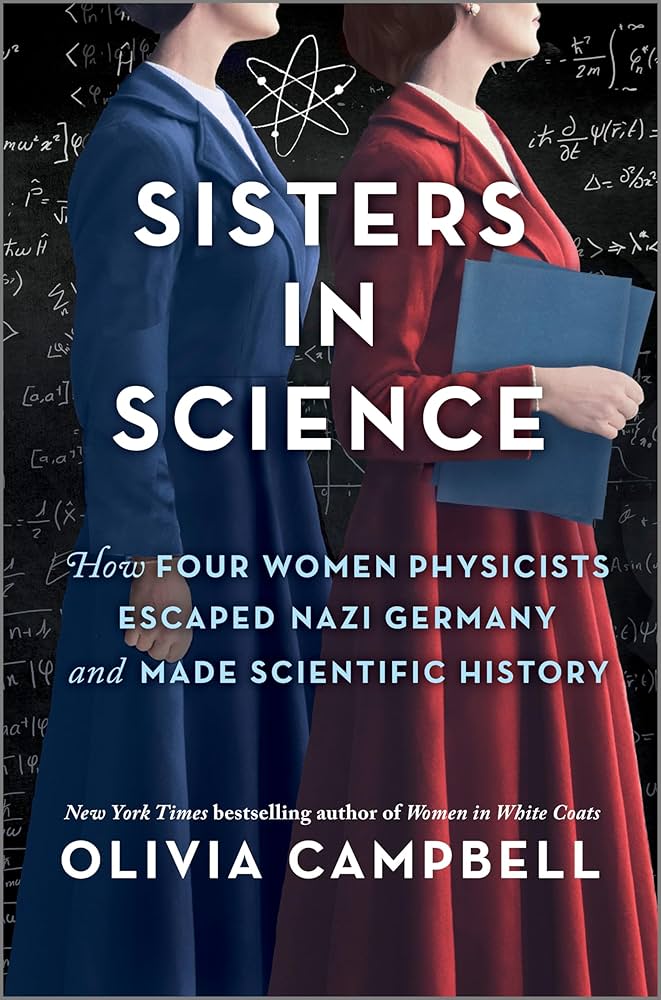
In the 1930s, Germany was a hotbed of scientific thought. But after the Nazis took power, physicists like Hedwig Kohn, Lise Meitner, Hertha Sponer, and Hildegard Stücklen had no choice but to flee due to their Jewish ancestry or anti-Nazi sentiments. Their harrowing journey out of Germany became a life-and-death situation that required herculean efforts of friends and other prominent scientists.
February is a month of opposites. Love (Valentine’s Day) and hatred (New England winters) and apathy (NFL championships). There’s also the forgetting of the very recent past (last month’s resolutions) and the remembrance of our longer past: presidential birthdays and Black History Month. For the latter, we celebrate the contributions of members of the African diaspora to the culture and history of the United States. There’s been a recent flurry of books related to African American history, and I’m excited to share them with you this month.
But first, I’m gonna tell you about something that is 1) not a book 2) not about America. It is the excellent BBC documentary series, A History of Africa, which you can view for free on YouTube. The African continent has a diverse and fascinating history that deserves way more attention than it gets. This documentary is a great starting point to enrich your knowledge of Africa’s diasporic daughters and sons.
If you prefer to start your journey in print, though, first on our list is the book equivalent of the aforementioned documentary.
Badawi (the host of A History of Africa) is a Sudanese-British journalist who worked for Channel 4 and the BBC before her current gig as President of the prestigious SOAS University of London. Her sweeping historical survey traces Africa’s rich legacy from prehistory to the present, exploring ancient civilizations, medieval empires and colonialism’s impact, while highlighting African voices and perspectives to offer a long-overdue account of the continent’s global significance.
A groundbreaking account of Sherman’s March to the Sea—the critical Civil War campaign that destroyed the Confederacy—told for the first time from the perspective of the tens of thousands of enslaved people who fled to the Union lines and transformed Sherman’s march into the biggest liberation event in American history.
You never forget your first shark. For Jasmin Graham, it was a little bonnethead, a type of hammerhead shark. Jasmin fell in love with sharks and with science, but the traditional academic path wasn’t for her. So, she joined with three other Black women to form Minorities in Shark Sciences (MISS), an organization dedicated to providing support and opportunities for young women of color who were pursuing the fascinating and environmentally essential work of marine studies. Jasmin became an independent researcher: a rogue shark scientist, learning how to keep those endangered but precious sharks swimming free – just like her.
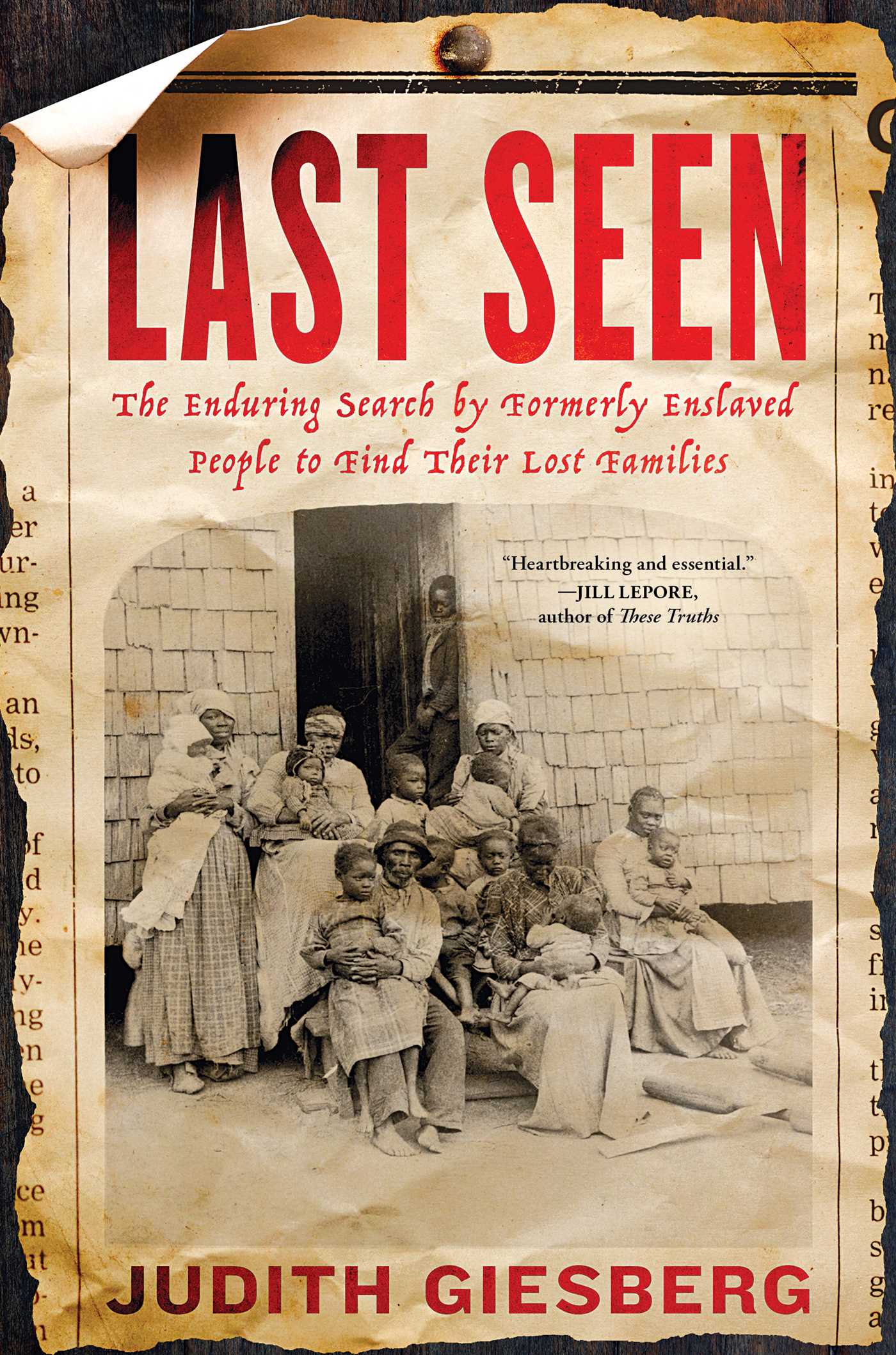
Drawing from an archive of nearly five thousand letters and advertisements, this is the riveting, dramatic story of formerly enslaved people who spent years searching for family members stolen away during slavery.
Born into poverty in rural Alabama, John Lewis rose to prominence in the civil rights movement, becoming second only to Martin Luther King, Jr. in his contributions. Greenberg’s biography, a New York Times Book Review Top 100 Book of 2024, follows Lewis’s journey beyond the civil rights era, highlighting his leadership in the Voter Education Project and his ascent in politics.
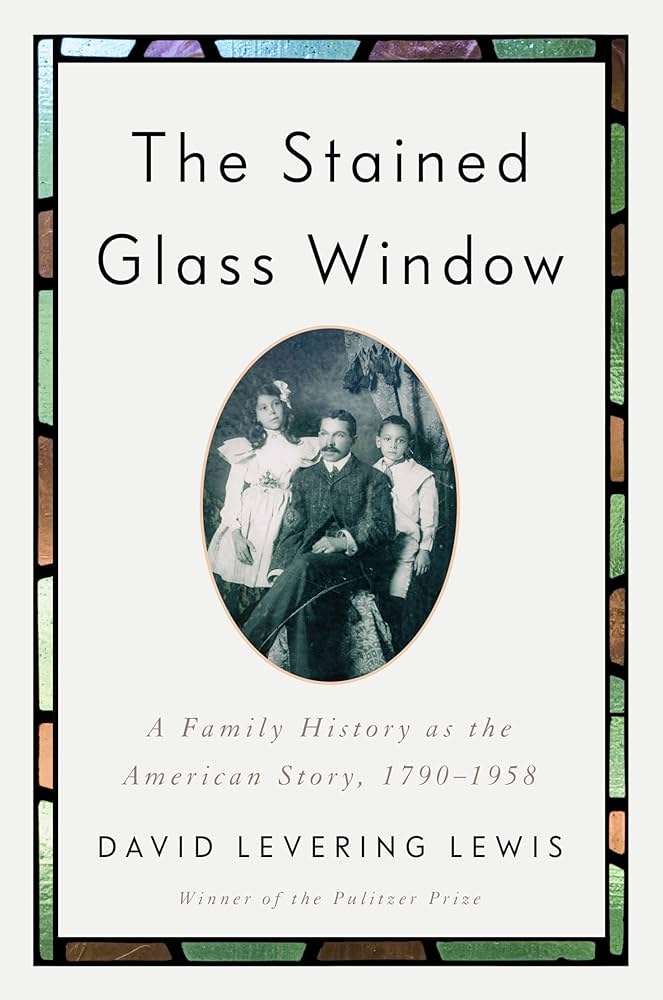
Sitting beneath a stained-glass window dedicated to his grandmother in the Atlanta church where his family had prayed for generations, it struck Lewis that he knew very little about those ancestors. And so, in his mid-80s, the esteemed historian began to excavate their past and his own, from white slaveholding families to a mulatto slaveholding family to an up-from-slavery black family. Lewis previously won two Pulitzer Prizes, one for each volume of his biography of W.E.B. DuBois.
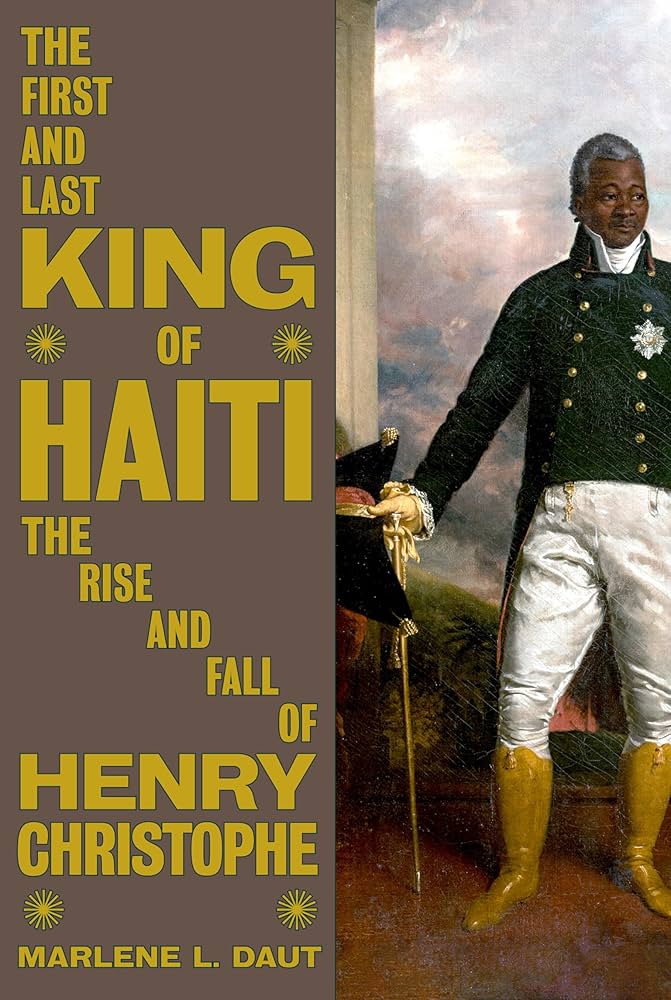
Haiti has the amazing distinction of being home to history’s most successful slave revolt, which led to its independence from France in 1804 and its establishment as a sovereign republic. Its significance looms large in the consciousness of African American thinkers and writers, with figures like Langston Hughes spending time on its soil. This book is the essential biography of the controversial rebel, traitor, and only king of Haiti, Henry Christophe (1767-1820).
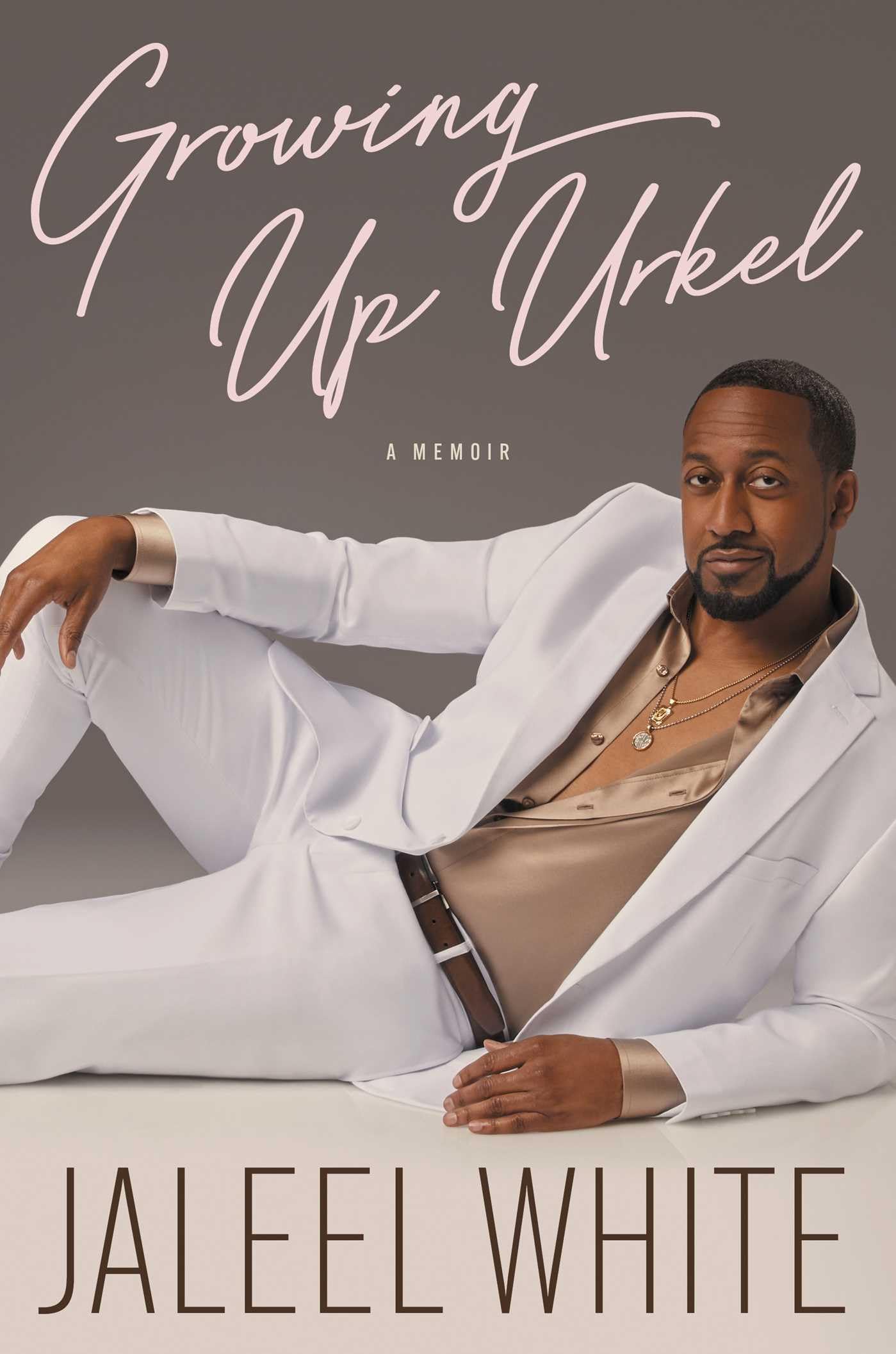
An incisive and insightful memoir by Jaleel White, the actor who portrayed Steve Urkel on the hit sitcom Family Matters. You may wonder what place this has among serious history books, but Family Matters remains one of the longest-running live action sitcoms starring a mostly African American cast. Join Jaleel as he invites you to relive the unforgettable ride of nineties nostalgia, while uncovering the personal growth behind the iconic suspenders and the lasting impact of his journey as one of America’s favorite sitcom stars.
















 The Cheshire Library Blog