Susan’s Picks from 2014

I feel terrible for only squeezing in 27 books this year, a new low for me, but considering I wrote or edited three books in between, I don’t feel so bad. I am an unforgivable nerd, wallowing in science, history, psychology, and biography to the point I read almost no fiction at all anymore. I feel bad when people ask me to recommend something and I have no clue what to offer because the last really good book I read was on the histology of Ebola, or they’re looking for romance recommendations and my idea of a great romance is the novelization of Raiders of the Lost Ark. Here are the best and worst I read this year, not counting a reread of Chris Wooding’s Retribution Falls, which I love so much I gave out ten copies at Christmas:

#
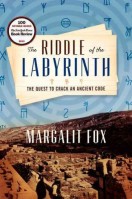
Jacket.aspxThe Riddle of the Labyrinth: the Quest to Crack an Ancient Code, by Margalit Fox. Fox covers the work by Michael Ventris, who eventually untangled the mystery of the early Greek/Mycenean Linear B glyphs, but spends much of the book discussing Alice Kober’s work, so much of it uncredited yet without which Ventris would not have succeeded. When Kober – who spent the majority of her life working on the syllabary – dies just a year before the pieces fall into place, you want to cry for her. If you love a good detective novel – this is a true story that shook the history world. (I warned you about the nerdism).

#detroit
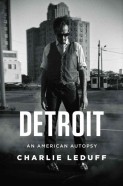
Detroit: An American Autopsy, by Charlie LeDuff. An incredible book about the decay of Detroit, a city so far gone America has forgotten it exists, while the people still try to survive in a place without – well, anything. No jobs, no police, no grocery stores, and most recently, no water. Made me incredibly angry to see America left to rot like this.

#

#
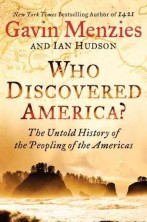
WJacket.aspxho Discovered America? by Gavin Menzies. Ever read a book that makes you feel like you woke up on an alien world, that everything you were ever told about history was wrong? This book takes Thor Heyerdahl to a whole new level, pointing out overwhelming scientific evidence that Asian, African, and European peoples were routinely coming to America long before Columbus was born. Utterly fascinating. Even if Menzies is only 10% right, it still changes everything we know about history. Easy to read, and you won’t be able to put it down.
#

#nkorea
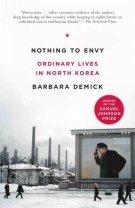
Nothing to Envy: Ordinary Lives in Northern Korea, by Barbara Demick. This book is so touching and so sad, you cannot help but be moved by people who have so little control over their lives that even their food and clothing is doled out by the government, and if they say you will starve, then you starve, because they will not give you more. People risking death to swim to China, or pay for an underground railroad to South Korea, where they have extreme culture shock that defies the propaganda they have been fed for generations. Hate the leader, but love the people. I love Gavin Menzies, but I think this gets my vote for Best Book of the Year.

#
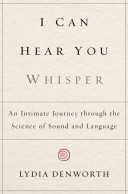
deafI Can Hear You Whisper: An Intimate Journey Through the Science of Sound and Language, by Lydia Denworth. Denworth’s youngest son is born profoundly deaf; this is her story not only of trying to decide how to educate him (as a lip-reader, a signer, or hearing w/ a cochlear implant). Interspersed with her journey is the science behind hearing and language, and the history of deafness, and it is utterly fascinating how much hearing and learning are interconnected, and why many deaf people never read beyond a fourth-grade level.

#tink
#
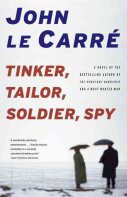
Tinker, Tailor, Soldier, Spy, by John LeCarré. I needed to read a couple of spy novels as research for a book I was writing. Every list I looked at said this was the best. I have no doubt they are right. A spy novel that will keep you guessing until the very end, it makes James Bond look like a pampered fool. Very British, but very, very good.

#

#
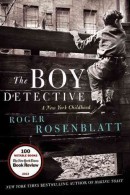
boyWorst book I read this year? There were a couple of stinkers, but I think the worst I read was The Boy Detective: A New York Childhood, by Roger Rosenblatt. I don’t care how many awards he’s gotten. I almost never abandon a book half-way through, but I just couldn’t finish this. It has a boy, and he’s in New York, but the rest is just a single run-on sentence of chapterless rambling. You know how your brain wanders foggy from topic to topic when you’re lying in bed half asleep? That’s this book. I read some clunkers, but I made it to the end of them. This one I couldn’t get past 50 pages. No, thank you.


What did you like/dislike this year?
Celebrate Martin Luther King, Jr. Day with Knowledge and Service

January 19, 2015 is Martin Luther King, Jr. Day. In 1994 Congress designated MLK day as a day of service. The MLK Day of Service is the only federal holiday observed as a national day of service. It calls for Americans to work together in order to provide solutions to our most pressing national problems. To learn more about the day check out the official website here.

The titles below include children’s books about Dr. King, fiction and nonfiction books about ordinary people who stand up for what’s right, and stories about helping others and giving back. Then there is a list of books about volunteering, to help choose what avenues we each might want to take in volunteering or service. No matter the day, helping out in the community is rewarding for the volunteer and those it helps. So even if you cannot participate on the designated day, maybe a book can help in finding something you can be passionate about or enjoy while serving the community.

People Who Made a Difference:

1. Child of the Civil Rights Movement by  Paula Young Shelton. A daughter of civil rights activist Andrew Young describes her experiences of growing up in the Deep South at the height of the movement, sharing her witness to the efforts of her father, family friend Martin Luther King, Jr. and thousands of others who participated in the historic march from Selma to Montgomery.


2. March On!: The Day My Brother Martin Changed the World by Christine King Farris.Having led thousands in a march for civil rights to the foot of the Lincoln Memorial on August 28, 1963, Martin Luther King, Jr. made the most of the historical moment by giving a speech that would forever inspire people to continue to fight for change in the years ahead.

3. Through My Eyes by Ruby Bridges. Provides the first-hand factual account of the six-year-old student who made history by having been one of the first black children to attend an all-white, segregated school in the 1960s.

4.Sit-in: How Four Friends Stood Up by Sitting Down by Andrea Davis Pinkney. A picture book celebration of the
50th anniversary of the momentous Woolworth’s lunch counter sit-in, when four college students staged a peaceful protest that became a defining moment in the struggle for racial equality and the growing Civil Rights Movement.

More books on civil rights and how individuals affect change include:The Story of Ruby Bridges by Robert Coles,  I Am Rosa Parks by Rosa Parks, Heroes for Civil Rightsby David A. Adler, Ida B. Wells: Mother of the Civil Rights Movement by Dennis Brindell Fradin and Judith Bloom Fradin, Freedom Riders: John Lewis and Jim Zwerg on the Front Lines of the Civil Rights Movementby Ann Bausum, My Country, ’tis of Thee: How One Song Reveals the History of Civil Rights by Claire Rudolf Murphy, Miles to Go for Freedom: Segregation and Civil Rights in the Jim Crow Yearsby Linda Barrett, The Girl From the Tar Paper School: Barbara Rose Johns and the Advent of the Civil Rights Movement by Teri Kanefield, and Free at Last?: The Civil Rights Movement and the People Who Made Itby Fred Powledge. 

Inspiration to Serve:

1. 50 Ways to Save our Children: Small, Medium & Big Ways You Can Change a Child’s Lifeby Cheryl Saban.Describes how to make a difference in a child’s life, including collecting toys for homeless shelters, donating books to schools and libraries, volunteer work, charitable donations, and starting a scholarship fund.

2. Teens With The Courage to Give: Young People who Triumphed over Tragedy and Volunteered to Make a Difference by Jackie Waldman. Thirty young people tell their stories of overcoming hardship to become volunteers in this inspiring look at a national trend among teenagers.

3. Our Day to End Poverty: 24 Ways You Can Make a Difference by Shannon Daley-Harris and Jeffrey Keenan, with Karen Speerstra.Imagine ending poverty at home and around the globe in our own lifetimes. Imagine your actions combining with others; actions to make poverty history. With originality and imagination, this book invites us to look at our very ordinary days, from waking up in the morning to going to bed in the evening, and to begin to think about poverty in new and creative ways. “Our Day to End Poverty” is organized into 24 “hour/chapter” segments.  Each chapter connects with your day, from breakfast to bedtime, relating these steps to ending poverty to our daily routines. Some times a problem gets to be so big, we feel there is nothing we can do about it. “Our Day to End Poverty” reminds us that if we all do just a little, a lot can get done.

  4. Giving: How Each of us Can Change the World by Bill Clinton. Compiling anecdotes about the diverse charitable efforts of the famous and non-so-famous, the former president looks at the positive influence of such work in every corner of the world and examines the profound benefits of working for the good of others for all humankind.
Looking for more inspiration? Try checking out The Promise of a Pencil: How an Ordinary Person Can Create Extraordinary Change by Adam Braun, Give a Little: How Your Small Donations Can Transform Our World by Wendy Smith, Immersion Travel USA: The Best and Most Meaningful Volunteering, Living, and Learning Excursions by Sheryl Kayne, Green Volunteers: The World Guide to Voluntary Work in Nature Conservation edited by Fabio Asuneda, Volunteering: The Ultimate Teen Guide by Kathlyn Gay, In a Heartbeat: Sharing the Power of Cheerful Giving by Leigh Anne and Sean Tuohy with Sally Jenkins, The Busy Family’s Guide to Volunteering: Do Good, Have Fun, Make a Difference as a Family! by Jenny Friedman, Volunteer Vacations: Short-term Adventures that will Benefit You and Others by Bill McMillon, Doug Cutchins, and Anne Geissinger, or Volunteering: A How-to Guide by Audrey Borus.

Three Holidays to Celebrate, Three Shows to Binge Watch

There are sparkly decorations everywhere, peppermint mochas are appearing at the coffee shop, and your mailbox is crammed with ads for door-buster sales. Yep, it’s the season for the gift-giving celebrations of Christmas and Hanukkah! But you don’t have to belong to any religion to have some fun this season. Here are a few cultural holidays that anyone can enjoy, along with television series to watch for hours on end while you’re off from work and school.

December 23

Festivus

Way back in December of 1997, millions of Seinfeld fans tuned in to watch the episode “The Strike” and were introduced to Festivus, a made-up holiday celebrated by Frank Costanza as a rebellion against the commercialism of Christmas. Fast forward to the present, and lots of people have taken to celebrating Festivus in their homes, dorms, and workplaces. The common rituals of Festivus are as follows:

1) Displaying the Festivus Pole – an unadorned aluminum pole. (You can actually buy these online!)
2) A celebratory Dinner – make anything you like, as long as it’s celebratory.
3) Airing of Grievances – this takes place immediately after dinner is served. Participants take turns complaining about how everyone has disappointed them in the past year.
4) Feats of Strength – after dinner, the head of the household selects a person to challenge to a wrestling match. Festivus officially ends when the head of the household is pinned.

Fun fact: Festivus actually goes back to 1966 when Seinfeld writer Dan O’Keefe’s father first instituted the tradition to celebrate an anniversary, and the family continued to celebrate it whenever Papa O’Keefe felt like it. Instead of an aluminum pole they had a clock in a bag, and they shared a Pepperidge Farm cake decorated with M&Ms

Binge Watch: Seinfeld. What else?

December 26

Boxing Day

Maybe you’ve seen Boxing Day on your wall calendar and had no idea what it was. Let’s Return Unwanted Gifts Day? A fisticuffs tournament over the last piece of pie? Nope! It’s a holiday in Great Britain and almost every place the British settled, except for the U.S. Nobody is sure where the name originated, though some believe it comes from the alms boxes set up in churches during the Advent season (which were then broken open and distributed on the 26th), or from the gift boxes presented to servants who had to work on Christmas but had the following day off.

Whatever purpose it once had, Boxing Day is now a relaxing day off to visit relatives, sit around and eat leftovers, and watch soccer. Among the wealthy, fox hunting used to be a popular Boxing Day activity before the practice was banned in 2004. Those with disposable income now hunt for bargains instead – it has become a huge shopping day, comparable to our Black Friday.

Binge Watch: If you’re not going to tune in to one of 10 Premier League games, pick up a Blu-Ray of The Paradise, a BBC series following a shop girl in Britain’s first department store.

December 26-January 1

Kwanzaa

Born out of the Black nationalist movement, Kwanzaa is a relatively young holiday, created in 1966 by Black Studies professor and activist Maulana Karenga as a way for African American to celebrate their heritage and connect to their community. It fuses elements from numerous African cultures – the term Kwanzaa derives from the Swahili phrase “matunda ya Kwanza” or “first fruits of the harvest,” and draws from the harvest celebrations of the Ashanti, Yoruba, Ibo, and other West African tribes (from which most African Americans have descended). There’s feasting and singing, of course, but the most important part of Kwanzaa is celebration of the seven principles – things like creativity and self-determination – that are represented by lighting one candle each night of the holiday.

Kwanzaa reached its height in the 1980s and 1990s, and about 2% of the U.S. population celebrates the holiday today. However, Americans of any heritage can set out a kinara on the mantle and celebrate our country’s diverse history.

Binge Watch: Roots, Alex Haley’s award-winning exploration of his family’s background.


Which holidays are you celebrating this year?

Historic Women in Math and Science

Is there a young woman in your life that is excited by science or math, or perhaps obsessed with a particular field? Well my six year old daughter is currently planning on being a scientist that studies and cares for wild animals. Meanwhile my eight year old son is loving a special science class that lets him try a number of science experiments each week. To encourage both in all their interests I offer books, movies, and stories about people in those fields. Like many parents I find it frustrating that I have to search a little harder to find women pursuing the Sciences.

Here are a selection of children’s books about female pioneers and contributors to the fields of math and science. Hopefully they will help keep interested girls and young women interested in the fields, and perhaps get a few new interested parties.

A fascinating collection celebrates the clever and creative inventions of women from candles, helmets, and baby carriers to cancer-fighting drugs and details their fierce determination to overcome many hurdles to make their dreams come true.

Women Astronomers: Reaching for the Stars by Mabel Armstrong
Presents information about the achievements of women in the field of astronomy throughout history, from women astronomers in the ancient and medieval world to prominent women in the profession today.
 

A picture book biography tells the story of Sylvia Earle’s growing passion for the wonders of the sea and how her ocean exploration and advocacy have made her known around the world.
An authorized portrait about Grandin’s life with autism and her groundbreaking work as a scientist and designer of cruelty-free livestock facilities describes how she overcame key disabilities through education and the support of her mother.
Profiles the extraordinary lives of twenty-six women who, through their acts and deeds, helped shape and change the world during their lifetime, including pilot Amelia Earhart and anthropologist Zora Neal Hurston.
More great resources about women in math, science, and technology include: Super Women in Science by Kelly Di Domenico, Dian Fossey: Primatologist by Lois P. Nicholson, The Triumph of Discovery: Women Scientists Who Won the Nobel Prize by Joan Dash, Jane Goodall by Lisa Kozleski, Marvelous Mattie: How Margaret E. Knight Became an Inventor by Emily Arnold McCully, The Elephant Scientist by CaitlinO’Connell and Donna M. Jackson, Sally Ride: Life on a Mission by Sue Macy, Mae Jemison: the First African American Woman in Space by Magdalena Alagna, Marie Curie by Kathleen Krull, Look Up!: Henrietta Leavitt, Pioneering Woman Astronomer by Robert Burleigh, Margaret Mead: Coming of Age in America by Joan Mark, Women Mathematicians by Padma Venkatraman, Women in Space: 23 Stories of First Flights, Scientific Missions, and Gravity-breaking Adventures by Karen Bush Gibson, Rachel Carson: Extraordinary Environmentalist by Jill C. Wheeler, and Women and Numbers: Lives of Women Mathematicians Plus Discovery Activities by Teri Perl.

You Can Turn Endless Political Talk into Election Education

With the political ads practically inescapable lately and midterm elections happening today, it is a perfect time to talk about voting with our children. Introducing the history, responsibilities, reasoning and ideals behind voting, and maybe a few laughs along the way, can turn the political ad season into a more enjoyable prospect for readers of all ages. I have broken the subject into two short lists, non fiction books and fiction.

Juvenile Nonfiction:

1.How Do We Elect Our Leaders by Willian David Thomas

2.Voting by Sarah De Capua

3.Today on Election Day by Catherine Stier

5. If I Ran for President by Catherine Stier

More nonfiction books that are solid resources in understanding the political process and the history behind it include: Eyewitness Vote by Phillip Steele, Getting Elected: a Look at Running for Office by Robin Nelson and Sandy Donovan, Heart on Fire: Susan B. Anthony Votes for President by Ann Malaspina, Rightfully Ours: How Women Won the Vote, 21 Activities by Kerrie Logan Hollihan, So You Want to be president? by Judith St. George, The Taxing Case of the Cows; A True Story About Suffrage by Iris van Rynbach and Pegi Deitz Shea, Running for Public Office by Sarah De Capua, Vote! by Eileen Christelow, You Want Women to Vote, Lizzie Stanton? by Jean Fritz, A Kid’s Guide to the Voting Process by Tammy Gagne, and America Votes: How our President is Elected by Linda Granfield.

Juvenile Fiction:

1. Grace for President by Kelly DiPucchio

5. Amelia Bedelia’s First Vote by Herman Parish

More stories about elections and the political process include: Election Day by Margaret McNamara,
President of the Whole Fifth Grade by Sherri Winston, Vote for Larry by Janet Tashjian (YA), Bad Kitty for President by Nick Bruel,Vote 4 Amelia by Marissa Moss, Pioneer Summer by Deborah Hopkinson, The Case of the Crooked Campaign by Lewis B. Montgomery, Otto Runs for President by Rosemary Wells, The Red, White, and Blue Crew by Lisa Mullarkey, The Hope Chest by Karen Schwabach, Babymouse for President by Jennifer L. Holm & Matthew Holm, Duck for President by Doreen Cronin,and Vote for Me! by Ben Clanton.