Six Picks : Historical Fiction for Teens

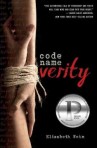
Code Name Verity by Elizabeth Wein

Code Name Verity by Elizabeth Wein

There have been some real stand-outs in Historical Fiction this year, here are six of our favorites:

Code Name Verity. In 1943, a British fighter plane crashes in Nazi-occupied France and the survivor tells a tale of friendship, war, espionage, and great courage as she relates what she must to survive while keeping secret all that she can. This Michael L. Printz Award Honor book was called “a fiendishly-plotted mind game of a novel” in The New York Times.
The Diviners by Libba Bray

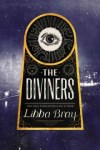
The Diviners by Libba Bray

The Diviners. In Book 1 of this new series by Libba Bray, seventeen-year-old Evie O’Neill is thrilled when she is exiled from small-town Ohio to New York City in 1926, even when a rash of occult-based murders thrusts Evie and her uncle, curator of The Museum of American Folklore, Superstition, and the Occult, into the thick of the investigation.
Dodger by Terry Pratchett

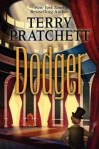
Dodger by Terry Pratchett

Dodger. In an alternative version of Victorian London, a seventeen-year-old Dodger, a cunning and cheeky street urchin, unexpectedly rises in life when he saves a mysterious girl, meets Charles Dickens, and unintentionally puts a stop to the murders of Sweeney Todd. Kirkus Reviews called it, “Masterful. Unexpected, drily funny and full of the pathos and wonder of life: Don’t miss it.”
Keeping the Castle by Patrice Kindl

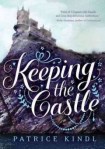
Keeping the Castle by Patrice Kindl

Keeping the Castle. A tale of romance, riches, and real estate. In order to support her family and maintain their ancient castle in Lesser Hoo, 17-year-old Althea bears the burden of finding a wealthy suitor who can remedy their financial problems. When the young and attractive (and very rich) Lord Boring arrives, and Althea sets her plans in motion. The problem; his friend and business manager Mr. Fredericks keeps getting in the way.

Scarlet by A. C. Gaughen

Scarlet by A. C. Gaughen

Scarlet. Will Scarlet shadows Robin Hood, with an unerring eye for finding treasures to steal and throwing daggers with deadly accuracy, but when Gisbourne, a ruthless bounty hunter, is hired by the sheriff to capture Robin and his band of thieves, Robin must become Will’s protector risking his own life in the process. The twist to this story is that “Will” is actually “Scarlet”, a girl disguising herself as a boy – a girl with many secrets…

Sophia's War by Avi

Sophia’s War by Avi

Sophia’s War. In this Revolutionary War tale, the year is 1776. After witnessing the execution of Nathan Hale in New York City, newly occupied by the British army, young Sophia Calderwood resolves to do all she can to help the American cause, including becoming a spy.

Remembering Barbara Mertz

Image of Elizabeth Peters

Barbara Mertz

Barbara Mertz might not be a name that you immediately recognize, but you just might recognize her pen names. She was the best-selling mystery writer who wrote dozens of novels under the pen names of Elizabeth Peters and Barbara Michaels. Sadly, she passed away in her home on the morning of August 8, 2013.  Mertz is survived by her children, Elizabeth and Peter, and six grandchildren.

Barbara Mertz earned a PhD from the University of Chicago in Egyptology at the age of 23. She first became a published writer in 1964 and authored two books on ancient Egypt, (Temples, Tombs, and Hieroglyphs (1964 with a revised edition in 2007) and Red Land, Black Land (1978 with a revised edition in 2008) Both books have been continuously in print since their first publication.

Mertz used the pseudonym Elizabeth Peters to pen more than 3 dozen mysteries. Several are stand-alone novels, including Summer of the Dragon (1979), and The Copenhagen Connection (1982), but she is perhaps best know for her series mysteries.

One series dear to my heart is about Jacqueline Kirby; who just happens to be a librarian with a very large purse and a knack for solving mysteries. Jacqueline makes her first appearance as an unwilling detective in The Seventh Sinner (1972).

Another Elizabeth Peters series is the Vicky Bliss Mysteries,  which follows the adventures of an American art history professor who keeps getting involved in international crime and her love interest, a charming art thief known as Sir John Smythe.  The first book in this series is Borrower of the Night (1973).

As Elizabeth Peters, Mertz may be best known for the 19 book Amelia Peabody series, the last of which was published in April of 2010. The heroine is an Egyptologist and the stories all relate to the “Golden Age” of Egyptology, spanning the 1880s to 1922. The first book in the series is Crocodile on the Sandbank, first published in 1976. There is also a companion book, Amelia Peabody’s Egypt: A Compendium, published in 2003.

As Barbara Michaels, Mertz wrote primarily Gothic and supernatural thrillers, including twenty four stand-alone novels including  Be Buried in the Rain (1985), Search the Shadows (1987), Smoke and Mirrors (1989), Into the Darkness (1990), Vanish with the Rose (1992), Houses of Stone (1993), The Dancing Floor (1997), and Other Worlds (1999).

You can find more information about Barbara Mertz and her books on her website http://www.mpmbooks.com/, which sadly does not seem to have been updated since last fall, but still has the most comprehensive information about her body of work.

Sharon Reads: Grave Mercy by Robin LaFevers

Grave Mercy

Grave Mercy by Robin LaFevers is the first book in a new young adult series, His Fair Assassin. The main character is seventeen-year-old Ismea, who has been feared and shamed her entire life because of scars she bears from her mothers attempt to abort her. She escapes an arranged marriage and dedicates her life to the god, or saint, Mortain who rules death. The convent that takes her in and trains her requires complete obedience, but her skills and safety of the convent help Ismae grow and thrive. During her third assignment, she discovers that the outside world is much more complicated than she had ever imagined. She finds herself under prepared as she tries to protect the duchess, and the country, amid traitors and plots that seem to become even more tangled as she loses her heart to her partner, and potential target for death.

Let’s start with the obviously fantastic reason everyone is interested by this book, assassin nuns. It could not be anything other than awesome. Ismea is saved from being further beaten, and most likely killed, by the man her father sold her to as a wife by a local priests and hedge witch that follow the old ways. She is taught to kill, to serve a dark god or saint and to protect her country. She learns to obey, and in turn to question the orders and plots that are driving her hands in death. Ismea becomes a strong, smart woman. Her partnership with Duval is far from insta-love, and develops slowly and will the appropriate amount of doubt and mistrust. However, I will say that I was occasionally annoyed with her jumping and being startled every time he touched her or looked at her a certain way. The court intrigue was well done, and held some surprises for me. I fully expected some of the players to be exactly who they turned out to be, but I was glad to find a couple unexpected twists and turns.

I recommend Grave Mercy to fans of historical fiction, court intrigue, and heroines that take charge of their destiny. There are some mystical elements and significant romance, but neither overwhelms the historical mystery that carries throughout the story. Some might be worried about the mystic elements or take on religion. I think most interested in the book, especially by the thought of assassin nuns, will be just fine. Those that are offended by the very idea of old gods and the way pagan religions were transformed to be part of Christianity through force, and the idea that the pagan community could have had (or still have) some things right, might want to skip it.  It is a four star book in my opinion.

Dark Triumph

The sequel, Dark Triumph follows fellow assassin nun Sybella on her own heart wrenching journey.

This review was originally published on Sharon the Librarian.

Diana Gabaldon’s Outlander to be a Cable Series on Starz

Fans of the Outlander series by Diana Gabaldon have longed for the books to be adapted for the screen since the first novel was published in 1991. The 7 books (with an 8th due later this year) defy genre categorization, containing elements of romance, fantasy/time travel, and historical fiction. Thy are epic in scale, rivaling  George R. R. Martin’s “Song of Ice and Fire” series for sheer page-count.

Ron Moore, creator of ‘Battlestar Galactica’, is on board to helm the new “Outlander” series for the Starz cable network. Set to unfold over 16 episodes, Outlander tells the story of married World War II combat nurse Claire, who accidentally steps back in time to the year 1743 where she is “immediately thrown into an unknown world of adventure that sends her on the run and threatens her life.” The ‘Outlander’ series of books have sold over 20 million copies.

As a huge fan of these books, I was both thrilled and wary when Ms. Gabaldon announced at BEA 2013 that Outlander would finally  be adapted for the screen. So often, books we love don’t measure up when made into movies or television series. Still, I’ll be watching!

Jenn Reads: Z: A Novel of Zelda Fitzgerald

Z: A Novel of Zelda Fitzgerald by Therese Anne Fowler was a book club pick for the girlfriends book club I run outside

Z: A Novel of Zelda Fitzgerald

of the library.

I’m probably going to get a LOT of comments on this, but am I the only one who thinks The Great Gatsby is *ok*? Perhaps my unfavorable opinion of this classic was marred by the fact that I listened to it, and it was perhaps the first classic I listened to. The only thing I got out of Gatsby – there was a cool car chase at the end.

My opinion of F. Scott Fitzgerald was never favorable either, and this book certainly did nothing to bump his position. We meet Z, Zelda Sayre, when she is 18 and ready for some excitement in her life. The year is 1918, the war is just about to end, and Zelda is graduating from high school. Zelda is unsure how her life is going to progress; she doesn’t want to follow a traditional Southern woman’s path in getting married right away, having kids, and staying home. Her life changes at her dance recital, when out in the audience she sees a striking young army soldier. After the recital he introduces himself as F. Scott Fitzgerald, and Zelda’s life is forever changed.

After some starts and stumbles, Scott and Zelda are married in NYC at St. Patrick’s Cathedral and they begin their tumultuous life together. Those early years should have been an indication to Zelda how the rest of her life would go.

The Fitzgeralds were a true celebrity couple. They were followed by journalists, photographers, their every move documented. They went to some pretty crazy parties, knew some really famous people (Pablo Picasso, Gertrude Stein, Ernest Hemingway, just to name a few), and never had any money. They moved constantly across the globe, leading a gypsy lifestyle so common for people like the Fitzgeralds.

I would gander that Zelda’s mental illness, now diagnosed as bipolar, was most definitely caused in part by her domineering, abusive, smothering, adultering and alcoholic husband. F. Scott would never win any prizes for “Husband of the Year” or “Father of the Year”. He never supported Zelda the way he should have, jealous that her success may surpass his own. Never fully given the opportunity to shine in her own right, Zelda suffered internally and was institutionalized in her 30’s.

I read most of this book while on jury duty. It was a quick read, with great descriptions, dialogue, and characters. I really hated F. Scott. And I really felt bad for Zelda. Imagine what her life would have been like without F. Scott.

Rating: 3.5 out of 5 stars.