
On April 28, we partnered with our local health organization, Chesprocott, to host an educational conversation about the Covid-19 vaccine. Dr. Henry Anyimadu and Dr. Sarah Banks from Hartford Healthcare volunteered their time to give us the latest information and answer any questions we had. We furiously took notes for those who weren’t able to make it to the program. Here’s what we learned:

What’s the current positivity rate for Connecticut?
As of late April, our positivity rate was 8.8-9% positivity rate, but it’s difficult to get a good number on community activity. The state calculates positivity by looking at PCR tests done in labs, but it doesn’t count home tests. The rate could be much higher.
How many people in Connecticut are vaccinated?
2.7 million people are vaxxed, which translates to 75% of the population.

What are the benefits of the covid vaccine?
The risk of death from covid is three to four times higher in unvaccinated people, and the risk of hospitalization is four times higher. The vaccine doesn’t protect you 100% from severe illness, hospitalization, or death, but it dramatically reduces your risk.
What about the fourth dose?
Currently a fourth dose is recommended for immunocompromised people and those at high risk.

What treatments are available for covid?
Antivirals such as Paxlovid and monoclonal antibodies are effective at fighting covid. They must be prescribed early in the illness, within five days of the onset of symptoms. Typically, they are given to folks 65 years old and older and to people with other risks. Your primary care practitioner can figure out if you are eligible for antiviral treatment. It’s very important that antivirals are prescribed early, as they are lot as effective in later stages of the illness.

Why are cases spiking?
There are a number of reasons. Mask mandates have gone away and people are just plain tired of wearing them. People are going out and traveling more often. We don’t have herd immunity yet. And most people were vaccinated six months ago and their antibodies are starting to wane. The numbers of cases are expected to continue rising until the middle or end of May. The good news, though, is that our high level of vaccination does mean that most of us have some level of immunity against covid.

What’s going on with the vaccine for kids younger than five years old?
Pfizer retracted their application for emergency use when their data showed it wasn’t as effective against omicron. Now that they have better omicron data, they are closer to submitting an application. Moderna just submitted an application on Thursday, April 28 for use in children under five. We are still waiting for a lot of data, but young children should have an approved vaccine soon. In the meantime, Remdesivir was just approved for treatment of severe illness in younger children. It’s also true that children generally do better than adults with viral illnesses, so they are not getting as sick as adults when it comes to covid. We don’t know yet if the covid vaccine will join the group of required childhood vaccine.
What’s in the future for the vaccine?
Companies are trying to come up with variant-specific vaccines. It’s easy to manipulate mRNA vaccines like those offered by Pfizer and Moderna, so we are expecting to see mRNA vaccines become responsive to evolving variants.
If you’re looking for more information on covid-19 or other health topics, we recommend the federal Centers for Disease Control and Prevention, the Connecticut Department of Public Health, or the local Chesprocott Health District. Why, you ask, are library professionals recommending websites instead of books? Well, even when we don’t have global supply chain issues slowing down every aspect of our lives, websites can be updated way faster than books – especially with the covid pandemic, when information changes daily. Websites are our first choice when it comes to timely health topics!

 Though the practices of mindfulness and meditation have been around for centuries, the science behind it has only recently become more understood. Health practitioners, and even the business world, have begun taking the concept of mindfulness quite seriously as more and more evidence comes to light on how the practice can actually change the “wiring” of our brains.

 For kids too young for Snapchat,






 Go outside for a walk! This is one of the best times of year to hang out around the canal trail, when birds who migrated south are coming back and starting to make nests for the spring. You can see turtles, beavers, and snakes at Lock 12, and in the last couple weeks I saw diving kingfishers, big herons, and colorful wood ducks in the new section of trail north of West Main Street.





 I am a deep introvert. I’m perfectly fine talking only to the cat or TV. Hence, when my son was born, I figured if I didn’t start talking to him, he’d never learn to talk (my first mistake), and thus began thirty years of talking to myself and narrating what I’m doing.
 Based on these studies, along comes

 It’s almost impossible to get through the winter without hearing about the flu. While we often use the word flu to describe any miserable feverish head cold, a cold (rhinovirus) is NOT the same as the flu (influenza). A head cold is 10 days of misery. Flu will disable you for weeks, if not outright kill you.
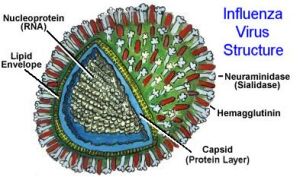 H2N3’s, H6N4’s. Now, not all of these can be caught by people (some are limited to animals), but viruses can mutate and change very rapidly. With all those combinations, the Centers for Disease Control have to make a best guess at what flu will prevail that winter, and make enough vaccine a year in advance. If your shot is for N1H1, and you catch H2N3 – you’ve got flu. Better flu shots (called trivalent or quadravalent) will give you immunity to the top three or four likely flus, quadrupling your chances of staying healthy. Even if you do manage to get a flu, your partial immunity will give you a much milder case.
 people, chickens, and pigs are often living in close or crowded conditions, and many Asian cities are very densely populated. Pigs are very similar to people in their genetic makeup (surgeons can use pig organs in people for short times). A bird flu can mutate and jump to pigs, and from pigs it doesn’t take a lot of mutation to become a Human flu. This is why scientists worry every time there’s a breakout of swine flu or bird flu, and millions of animals may be slaughtered to keep it from spreading. All it takes is a new mutation to start a mega-deadly 1918-style pandemic.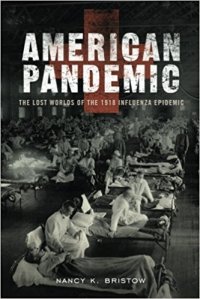





 The Cheshire Library Blog