Best Museum Passes for Families with Young Kids

As a parent of two young kids, my time away from work is a constant stream of requests and/or demands. The 4-year-old: refill my milk cup even though you’re currently buttering my toast and haven’t even made your coffee yet. The 20-month-old: read Trashy Town to me again. The 4-year-old: I just discovered My Little Pony and I love it, so now my name is Princess Twilight Sparkle and my brother is Spike. Spike: read! Twilight: you are no longer Momma, you’re now Princess Celestia. Can you talk like Princess Celestia? Spike: I will scream-cry if you don’t read to me in two seconds.

Sometimes you need a change of scenery in order to prevent your kids (or yourself) from scream-crying. For me, the library’s museum passes have been invaluable when it’s too wet to visit the playground at Bartlem Park or too cold for miniature horses at Brooksvale Park. Museum passes offer discounted or free admission for adults and kids to museums and educational attractions across Connecticut and beyond. You can reserve them up to 30 days in advance and print almost all of them from home anytime, requiring no special trip to the library. For added convenience, many museums will just scan the pass right from your phone. Here’s our young crew’s experience with the passes.

The Children’s Museum

Location: 180 Mohegan Drive, West Hartford

Pass perks: one free admission for every paid admission

Cost before perks: $15/person ages 2 and up, below 2 is free (price info)

We visited The Children’s Museum when Twilight was two years old and Spike was an unhatched egg. The museum accepted the digital pass that was sent to my phone via email, and soon we were in an indoor air-conditioned wonderland. The museum looks like a former school with one long hallway and branching classrooms that have been converted to different activity areas. I appreciated the easy navigation! The woods-themed dramatic play room was a hit, as was the craft room. The dinosaur room was another success.

There’s also a large collection of live animals spread across three rooms: snakes, chinchillas, box turtles, and more, all of whom came to the museum after being given up, injured, or confiscated. The museum has regular demonstrations where kids can meet some of the animals. Twilight wasn’t interested in petting the ball python, but there were so many other activities that kept her engaged that it wasn’t a loss.

KidsPlay Children’s Museum

Location: 61 Main St, Torrington

Pass perks: Half-price admission for up to 6 family members

Cost before perks: $14 for everyone age 1+, free under 12 months (price info)

KidsPlay has become our family’s favorite museum. There are so many rooms and activities here: play vehicles, a climbing wall, air play, a craft room, a music room with a piano, a grocery store, a pioneer cabin with dress-up clothing. We could not possibly visit every area in one trip! We were impressed not only with the breadth of activities, but how clean and well-maintained the space was. We loved this museum so much on our discounted visit that we got a year-long membership, so we’ve gotten to experience rotating play areas like kinetic sand and a hockey rink.

Street parking is a breeze in downtown Torrington, and there’s an off-street lot as well. The only drawback is its limited schedule. As with any museum, check the hours of operation before you visit!

Roaring Brook Nature Center

Location: 70 Gracey Road, Canton

Pass perks: one free admission for every paid admission

Cost before perks: $9 for adults, $7 for children 12 and under (price info)

Our Children’s Museum pass also grants discounted admission to Roaring Brook Nature Center (not to be confused with Roaring Brook Park, the not-for-the-faint-of-heart local trail). The nature center has an indoor section with taxidermy dioramas of our local habitats, live animals, play nooks, and a library, plus an outdoor area with rescued birds and turtles. Twilight enjoyed the scavenger hunt, singing lullabies to Tomasina the black vulture, and looking for turtles in the pond.

The highlight of the trip, though, was a hike along the trails next to the nature center. The trails are free to access and open from dawn to dusk, and a lot of it is hemlock forest (i.e., those really cool dark forests that make you feel like you’re a character in a fantasy book). The kids played Poohsticks from the bridge over the creek and explored a set of lean-tos while their bird nerd of a parent listened to warblers and nuthatches calling in the trees.

Connecticut Science Center

Location: 250 Columbus Blvd, Hartford

Coupon perks: 15% off up to six admissions

Cost before perks: $29 for adults, $23 for ages 3-12, plus $7 per person for butterfly encounter (price info), plus $7 per vehicle for 3 hours of parking in the adjacent garage (garage information)

Twilight loves the CT Science Center. When she was two years old, we could easily spend an hour just in the water play area. (They provide smocks, but it’s still a good idea to bring backup clothes and shoes.) There’s also live animals including a sloth, a butterfly encounter, and lots of interactive science activities that get more interesting as Twilight gets older. A glass elevator lets you look out across the whole museum, and it’s roomy enough for you to indulge in repeat rides without compromising foot traffic.

This is not a reservable pass, but a coupon that you can pick up anytime and use anytime. Even with a coupon, this is admittedly a pricier outing. But if you can swing it, it’s worth a visit.

Dinosaur State Park

Location: 400 West St, Rocky Hill

Pass perks: free admission to the exhibit center for two adults and four kids age 6-12; kids 5 and under are free

Cost before perks: $6 for ages 13+, $2 for ages 6-12, free parking and trail access

The kids recently visited 200-million-year-old dilophosaurus footprints at Dinosaur State Park, where you can visit indoor exhibits for free with the CT Parks Pass. (This is a physical pass that needs to be picked up and delivered back to the library.) The footprints are housed in a geodesic dome that also includes dino dioramas, crafts, and some live reptiles and amphibians. The adults loved it, but Twilight was a little disappointed that dinosaurs were extinct and weren’t there stomping around making the footprints.

Luckily, the nature trails outside the exhibit center are perfect for small legs, and they’re free to use without the pass. We saw a big (and completely harmless) water snake sunning itself near the marsh!

Overall, there are so many activities at each place that you really can’t go wrong with borrowing a pass. And even if your museum outing is more miss than hit, hey – at least it’s a few hours in which your kids aren’t pretending they’re Keith Moon and your living room is a Holiday Inn!

Why don’t all the passes give me free admission?

We would love to offer passes that grant free admission everywhere, but the museums set the terms for their passes and decide what they’re going to make available for libraries to purchase. Sometimes that’s free admission. Sometimes that’s just a discount. It all depends on the museum, but we always get the best discount we can!

Why doesn’t the library offer passes to Beardsley Zoo, Mystic Aquarium, or the Maritime Aquarium?

Good question! Unfortunately, the aquarium passes don’t really offer a good value for most patrons. (Think a percentage off a yearly membership, or a few dollars off if you purchase add-ons beyond general admission.) Instead of disappointing our patrons, we opt to get different passes with better discounts. As for the Beardsley Zoo, they changed their ordering process a couple years ago, and it doesn’t jive with the way we make purchases. However, we’re planning to add more animal-themed passes in 2026. Stay tuned!

What about the Peabody Museum? Why doesn’t the library offer a pass?

We don’t offer a Peabody Museum pass because it’s completely free! They gave it a major overhaul recently, and it’s a gorgeous space. Fossilized skeletons and plants are on the first floor, with minerals and animal dioramas on the third floor. Human history is exhibited on the second floor.

Want to spend more time doing free stuff in New Haven? Enjoy a drive or hike to the top of East Rock Park where you can look out over the city and Long Island Sound, or walk around the grounds of Edgerton Park, which also hosts Shakespeare performances in August and the CT Folk Fest in September. Older kids and adults will enjoy free museums such as the Yale Center for British Art, the Yale Art Gallery, and the Morris Steinert Collection of Musical Instruments (when it reopens to the public). Admission to the New Haven Museum is also free when you borrow our pass!

Plant Intelligence

For thousands of years, Man considered himself the only sentient being in the universe, the only one capable of higher thought, understanding, and language and communication.

We now know that isn’t true. Higher primates, such as gorillas and chimps, are certainly capable of learning not only their own forms of communication, but American Sign Language as well. Dogs, it turns out, are capable of understanding human language at the level of a three year old human child, with some breeds (like German Shepherds) able to differentiate up to a thousand different words. We know that octopi can perform complex tasks (of their own planning, nonetheless), recognize people, and have a functional IQ of about 40. Dolphins and whales have complex languages and not only communicate, but show empathy.

Hence, many people choose not to eat animals, and dine only on plants.

But what about plants? What about their feelings?

Plants? What does a plant know? Corn has ears, but that doesn’t mean it’s listening.

Turns out, plants know more than you think. Plants have been caught communicating in numerous ways, understand when danger is near, and sympathize with other plants.

Yes, really.

This communication is known as phytosemiotics. One way is through chemical signals. A wounded plant will give off a volatile chemical compound (something you can smell) that other plants can sense. The receiving plant can then roll up its leaves or lean away. That wonderful fresh-cut grass smell we love in the summer? Yeah, that’s a hundred thousand blades of grass screaming in agony and warning other plants to beware that something is damaging them. Plants also communicate through ultrasonics – noises above our hearing range but which can be detected and recorded on audio equipment (ultrasonic vibration of 20–105 kHz). Some of this may be due to tiny air bubbles being released due to chemicals triggered during stress. Trees, it turns out, communicate under the soil as well, using certain types of fungi in the dirt to communicate through their roots. Are they discussing algebra? No. But they can tell each other about dangers, or fresh rain, or the pain of bark beetles, and other plants can ‘arm’ themselves accordingly. Just the sound of insects chewing can cause plants to release chemicals that deter insects (caffeine, by the way, exists in plants as a natural insect repellent).

Perhaps the Druids were on to something, thanking plants for sacrificing their leaves.

If that’s not weird enough, plants – even those without ears – apparently respond to music. Sure, houseplant lovers will tell you they’ve always known this, but numerous studies have turned up actual results. As early as 1962, studies showed that plants exposed to classical music had a 20% growth increase and a 72% increase in biomass over controls. Violins gave the best result. This was repeated by a Canadian researcher, with 66% increase in wheat yields using Bach’s violin sonatas. Duckweed, a water plant, exposed to Bandri’s Purple Butterfly, five hours a day for seven days at 60-70 decibels, showed a 10% increase in leaf growth and a slightly higher protein content compared to silent plants. Roses love violin music. Heavy metal tends to induce stress. Devendra Varol of the Institute of Integrated Study in India found that plants can not only distinguish between genres of music, but also nature sounds and traffic noises.

Oh, those poor weeds on the highway!

And while you laugh and scoff, know that in 2004 the TV show MythBusters attempted similar experiments in seven greenhouses. In their experience, Death Metal produced the best growth, second was classical, and third was positive spoken words. The silent greenhouse had the worst growth.

How can this possibly be?

The best theory is that the vibration of music may aid plants in transporting their nutrients more efficiently, shaking things through faster. 

Next time you pull a carrot, remember those mandrakes in Harry Potter shrieking piteously when pulled from the pot.

In the meantime, check out these books on the wisdom of plants, and be kind to your root-footed friends!

Finding the Mother Tree by Suzanne Simard

The Serviceberry by Robin Wall Kimmerer

Listen to the Language of Trees by Tera Kelley

Aromatherapy Garden by Kathi Keville

Secret Wisdom of Nature by Peter Wohlleben

Flora by Helen Fewster

The Light Eaters by Zoe Schlanger

I Heard There Was a Secret Chord: Music as Medicine by Daniel Levitin

Healing at the Speed of Sound by Don Campbell

How Shostakovich changed my mind by Stephen Johnson

Violin Music:

Shatter Me by Lindsey Stirling

David Garrett by David Garret

Vivaldi for Dummies

The Ultimate Most Relaxing Mozart in the Universe

The Library of Congress Needs Your Help!

I recently took a class on archives and manuscript management- as one does- and learned about a problem in the world of museums and archives. Many of them have large numbers of old documents they have scanned into their digital collections for preservation, but they’re not searchable. What do I mean by “searchable?” Let’s say you’re doing research online, looking for information on feral pigs in North America in the 19th century. Now, it turns out the Library of Congress had a bunch of letters donated to them that discuss precisely this, and you could read all about the problems Matilda had on her farm in Cheshire as she writes to Cletus in Middletown. Unfortunately, you’re not likely to find these letters by blindly sorting through the images that make up the archives’ massive collection. Those letters first need to be transcribed, where someone looks at the pictures taken of the letters and types what is written there. Once this text has been typed, the computer is able to match your search for “feral pigs, North America, 1800s” with the text that was entered via transcription.

Here’s the problem: it takes a lot of time to transcribe all those old historical records. The solution? You.

That’s right! There are all kinds of archives and other historical organizations looking for volunteers to transcribe and review old documents. What does this look like in action? Here’s an example from a transcription I did on the Library of Congress’s We the People website:

Above is an article written by Frederick Law Olmsted, the “father of landscape architecture in the United States,” best known for designing Central Park in New York City. Here, he enthuses about the “Lungs of London,” another term for London’s Royal Parks. Even within this brief two-page document, there is so much to sink your teeth into. He describes the necessity of public parks that do not exclude the working class:

Money, and their legs, will carry [genteel people] whither they will; but with the poor artisan or labouring man it is not so. He cannot afford time or means to set out with his wife and children on a Sunday voyage of discovery – and to find the shades of night, perhaps, falling around him just as he has succeeded in refreshing his eyes with a bit of anything green.

Poetic! And relevant 185 years later… When opening up a new document to transcribe, there’s no telling what you may find.

This kind of project is perfect for history buffs, puzzle hounds, those interested in volunteering their time, or anyone who has ever thought, “Gee, I bet I’d make a good code cracker.” Each organization has slightly different guidelines for transcription, so definitely peruse those before you get started. Generally, these institutions want to make it easy for volunteers to provide their help, so it doesn’t take more than a few minutes before you’re transcribing your first document.

Here are a few of my favorites:

The Library of Congress– Probably the quickest to get started, with the easiest-to-use interface. You don’t have to have an account to transcribe, but if you create one (it’s free), you can track your hours.

National Archives– Volunteers here are called “Citizen Archivists,” and have more options outside of straightforward transcription like their “Outside the Box Missions.” This one wins for coolest branding.

Historic New England– They’re focusing on transcribing the Casey Family Papers right now, and from what I can tell this is a family with decent handwriting, great for beginners.

There are also many other smaller institutions looking for transcription help, along with international archives. Try googling “archives transcription volunteers” or “digital transcription volunteers” if none of the above suggestions tickle your fancy.

Questions? Did you try it? What did you think?

Cheshire Grange Fair

Did you know that the Grange has been a part of Cheshire since 1885? 

Did you know that the Grange system was founded by agricultural families in 1867, to help both the North and South recover from the terrible destruction of the Civil War? There are more than 240,000 members across the US, with more than 60 chapters in Connecticut alone.

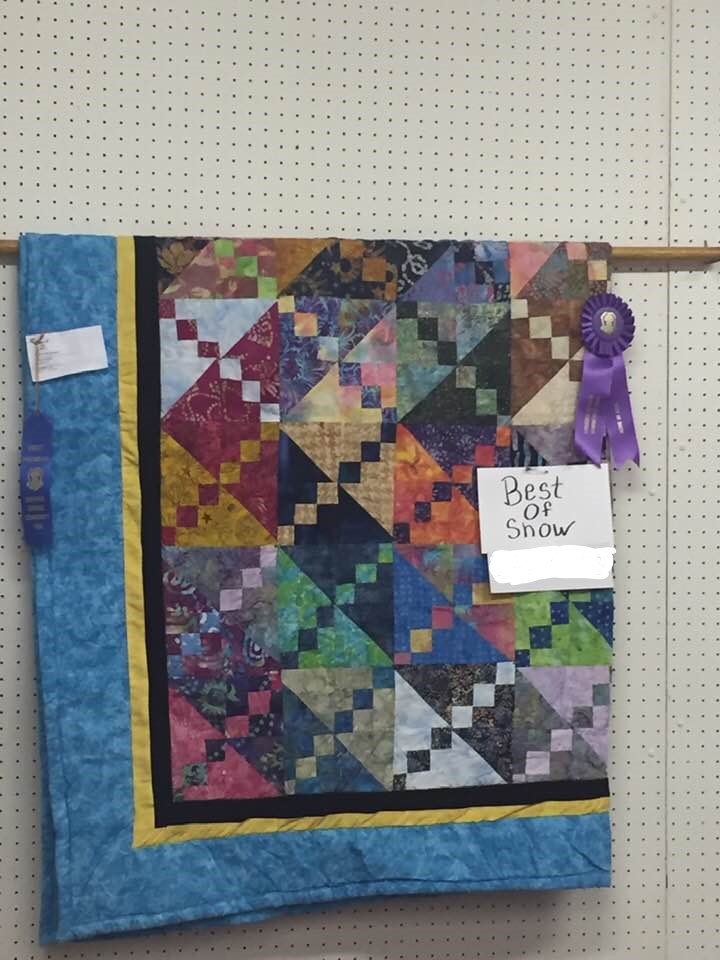
So, outside of owning the building on Wallingford Road (where, last century, I used to take dance lessons), what exactly does the Grange do?  While there’s still some focus on agriculture, the modern Grange performs charitable community services for rural, suburban, and urban localities, and is open to everyone. Among the many community programs they run and support are Red Cross Blood Drives, quilts for AIDS babies, supporting Heifer International, gift baskets for the needy and elderly, school supplies, camperships, scholarships, equipment for police and fire departments, community education programs, and so much more. And of course, the annual Grange Fair – this year on August 21. 

See, the more people who enter – anything! – the more interesting your Grange Fair is. This is your community fair – and the more we support it, the better it is! (I’m tired of being the only entry in some categories. That’s just no fun.)

So dig through your treasures. Print that photo. Iron that placemat you made. Tuck the threads on that needlepoint you did during shutdown. Pick those tomatoes carefully. No effort is too “amateur,” so get moving and get your entry form in! 

There are a limited number of entry booklets available at the library and around town, or you can download them yourself from their website. 

Best of luck!

http://www.cheshiregrange.org/grangeagfair.asp

Library Resources You Might Not Know About: Part 2

We recently highlighted some services & resources offered by Cheshire Library that may have been new to you. From a book-matching service to streaming video and online courses, the library has an abundance of free resources. Today we’ll highlight a few more you may not be aware of, that you don’t even need to have a library card to use.

Cheshire Library is constantly reviewing and adjusting our online services to bring  patrons what they need. The library is still here for you, even though how you use it these days might look a little different.

A Page Full of Freebies

When the shutdown happened in March 2020, our intrepid librarians started assembling a list of useful free resources that people could access from home. This expanded from Local (links to the CT Covid Response Page, 211 Directory, Cheshire School Meal Distribution)  and  National  (links to the CDC, NIH, WHO) Health Information to other resources that might help take the sting out of being isolated. Sites to access free online activities like virtual museum tours, webcams of animals and nature, interactive learning, and even armchair travel!

Community Service in a Virtual World

Many high school student are required to complete a set number of community service hours as part of their curriculum, but COVID-19 has made it difficult to volunteer in-person. We’ve designed a program (info on our Teen Page and monthly Event Calendars) where teens can earn community service hours by submitting a photo, video,  or other content for us to add to CPL’s social media pages. Ideas for submissions include book reviews, artwork, poetry, short stories, personal essays, photos or video of food you’ve cooked or baked, or any other creative idea you have for content. (Not all submissions will be used on our social media, and submissions including photos of people are not allowed.) Each submission will be awarded 2 community service hours.

Get WOWed by Our Newest Books and Dvds

If you’re not able to get into the library as often to check out what’s new, we’ve got a resource you’re going to love. We’ve teamed up with Wowbrary to deliver a list of the latest additions to our catalog straight to your inbox. The New Item Newsletter lets you know everything that’s new, digital items as well as physical items. In fact, you’ll learn about the physical books and dvds the minute we order them, before they even hit the shelf, and can place holds on them right away (you will need a library card for this part)!

No Printer? No Problem!

Many people have used our public printers in the past to print up important documents. Now you can do so without ever stepping foot inside the building. Our Mobile Printing Portal (accessed through the “Visit” tab on our website) allows you to send print jobs to us right from your computer or mobile device. We’ll let you know when your printouts are ready, and you can pick them up at the Grab ‘n Go station by the parking lot entrance.

Something Fun for Our Youngest Patrons

Our Baby Bop music & movement classes for infants 0-12 months and their caregivers has been on hiatus during the pandemic, but we’ve created a dozen free printable guides (find them on our Kids Page) of fun lap-sit songs, rhymes, and activities of music and movement to help develop motor and language skills. But mostly it’s just plain fun – playing is learning! We will add new guides periodically, so check back often!

Entertainment and Information in the Video Age

Finally, we encourage you to subscribe to our YouTube Channel. We’ve really stepped up our video content creation during this pandemic, and the results are on YouTube. From DIY tutorials, to lit tips,  to silly skits, to full length programs, we’ve got something for everyone to enjoy and learn from. You can even sit in on a Library Board meeting, if that’s your jam! Subscribe to be notified when we post something new.