You, like many others across the world, just finished watching Tiger King. The Netflix docuseries just launched on March 20th, and it’s already taken the world by storm. The series received acclaim from critics, and according to Nielsen ratings, was watched by 34.3 million people over its first ten days of release, ranking as one of Netflix’s most successful releases to date.
 The series follows the larger than life character Joseph Allen Maldonado-Passage, also known as Joe Exotic, and his sprawling zoo, the Greater Wynnewood Exotic Animal Park. Joe has quite the history, with the law and with other big-cat owners. He twice unsuccessfully ran for public office, first for President of the United States in 2016 as an independent, and then for Governor of Oklahoma in 2018 as a Libertarian. In 2019, Maldonado-Passage was convicted on 17 federal charges of animal abuse (eight violations of the Lacey Act and nine of the Endangered Species Act) and two counts of murder for hire, for a plot to kill Big Cat Rescue CEO, Carole Baskin. He is currently serving a 22-year sentence in federal prison.
It doesn’t seem like reality until you’re watching it unfold in front of your eyes, and like some terrible fire, you can’t pull your eyes away from the madness. There are no “characters” you can root for, except for the cats. As a true crime lover, I felt myself wanting more after the credits rolled! Instead of digging deeper into the depths of Netflix, I decided to do some digging through the libraries’ digital collections to satisfy my craving for tiger true crime mania.
Due to the fact that the library is closed at this time, we’re recommending books and audiobooks that are accessible through the libraries’ digital services, including RBdigital, Libby, and Overdrive. If you need help accessing these services, help is available on our website, and librarians are available by phone remotely. Call 203-272-2245 and leave a message. Someone will get back to you shortly!
 First up is The Lizard King: The True Crimes and Passions of the World’s Greatest Reptile Smugglers by Bryan Christy. The book is described as “The Sopranos of Snakes”, focused on the fascinating account of a father and son family business suspected of smuggling reptiles, and the federal agent who tried to take them down. If you’re looking for more animal justice and federal takedowns, then The Lizard King is the perfect fit. The audiobook and ebook are available online through RBdigital.
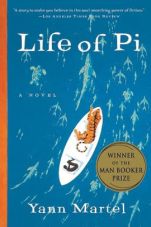 Next is a little bit more fanciful, but showcases a star tiger, Richard Parker. Life of Pi is a classic, and mixes fantasy and dangerous reality into a beautiful story, in which you can’t quite tell reality from fiction (much like tiger king, is this guy real life?) The story’s back cover states: ” Pi Patel has an encyclopedic knowledge of animal behavior and a fervent love of stories. When Pi is sixteen, his family emigrates from India to North America aboard a Japanese cargo ship, along with their zoo animals bound for new homes. The ship sinks. Pi finds himself alone in a lifeboat, his only companions a hyena, an orangutan, a wounded zebra, and Richard Parker, a 450-pound Bengal tiger. ” The story is an escape from reality all of us could use right now. The audiobook and ebook are available online through RBdigital.
 Midnight in the Garden of Good and Evil by John Berendt is a true crime classic, covering art dealings, murder and mystery, all in the deep south. It includes the same courtroom drama that was brought to life in Tiger King. The book is described as: ” Shots rang out in Savannah’s grandest mansion in the misty,early morning hours of May 2, 1981. Was it murder or self-defense? For nearly a decade, the shooting and its aftermath reverberated throughout this hauntingly beautiful city of moss-hung oaks and shaded squares. John Berendt’s sharply observed, suspenseful, and witty narrative reads like a thoroughly engrossing novel, and yet it is a work of nonfiction.” Another classic worth checking out from our digital collections, available online as an audiobook through RBdigital, and ebook through Overdrive.
 If you spent the whole documentary wishing they’d focus more on the tigers less on the mullets, then The Human, the Orchid, and the Octopus could be your fit. Written by Jacques Cousteau, an author and researcher who studied the sea and all forms of life in water, the book “weaves gripping stories of his adventures throughout, he and coauthor Susan Schiefelbein address the risks we take with human health, the overfishing and sacking of the world’s oceans, the hazards of nuclear proliferation, and the environmental responsibility of scientists, politicians, and people of faith”. It’s a heartfelt tale which inspires us to do better, and be better for our planet, and the animals we share it with. It’s available online as an audiobook through RBdigital.
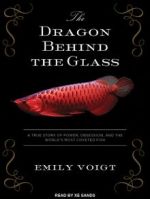 “A man is killed for his prized pet fish” Whaaaaaat? That first line hooked me right away on The Dragon Behind the Glass: A True Story Of Power, Obsession, And The World’s Most Coveted Fish. “A tycoon buys a single specimen for $150,000. Meanwhile, a pet detective chases smugglers through the streets of New York. Delving into an outlandish realm of obsession, paranoia, and criminality, The Dragon Behind the Glass tells the story of a fish like none other” This book follows tiger kings footsteps in chasing animal smugglers throughout the globe, all for the very expensive, very lucrative, animal black market. Download the audiobook through RBdigital.
Looking for more? Here are a few more titles available through RBDigital, Overdrive and Libby for your phone, tablet, or computer!
- A Million Little Pieces / James Frey
- Animal Liberation / Peter Singer
- Poached : inside the dark world of wildlife trafficking / Rachel Love
- Deep Into Yellowstone : a year’s immersion in grandeur & controversy / Rick Lamplugh
- Tigers in the Snow / Peter Matthiessen
- How to be a Good Creature : a memoir in thirteen animals / Sy Montgomery
 As I write this, the ebook for Michelle Obama’s 2018 memoir,
  First, a little background. When Cheshire Library started offering eBooks to their patrons in 2006, lending of downloadable items was in its infancy. Publishers were extremely wary about allowing library users virtual access to their books. After all, digital copies of books never wear out or have to be replaced, and are more vulnerable to unauthorized copying (“pirating”). Publishers were afraid if they allowed libraries access to their books digitally, they would be losing money. Individual publishers came up with their own sets of rules for libraries to access their e-content, and they have been tweaked many times since 2006. The graphic to the right outlines the current purchasing & lending restrictions for libraries purchasing e-Books from the “Big 5”. Over the years, all 5 publishers have gone to a “metered access” model, meaning that titles expire after a set number of uses or months, at which time the library has to purchase the item again if they want to keep it available to their patrons.

 Not every book becomes a movie; not every movie started out as a book, but the two feed off each other like peanut butter and chocolate. Many of the top Oscar-winning films started out as books (



 If you have a kindle, Ipad, or smartphone, you have access to a world of books, movies and magazines from the comfort of your own home. Our library alone has access to several apps including
 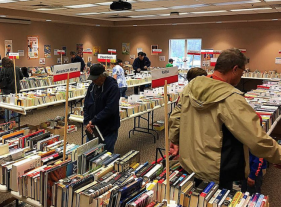 d the product they carry is built on the community around it. This creates a unique experience in every bookstore you frequent, you’ll never find the same selection twice. Used bookstores are also the place to go if you’re looking to bulk up your classics collection (I’ve been known to walk out with a stack of mass market
  Have friends who are just as into reading as you are? Start a book swap between friends! This is a fantastic way to read new titles, and share books that you’ve loved with friends. That way, you both get to read them, and talk about your favorite titles and characters. After all, what’s a better gift to give and receive than a new book. I’ve been trading books with friends for years, and I find it’s a fantastic way to read things I normally never would have picked up, and learn more about my friends taste in books. It’s like having an informal book club, without all the pressure of meetings and who’s bringing the snacks.
 The Cheshire Library Blog