
People of color have historically been under-represented in children’s literature. Thankfully, that has been changing in recent years. If you’re a black child, it’s important to see yourself represented positively in books. Equally important, it is important for white children to see positive representation of people of color. Here’s a list of books written by black authors that are available at your local library. These stories center, reflect and affirm the lived experiences of black children.
Sam Brown, writer for Bookstr summed it up perfectly, stating “Children’s books are powerful tools that help instill a sense of empathy in young readers. They are testing grounds for new ideas and exercises in ethics. Reading, at any age, teaches us that the experiences of other people are not only valid, but influential to our own lives. It’s for this reason that representation in children’s books matters”
Hair Love 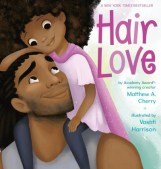 by Matthew A. Cherry ; illustrated by Vashti Harrison – Zuri’s hair has a mind of its own. It kinks, coils, and curls every which way. Zuri knows it’s beautiful. When Daddy steps in to style it for an extra special occasion, he has a lot to learn. But he LOVES his Zuri, and he’ll do anything to make her — and her hair — happy.
The Day You Begin by Jacqueline Woodson ; illustrated by Rafael López – There are many reasons to feel different. Maybe it’s how you look or talk, or where you’re from; maybe it’s what you eat, or something just as random. It’s not easy to take those first steps into a place where nobody really knows you yet, but somehow you do it. Jacqueline Woodson’s lyrical text and Rafael López’s dazzling art reminds us that we all feel like outsiders sometimes-and how brave it is that we go forth anyway. And that sometimes, when we reach out and begin to share our stories, others will be happy to meet us halfway.
My Hair is a Garden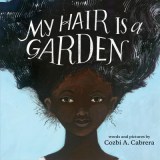 by Cozbi A. Cabrera – After a day of being taunted by classmates about her unruly hair, Mackenzie cant take any more and she seeks guidance from her wise and comforting neighbor, Miss Tillie. Using the beautiful garden in the backyard as a metaphor, Miss Tillie shows Mackenzie that maintaining healthy hair is not a chore nor is it something to fear. Most importantly, Mackenzie learns that natural black hair is beautiful.
Thirteen Ways of Looking at a Black Boy by Tony Medina & 13 artists – These short, vibrant tanka poems about young men of color depict thirteen views of everyday life: young boys dressed in their Sunday best, running to catch a bus, and growing up to be teachers, and much more. Each of Tony Medina’s tanka is matched with a different artist―including recent Caldecott and Coretta Scott King Award recipients.
Radiant Child : the story of young artist Jean-Michel Basquiat by Javaka Steptoe – Jean-Michel Basquiat and his unique, collage-style paintings rocketed to fame in the 1980s as a cultural phenomenon unlike anything the art world had ever seen. But before that, he was a little boy who saw art everywhere: in poetry books and museums, in games and in the words that we speak, and in the pulsing energy of New York City. Now, award-winning illustrator Javaka Steptoe’s vivid text and bold artwork echoing Basquiat’s own introduce young readers to the powerful message that art doesn’t always have to be neat or clean–and definitely not inside the lines–to be beautiful.
The King of Kindergarten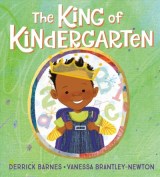 by Derrick Barnes ; illustrated by Vanessa Brantley-Newton – Starting kindergarten is a big milestone–and the hero of this story is ready to make his mark! He’s dressed himself, eaten a pile of pancakes, and can’t wait to be part of a whole new kingdom of kids. The day will be jam-packed, but he’s up to the challenge, taking new experiences in stride with his infectious enthusiasm! And afterward, he can’t wait to tell his proud parents all about his achievements–and then wake up to start another day.
Woke Baby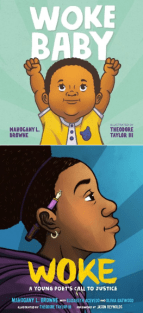 by Mahogany L. Browne ; illustrated by Theodore Taylor III, and Woke : a young poet’s call to justice by Mahogany L. Browne, with Elizabeth Acevedo and Olivia Gatwood ; illustrated by Theodore Taylor III. Woke Baby is a lyrical and empowering book for all the littlest progressives, waking up to seize a new day of justice and activism, Woke is a collection of poems by women that reflects the joy and passion in the fight for social justice, tackling topics from discrimination to empathy, and acceptance to speaking out.
Sulwe 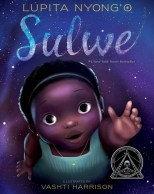 by Lupita Nyong’o ; illustrated by Vashti Harrison – Sulwe has skin the color of midnight. She is darker than everyone in her family. She is darker than anyone in her school. Sulwe just wants to be beautiful and bright, like her mother and sister. Then a magical journey in the night sky opens her eyes and changes everything.
I am Enough by Grace Byers ; pictures by Keturah A. Bobo -This gorgeous, lyrical ode to loving who you are, respecting others, and being kind to one another comes from Empire actor and activist Grace Byers and talented newcomer artist Keturah A. Bobo. We are all here for a purpose. We are more than enough. We just need to believe it.
Now more than ever is the time to promote and share stories of all kinds. Know that the library is a place that welcomes everyone, following Cheshire Public Libraries mission statement “The Cheshire Public Library transforms lives and strengthens the community”.
Looking for more? Here are some other titles available from the Cheshire Library:
- The Book Itch : freedom, truth & Harlem’s greatest bookstore by Vaunda Micheaux Nelson ; illustrated by R. Gregory Christie
- Chicken-chasing Queen of Lamar County by Janice Harrington
- Crown : an ode to the fresh cut by Derrick Barnes ; illustrated by Gordon C. James
- Grace for President by Kelly DiPucchio ; pictures to LeUyen Pham
- Trombone Shorty by Troy “Trombone Shorty” Andrews ; pictures by Bryan Collier
- Ada Twist, Scientist by Andrea Beaty ; illustrated by David Roberts
- Leo Can Swim by Anna McQuinn ; illustrated by Ruth Hearson
- Happy in Our Skin by Fran Manushkin ; illustrated by Lauren Tobia
- The Breaking News by Sarah Lynne Reul
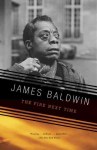
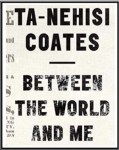
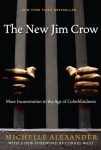
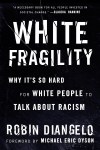
 Right now, many are wondering how to come to a better understanding of racism (particularly against Black Americans) in our culture and what they can do to support anti-racist initiatives. With something so deeply ingrained in our society that some don’t even recognize it, education is a good starting point. There are hundreds of books on the subject, many available at your local library. We’ve put together a “primer” of titles available at Cheshire Library that many consider essential reading on the subject: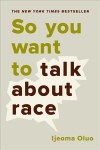






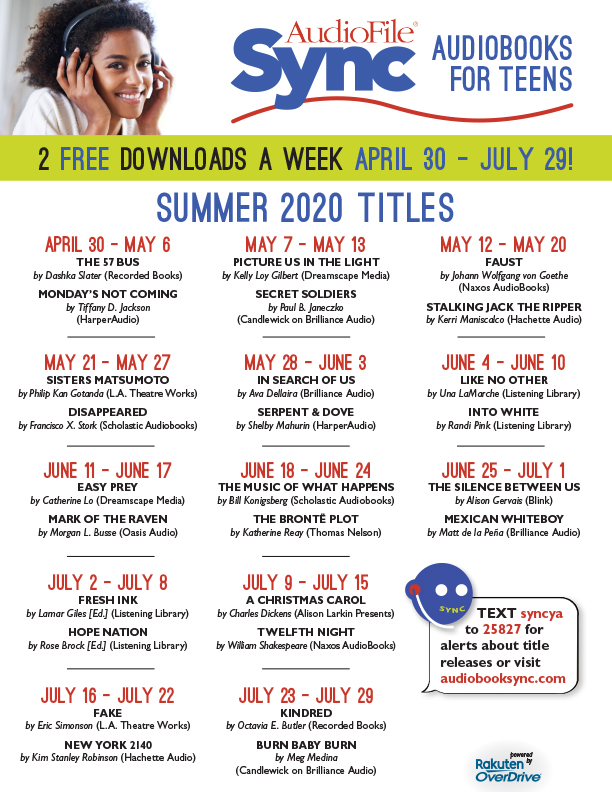
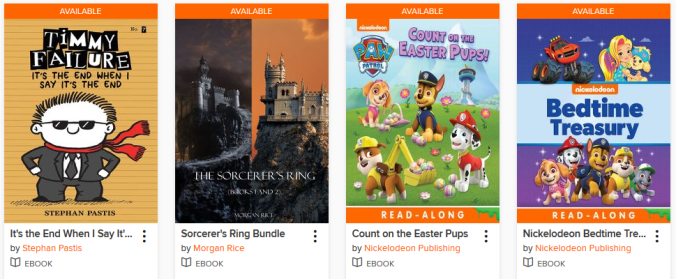
 now realizing that their libraries offer more digital items for kids than they originally thought.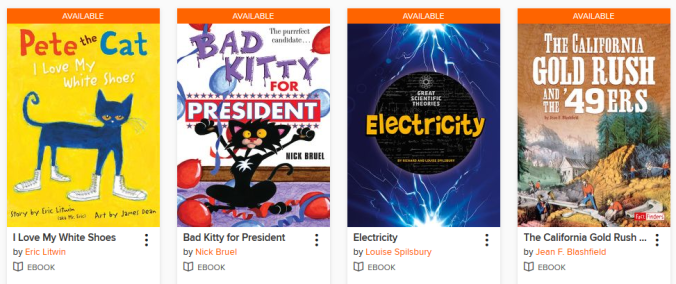

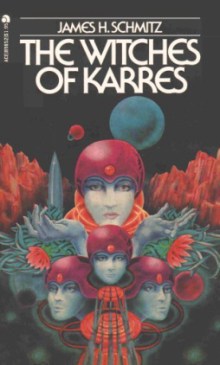 Recently I rediscovered a book that I loved long ago: The Witches of Karres by James H. Schmitz. I enjoyed it just as much, if not more than before. The book is a rarity among older science fiction, it doesn’t show its age with ridiculous predictions or stilted dialog and literally feels as if it could’ve been written yesterday. Partly, I believe that this is because it is as much a fantasy book as a science fiction book, but mostly it’s because the author’s writing is funny, imaginative, and clever, and his characters are delightfully quirky and likeable.
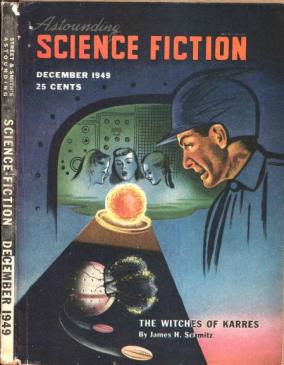 The Witches of Karres was originally a novelette published in the
  The Cheshire Library Blog