Short Stuff

I’d like to read more, but I don’t have time to read a long, involved story.

There’s a solution for that. It’s called a short story.

 Short stories are those that can be read in under an hour – often not more than 5,000 words (beyond 7,500 is called a novella, and they are often published alone in little books, like Stephen King’s The Shawshank Redemption,  J.A. Jance’s The Old Blue Line, or Shirley Goodness and Mercy by Debbie Macomber) and they are often grouped together in anthology volumes, anthology meaning, literally, a collection of stories, the same way a CD album is a collection of individual songs.

Short stories are an art form of their own, still carrying the same structures of their longer novel cousins (plot, themes, metaphors, etc) but in a very short package. Some are complete stories (think of Ray Bradbury’s All Summer in a Day, or Shirley Jackson’s The Lottery) while others might just give you a slice of life, a few hours in the life of an individual with no clear beginning and no clear end, leaving you to wonder what might come next (some stories by Anton Chekhov, or Ernest Hemingway’s Hills Like White Elephants). They can be happy or sad, comic or dramatic, or full of irony (The Necklace, by Guy de Maupassant). Sometimes an anthology might consist of short stories on a single theme (love, loss, westerns, adventure), or they could be a mix of anything. And the beauty of an anthology is you can read one or two stories, or the whole thing, depending on your time and interest.

But short stories don’t carry the same weight as novels.

Of course they do! Many writers are known more for their short stories than for their novels – Alice Munro is considered one of the premier short story writers, having won the 2013 Nobel Prize for Literature in part for her short stories. Ray Bradbury is another prolific short-story writer, not quite horror, not quite science fiction, not quite fantasy, just imaginative. His philosophy was to write one short story a week, because out of 52 short stories, you were bound to have three or four that were really good. Short stories are easier to sell, if not to anthologies then to magazines – many a writer got their start in The New Yorker, Collier’s, or Atlantic, let alone Good Housekeeping and Readers’ Digest. Some of the most popular authors – Isaac Asimov, Dashiell Hammett, and Raymond Chandler – carved their name writing for pulp fiction magazines.

Short stories don’t always stay short, either. Many popular films started out as short stories – The Secret Life of Walter Mitty (published in The New Yorker) (Did you realize this one takes place in Waterbury, Connecticut?), All About Eve, 2001: A Space Odyssey, The Curious Case of Benjamin Button, 3:10 to Yuma, Shawshank Redemption, Minority Report, Brokeback Mountain, Rear Window, Total Recall, and many, many others.

A little story can go a long way. If you’re pressed for time, check out the stories in these collections, and more!

Best Short Stories of Jack London

Ray Bradbury Stories: 100 of His Most Celebrated Tales

Collected Short Stories of Louis L’Amour, Vol. 4

Children of the Night: Best Short Stories by Black Writers

Dancing Through Life in a Pair of Broken Heels

No Middle Name: The Complete Collected Jack Reacher Short Stories

Beautiful Days

Amish Front Porch Stories

Bring Out the Dog: Stories

Complete Stories of Edgar Allen Poe

Cutting Edge: New Stories of Mystery and Crime by Women Writers

20th Century Ghosts

The Nobel Dylan

If you’re under thirty, you might ask, “Who’s Bob Dylan?”

If you’re over thirty, you might ask, “Bob Dylan’s still alive?”

Yes, Dylan’s still alive, though he’s 80 now, and a lot wealthier for having sold his entire recorded catalog to Sony music, a deal worth between $150 and $200 million

That’s a lot of social security.

Dylan, most widely known for folk and folk-rock music, has a career spanning more than 60 years. With more than 500 songs under his belt – many of them covers sung by other artists and movie soundtracks – he ranks in the top 30 most successful musicians of all time (The Beatles being number one, and Michael Jackson being number two). You may recognize not only Blowin’ in the Wind (a top hit for Peter, Paul, and Mary as well), but Quinn the Eskimo (made a hit by Manfred Mann), Too Much of Nothing (another Peter, Paul, and Mary hit), and Knockin’ on Heaven’s Door, which became a major hit for Eric Clapton – all written by Dylan.  In addition, he was a founding member of the Traveling Wilburys, a short-lived group (1988-91) composed of the royal powerhouse of Dylan, George Harrison, Tom Petty, Roy Orbison, and Jeff Lynne. 

Dylan with Rubin Carter, a free man

Dylan, following in the social justice footsteps of Woody Guthrie and Pete Seeger, wrote the ballad Hurricane in 1975, based on the arrest of boxer Rubin Carter for a 1966 murder he didn’t commit and who was sentenced to two consecutive life sentences. Dylan played several concerts to raise money for his defense. Carter was found to have been unfairly tried in 1985, and released. In 1999, a movie version of his story was released, with Denzel Washington playing Carter.

If that’s not enough of a resume, Dylan is the only American songwriter to be awarded a Nobel Prize for Literature in 2016 – yeah, that Nobel Prize – for “creating new poetic expressions within the great American song tradition.”  He’s only the second songwriter to ever be awarded the prize, the first going to the prolific Indian poet Rabindranath Tagore, who wrote more than 2000 songs – back in 1913.

Dylan on his own can be hard on the uninitiated. His voice is nasally and sometimes whiny, and the socially conscious ballad style of the 1930’s and 40’s isn’t in a resurgence as it was in the 60’s, but that doesn’t mean you shouldn’t listen. Dylan has a wide variety of songs and styles, and if you don’t like him singing it, look for someone else performing the song (Joan Baez does several, but she can also be nasally and whiny. Her song Diamonds and Rust is allegedly about Dylan.). With a resume like that, there’s a lot to like.

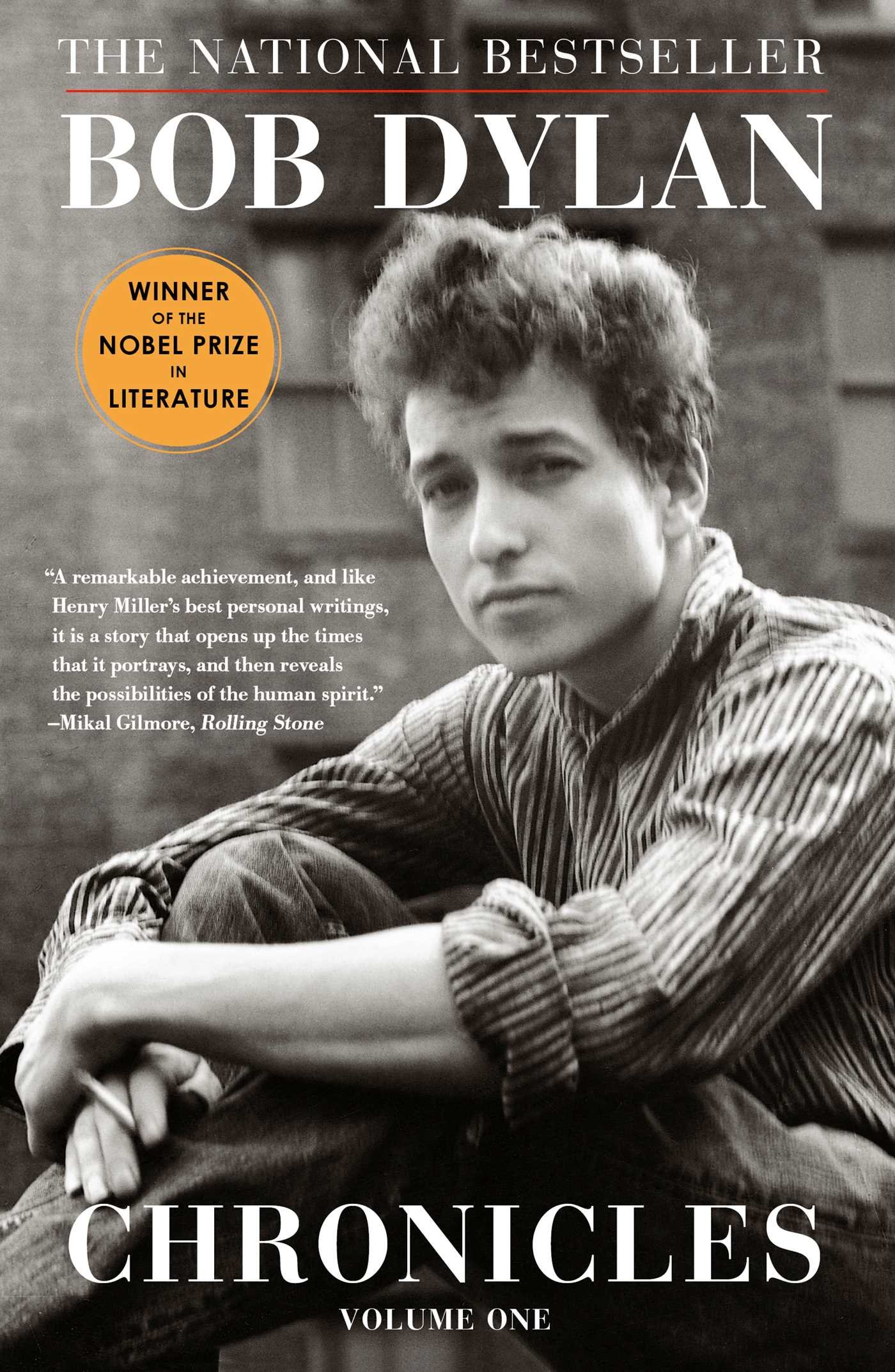
Try these biographies on Dylan, too!

The Double Life of Bob Dylan
Chronicles
Down the Highway
Bob Dylan in America

The Maus Trap

As long as there have been books, there has been controversy about books. There have been six major book-burnings in the US (yes, America) over Harry Potter, because some people believe a little too much in witches, though, personally, if I believed that strongly in witches, I might just not want to anger them.

But logic doesn’t exist in book burnings, or bannings.

In 1948, in Binghamton, New York , people went door to door gathering and burning comic books, to save youth from their moral depravity. It sparked a nationwide comic-book burning spree, including here in Connecticut.

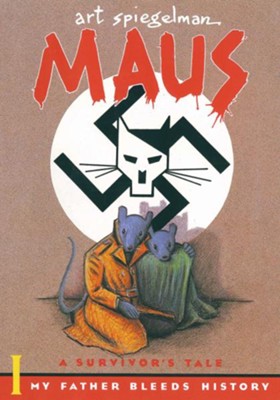
This year’s book fiasco (and this happened on January 10), has been the McMinn County (Tennessee) School Board voting 10-0 to remove the graphic novel Maus from their curriculum, over the use of 8 curse words (the most objectioned being – forgive me if you will, God damn), and the depiction of a naked mouse in a bathtub, with a breast showing. A mouse-breast. 

Maus is not drawn as graphic realism; with its heavy line style, it could be cut and printed in woodblocks and look the same.

Maus, by Art Spiegelman, is the winner of a 1992 Pulitzer Prize, the only graphic novel ever to do so. In it (sometimes found in two volumes, sometimes as one combined), Spielman interviews his father, a Polish Jew, as to what it was like to survive the Concentration Camps – his father spent time in both Auschwitz and Dachau, and his mother in Auschwitz. Nazis are portrayed by cats, Jews by mice, Americans by dogs, French by frogs, British as fish, and Swedes as deer.  

Spiegelman has a lot of anger toward his father that comes out now and then in the story. His father was, understandably, damaged by the war and not necessarily an empathetic father. Spiegelman’s mother couldn’t rid herself of the experience, and committed suicide when he was 20 (the unfortunate mouse in the bathtub). It’s a true story, an honest story, and Spiegelman’s struggle to make sense of it and his place in the narrative is the struggle we all face trying to understand the Nazi rise to power and the unimaginable atrocities they carried out – atrocities so horrific, the experiences threw open the study of epigenetics on the belief that the DNA of survivors’ children had been altered by the experiences of the parents, though some studies are undecided.

Tennessee withdrew the book from the curriculum just three days before Holocaust remembrance day, citing moral issues that included violence and showing dead mouse children, language, and that naked mouse breast in one panel. 

Maus is now the top-selling book in America, thanks to Tennessee’s decision that thirteen year olds learning about the Holocaust in graphic form and seeing mild curse words in print might damage them. Good thing they never saw the photo novel my father, a historian, has of World War II, which is nothing but photographs of the war, including too many horrific images from the various camps, a book which has haunted me since childhood.

The internet, while not reliable for many things, had the best quote: If it was okay for 13 year old Anne Frank to live through it, why is it too disturbing for 13 year old Tennessee children to learn about it? 

There are many reasons some books may be objectionable, outside of really bad prose, and yes, it is not unreasonable that some books should have an age limit – after all, movies and video games do. I would not recommend reading “The Exorcist” to a ten year old, even a literate one. The thing to remember is that not everyone can agree on what or why something should be limited, or worse, banned. Always, always, read the banned book, find out what information someone is trying to suppress, why, and then talk about it. If you still find the material objectionable, that’s fine, but you don’t have the right to control its availability to others.

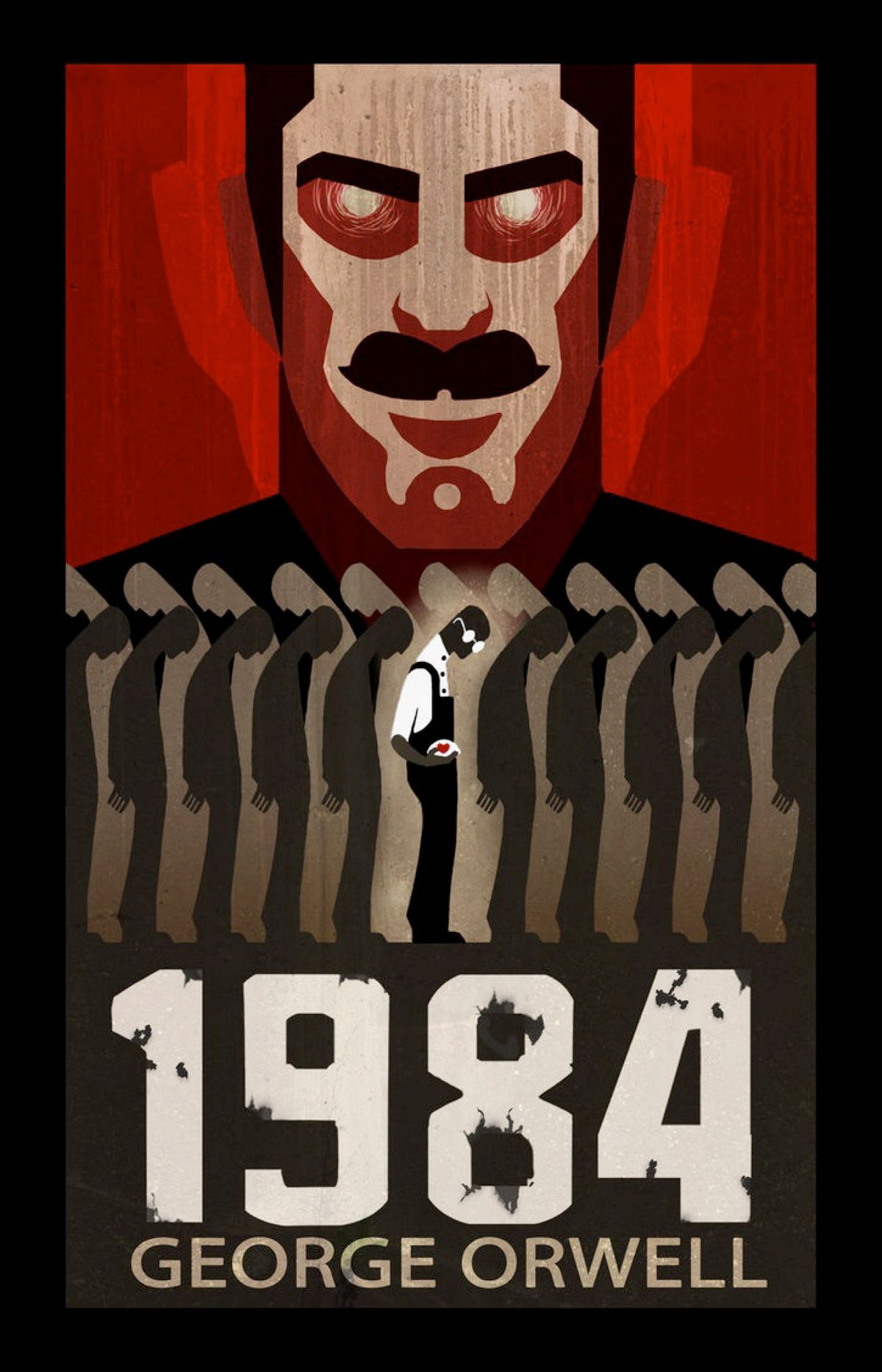
Decide for yourself. Maus is currently sold out on Amazon, but you can join the wait list for the library’s copy here. Meanwhile, check out these commonly banned books – most of which the rest of America considers classics (1984 by Orwell is the #1 banned book in America).
9/11 – Twenty Years Later

There are several points in US history that are “fixed points,” dates and events which become so embedded in the minds and hearts of the people that they become part of our universal consciousness, whether or not we experienced them ourselves. July 4, 1776, the signing of the Declaration of Independence. April 15, 1865, Abraham Lincoln is assassinated. December 7, 1941, the Bombing of Pearl Harbor, “The Day That Will Live in Infamy.” November 22, 1963, the assassination of President John F. Kennedy.

And September 11, 2001, known simply as 9/11, when foreign nationals who had trained here in America, who bypassed airline “security,” hijacked four American jetliners and crashed them into the Twin Towers in New York City, the Pentagon in Washington, DC, and a field in Pennsylvania. The entire world stopped. On that day 2,983 Americans died, including 343 Firemen, 60 police officers, and 8 medical personnel – not counting the people who died from breathing in all the toxins released from the burning rubble. If you remember the day, you remember exactly where you were when you heard about it. People stayed glued to their TVs for days, hoping beyond hope that someone had survived the horror. So many people knew someone, or had ties to someone, who died that day. A friend of mine at Morgan Stanley by chance happened to be sent to a meeting at a different office that morning. Every one of his coworkers died. My husband’s cousin was just blocks away on her way to work when it hit, and wound up having to evacuate her apartment.

This year is the 20th anniversary of 9/11, a somber day for reflection. An entire generation has now grown up in a post-9/11 world, knowing the date as something only in a history book, no emotional ties to the day at all. Millions of New Yorkers are new to the city, with no experience of the unity the catastrophe created. Perhaps this is the most important memorial yet. 

The 9/11 Memorial and Museum at 180 Greenwich St. in New York City will be holding a ceremony for the families of the victims on that day. There will be six moments of silence, one for each of the tragedies that happened. Churches are encouraged to toll bells. The ceremony is private, but the museum will be open to the public from 1 pm until midnight. At sundown, the annual tribute in lights will commence. 

9/11 is a day that is going to be with us for a very long time, whether you remember it or not, whether you had any connection to it or not, whether you care about it or not. It’s still hanging over us, a Damoclean Sword we cannot take our eyes from. 

To honor the date, Cheshire Public Library invites you to share your 9/11 memories through our 9/11 Reflections project. As we approach the anniversary date, we are compiling the stories of local residents – where they were, what they remember, how they were affected that day. You can click on the link here, or pick up a paper form at the library. Select stories and photos will be displayed on our website on September 10. The deadline for submissions is September 3.

Be considerate about the date, even if you feel it doesn’t affect you. Hold that moment of silence, if not for the past, but for the future, that we – or anyone else – won’t have to suffer such an attack again. 

To learn more, check out some of these books and films:

Inside 9/11

Fahrenheit 9/11

In Memoriam: NYC 9/11/01

Zero Dark Thirty

The Only Plane in the Sky

Fall and Rise: The Story of 9/11

The 11th Day

The Looming Tower

Kill Bin Laden

A Nation Challenged

Darkly Dahl

Roald Dahl is an author of controversy. He’s lauded for being a brilliant writer; he’s shunned because of his 1920’s upbringing and racist and antisemitic writings and comments. His children’s books are considered classics of literature; his children’s books are ignored by some who complain they are too dark for children’s literature.

Too dark? Let’s look at this.

Little Red Riding Hood’s grandmother was eaten by a predatory wolf, Cinderella’s stepmother made her into a slave, Hansel and Gretl were abandoned (twice!) by their parents and taken in by a cannibalistic hag; the Little Match Girl freezes to death all alone. Is Charlie and the Chocolate Factory or Matilda darker than that? Not quite.  

There is some truth to it – in many of Dahl’s stories, parents, if not most adults, are seen as evil, or cruel, or incompetent providers – mean teachers, poor and ever-working parents, buffoonish adults who cannot see the plight of the child (Wonka is most definitely – well, Wonky). There are elements of racial bigotry (the tiny black (yes, they were black in the book) oompa loompas living on grubs; Germans always being fat gluttons, etc). But is this so far from other children’s stories? Not so much. Lemony Snicket’s Series of Unfortunate Events is also darkly humorous, and few are crying foul. Dr. Doolittle bleaches a man’s skin, rather than let a black man marry a white woman. Peter Pan’s stereotypical depiction of Native Americans is downright painful and offensive on many levels. Bigotry and stereotyping is nothing new, only that fact that we now call it what it is. 

One point to remember is that parents, quite frankly, are a pain in the neck to children. They love them, while at the same time resent them for setting limits, saying no, and dragging children kicking and screaming through the process of growing up. For Dahl – and millions of others – who grew up in British boarding schools, at the mercy of bullies they couldn’t escape and teachers who were allowed to whip children, the experience left a more lasting impression (Pink Floyd, anyone?). For those in Britain who grew up in World War II, who as children hid during the Blitz or were shipped out to board with strangers, it lends another level of abandonment and trust issues to children’s literature. There’s a reason behind a lot of the dark – and for British children, it’s a shared cultural memory. Is Fantastic Mr. Fox an allegory for the war? Possibly. 

Another point to consider is children are the hero of their own story. It’s fine if Daddy vanquishes the dragon, but children would much rather be the ones doing it. Tween and Pre-tween children desperately want to be seen as competent, able to impress grown ups with their abilities. Children want to be the hero, and they can’t do that if Mummy and Daddy are with them telling them no – hence the number of orphan stories, or children alone. They can’t rely on the adults with them, or the story won’t work. A story about a child who tried and failed, who gave up and lived with their perceived oppression, isn’t a story a child wants to read about. There’s no role model there, no hero, no inspiration, no one to pretend to be. So of course Matilda has to shine, and the Peach must kill James’s wicked aunts, even if he has to find kinship with a bunch of insects, and even wacky Mr. Wonka can’t miss the good that dwells in Charlie. 

Darkness, shmarkness. The world is a dark place, and childhood a relatively new invention. In too many places, children are still locked in war-torn places, famines, camps, drug violence, and abusive situations. Our lauded fairy tales of yore – right down to Mother Goose and Aesop’s Fables – hark back to far darker times.

 Let them read. If nothing else, darker literature provides the perfect chance to discuss empathy, fantasy vs. reality, and handling tough situations – including some of the tough times we’ve been through in the past year.

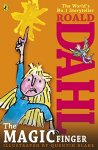
The Magic Finger

Danny the Champion of the World

Charlie and the Chocolate Factory

The Witches

The BFG

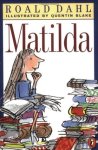
Matilda

James and the Giant Peach

Fantastic Mr. Fox