The Top 100 Films of All Time

What makes a fantastic film? You might as well ask what makes a good red wine, or abstract painting, or an attractive face.

Not every blockbuster is a “quality” film, and certainly not every “quality” film is a blockbuster. Some films are held in high regard, but are so “artsy” that it can be difficult to enjoy them (Eraserhead). Some movies are wildly popular (Die Hard), but hated by critics. A film can have a great script, but bad director, or a great director but the worst possible actor (Denise Richards in The World is Not Enough). Sometimes the special effects are awful (Howard the Duck, and let’s not forget the unfinished production on Cats). Sometimes the budget is practically zero (the $400,000 budget of Monty Python and the Holy Grail was partially financed by the rock bands Pink Floyd, Led Zeppelin, and Jethro Tull), while others have tremendous budgets and huge followings and are so awful they still fail (Solo, A Star Wars Story had a budget of $250 million and couldn’t break even—how can you lose with Star Wars?). When all these things come together—a good story, good writing, good actors, good directors, good marketing, and sometimes good timing (even Lilo and Stitch had to be retrofitted because of a plane and building scene right after 9/11)—you can hit a home run clear out of the park. 

Obviously, everyone has different tastes. Porky’s is my go-to when I need a stupid laugh. Yeah, it’s not high-brow. Forty years later, I still don’t understand the humor in Ghostbusters. 2001: A Space Odyssey is an incredibly beautiful movie, far ahead of its time, but with zero dialogue for the first 20 minutes, and I think it’s one of the most boring movies I’ve ever seen. I have endlessly tried to understand the hoopla of Blade Runner, read all the discussion on it, and I’m still missing the genius. I’ll just agree it’s an important film, and carry on. My favorite romance movie is Raiders of the Lost Ark—not generally on any romance list. 

So, anyone trying to pick the top 100 films of all time is truly facing an endeavor in futility, whether you’re the American Film Institute or a bunch of friends at dinner. I gathered results from eight different polls, and tried to tabulate the results. AFI, no surprise, is a bit snooty and prefers their films pre-1950, and doesn’t care much for popularity or genre films. Rotten Tomatoes focuses on user recommendation and critic reviews. Empire Online focuses more on popularity, artistic merit, and cultural impact. IMDB uses user ratings. British Film Institute includes far more foreign-language films than we get exposure to, with the ratings of more than 1600 critics, academics, and curators. Sight & Sound, which is run by the Criterion Channel, uses more than 1500 critics choices. Overall, drama far outweighed comedies, and musicals and animated films were few all around.

How many of these have you seen? Which ones would you recommend?

1.   12 Angry Men

2.  2001 a Space Odyssey

3.   400 Blows

4.   Alien

5.   All About Eve

6.   All the President’s Men

7.   Annie Hall

8.   Apocalypse Now

9.   Battle of Algiers 

10.   Battleship Potemkin

11.   Beau Travail

12.   Bicycle Thieves

13.   Blade Runner

14.   Bonnie and Clyde

15.   Breathless

16.   Bringing Up Baby

17.   Brokeback Mountain

18.   Casablanca

19.   Chinatown

20.   Citizen Kane

21.   City Lights

22.   Close Up (1990)

23.  Do The Right Thing

24.   Double Indemnity

25.   Dr. Strangelove

26.   Duck Soup

27.   ET

28.   Fellowship of the Ring

29.   Forrest Gump

30.   Get Out

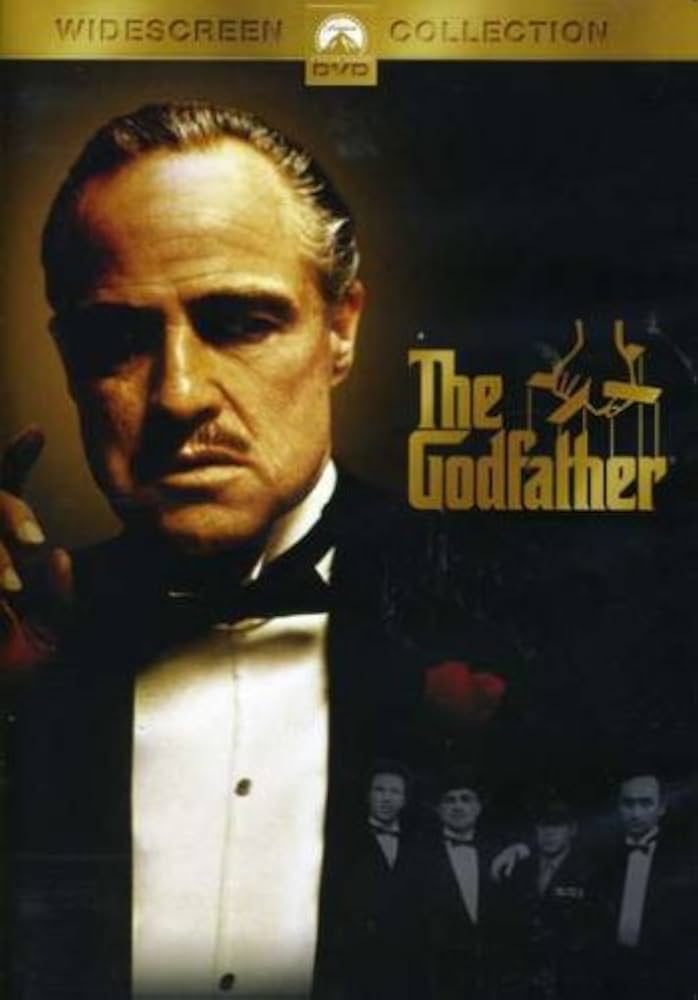
31.   Godfather

32.   Godfather II

33.   Gone with the Wind

34.   Goodfellas

35.   In the Mood For Love (2000)

36.   Intolerance

37.   It Happened One Night

38.   It’s a Wonderful Life

39.   Jaws

40.   Jeanne Dielman, 23, Quai du Commerce, 1080 Bruxelles

41.   King Kong

42.   Lawrence of Arabia

43.   M

44.  Mad Max Fury Road

45.   Maltese Falcon

46.  Metropolis

47.   Modern Times

48.   Moonlight

49.   Mulholland Drive

50.   Nashville

51.  Network

52.   North By Northwest

53.   On the Waterfront

54.   One Flew Over the Cuckoo’s Nest

55.   Parasite

56.   Passion of Joan of Arc (1928)

57.   Pather Panchali  

58.   Persona

59.   Psycho

60.   Pulp Fiction

61.   Raging Bull

62.   Raiders of the Lost Ark

63.   Rashomon  

64. Rear Window

65.  Rules of the Game

66.  Saving Private Ryan

67.   Schindler’s list

68.   Seven Samurai

69.   Shawshank Redemption

70.   Silence of the Lambs

71.  Singing in the Rain

72.   Some Like it Hot

73.   Sound of Music

74.  Spirited Away

75.   Star Wars: A New Hope

76.   Sunrise: Song of Two Humans  

77. Sunset Boulevard

78.   Taxi Driver

79.   The Dark Knight

80.   The General 

81.   The Searchers

82.  The Shining

83.   Titanic

84.   Tokyo Story

85.   Toy Story

86.   Vertigo

87.   Wizard of Oz

88.   American Graffiti

89.   Cabaret

90.   A Clockwork Orange

91.   French Connection

92.   The Empire Strikes Back

93. Easy Rider

94.   The Deer Hunter

95.   MASH

96.   Platoon

97.  Spiderman: Into The Spiderverse

98.   No Country for Old Men

99.   Up

100.  West Side Story (original)

Just to push myself, I tried, tried to pick my 100 top films, but couldn’t get further than 50. Do I pick the ones I’ve watched the most times (Star Trek: The Wrath of Khan)? Do I pick the ones I think are technically perfect (Casablanca)? Do I pick the ones I felt most deeply? (I cried for two hours after Edward Scissorhands) The most mind-bending (Dr. Strange)? Something sentimental I remember from childhood (The Poseidon Adventure)? It becomes too difficult to choose. So, these are the first ten films I’d pick to be stranded on a desert island with (assuming I had the means to watch them) (and I’d prefer more):

The Road Warrior

Serenity (2005)

Rogue One

Casino Royale (2006)

Casablanca

Raiders of the Lost Ark

Lord of the Rings

The French Connection

Planet of the Apes (1968)

Terminator 2

Like a Hurricane

Every so often an actor seems to become a shooting star, rising to the top from seemingly nowhere, and now he or she seems to be in everything. Leonardo DiCaprio started as a 14 year old in a Matchbox commercial and by 19 had an Academy Award nomination for What’s Eating Gilbert Grape. Harrison Ford made American Graffiti at 31, an unknown actor who was remodeling a kitchen for the casting director, then made himself part of history just three years later when Star Wars sent him to superstardom faster than the Kessel run. Brad Pitt had a small role as a cowboy hitchhiker in Thelma and Louise, then rose to stardom a year later in A River Runs Through It. 

Some actors start out young – Shirley Temple was just three when she made Stand Up and Cheer, making 50 films before retiring at the age of 22. Judy Garland began performing with her sisters even younger – just two. Studio executives were feeding her amphetamines by 16 to keep her energy up, leading to an overdose death at just 47. Justin Henry is the youngest ever Academy Award nominee at just 8 years old, for Kramer Vs. Kramer. Tatum O’Neal remains the youngest winner of an Academy Award, landing her a Best Supporting Actress at just nine years old, for Paper Moon. Halley Joel Osment was just eleven in The Sixth Sense, but was already a veteran after playing the son of Forrest Gump at the age of six.

Now, another young actor is exploding on Hollywood, not yet thirty with dozens of awards to his name. Timothée Chalamet seems to be taking the world by storm. Although his mother danced on Broadway, Chalamet credits Heath Ledger’s performance as the Joker in 2008’s Dark Knight for starting his acting bug.

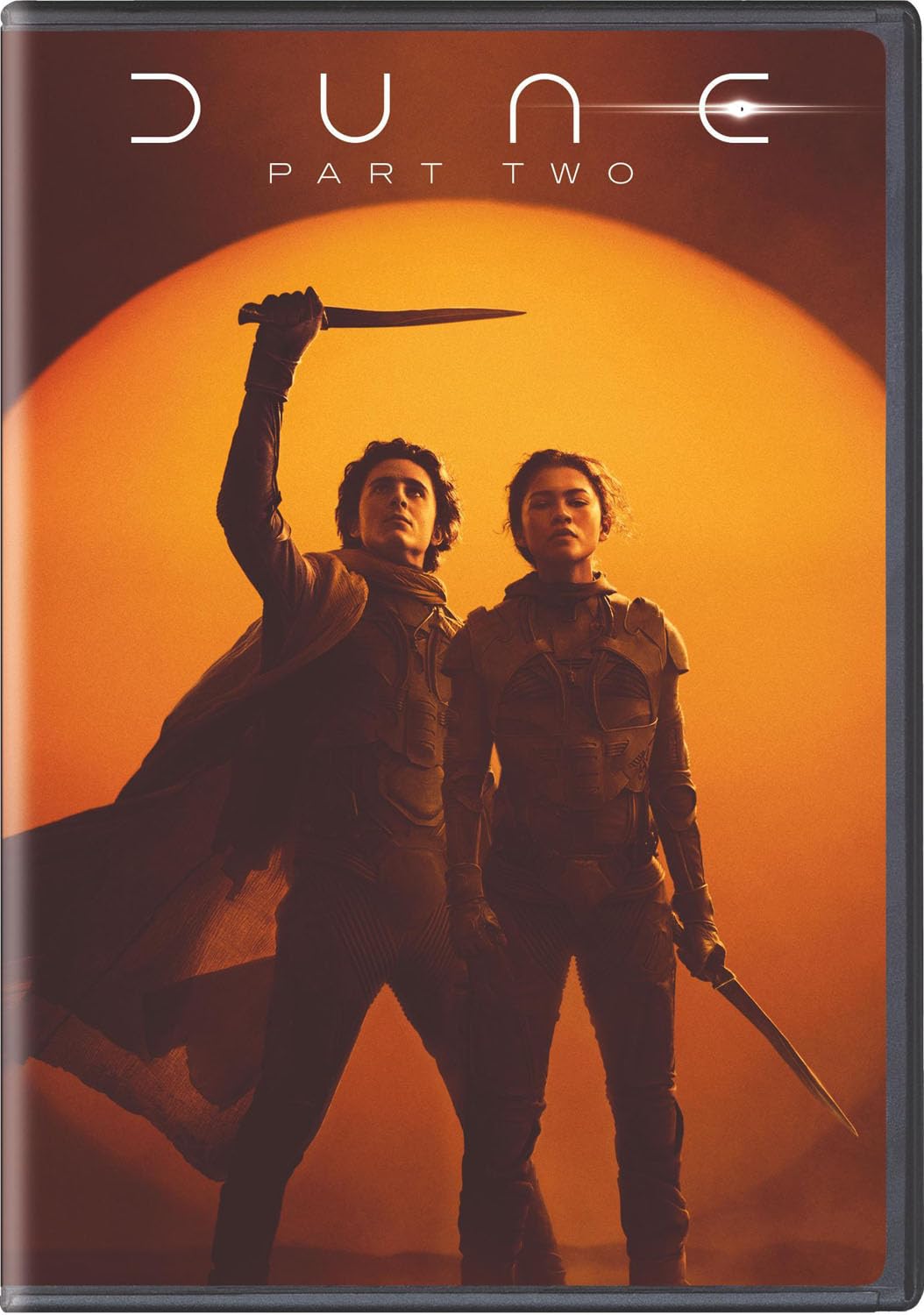
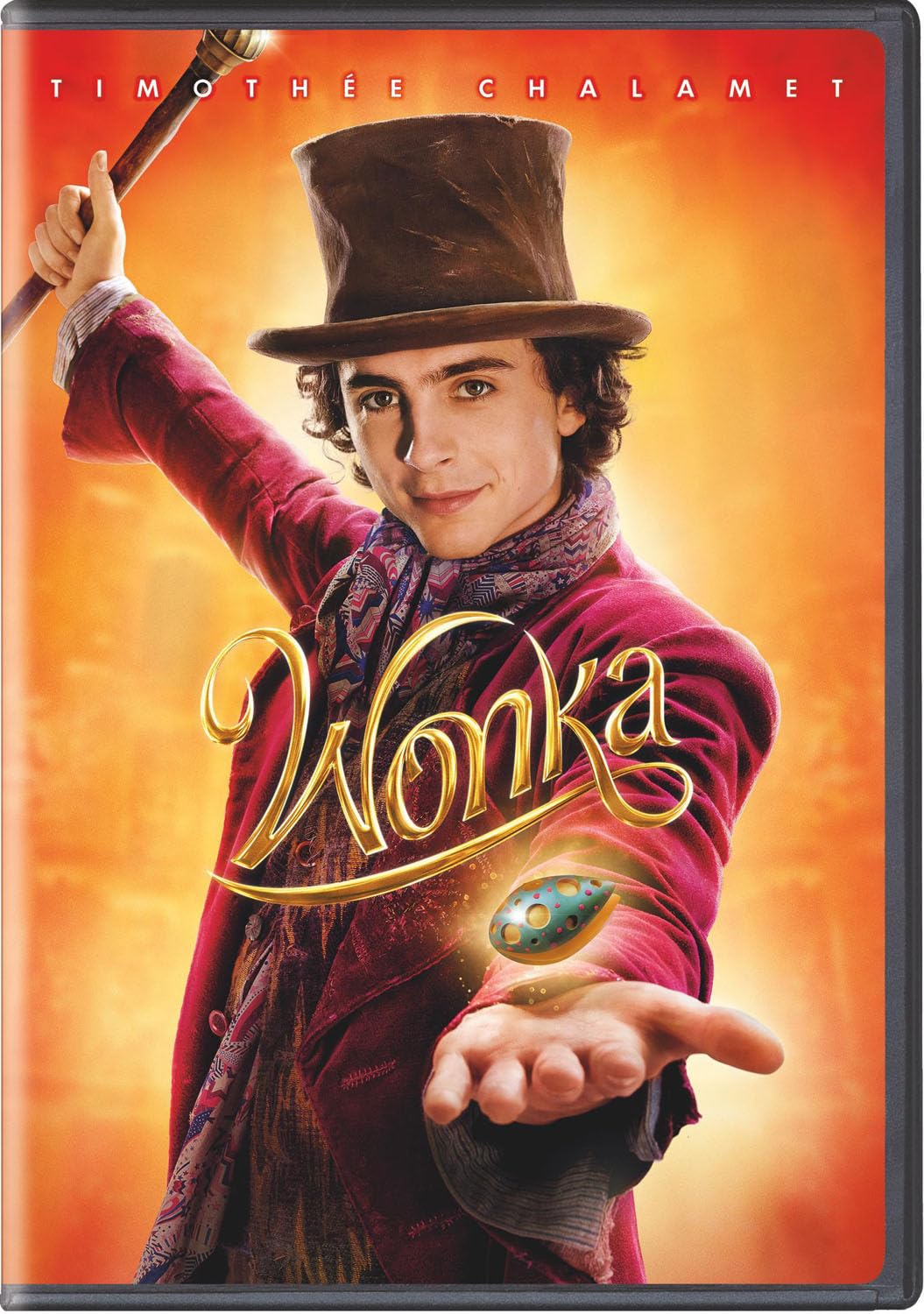
Born in just 1995 (ouch), Chalamet’s premiere was on Law and Order in 2009, moving to films with a role in Interstellar. From there, an almost non-stop string of movies came. Call Me By Your Name (2017) earned him an Academy Award Best Actor nomination, the third youngest nominee ever. His success culminated in the lead roles for the Dune films (another movie nominated for the Oscar), Wonka, and the recent A Complete Unknown, a biography of singer Bob Dylan (now 83), for which he was again nominated for an Oscar at 29 years old. Chalamet had Dylan’s approval for the role. He sang more than 40 of Dylan’s songs for the soundtrack (and did an excellent job), and yes, he himself played both the guitar and harmonica for it. On top of that, between acting, singing, and playing the actual instruments, Chalamet also co-produced the film. He lost the Oscar to Adrien Brody (The Brutalist), but became the youngest actor ever to win the Screen Actor’s Guild Best Actor award for the role.

Some actors start out unknown and bloom into fame in time; others seem to shoot straight to the top. Some who do fade out for a variety of reasons (James Dean made only 3 films; Mel Gibson’s behavior became a liability, Drew Barrymore was in substance rehab by thirteen, Ezra Miller became erratic), but others manage to navigate the pitfalls and go on to have long and amazing careers (Jeff Bridges, Clint Eastwood, Betty White, Kurt Russell, Mickey Rooney, for some). Time will tell if Chalamet can keep the fire burning. 

I’m betting he does. Check out his work, and see if you agree!

Side note: Both A Complete Unknown and The Brutalist have only been released on Blu Ray disc, so check your player first.

Get Your Kicks with Martial Arts Films

Ever wonder how much of movie fight scenes are staged and faked, and how much is real? Today, so much is done on a green screen, even the locations are unconvincing. You can be sure, however, that martial arts films are very real.

Martial arts films have some of the best action and fight choreography you can find in film, and they often span multiple genres. Some are written specifically for comedy (most American Jackie Chan films, like Rush Hour), while others are mind-bending (The Matrix). Some are more realistic (Enter the Dragon), while others are not (John Wick 4. Thirteen consecutive hits by cars? I think not. Don’t get me wrong – the John Wick series is in my top 20 films, but this pushes credibility.) Foreign films tend to focus more on the art and less on a story line (sorry, subtitles or overdubbing, the dialogue in Jackie Chan’s Police Story is downright painful, even though the action and car chases are superb), while American films tend to have a story line that is stretched to make room for the action scenes (If John Wick can kill three men with a pencil, does that make the Joker, who kills one, also a martial artist?). Some movies are very good (Ip Man 2, which is a lot like Hong Kong Rocky) while others are cringeworthy and forced (American Kickboxer, for one).

Few martial arts movies are “pure” – there are few “karate” or “judo” or “jiu jitsu” films. Most martial arts films use mixed martial arts, as the actors are usually multiply trained. Bruce Lee, the granddaddy of martial arts stars, didn’t hold a black belt in anything, but invented his own school called Jeet Kune Do. Lee studied under the actual Ip Man, Yip Kai-Man, who invented the school of Wing Chun. The incredible Donnie Yen, whose greatest American films have been Star Wars: Rogue One and John Wick 4, has black belts in Wing Chun, Judo, a sixth-level black belt in Tae Kwon Do, and a purple belt in Jiu Jitsu. Keanu Reeves, of John Wick and Matrix fame, holds a black belt in Jiu Jitsu, as well as black belts in Judo and Karate.

What’s the difference between all the different martial arts forms? Generally, they’re very minor. Some use open hand, some used closed. Some are meant to deflect and defend, others to overpower (Krav Maga). Some emphasize hand work over kicks. Aikido deflects the energy of an attacker, rather than responding. Jiu Jitsu is about pinning and dominating an opponent. Wing Chun focuses on the center of the body and rapid-fire punching, similar to boxing. A second difference is the concept of “belts.” The “belt” level concept is Japanese in origin, while the Chinese systems don’t always use it. This is partly why some of the greatest martial artists of film – such as Bruce Lee – don’t have black belts in any denomination.  Traditionally, the forms using belt levels are karate, tae kwon do, judo, and jiu jitsu.

You might be surprised to know there are a number of western action actors who are more than proficient at various martial arts, including Iron Man actor Robert Downey Jr. (Wing Chun), Wesley Snipes (5th level black belt in karate, 2nd level black belt in Hapkido, plus jiujitsu, kickboxing, kung fu, and capoeira), and Steven Seagal, a 7th-level black belt in Aikido. Chuck Norris has a tenth-degree blackbelt in Tang Su Do. Jean-Claude Van Damme has black belts in karate and kickboxing. Sean Connery, the first James Bond, had a black belt in karate. Jason Statham has a brown belt in jiu jitsu. Even Willie Nelson is a fifth-degree black belt in Korean Gongkwon Yusul, which he has studied for more than twenty years.

On the other hand, Michelle Yeoh, who stars in many martial arts-action films, has no formal training at all, but chalks up her moves to dance training. On film, no one can tell.

Don’t skip a movie just because it’s in a foreign language. Movies like Ip Man 2 and Seven Samurai are well-worth reading captions. Whether you like your action cheesy and fun, or serious and deadly, check out these films that feature martial arts or martial artists, and be careful what you kick or punch!

8 Movie Action Pack

Big Trouble in Little China

Art of Self Defense

As Good as Dead

Big Trouble in Little China

Blade

From Russia With Love

Embattled

Everything Everywhere All At Once

Fearless

Forbidden Kingdom

Foreigner

Hero

Jiu Jitsu

John Wick 1-4

Karate Kid

Keeper

Kill Bill

The Matrix

Mulan

Rush Hour

Pistol Whipped

Red Cliff

Rogue One

Rush Hour

Sakra

Seven Samurai

Shang Chi

Spy Next Door

The Assassin

XXX Return of Xander Cage

Getting Cult-ured

We’ve all heard the term, “It’s a cult classic,” “It’s a cult film,” but what actually is a cult film? For one thing, it has zero to do with charismatic leaders or brainwashing. Cult films can be weird, but some are wildly popular.

While the definition itself is elusive, and films can theoretically lose their cult status if they become mainstream, there are several factors that help define which films can fall in that category. For one, it has to bomb at the box office. This doesn’t mean it was a bad film – Donnie Darko did lousy because the film revolved around a plane crash, and it was released just weeks after 9/11, and all the advertisers pulled out. The Princess Bride became a wildly popular film that did poorly in the theaters, mostly because the studio didn’t know how to market it – kid flick, or adult? Love story, fantasy, or comedy? With no marketing, it didn’t fare well.

A second common requirement is the movie has to be unconventional. It’s not something that will appeal to everyone. Quentin Tarantino films are widely lauded, but Pulp Fiction and Reservoir Dogs aren’t for everyone. Neither are David Lynch films. I love Eraserhead, but it’s a bizarre, trippy, nightmarish film of a man trapped in a dystopian Philadelphia, caring for his grotesquely deformed infant. It is not going to be a runaway hit. Lynch’s TV series Twin Peaks falls in this category, too.

A third is a wildly loyal fan base, who not only quote the film but can often recite most of the dialogue. Many films, of course, fall in this category, but don’t meet the other criteria. Thousands of people are rabid Star Wars fans, or Wizard of Oz fans, or Casablanca fans, but those are mainstream films that appeal to the masses. Fight Club can fall in here. Also Jim Henson’s Labyrinth and The Big Lebowski.

Some claim a cult film must be subversive – this opens the door to a host of horror (Human Centipede, Nosferatu), exploitation (Freaks), pornography, over the top documentaries (like Reefer Madness), and more, but that’s not always the case. Traditionally, cult films gained their popularity from midnight movie showings. Now thanks to streaming, any film on the internet can become a cult film.

Other films fall into the campy, grade-B (or -C) genre films under the guise of “It’s so bad, it’s good.”  Jane Fonda’s Barbarella can fall under here. Attack of the Killer Tomatoes was written specifically that way. Also Attack of the 50-foot Woman, Forbidden Planet, and Plan 9 From Outer Space – a movie credited with being the worst motion picture of all time. You have to laugh at how bad it really is.

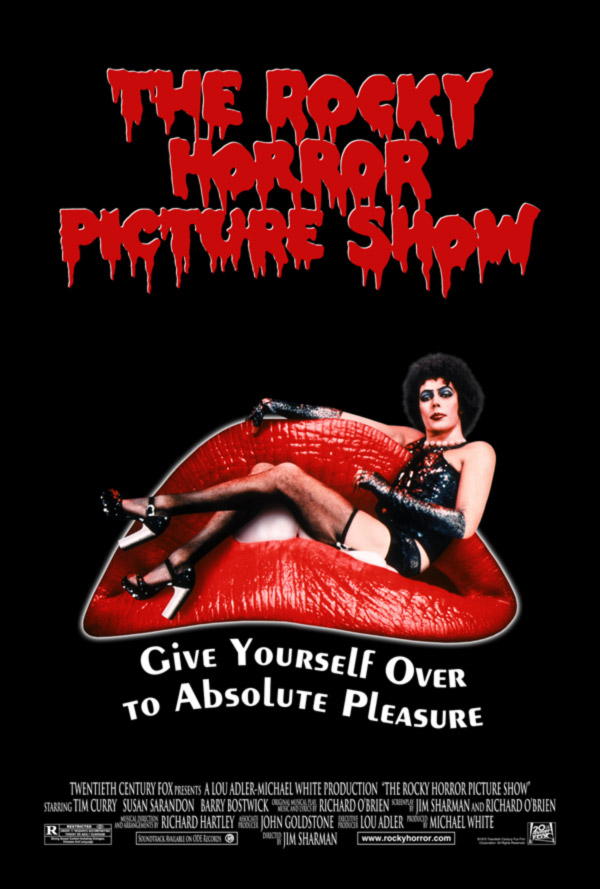
The Granddaddy of all “Cult” films, of course, is Rocky Horror Picture Show. It checks every box – subversive (open sexuality!), midnight showings, camp (Tim Curry vamping it up in leather and lace), a guilty pleasure, definitely not mainstream, and a rabidly loyal fan base who can sing and quote the entire movie from memory, while throwing toast and raising umbrellas depending on the scene. It’s a great, if strange, film with a fabulous soundtrack, but not family friendly. It struggled in theaters initially, but Rocky Horror is currently the seventh highest grossing rock film when adjusted for inflation, and at 49 years old, it is the oldest continuously released movie in history – you can still find it playing in a theater somewhere. It now on the National Registry of films as culturally important.

So much for non-mainstream and subversive.

TV shows can be cult as well.  The original Star Trek would qualify – a show with such poor ratings it was cancelled after two seasons, only to have a huge outcry from a fanbase that got it renewed for a third season … and then a mega-empire of movies and TV series. Firefly too – a show of only 14 episodes with a fan base so active it spawned a motion picture (Serenity) – as are Buffy the Vampire Slayer, Lost, Arrested Development, South Park, and The Simpsons. While both South Park and The Simpsons were wildly popular, they’ve been in production for 26 and 36 seasons, respectively, which puts them into cult status.

You probably already love a “cult” film, but give some of these a try and see if you agree!

Eraserhead

The Man Who Fell to Earth

Plan 9 from Outer Space

Princess Bride

Barbarella

Big Lebowski

Big Trouble in Little China

Boondock Saints

Brazil

A Clockwork Orange

Elephant Man

Escape from NY

(TV) Firefly

Freaks

Harold & Maude

Kill Bill

Labyrinth

Monty Python and the Holy Grail

Napoleon Dynamite

Night of the Living Dead

Pulp Fiction

Reservoir Dogs

Rocky Horror Picture Show

This is Spinal Tap

Tommy

Kung Fu/ martial arts films such as Enter the Dragon

Hocus Pocus

10 Movies Set in Ireland (perfect for St. Patrick’s Day!)

On St. Patrick’s Day, after you’ve eaten your corned beef and cabbage and drunk your green beer, why not settle in for a movie that sweeps you away to Ireland? In 2014 I put together a list of movies set in Ireland, perfect for St. Patrick’s Day viewing. Since then, there have been quite a few more good movies set in the Emerald Isle, so I thought an update might be in order. Here are 10 movies to add to your celebration of all things Irish.

This slideshow requires JavaScript.

  1. The Banshees of Inisherin. On a tiny island off the coast of Irelend in 1923, two lifelong friends find themselves at an impasse when one abruptly ends their relationship, with alarming consequences for both of them. This film was one of the highlights of 2022, nominated for multiple awards for cast and crew alike.
  2. Wild Mountain Thyme. Headstrong farmer Rosemary Muldoon has her heart set on winning her neighbor Anthony Reilly’s love. The problem is, Anthony believes he’s inherited a family curse, and remains oblivious to his beautiful admirer. Stung by his father’s plans to sell the family farm to his American nephew, Anthony is jolted into pursuing his dreams.
  3. Belfast. A semi-autobiographical film written and directed by Kenneth Branagh, which chronicles the life of a working class family and their young son’s childhood during the tumult of the late 1960s in Northern Ireland.
  4. Song of the Sea. When Saoirse and Ben’s mother mysteriously disappears into the ocean, the two children go on an epic journey to find out the truth about her, and in the process, discover mystical secrets about both their mother and Saoirse herself. The film takes inspiration from the mythological Selkies of Irish folklore, who live as seals in the sea but become humans on land.
  5. My Left Foot. Born with cerebral palsy, the 10th of 22 children of a Dublin bricklayer and his wife, Christy Brown was doomed to life as a vegetable by physicians in 1932. His strong-willed mother’s love and faith encouraged him to overcome this label. An astounding story of an artist who defeated a physical disability, degrading stereotypes, and poverty to fulfill his dreams.
  6. Michael Collins. The life of an Irish man whose dreams inspired hope, whose words ignited passion, and whose courage forged a nation’s destiny. His powerful gifts sparked the fierce battles that led to the Irish Republic that exists today, but his unshaken confidence in those gifts led him to become a victim of the very men he inspired to fight by his side.
  7. Once. A Dubln street musician and a young mother discover each other’s talents and push one another to realize their dreams. The soundtrack from this film won a Grammy award, and the song “Falling Slowly” won an Academy Award for Best Original Song.
  8. Albert Nobbs. A woman (Glenn Close) passes as a man in order to work and survive in 19th century Ireland. Some thirty years after donning men’s clothing, she finds herself trapped in a prison of her own making.
  9. Waking Ned Devine. When Ned Devine dies from shock after winning the lottery, two longtime friends, Micheal and Jackie, discover the body and agree Ned would want them to benefit from his good luck. They embark upon an outrageous scheme to claim the ticket but first they have to get all the townsfolk to go along with their plan.
  10. The Wind That Shakes the Barley. Set during the Irish War of Independence (1919–1922) and the Irish Civil War (1922–1923), this drama tells the fictional story of two County Cork brothers who join the Irish Republican Army to fight for Irish independence from the United Kingdom. It takes its title from the Robert Dwyer Joyce song “The Wind That Shakes the Barley”, a song set during the 1798 rebellion in Ireland and featured early in the film.