Serial Solving

I never know what I’ll read next. What ever sparks my interest, either by title, by book cover, or by subject. I have no special direction or particular interest, but if I found one book on a subject interesting, I’m far more likely to read another on the subject, or by the same author.  Hence I’ve read an inordinate amount of books on Ebola, fast fashion, tea, books on the making of various movies, and, well, serial killers.

We know the names. Son of Sam. Ted Bundy. Green River Killer. BTK Killer. Long Island Killer. 

I have no fascination with them, find most of them repellent and frightening beyond description, and did not shed a tear when Jeffery Dahmer died in prison, but I find the psychological processes and forensics involved in tracking them down utterly intriguing. The science end, not the murder end. And there is SO much to be fascinated about. 
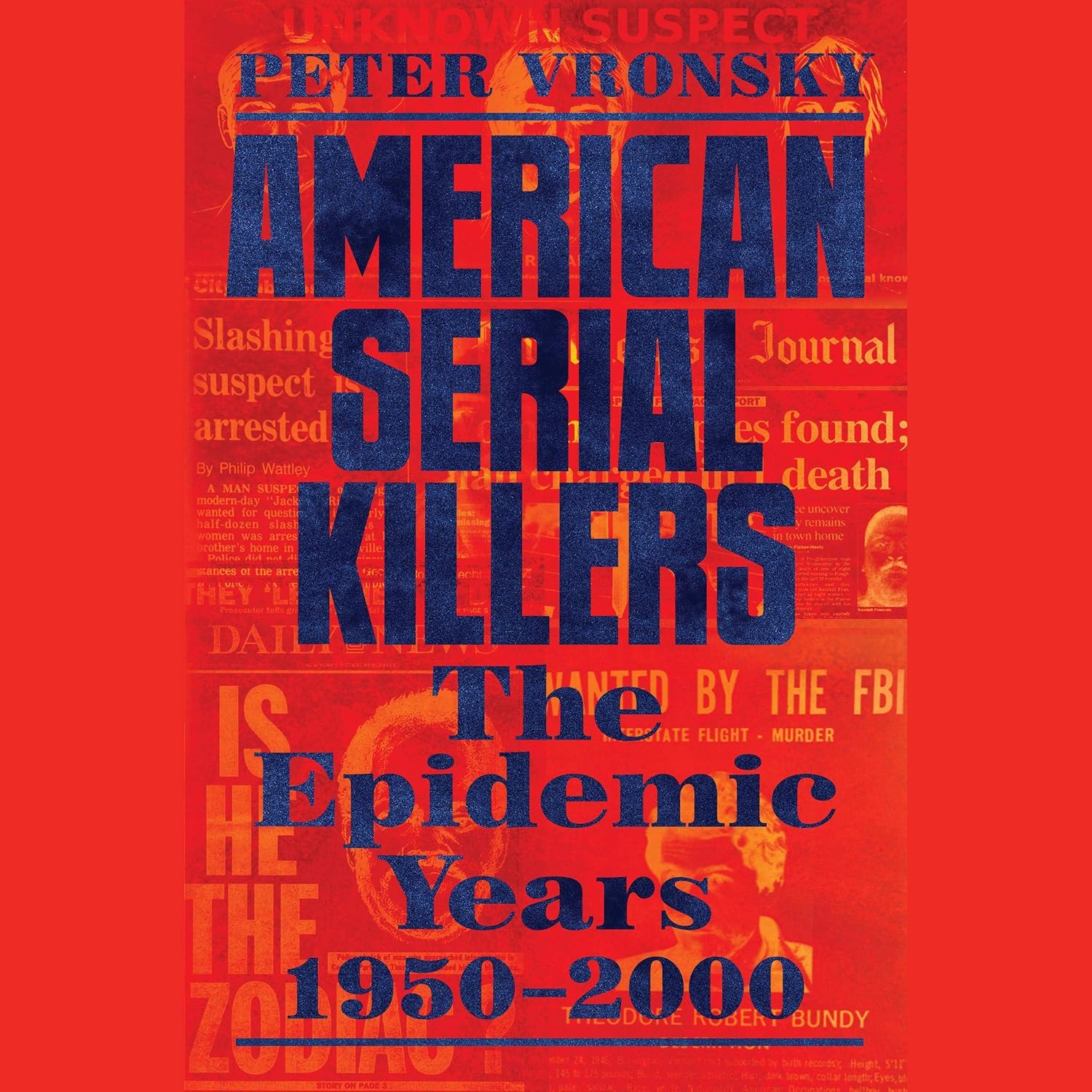
Most recently, I read the book American Serial Killers: The Epidemic Years, by Peter Vronsky, and I was blown away by the premise. America – which has more serial killers than any other country (well, that are reported and connected. Other countries have mass murders by corrupt governments, so maybe we’re better off) – had a major epidemic of serial killers (those that intermittently kill more than three people, as opposed to a spree all at once) from around 1970 to the mid 1990’s – more than 600 a year, and then it tapered off sharply. Why? Why did we have terrible trails of serial murders for 25 or 30 years, and then few?  Vronsky makes a very strong, documented  case for the fact that most of these killers were born in the late 40’s and early 50’s (25 or 30 by 1975) and their fathers fought in World War II. Vronsky documents that many of these fathers came back damaged from the war – PTSD, violent, depressed, alcoholic, received no help, and were unable to nurture their children. These boys – coming of age with violent sex images in men’s magazines, pulp fiction novels, and comics – grew up with attachment issues, poor self-image, and violent fantasies about sex, which they slowly began to work up the nerve to carry out. Why did things taper off? Most of those killers were either dead, in prison for other crimes, or had worn themselves out and were living a quiet life until something might trigger them again, unknown to their neighbors. Vietnam Vets received more services than soldiers in the 40’s, there was more public support, it wasn’t as big a deal to divorce a man, and those children did not have the same issues their grandfathers did. Those children of Vietnam vets would have been 25-30 in 1990-95 – years when serial killers were in decline.

Another utterly fascinating book – one that sent me down a long, long wormhole of research – is Barbara Rae-Venter’s I Know Who You Are: How an Amateur DNA Sleuth Unmasked the Golden State Killer and Changed Crime Fighting Forever. The Golden State Killer was alleged to have killed 13 people and committed more than 50 rapes across California between 1974-1986. Because police departments didn’t talk to each other or share information, no one was ever able to piece together all the information. Enter Rae-Venter. Rae-Venter spent her days helping people trace their genealogy and find their families using her home computer. Asked if she could do the same for a suspect, Rae-Venter needed 63 days and $200 to make a genetic profile of the killer from her dining room – something 30 years and $10 million of taxpayer money had never been able to do, leading directly to the apprehension of the killer. Since Rae-Venter, a huge number of backlogged, dead-end cases have been solved and cleared (like the Long Island Killer) due to the methods she used.

Spurred on by her methods, I fell down a rabbit-hole of genealogical research, aided by ancestry.com (free at the library), and in a week was able to trace my mother’s ancestry back 12 generations, connect some gaps, discover my grandmother had an older sister we never heard of (probably because she died at 5 months), and my grandmother’s younger sister was four when she died, not the two my grandmother remembered. Sometimes books are dangerous!

Through both of these books, several names kept popping up, and I realized I’d already read books by both men. John Douglas was the first real FBI criminal profiler, starting in the 1980’s, creating many of the procedures we use today. His book, Mindhunter, chronicles how he began, in a time where every department wanted the glory of solving the case, and thus no one ever shared information, and no one ever solved the cases. 

Unmasked: My Life Solving America’s Cold Cases by Paul Holes, is another. Holes learned the business under Douglas, pursuing cold-case investigations from the 1990’s into the 2000’s.  Some of the cold cases that perplexed them the most and they were never able to solve were later solved by Barbara Rae-Venter’s methods, like the Long Island Killer and the Golden State Killer.
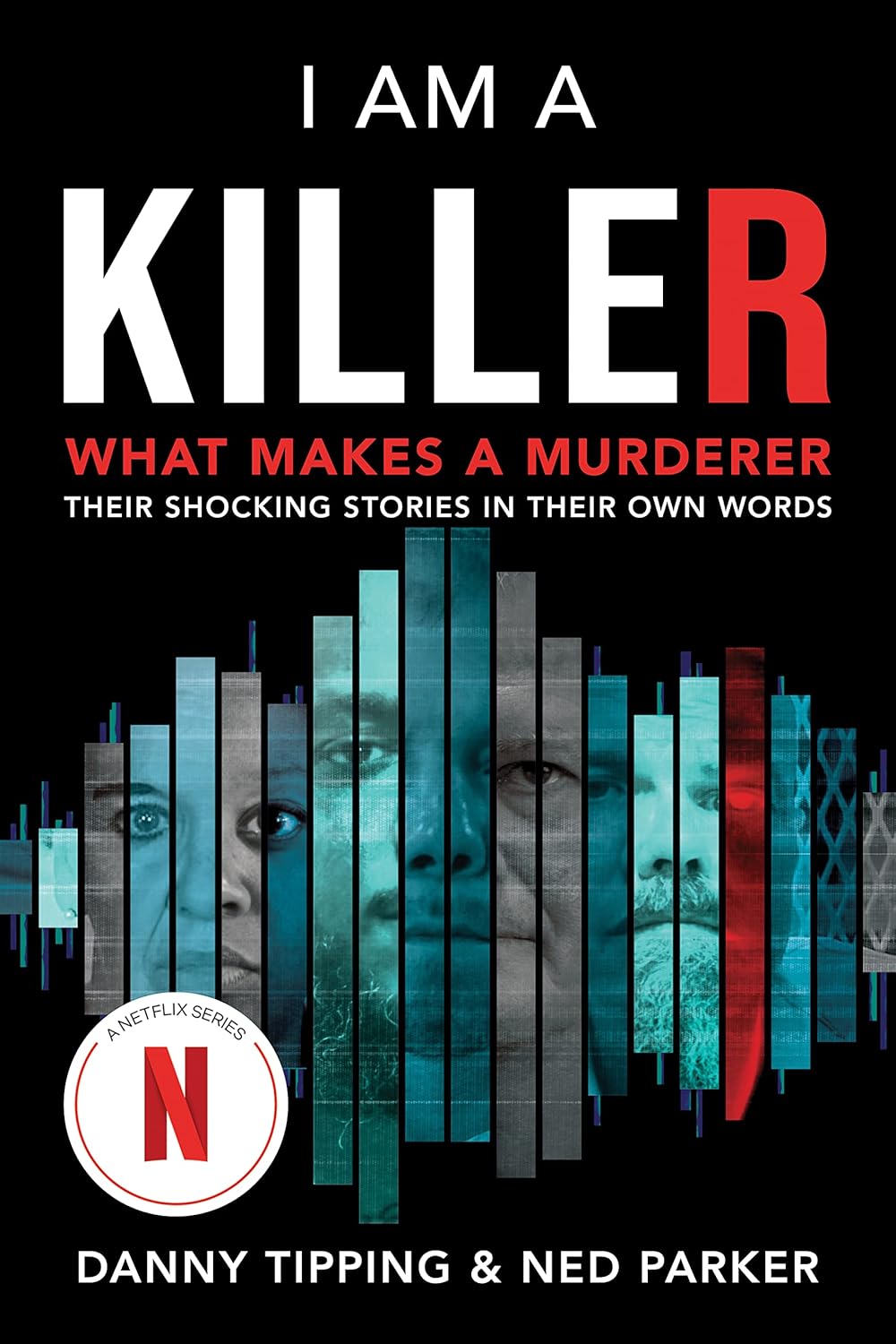
If you don’t care so much about crime but like psychology and sociology, and want to find out why people kill, try I Am a Killer, by Danny Tipping.  It’s a sad book that dwells on the murderers and not so much the crime. Time after time, the horrific backgrounds of these killers are revealed (one father, to hide the bruises and welts on his kid when Social Services was coming, tied him to a mattress, poured lighter fluid on him, and set his back on fire). Many did not deserve the sentences they received, responding to unimaginable abuse. There are no winners in this book. 

Though he technically didn’t kill anyone, if you want local flavor, read Incendiary: The Psychiatrist, The Mad Bomber, and the Invention of Criminal Profiling, by Michael Cannell. Many people claim to have invented criminal profiling, but this was an early case. In the 1940’s, a bomber went around exploding devices all over New York City, then teasing the police through letters. After twenty years, he was determined to be George Metesky – from Waterbury, Connecticut, and the criminal profiling was eerily correct.

If you like crime stories and investigations, these are excellent books. If you like psychology and deviant behavior, these are also excellent books. The difficult part is that they had to be written at all.

4 Teens’ Takes on “A Good Girl’s Guide to Murder”

The following is a collection of book reviews by four teens (identified here by their initials) who read Holly Jackson’s novel, A Good Girl’s Guide to Murder. All four teens rated the book 5/5 stars. What makes it so good? Should you read it, too? Read on!

Grammar and spelling in some reviews have been edited for clarity.

Summary (provided by the publisher):

Everyone in Fairview knows the story.

Pretty and popular high school senior Andie Bell was murdered by her boyfriend, Sal Singh, who then killed himself. It was all anyone could talk about. And five years later, Pip sees how the tragedy still haunts her town.

But she can’t shake the feeling that there was more to what happened that day. She knew Sal when she was a child, and he was always so kind to her. How could he possibly have been a killer?

Now a senior herself, Pip decides to reexamine the closed case for her final project, at first just to cast doubt on the original investigation. But soon she discovers a trail of dark secrets that might actually prove Sal innocent . . . and the line between past and present begins to blur. Someone in Fairview doesn’t want Pip digging around for answers, and now her own life might be in danger.

Use 5 words to describe this material.

OM: Truth, justice, friendship, reputation, mystery

GF: Mystery, suspenseful, confusing, thought-provoking, and compelling

KA: Mysterious, action-filled, suspenseful, perseverance, and thrilling

MH: Captivating, thrilling, entertaining, suspenseful, shocking

Why did you read/view this material?

OM: It is a New York Times bestseller and friends were recommending it.

GF: I read this book because my friend recommended it to me and it looked like a very interesting book.

KA: I read this book because of how it was getting amazing reviews and also because of how I wanted to read the whole series.

MH: I read A Good Girl’s Guide to Murder because it was popular and I am interested in the genre of murder mysteries. 

What was your favorite part and why? 

OM: The surprise twist at the end. This story kept you at the edge of your seat. 

GF: My favorite part of the book is when you find out who is behind the whole scene. The buildup in this book is amazing, and I was questioning who actually did it the whole time. The book surprises you with that answer! 

KA: My favorite part was when Pip found out who was the true murderer. It was the person I least expected. 

MH: My favorite part is the part that must never be spoiled ahead of time, this is the part where everything falls together and Pippa figures everything out. This is my favorite part because it’s so satisfying to see all the clues put together, the ending is so unexpected. It is an ending worthy of Agatha Christie.

What is one thing that you would change about this material? Why? 

OM: The beginning is a little confusing, as it switches from first person, to journal entries, to interview transcripts. I had to spend more time than I usually would figuring out what was important to focus on before could I really process the point of the story.

GF: One thing that I would change about this book is giving the outside characters that are still relevant to the book more of a story. In this book, everyone is viewed as a suspect for Pip to investigate, but in reality, every character is different and has their strengths and weaknesses.

KA: Something I would change about this book is how it has pictures. I prefer when books do not have pictures.  

If you could ask the author/creator one question about this material, what would it be and why? 

OM: I would ask the author how she got the idea because the book states that it is completely fiction. It is such a well thought out and creative story, I would love to know where she gets her inspiration.

GF: If I could meet Holly Jackson and ask her one question about A Good Girl’s Guide To Murder, I would ask her what gave her the idea to write this book. It has very big plot twists and the storyline is complex, so I would ask her how she came up with this.

KA: Something that I would ask Holly Jackson is what inspired her to write a book about this topic. Was it based on a true story/something that really happened?

MH: If I could ask Ms. Jackson one question about A Good Girl’s Guide To Murder, it would be this, how did you come up with your ending? The ending was truly very unexpected and surprising, I would like to know how Ms. Jackson came up with such a unique ending.

Who do you think would like this material and why?

OM: Anyone that enjoys mysteries or realistic fiction would enjoy this book.

GF: I think that teenagers would like this book. This is because it has great characters that most people can relate to, and it has big plot twists that older kids would enjoy.    

KA: I think people who like crime/murder related books would like this.

MH: I think anyone thirteen years old or older would enjoy this book, even adults, the plot develops very quickly, yet it is not at all predictable. It is a thrilling and exciting read for anyone, not just true crime geeks.

True Crime for the Faint of Heart

I used to love true crime. For my first research paper in high school, I wrote about the 1964 murder of Kitty Genovese and the phenomena of the bystander effect. In college, Investigation Discovery was my background noise while working. More recently, murder podcasts and true crime audiobooks accompanied my commute to work, and I unwound with Netflix miniseries that dissected cold cases.

But my tastes are changing. Death got a little too close to me over the last two years. A podcaster made me question the ethics of finding entertainment in another’s pain. And becoming a parent obliterated my tolerance for stories where terrible things happen to small and vulnerable beings. Don’t get me wrong – I’m still fascinated by the darkness. I just need to be more selective. Minimal death and violence. Minimal gore. Thefts, forgeries, con artists. White collar crimes. Maybe the occasional plane crash or disaster.

So I present you with an updated list of true crime stories in various formats for those who, like me, have to say “hard pass” to serial killers and kidnappers.

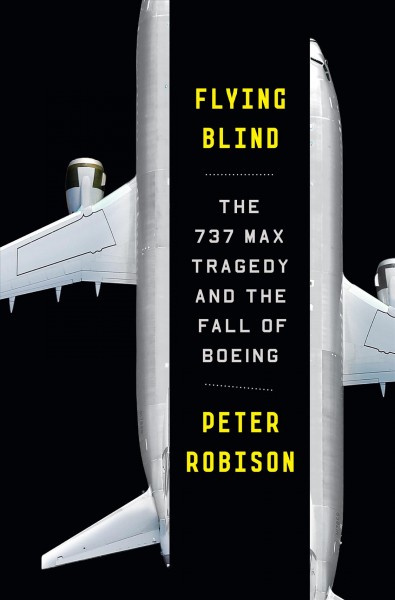
Flying Blind : The 737 MAX Tragedy and the Fall of Boeing by Peter Robison. A fast-paced look at the corporate dysfunction–the ruthless cost-cutting, toxic workplaces, and cutthroat management–that contributed to one of the worst tragedies in modern aviation.

Bad Blood : Secrets and Lies in a Silicon Valley Startup by John Carreyrou. Recounts the story behind Theranos, the medical equipment company that misled investors to believe they developed a revolutionary blood testing machine, detailing how its CEO, Elizabeth Holmes, perpetuated the lie to bolster the value of the company by billions.

Empire of Pain : The Secret History of the Sackler Dynasty by Patrick Radden Keefe. Presents a narrative account of how a prominent wealthy family sponsored the creation and marketing of one of the most commonly prescribed and addictive painkillers of the opioid crisis.

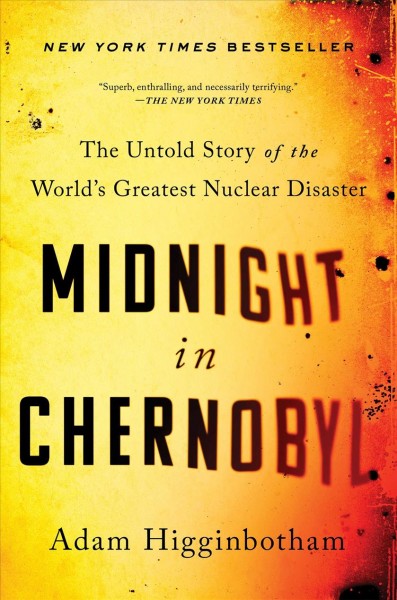
Midnight in Chernobyl : The Untold Story of the World’s Greatest Nuclear Disaster by Adam Higginbotham. Journalist Adam Higginbotham’s definitive, years-in-the-making account of the Chernobyl nuclear power plant disaster–and a powerful investigation into how propaganda, secrecy, and myth have obscured the true story of one of the twentieth century’s greatest disasters.

Confident Women : Swindlers, Grifters, and Shapeshifters of the Feminine Persuasion by Tori Telfer. The art of the con has a long and venerable tradition, and its female practitioners are some of the best– or worst. Telfer introduces us to a host of lady swindlers whose scams ranged from the outrageous to the deadly.

The Gardner Heist : The True Story of the World’s Largest Unsolved Art Theft by Ulrich Boser. Shortly after midnight on March 18, 1990, two men broke into the Isabella Stewart Gardner Museum in Boston and committed the largest art heist in history. But after thousands of leads, hundreds of interviews, and a $5-million reward, not a single painting has been recovered. Worth a total of $500 million, the missing masterpieces have become the Holy Grail of the art world and one of the nation’s most extraordinary unsolved mysteries.

When Art Imitates Life

Anne Perry is an accomplished mystery writer with more than forty novels to her name, including the Thomas Pitt series, the Daniel Pitt series, the William Monk series, and more. Many of her novels take place around World War I. 

She’s also a convicted murderer.

A friend from college – who is also a librarian – told me this while I was reading Death with a Double Edge, the fourth of her Daniel Pitt series. And thereby hangs a tale.

Perry (whose birth name was Juliet Hulme) was born in England but spent much of her childhood in the Bahamas, South Africa, and New Zealand. As a teen in New Zealand, she became fast friends with a girl named Pauline Parker. Their friendship was so tight it bordered on obsessive, with the girls creating rich fantasy worlds they pretended to live in, and throwing tantrums if they couldn’t be together.

When Perry was 15, her mother was caught in an affair, and her parents decided to divorce. Perry was going to be sent to South Africa to stay with relatives for a while. This sent the friends into a panic. They asked Pauline’s mother if Pauline could go with Anne/Juliet, and her mother said no. Pauline then, in the short-sighted way children have, decided to kill her mother, freeing Pauline to travel with Anne/Juliet. When Anne hesitated, Pauline threatened to kill herself if Anne didn’t help. Just three days later, while walking with Pauline’s mother, the girls beat her to death with a brick – a deed that took twenty savage blows.

Perry and Hulme were caught quickly. They were too young for the death penalty, and both wound up serving five years in prison. They didn’t speak to each other again. Perry eventually settled in the United Kingdom, where she lived a quiet, penitent life and took up writing mysteries that often had a theme of redemption. It wasn’t until 1994, when no one less than Peter Jackson made a movie about the crime (Heavenly Creatures), that a New Zealand journalist outed her as Juliet Hulme – three days before the release of the film. No one had spoken to her to get any actual facts about the crime, and the film remains highly fictionalized.

Is Perry the only author who has done hard time? Of course not. Mystery writer Dashiell Hammett did six months in jail for contempt of court. Nelson Algren, who wrote Man With the Golden Arm, spent five months in jail for stealing a typewriter. William S. Burroughs, author of The Naked Lunch, first spent time for forging a prescription, but later killed his common-law wife after a drunken argument while in Mexico. He escaped prosecution by fleeing back to the United States. Chester Himes was sent to jail for eight years at the age of 19 for armed robbery, where he began to write such novels as A Rage in Harlem and Cotton Comes to Harlem. In all cases, incarceration, even for a little while, made a huge impact on the writer and their view of the world.

Anne Perry’s latest book, Three Debts Paid, a fifth volume of the Daniel Pitt series, was released in April.

CPL Staff’s Favorite Reads of 2020

Ask a librarian for some good books, be prepared for a long list! I recently asked our staff members to share some their favorite reads in 2020, and the answers that came back were many and varied. We really do read a lot! Not all the books on this list were published in 2020, (some were older books we just got around to reading in 2020!), but all received a solid thumbs up from a member of our staff:

Children’s Books

Picture Books

Chapter Books

YA Fiction

Adult Fiction

Adult Non-Fiction


( * – this book was recommended by more than one staff member)