Getting In On The Games – Fiction For and About Gamers

Video games, whether on computers, consoles, tablets, or handheld players are fun diversions for many people of all ages. For serious players the worlds within games offer an escape, communities of like-minded individuals, and mild (or not so mild) obsessions for the players. It is no wonder that authors have used video games as subject matter, setting, plot device, or even characters in their work. Here are some great novels, divided into children’s fiction and young adult fiction, that might particularly appeal to gamers and those that lose them to the games.gamerj1

Children
My Life as a Gamer by Janet Tashjian
Derek Fallon gets the chance of a lifetime when he is asked to test software for new video games, but he soon discovers that his dream job isn’t all it’s cracked up to be.

Game Over, Pete Watson by Joe Schreibergamerj4
When video game obsessed Pete Watson discovers his dad is not only a super-spy but has been kidnapped and is now trapped inside a video game, he has to use his super gaming skills and enter the game to rescue him.

Game On! by D.J. Steinberg
When Old Fogey escapes from prison and creates a video game that physically sucks the players into the game, it is up to Daniel, aka Loud Boy, and his friends to call upon their superpowers to rescue the captured players.

More children’s books that video game fans and players might really enjoy include:The Time Hackers by Gary Paulsen, Deadly Pink by Vivian Vande Velde,Close Encounters of the Nerd Kind by Jeff Miller, Only You Can Save Mankind by Terry Pratchett, Brainboy and the Deathmaster by Tor Seidler, Herbert’s Wormhole by Peter Nelson, and Game On! by Jennifer L. Holm & Matthew Holm.

This slideshow requires JavaScript.

Young Adults
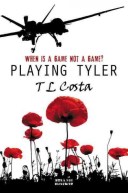
Playing Tyler by TL Costa
Tyler MacCandless feels trapped caring for his older brother in rehab and working at gamerya1McDonald’s, until he is introduced to a new video game that could earn him a place in flight school, but may also be very different than it appears.
In Real Life by Cory Doctorow
Immersing herself in an online role-playing game where she enjoys fantasy heroics, Anda confronts a difficult choice when she befriends a disadvantaged Chinese kid who works illegally to gamerya8collect valuable objects and sell them to other players for real money.

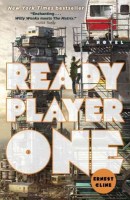
Ready Player One by Ernest Cline
Immersing himself in a mid-twenty-first-century technological virtual utopia to escape an ugly real world of famine, poverty, and gamerya4disease, Wade Watts joins an increasingly violent effort to solve a series of puzzles by the virtual world’s creator.
More young adult books that video game fans and players might really enjoy include: The Hitchhiker’s Guide to the Galaxy by Douglas Adams, Neuromancer by William Gibson, The Peripheral by William Gibson, For the Win by Cory Doctorow, Ender’s Game by Orson Scott Card,  In Real Life by Lawrence Tabak, The Eye of Minds by James Dashner, Erebos: It’s a Game: It Watches You by Ursula Poznanski, Epic by Conor Kostick, Insignia by S. J. Kincaid, The Improbable Theory of Ana & Zak by Brian Katcher, and Guy in Real Life by Steve Brezenoff.

Solving the Meal or Snacktime Blues

If you are anything like me, you spent the start of the school year determined to pack healthy lunches and have healthier snack options available for the kids, and most likely yourself. Even if you do not have kids, at some point you have had the urge to jazz up your own meals, make cooler appetizers for some function, or just eat better. Maybe you want to sneak some extra vegetables into dinner, or even dessert, or new dietary restrictions have you trying new combinations and ways to make everything taste great while still being reasonably good for you. snack

I started off the school year with fresh baked muffins (with pureed vegetables hidden inside), plenty of fruit and whole grains in the snazzy bento box style containers for each of my kiddos. I had a snack box in the refrigerator and one in the pantry with pre portioned healthy snacks to fulfill requests. And now? Well, lets just say that the lunches are not nearly as well planned and motivation to keep everything healthy and organized is waning.

I have one young picky eater in the house, and a husband that dislikes casseroles, crock pot cooking, and vegetables in general. It is easy to fall into a rut of making the same the few meals over and over, and picking meals that seem to be the easiest to make even when there are better options. I have found that I regularly need motivation, ideas, and more to keep things healthy and tasty- as well as eaten by the whole crew. Getting everyone involved in the meal planning, shopping, or cooking is a big help. If they get to pick the food, or help in preparing it, they are all much more likely to eat, or at least try, what is on their plate.

Here are some books that I have recently found (some just moved into the Parenting section in the children’s room) to help inspire and re motivate myself and anyone else struggling with healthy meals, healthy snacks, and fun foods that are tasty and healthy.

lunchbox2Stealth Health Lunches Kids Love: Irresistible and Nutritious Gluten-Free Sandwiches, Wraps and Other Easy Eats by Tracy Griffith

So Easy: Luscious, Healthy Recipes for Every Meal of the Week by Ellie Krieger

lunchbox1Best Lunch Box Ever: Ideas and Recipes for School Lunches Kids Will Love by Katie Sullivan Morford

Weelicious Lunches: Think Outside the Lunchbox with More than 160 Happier Meals by Catherine McCord


lunchbox3ChopChop: the Kids’ Guide to Cooking Real Food with your Family by Sally Sampson

The Sneaky Chef: Simple Strategies for Hiding Healthy Foods in Kids’ Favorite Meals by Missy Chase Lapine

lunchbox4Regular readers know by now that I can never stop with just a few recommended books. So, if those listed above are already checked out or you are looking for more you might want to try: Beating the Lunch Box Blues: Fresh Ideas for Lunches on the Go! by J. M. Hirsch, Insanewiches: 101 Ways to Think Outside the Lunchbox by Adrian Fiorino,Deceptively Delicious: Simple Secrets to Get your Kids Eating Good Food by Jessica Seinfeld, The Cleaner Plate Club by Beth Bader & Ali Benjamin, Double Delicious! : Good, Simple Food for Busy, Complicated Lives by Jessica Seinfeld, and The Dinnertime Survival Cookbook: Delicious, Inspiring Meals for Busy Families by Debra Ponzek.

Our Most Popular Non Fiction Series for Children

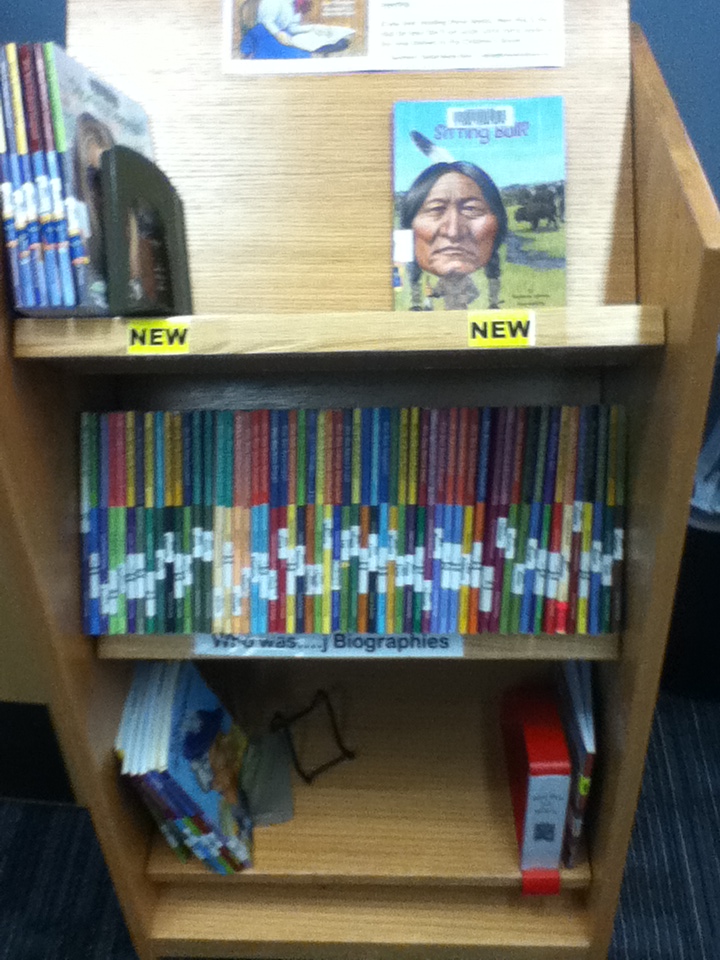
IMG_3100When biography and nonfiction book reports are assigned in school, there is one series that most middle grade readers go to first. Most will head straight for the Who Was biographies and the What Was and Where Is nonfiction series. These books cut straight to the important facts about the subject matter, while making the reading both fun and interesting. In fact, these books are so popular that it is hard to keep them on the shelf even when there are no school projects looming. To see just how few of these popular books actually are in the library right now, check out the small wooden stand outside the Teens Room.

whowas1This series is published by Penguin, and covers an extensive list of people, places, and events that are important historically or are currently relevant in pop culture. The books are easily recognizable by the caricature style drawing of biography subjects and bold cartoon work of all their covers.  There are also illustrations throughout the books and extra bits of information that make the reading more fun. For big fans of the series Penguin has a website where readers can keep track of which books they have read and test their knowledge.

whowas2There is a book club here at the library that meets once a month and focuses on the Who Was series. About a month before each meeting, a librarian will select a book from the series for everyone to read. At the meeting, readers chat about what they discovered in the book and do one or more fun activities inspired by that person’s life. For more info on when the group is meeting check out our events calendar.

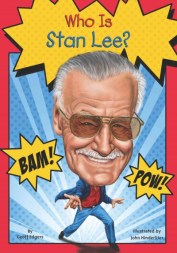
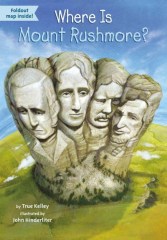
what1Here is a small sampling of the wide variety of people, places, and events this series explores; Who is Jane Goodall? by Roberta Edwards, What is the World Series? by Gail Herman, What was the Battle of Gettysburg? by Jim O’Connor, Who was Dr. Seuss? by Janet Pascal, What was Hurricane Katrina? by Robin Koontz, Who was Betsy Ross? by James Buckley, Where is Mount Rushmore? by True Kelley, Who was Frederick Douglass? by April Jones, What is the Panama Canal? by Janet B. Pascal, Who is Stan Lee? by Geoff Edgers, What was the March on Washington? by Kathleen Krull, and Where is the Great Wall? by Patricia Brennan Demuth.

Children’s DVDs that Entertain and Educate

smartdvdKids seem to love anything they can watch on a screen. We often feel guilty if we let them watch too much, but there are more and more fantastic selections of movies, television shows, and documentaries aimed at children that are also highly entertaining. Public Broadcast Television has led the way, but National Geographic and many other publishers have continued the effort to make entertainment that also teaches. Here are some of the great television series  that have been a hit with my two children, while also catching my attention (in a good way).

Wild Kratts 
Creature teachers Chris and Martin Kratt will take families along on extraordinary animal-smartdvd2powered adventures. The show transforms the Kratt Brothers into animated versions of themselves, allowing the real-life zoologists to visit wild animals in their little-seen habitats and showcase key science concepts.

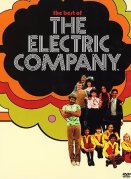
Classic episodes of The Electric Company.
Hilarious, educational and groovy, the 1970s educational television show and cultural phenomenon The Electric Company ran zany comedy and music acts designed to teach kids reading and arithmetic. A re-imagining of this show, with an all new cast and crew, airs regularly on PBS and can be steamed from various outlets, but is not currently on DVD.

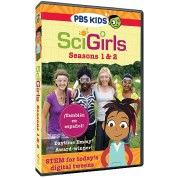
smartdvd1SciGirls
A weekly television series and educational outreach program for smartdvd2elementary and middle-school children based on proven best practices for science, technology, engineering and math education for girls.

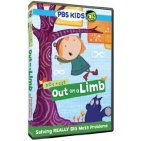
Peg + Cat
Follows the adventures of a young girl named Peg and her sidekick Cat as they use math skills to solve a variety of problems.

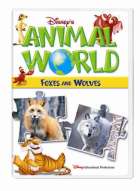
smartdvds5Disney’s Animal World
Stunning live-action wildlife clips of animals in their natural habitats are combined with footage from Disney’s animated classics to introduce youngsters to the world of animals.

More great, educational dvd’s for children include: Dinosaur Train, Super Why, WordWorld, Sid the Science Kid, Reading Rainbow, Martha Speaks, Cyberchase, Magic School Bus, Bill Nye the Science Guy, LeapFrog DVD’s, The Cat in the Hat Knows a Lot about That, OctonautsSchoolhouse Rock!, and the Eyewitness DVD series.

Hidden Treasures and Tips for Exploring the Children’s Room

As someone who spends most of her working and non working hours surrounded by children and children’s books, I am pretty savvy with how our children’s room is organized and what all the stickers and categories mean. However, not all of it is obvious and I want to share some of the small pockets of the children’s collection with you so that it is easier for you to find just the right book. We have updated our signage to make it easier to find the right section, but there are still some nooks and crannies that you might not know about.

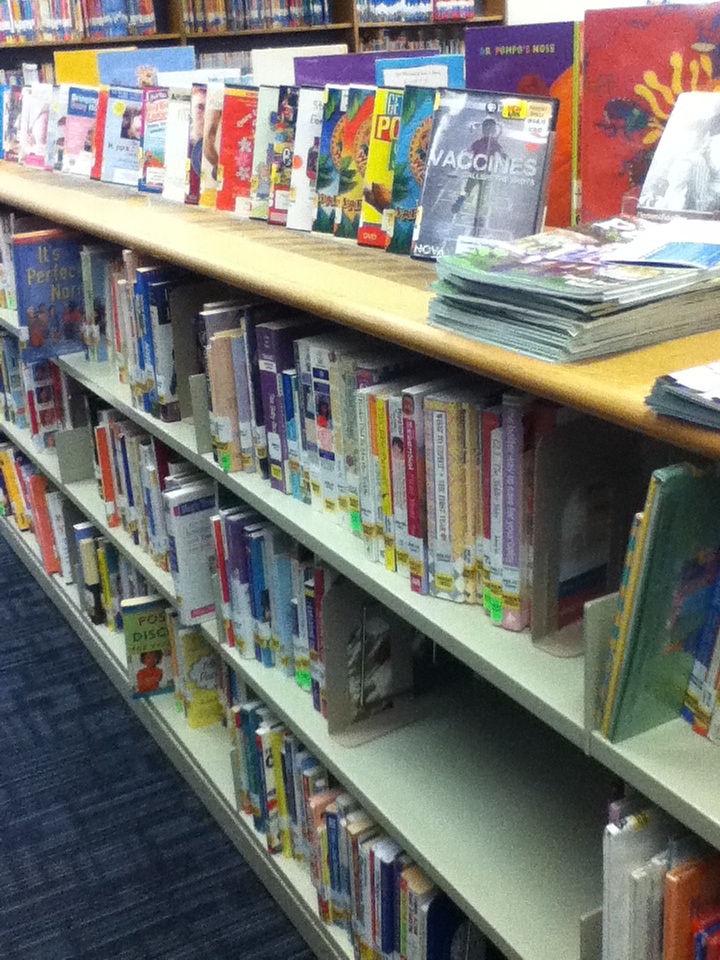
Parents ShelfIMG_3102
If you are looking for books to help you manage the joys of parenthood, including everything from pregnancy to how to have tough discussions with older children, then this area is a great resource. There are non fiction books for parents, DVD’s, and some books to share and read with your children on a variety of topics. Whether you are facing the wonder of potty training or the teen years, there are books here to help. There are also Parent’s Magazines and publications that are free to take. This shelf is right before the play area, so parents can browse with little ones still in sight. The call numbers for these materials all begin with Parent.

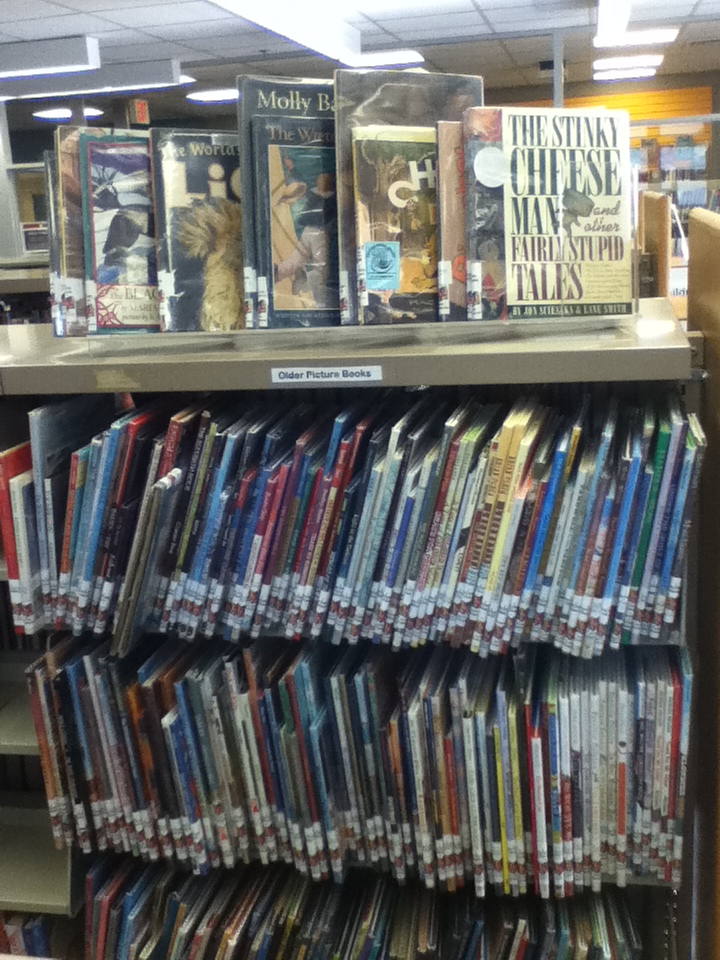
IMG_3096Older Picture Books
These books typically look like the average picture book. However, they are shelved after the chapter books and tend to have more words and/or subject matter that might require more explanation or discussion than expected from a picture book. These are great options for readers who are ready for chapter books but do not want to leave behind picture books or easy readers. The call numbers for these books all begin J OPB.

Easy NonfictionIMG_3103
Trapped between the nonfiction books and the picture books are a couple rows on easy nonfiction. You can tell these nonfiction books apart from the rest because of the bold red E under the call number. These are non fiction materials especially suited for Kindergartners through second graders to explore on their own or for reading together. The text tends to be simple, with glossaries for the harder words, and plenty of pictures. The call numbers for these items begin with J E followed by a number.

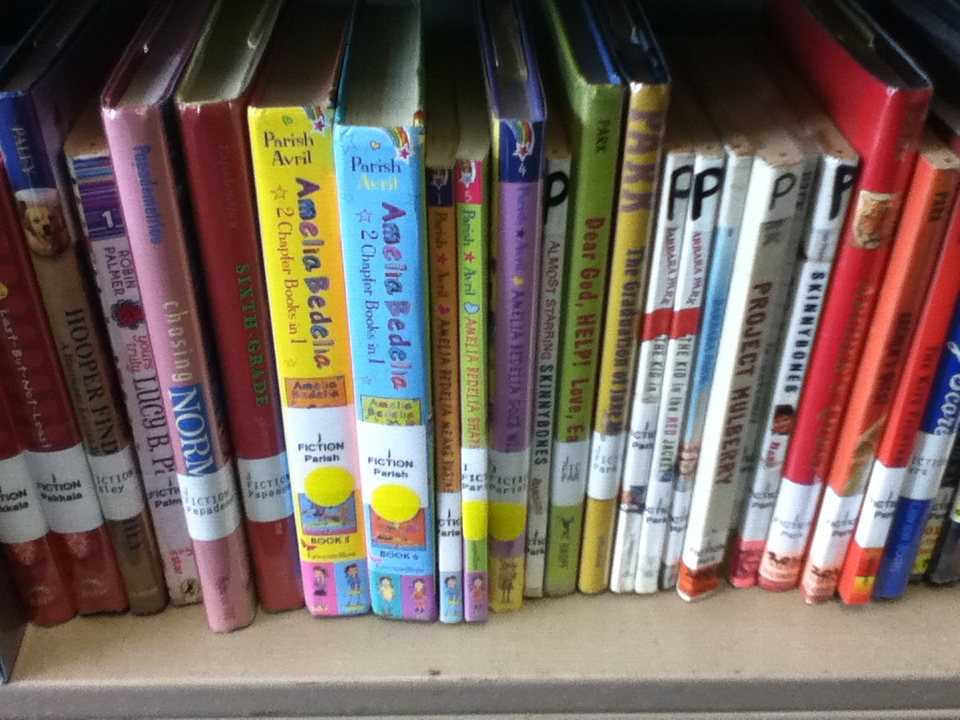
IMG_3097Fiction and Nonfiction with a Yellow Dot
When exploring the fiction section (including series, science fiction, and mystery) and the nonfiction section of our children’s room, you might notice that some of the labels wear an extra yellow dot. This dot means that it is a transitional or easy chapter book. These books are not quite as easy to IMG_3098read as the easy readers wearing the blue stickers (shelved over by the picturebooks) but are great for the readers who are venturing into the world of chapter books and might be intimidated by the sheer size and lack of pictures in some. The these books tend to have a large font, lots of pictures, and less words on a page that other chapter books.

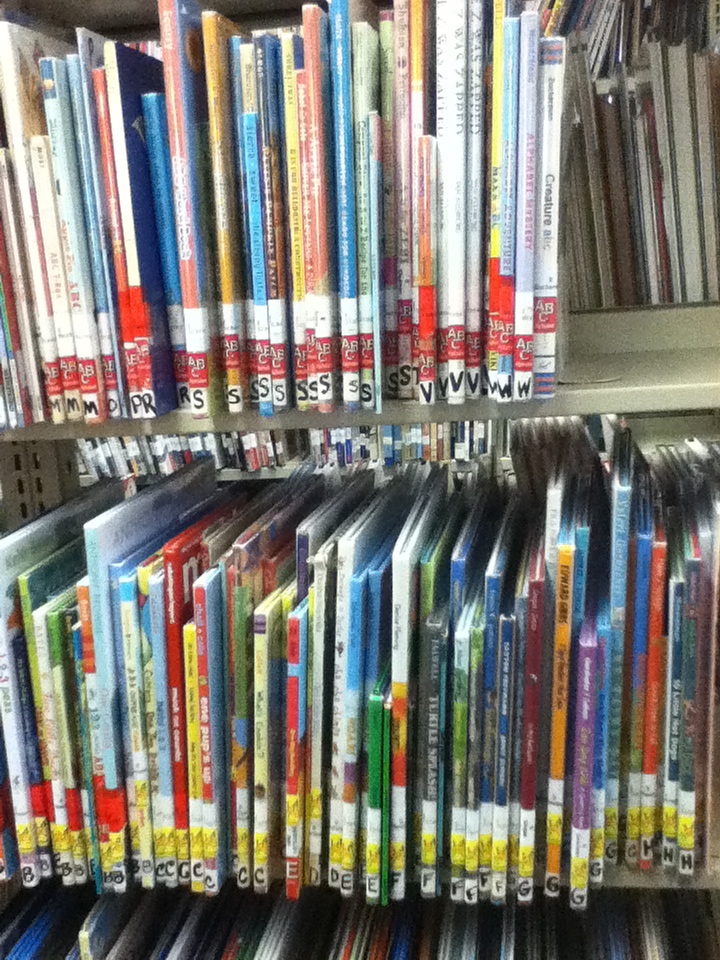
 IMG_3101ABC’s and 123’s
Between the Easy Nonfiction and the Parent’s Shelf lies a small section of picture books and easy nonfiction books that help teach numbers and letters. All of the books that specifically teach numbers have a yellow 123 sticker on the spine, and the alphabet books have a red ABC on the spine. The call numbers for these items begin with an ABC or 123 as appropriate.

There are a few more special stickers and sections in the children’s room. Please, come explore the room, and if you need help finding anything or want to know what any of the labels mean, stop by the Children’s Desk and we will be glad to help!