The “I Survived” Series and Related Book Suggestions

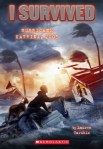
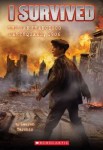
Is historical fiction or survival fiction something that intrigues you or your child? Then you have probably heard of the I Survived series of children’s chapter books by Lauren Tarshis:

This series consists of historical fiction that is plot driven and faced paced. It grabs the attention of most willing readers with stories about courage and survival. According to Scholastic the books are best suited to those reading and a second grade reading level and up, with Lexile ratings around 600 and higher. For more information on the I Survived series check out the Scholastic’s webpage dedicated to the series. The series includes:

1. The Sinking of the Titanic, 1912
2. The Shark Attacks of 1916
3. Hurricane Katrina, 2005
4. The Bombing of Pearl Harbor, 1941
5. The San Francisco Earthquake, 1906
6. The Attacks of September 11, 2001
7. The Battle of Gettysburg, 1863
8. The Japanese Tsunami, 2011
9. I Survived the Nazi Invasion,1944 will be released in late February but you can place a hold on it now!

If you have read all of the books currently available in this series or are looking for more books about courage, hope, and survival for children then I would recommend also checking out: Al Capone Does My Shirts by Gennifer Choldenko and its two sequels, Pirate Hannah Pritchard: Pirate of the Revolution! by Bonnie Pryor and its sequels, Will at the Battle of Gettysburg, 1863 by Laurie Calkhoven and the entire Boys of War series, Survival in the Storm: the Dust Bowl Diary of Grace Edwards by Katelan Janke (part of the Dear America series), The Winter of Red Snow: the Revolutionary War Diary of Abigail Jane Stewart by Kristiana Gregory (part of the Dear America series), Rex Zero by Tim Wynne-Jones and its sequels, The Journal of Jesse Smoke: a Cherokee Boy by Joseph Bruchac (part of the My Name is America series), Sophia’s War: a Tale of the Revolution by Avi, and Waiting for Anya by Michael Morpurgo.

I know that I have barely touched the surface of historical fiction that deals with children facing times of war, environmental catastrophe, and other situations with include a struggle to survive. Do you have a favorite, series or stand alone, that you would recommend?

Monstrously Magnificent Picture Books

If your kids are anything like mine, or were when they young, they have a fascination with monsters. Both my five and my seven year old love anything that they can slap a ‘scary’ label on, as long as it does not get too scary. Scooby-Doo, and an ever-cycling cast of creatures are the constant source of happy conversations and late night fears. Vampires, ghosts, zombies, mummies, and a wide assortment of creatures have become the focus of one or both of my children at any given time.

Some books, movies, and television shows featuring monsters are silly fun, others creepy and entertaining, while others cross a line (some times without me even realizing it until the questions or nightmares start) into the realm of actually scary.  Finding the right balance of fun and creepy without crossing the line into actually fright inducing can be difficult. Here are some of the books that I have found to be entertainingly spooky or silly, without becoming too scary.

We have a Monster Lit Kit– a collection of books, activities, a CD, and a DVD to please young monster lovers. The lit kit is includes the books Bigfoot Cinderrrrrella, Birthday MonstersFrank was a Monster Who Wanted to DanceThe Monsters at End of this Book, Monster Goose, My Monster Mama Loves Me So, Monster Manners, Monster Things to Make and DoThere’s a Nighmare in my Closet, and  The Very Worst Monster. The music CD include is Scream Factory Favorites which is z collection of songs based on the characters from Monsters, inc. and the DVD included is Cookie Monster’s Best Bites. We have Lit Kits available on most topics out youngest readers, and their families or teachers enjoy.

Big Scary Monster by Thomas Docherty
Big Scary Monster is one misunderstood beastie. He loves to jump out and surprise his friends, but he’s not mean, really. Yet when his friends start hiding from him, he decides to look for new creatures to frighten, only to wind up finding out he’s a bit of a scaredy-cat himself!

Bone Soup by Cambria Evans
Retells the classic tale about a traveller, a ghost, who tricks a town’s witches, ghouls, and zombies into helping him make soup. A Halloween themed version of Stone Soup.

I Need My Monster by Amanda Noll
Checking under the bed for his monster, Ethan discovers that he is gone fishing for a week, and realizing he can’t sleep without him tries to find a substitute monster.

Leonardo, the Terrible Monster by Mo Willems
Leonardo is a terrible monster — he can’t seem to frighten anyone. When he discovers the perfect nervous little boy, will he scare the lunch out of him? Or will he think of something better?

The Monsters’ Monster By Patrick McDonnell
Grouch, Grump, and little Gloom ‘n’ Doom spend much of their time arguing over who is the “biggest and baddest” until they build a monster together that turns out to be very different than what they expect.

My Friend the Monster by Eleanor Taylor
After his family moves into their new house, Louis the fox discovers a very frightened monster living under his bed, and when he takes the monster to the park with him, the monster helps him make new friends.

Sally and the Some-Thing by George O’Connor
Stuck at home with her mom and her new sibling, Sally heads for the swamp with her fishing pole and bike. What she discovers, a slimy, slithery Some-Thing, is a new best friend. Mud pies, burping contests, snail racing–and sensational, beautiful artwork deliver plenty of kid appeal.

If You’re a Monster and You Know It by Rebecca Emberley and Ed Emberley
Monsters sing their own version of this popular song that encourages everyone to express their happiness through voice and movement.

For more monstrously fun reading, you might also want to check out; Bedtime Monsters by Josh Schneider, Some Monsters are Different by David Milgrim, Ghost in the House by Ammi-Joan Paquette, Monsters on Machines by Deb Lund, There Was an Old Monster by Rebecca Emberley, Go Away, Big Green Monster! by Ed Emberley, There’s a Nightmare in my Closet by Mercer Mayer, Most Loved Monster by Lynn Downey, The Monster Who Lost His Mean by Tiffany Strelitz Haber, Even Monsters Need Haircuts by Matthew McElligott, When a Monster is Born by Sean Taylor, Skeleton for Dinner by Margery Cuyler, Bedtime For Monsters By Ed Vere, Beasty Bath By Robert Neubecker, Goodnight, Little Monster By Helen Ketteman, or  Broom, Zoom! by Caron Lee Cohen.

Guiding Reading What? (What Kind of Reader is my Child, Part Deux)

So, if you read What Kind of Reader is my Child? you will have a  understanding of the general terminology about reading development and where your child might be in the process.  But what about all those crazy level letters and numbers at the end of each definition? Well, here is some of the basic information and resources that can help you get a handle on that part as well. I am going to toss in an extra one, which I know some local schools are assigning to advanced readers.Screen Shot 2014-01-09 at 4.49.43 PMWhich systems you need to pay the most attention to will vary by school. Most schools do use the DRA testing system. However I know that Cheshire, Southington, and Wallingford also use the Fountas & Pinnell Guided Reading Leveling (GRL) system for classroom use. You can use this chart on the Scholastic website to help understand how the levels correspond. You will note that there are even more leveling systems included on the chart, but I am going to focus on the most used systems in our area.

Fountas & Pinnell Guided Reading Leveling system (GRL) starts with level A, being the easiest, and goes up to Z. These levels are based on benchmark assessments or other systematic observations are used to determine the instructional reading level of each student.  Our library offers a variety of fiction and non fiction books from level A through G labeled and sorted by level for check out. Feel free to browse the collection or help finding books, but if you would like help, please stop by the children’s desk for assistance.

Developmental Reading Assessment system (DRA) also starts with level A for the easiest books, but  switches to numeric levels which run from 1 to 80. A child’s DRA reading level is based on is a standardized reading test.  During the test students read a selection (or selections) and then retell what they have read to the examiner. Most of our area schools use this standardized testing system to help gauge reading skills and comprehension, but many combine the information they get from this system with the GRL system.

A Lexile text measure is based on the semantic and syntactic elements of a text. A Lexile reader measure can range from below 200L for emergent readers to above 1600L for advanced readers.  This system tends to be the hardest translate from skill level and rating to book recommendations, at least for me. Most of the focus on these numbers come into play after children are fluent readers. For charts that break down which Lexile ratings are average by grade and further details, I highly recommend exploring their website. The site offers a search tool that allows you to find books based on Lexile level and then limit by age and interests so that you can find reading material for just about any fluent reader.


For more information on the stages of reading development and encouraging reading check out: Early Literacy by Joan Brooks McLane, Gillian Dowley McNamee, Straight Talk about Reading: How Parents Can Make a Difference During the Early Years by Susan L. Hall and Louisa C. Moats,  Matching Books to Readers: Using Leveled Books in Guided Reading, K-3 by Irene C. Fountas and Gay Su Pinnell (reference book that cannot leave the library), The Book Whisperer: Awakening the Inner Reader in Every Child by Donalyn Miller, Games With Books: 28 of the Best Children’s Books and How to Use Them to Help your Child Learn  by Peggy Kaye, Raising a Reader: Make Your Child a Reader for Life by Paul Kropp, and The Between the Lions Book for Parents: Everything you Need to Know to Help your Child Learn to Read by Linda K. Rath and Louise Kennedy.

Pete Seeger, An American Bard

Pete Seeger, the granddaddy of American folk music, passed away peacefully in his sleep January 27, at the age of 94. Pete left Pete-Seeger-001a legacy of not only a tremendous contribution to American music, but of political activism and ecology with an emphasis on peace.

If you’ve ever heard The Lettermen sing “Turn, Turn, Turn,” if you’ve ever heard “We Shall Overcome” sung at a protest, if you ever listened to Bruce Springsteen belt out his We Shall Overcome album, you’ve been touched by Pete’s music.  If you’ve ever driven along the Hudson River in New York and noticed the lack of garbage floating in it, you’re looking at Pete’s work.

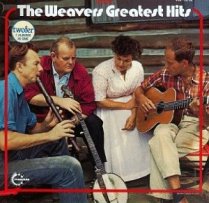
Pete began singing with the Almanac singers back in the 40’s, alongside the bedrock of American folk singers such as Woody Guthrie (who wrote the iconic and ironic song “This Land is Your Land”), Lee Hays, and Cisco Houston, among others. The Almanac singers morphed into The Weavers by 1950, with Lee Hays, Ronnie Gilbert, and Fred Hellerman, and enjoyed great popularity (including a number one hit in “Goodnight Irene”) until 1953, when they were blacklisted by McCarthyites as being 5123Z66NNXL._SX300_suspicious for singing about such things as worker’s rights and political oppression around the world.  This did not stop them from playing Carnegie Hall in 1955.  By the 1960’s folk music was only increasing in popularity, and Pete had a great influence on such upcoming folk singers such as Joan Baez, Bob Dylan, and Arlo Guthrie, Woody’s son, with whom he kept a life-long friendship. Seeger  – four of his six siblings are also folk singers – continued to influence music through the 80’s, 90’s, and 2000’s by working with mega-musicians such as John Mellencamp and Bruce Springsteen, who released a well-received folk album after mentoring from Pete.

If Seeger was anything, it was tireless. It was he who introduced Martin Luther King Jr. to the song “We Shall Overcome.”  In 1966 he became part of the Clearwater effort to clean up the toxic waste and raw sewage that was 51PP4Dc+wyL._SY300_destroying the Hudson River in New York, something he never stopped doing. He stood behind Occupy Wallstreet.  He played at President Obama’s inauguration, at the age of 89. He was still playing and giving concerts at 93. He was predeceased by Toshi, his wife of 70 years, just last summer.  He has been a part of, well, generations of American history, from WPA projects to serving in World War II to facing down the House Committee on UnAmerican Activities to the civil rights movement, ecology, founded music festivals, and more. He is truly an American Icon, one we can all be proud of.5175nuV6svL._SL500_AA280_

If you want to listen to classical truly American music, if you’re looking for great songs for singing or guitar, if you want your children to listen to some fun and rolicking children’s songs, check out some of Pete’s extensive legacy.  Bob Dylan and Bruce Springsteen walk in his shadow, but there is no one alive who can come close to filling Pete’s giant footprints.

Great Poetry Books to Share with Children

Do you love poetry and want to inspire the same love in your child, are trying to teach young children to read and write poetry, or simply looking to spark your own enjoyment of the genre. Poetry can seem intimidating at first glance, but knowing where to start, and starting simple, are often a good idea. These books are full of poetry that is suited for all ages, the young and young at heart. So, regardless of the reason you might want to venture into the worlds of poetry, these books are a great place to start.

This slideshow requires JavaScript.

  1. Falling Up (or any collections) by Shel Silverstein
  2. The World of Christopher Robin; the Complete When We Were Very Young and Now We are Six by A.A. Milne
  3. A Child’s Garden of Verses by Robert Louis Stevenson
  4. Love That Dog by Sharon Creech
  5. Sad Underwear and Other Complications: More Poems for Children and Their Parents by Judith Viorst
  6. Mirror Mirror: A Book of Reversible Verse by Marilyn Singer
  7. A Pizza the Size of the Sun by Jack Prelutsky
  8. Joyful Noise: Poems for Two Voices by Paul Fleischman
  9. Forest Has a Song: Poems by Amy Ludwig VanDerwater
  10. A Dazzling Display of Dogs by Betsy Franco
  11. It’s Raining Pigs and Noodles by Jack Prelutsky
  12. Kids Pick The Funniest Poems by Bruce Lansky
  13. The Bill Martin Jr Big Book of Poetry by Bill Martin Jr.

There are, of course, many more fantastic books of poetry and novels in verse out there for us all to enjoy. If you have a favorite that I missed please share it with us in the comments so that others can discover it too!