Today’s post comes to us from Ali, Head of Children’s Services.

Many people assume that there isn’t much they can do to help their child learn to read until they are of a certain age. Believe it or not, you should start at birth. The five core practices to help prepare children for reading are Reading, Writing, Talking, Singing, and Playing. These practices are taken from the Every Child Ready to Read Initiative. You may already be nurturing these pre-reading skills at home, but it is important to use these techniques everywhere you go with your child. To learn more about these practices, you can ask any children’s librarian for suggestions or attend an early literacy program or storytime at the Cheshire Public Library.
 Early literacy programs at public libraries have changed significantly over the years. Early literacy is everything a child knows about reading and writing before he or she can read or write, typically between the ages of 0-5. Traditionally, children’s library programs focused on the education of children. Today, these programs focus on the education of the parent or caregiver. If you attend storytimes at the public library, you may hear the children’s librarian state an early literacy tip or model a specific behavior during their programs. This is done intentionally to encourage caregivers to use these tools at a later point.
Here are some ideas on using each of the 5 best practices in your everyday life.
- TALKING is the most critical early literacy skill because it helps children learn oral language. You can talk to your child about things you see or ask them open-ended questions to encourage a response from them.
- SINGING develops language skills by slowing down syllables and sounds that make up a word.
 You can sing in the car whenever you’re traveling and you never have to worry about other people hearing your singing voice.
 - READING together not only develops vocabulary and comprehension, but it fosters a love of reading. Try to pick a time to read when you are both in a good mood and never force it. It is a good idea to establish a reading routine at bedtime when your child is most relaxed.
- You can start to practice WRITING as soon as your child can grip anything. Even if they are only making scribbles, they are getting those small hand muscles ready to hold a pencil.
- Children also learn language and literacy skills through PLAY by helping them put thoughts into words as they talk about what they are doing.
 Caregivers have the most important role in developing a child’s reading skills, so it is important that you practice these techniques as often as possible. I encourage you to visit the library and check out some of the early literacy programs and resources that we have. To see our full events calendar, you can go to https://cheshirelibrary.libcal.com/.
Check out our Parenting section for more on early literacy and school readiness:
- Is Everybody Ready for Kindergarten? by Angèle Sancho Passe
- Building Brains : 600 Activity Ideas for Young Children by Suzanne R. Gellens
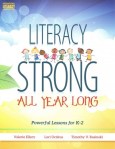
- Literacy Strong All Year Long by Valerie Ellery, Lori Oczkus, Timothy V. Rasinski
- Let Them Play : An Early Learning (un)Curriculum by Jeff A. Johnson and Denita Dinger
- Seven Skills for School Success Pam Schiller




 And don’t forget to sign up for our summer reading program for kids and adults : Summer Adventure! The program runs from June 21 through August 17. Raffles, prizes, and giveaways will be available to those who complete the activities. Who will take home the crown for the most minutes read? Will it be the kids, or will it be the adults?
 It’s not just a snappy title – I really do have enormous faith and trust in a dog. My husband is blind and he (and I) depend every day upon the amazing skills of his guide dog Becca to help him navigate his world. I can go off to work and not worry about him, because I know he and Becca will manage perfectly well. They’re not stuck at home and are never bored. They go on long walks, golf, visit friends… at this point they actually have a much richer social life than I do! I am filled with wonder every time I see the two of them working together – she warns him of curbs, cars, and dangers both underfoot and at head height, she finds doors, counters, empty seats, and me (!) whenever needed and with great determination and enthusiasm.
 Once we were shopping at the grocery store, and a family with children walked by. The parents conscientiously cautioned their kids about not distracting Becca while she was working, telling them that she was a service dog. The littlest child wasn’t quite sure what a service dog was, but he used his own best judgement, and looked out for us for the rest of our shopping trip. He alerted everyone: “Don’t bother that dog- she’s a serious dog!” every time we crossed paths. It was adorable, but he was absolutely correct- Becca is a very serious dog when she is working.
 members of the military with their operations. Police dogs, often called K-9s, are trained specifically to assist police and other law-enforcement personnel in the line of duty. Search and rescue dogs have high energy, great stamina and focus. These highly trained animals serve in many different fields, including tracking, specialized search, avalanche rescue, and cadaver location. Therapy dogs offer emotional support to sick or injured persons, often visiting hospitals, schools, hospices, nursing homes and more. Service dogs are working dogs that have been specially trained to assist persons with disabilities.









 For kids too young for Snapchat,





 Go outside for a walk! This is one of the best times of year to hang out around the canal trail, when birds who migrated south are coming back and starting to make nests for the spring. You can see turtles, beavers, and snakes at Lock 12, and in the last couple weeks I saw diving kingfishers, big herons, and colorful wood ducks in the new section of trail north of West Main Street.





 So what does that mean? Are books working against girls? Do we perpetuate female stereotypes and patriarchal archetypes starting with early board books? Do we as parents set our children up for failure by gender-typing from an infant’s earliest days?





 e readers to decipher differences in the text format to determine narration, tone, or mood. The illustrations also help to decode difficult vocabulary. Graphic novels can serve as an introduction to non-linear storytelling. Each chapter may present a different time period or flashback to a past event forcing the reader to stop and contemplate the story.


 The Cheshire Library Blog