Summertime Stargazing for the Whole Family

Warm summer nights are the perfect time for stargazing alone, or as a family. Learning about space, the night sky, and how to find objects in the sky is free, can be lots of fun, and is a great way to spend some summer night with the whole family.  So, if you have a youngster that is fascinated by the stars, or if you would have some interest and would like to encourage that interest in other family members or friends, here are some great children’s books about the stars and getting started stargazing.
1. Stargazers by Gail Gibbons
2.Night Sky Atlas by Robin Scagell
3. Awesome Astronomy by Raman Prinja
4.A Black Hole is Not a Hole by Carolyn Cinami DeCristofano; Illustrated by Michael Carroll
5. Universe by Robin Kerrod
6.The Kids Book of the Night Sky by Ann Love & Jane Drake; illustrated by Heather Collins
7. Once Upon a Starry Night: a Book of Constellation by Jacqueline Mitton, Christina Balit
8. The Young Astronomer by Harry Ford

9.Where are the Stars During the Day?: a Book about Stars by Melvin and Gilda Berger; illustrated by Blanche Sims
10.Beyond the Solar System: Exploring Galaxies, Black Holes, Alien Planets, and More by Mary Kay Carson


Want more great books about the night sky and space include: Is there Life on other Planets?: and Other Questions about Space by Gregory L. Vogt, 11 Planets: a New View of the Solar System by David A. Aguilar,Exploring the Solar System: a History with 22 Activities by Mary Kay Carson, Dot to Dot in the Sky: Stories in the Stars by Joan Marie Galat, and 101 Things Every Kid Should Know about Science by Samantha Beres.


Still not enough information, or looking to study more study about space, the night sky, and stargazing? In the adult nonfiction department you might want to check out: Stargazing with Binoculars by Robin Scagell, Firefly Guide to Stars and Planets by Sir Patrick Moore, Astronomy Hacks by  Robert Bruce Thompson and Barbara Fritchman Thompson, An Intimate Look at the Night Sky by Chet Raymo,A Field Guide to the Stars and Planets by Jay M. Pasachoff, Discover Planetwatch : a Year-Round Viewing Guide to the Night Sky with a Make-your-own Planetfinder by Clint Hatchett, or The Audubon Society Field Guide to the Night Sky by Mark R. Chartrand.

Summertime Picturebooks to Share

I know that while the summer heat is beating down on us we might want to hide away in the air conditioning and avoid the heat and sun. However, there are plenty of great things about summer, especially when you are a child. Here are some great picturebooks about summer for young readers to explore on their own, or for you to share with them, that will make you forget about the heat and enjoy the good things about summer together.

The Twelve Days of Summer by Jan Andrews. On each successive day of summer, a youngster finds an increasing number of animals and other natural wonders in the surrounding world and leaves behind a remembrance of the day’s discovery.

Carl’s Summer Vacation by Alexandra Day. Although told to take a nap by her parents, Madeleine and her favorite canine companion, Carl, head out to explore their surroundings and have fun taking a canoe ride on the lake, picnicking under the trees, and eating tasty blackberries straight off the bush.

The  Summer Visitors by Karel Hayes. During the summer a family of bears enjoys the comforts of life at a cottage by a lake, alongside the human visitors.

Now it is Summer by Eileen Spinelli.  A young mouse is encouraged by his mother to enjoy summer while waiting for autumn to come.

Summer: an Alphabet Acrostic by
Steven Schnur. Describes the summer season, with its recreation, heat, insects, and garden vegetables, and when read vertically, the first letters of the lines of text spell related words arranged alphabetically, from “awning” to “zodiac.”

Looking for more? We currently have a  display for summer related books in the children’s room, and I have further suggestions here. Summer is Summer by Phillis and David Gershator, It’s Summer! by Linda Glaser,  A to Z of Summer by Tracy Nelson Maurer, Lionel in the Summer by Stephen Krensky, The Summer Playground by Carl Emerson,  Summer Beat by Betsy Franco, What Happens in Summer? by Sara L. Latta, Come On, Rain by Karen Hesse, and Before the Storm by Jane Yolen.


Happy Birthday Paperback Books!

birthday

On July 30, 1935, a new technology was born that provided knowledge, stories, entertainment (with text and pictures, no less) that was convenient and cheap.  It was light enough to carry anywhere and you could tag specific areas to penguinre-read at a later date.  An early e-reader?  Nope – the paperback book!  Penquin Publishers, in England, was the first to successfully publish respectable, quality writing without a hard cover.  (There were earlier paperback books called penny dreadfuls, yellow-backs, and dime novels that generally featured lurid stories and were printed on cheap pulp paper.)

pocketPartnering with Simon & Schuster, Robert de Graff introduced the first paperbacks in America on June 19, 1939 called Pocket Books.  The first American paperback book to be printed in the United States was The Good Earth by Pearl Buck.  The cost to purchase these new books – 25 cents versus $2.75 for a hardcover.  In order to make a profit on paperbacks, de Graff had to print 100,000 copies at a time.  He couldn’t rely on bookstores to sell that many copies so he began using magazine distributors to place Pocket Books in newsstands, subway stations, drugstores and any other outlet to reach suburban and rural populations.  He designed bold, colorful, eye-catching book covers to catch people’s eyes.  By September 1944, 100 million books were sold in more than 70,000 outlets across the United States.   By the end of the 1940’s, the paperback industry began publishing original stories.  Previously, the industry only reprinted hardcover titles.  There are now more than 20 major publishers producing high quality, original and reprinted paperbacks.


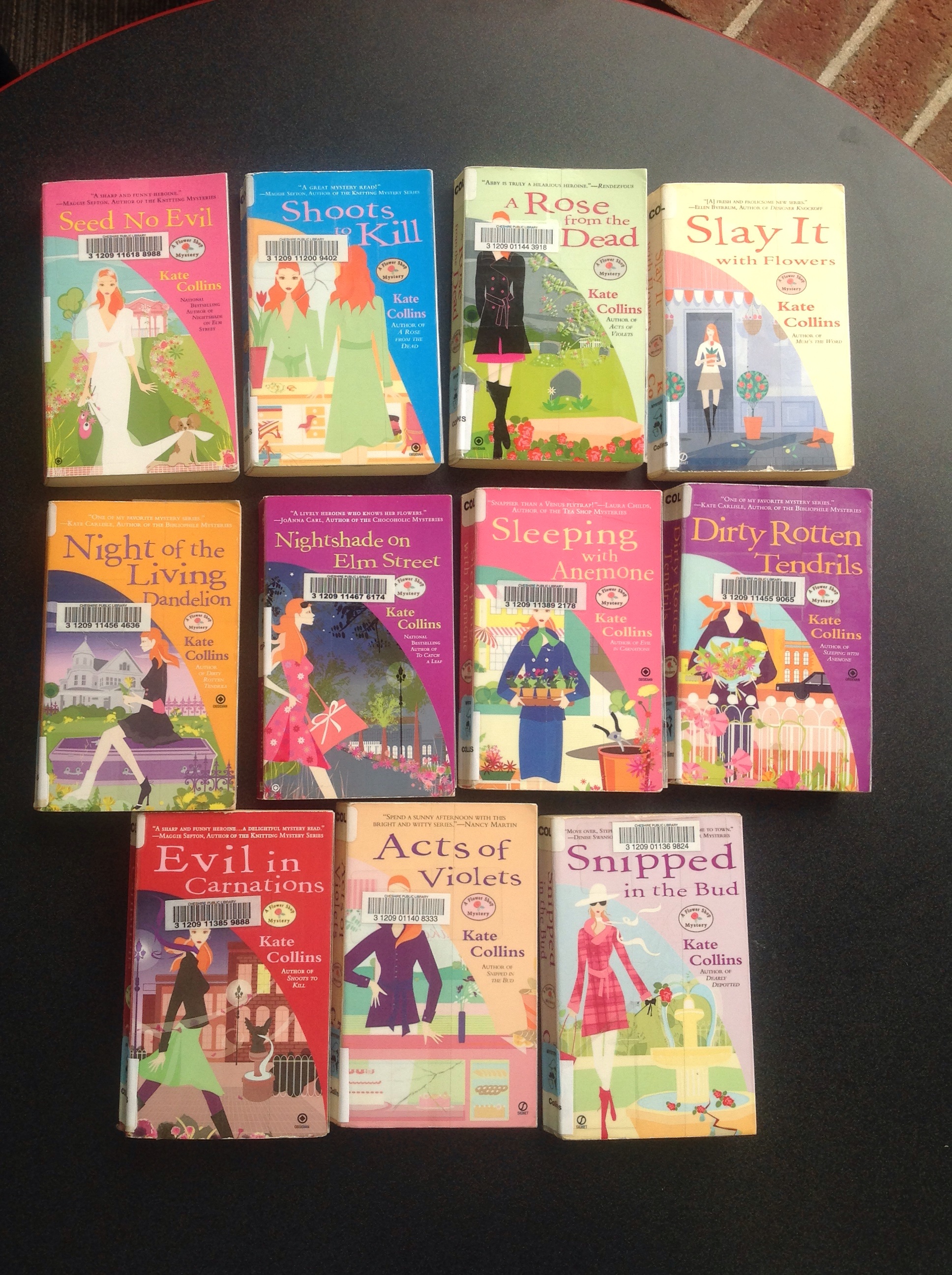
Today, there are many sizes of paperback books and all different prices, but the two major sizes are mass-market and trade.  Authors originally wrote stories for publications in magazines, but soon shifted their attention to mass-market paperbacks.  They could write longer, more in-depth, entertaining novels that boasted beautiful, bold, color covers and were prominently displayed in all types of venues.  They were affordable and easy to carry and proved to be a huge hit.  Mass-market paperback readers have a large selection of genres of original stories to choose from, in addition to best-selling hardcovers republished in paperback form.  In the beginning, Westerns were the biggest selling genre, followed by Crime and Science Fiction.   The most popular genre for mass-market today is Romance.  Within this genre you will find many sub-genres including contemporary romance, historical romance, small town romance, and paranormal romance.  The Cheshire Library has a separate section dedicated to mass-market Romance Books located towards the front of the library, near the large windows.    Another very popular genre for mass-market paperbacks are Cozy Mysteries.  The Cheshire Library has a large selection of these interfiled among the hardcovers in the Mystery section of the library.  You can also find regular Fiction, Science Fiction and Fantasy paperbacks in the library’s collection.
COZY MYSTERIES

COZY MYSTERIES

Some literary authors, critics and bookstore owners turned their noses up at mass market paperbacks.  When Doubleday’s Jason Epstein was a college student, he lamented the fact that he and his fellow students couldn’t afford hardcover editions and envisioned a line of upscale paperbacks of hardcover bestsellers and classics.  By 1953, Trade paperbacks were introduced.  These were larger, more durable, with attractive covers illustrated by fine artists with an appeal to a more intellectual market.  They sold for 65 cents to $1.25.    The library’s selection of Trade paperbacks are filed among the hardcover books.  They also come in a variety of genres, with the most popular genres being erotic romance – with Fifty Shades of Grey topping the charts – and Christian-themed books.


There were many who thought paperbacks would kill the publishing industry, but instead, the books proved to be quite the sensation.  As recently as 2010, paperbacks outsold hardcover books.  Although the ebook has taken some of the market away from paperbacks, they still continue to be a much beloved tool for readers everywhere.  The look, feel, texture, smell, size, and portability makes the paperback book very inviting.


Tooth Fairy Books for First Time Donors

Do you have a child that has lost their first tooth, is celebrating their first wiggly tooth, or has questions about the Tooth Fairy and other related mythology? Parents of all generations have faced the dilemma of how to deal with it, and just what stories to share in their families. Well, here are a selection of picturebooks for you and your child to peruse to see what best fits your family.

1. Throw Your Tooth on the Roof: Tooth Traditions From Around the World by Selby B. Beeler; illustrated by G. Brian Karas. Consists of brief statements relating what children from around the world do with a tooth that has fallen out. Includes facts about teeth.

2. Tooth Tales From Around the World by Marlene Targ Brill; illustrated by Katya Krenina. Explores how different cultures have viewed losing teeth and how the idea of the Tooth Fairy originated.

3. The Tooth Mouse by Susan Hood; illustrated by Janice Nadeau. Introduces readers to the Tooth Mouse, France’s version of the tooth fairy, and to Sophie, a sweet young mouse who must prove she is brave, honest and wise enough to take over this important job.

4. Madlenka by Peter Sis
Madlenka, whose New York City neighbors include the French baker, the Indian news vendor, the Italian ice-cream man, the South American grocer, and the Chinese shopkeeper, goes around the block to show her friends her loose tooth and finds that it is like taking a trip around the world.

5. Amanda Pig and the Wiggly Tooth by Jean Van Leeuwen; pictures by Ann Schweninger.
Amanda Pig has her first ever wiggly tooth and she can not wait for the Tooth Fairy to come. But her loose tooth will not fall out. Father offers to pull it out for her, but Amanda thinks that might hurt too much. Instead, she decides to ignore it and one day discovers that her tooth has fallen out on its own. But where is it. Will the Tooth Fairy still come if Amanda has lost her tooth.

6. Tabitha’s Terrifically Tough Tooth by Charlotte Middleton. A young girl tries everything she can think of to make her loose tooth fall out in time to leave it for the Tooth Fairy.

There are plenty of other books that feature both new and well-known characters dealing with the first loose tooth. Here are some more books you might want to check out: Dear Tooth Fairy by Karen Gray Ruelle,  Silverlicious  by Victoria Kann, I Want My Tooth by Tony Ross, Franklin and the Tooth Fairy by Paulette Bourgeois, Fancy Nancy and the Too-Loose Tooth by Jane O’Connor, The Berenstain Bears and the Tooth Fairy by Jan & Mike Berenstain, The Very Beary Tooth Fairy by Arthur A. Levine; illustrated by Sarah S. Brannen, A Visit from the Tooth Fairy by Sarah Albee; illustrated by Karen Craig,
I Lost my Tooth! by Hans Wilhelm, Bear’s Loose Tooth by Karma Wilson; illustrations by Jane Chapman, and Gilbert and the Lost Tooth by Diane deGroat.

Great Graphic Heavy Books for Reluctant Readers

Do you have a reader that is sad to find the majority of their books are missing the illustrations that initially drew them to reading in the first place? Or perhaps you have a reader that is a bit intimidated (but refuses to admit it) by books with so much text, and so few illustrations? Perhaps they just think that reading is boring or not fun. Thankfully, graphic heavy books and graphic novels for this age group are increasing in both quality and quantity. This means that there are books out there with an extra dash or excitement and silliness available for readers of all ages.

Here are some great books that just might capture your reader’s eye with graphics, and keep them reading because of the story. The majority of theses books are the first in a series, so if your reader gets hooked, you should have a few books to go before looking for the next title. I have broken the lists down by age group, and by amount of text, to make finding the perfect book just a little easier.

Graphic Novels for Grades 2-5
1. The Adventures of Ook and Gluk: Kung-Fu Cavemen from the Future by George Beard and Harold Hutchins
2. Zita the Space Girl: Far from Home by Ben Hatke
3.Knights of the Lunch Table: The Dodgeball Chronicles by Frank Cammuso
4. Babymouse: Queen of the World! by Jennifer L. & Matthew Holm
5.  Fashion Kitty and the Unlikely Hero by Charise Mericle Harper
6. Squish 1: Super Amoeba by Jennifer L. and Matthew Holm
7. The Adventures of Super Diaper Baby by Dav Pilkey


Grades 2-5 with more a bit more text:
1. School!: Adventures at the Harvey N. Trouble Elementary School by Kate McMullan
2. SPHDZ (Spaceheadz series) by Jon Scieszka
3. Ellie McDoodle: New Kid in School by Ruth McNally Barshaw
4. Knucklehead: Tall Tales & Mostly True Stories of Growing Up Scieszka by Jon Scieszka
5. Big Nate: In a Class by Himself by Lincoln Peirce
6. Justin Case: School, Drool, and other Daily Disasters by Rachel Vail
7. Secret Identity (Shredderman Series) by Wendelin Van Draanen
8. Dragonbreath by Ursula Vernon
9. Frankie Pickle and the Closet of Doom by Eric Wight
10. The Strange Case of Origami Yoda by Tom Angleberger


Grades 5 and Up
1. Coraline (based on the novel by Neil Gaiman) adapted by P. Craig Russell
2. Stickman Odyssey, Book 1: An Epic Doodle by Christopher Ford
3. Page by Paige by Laura Lee Gulledge
4. Meanwhile by Jason Shiga
5. The Defense of Thaddeus A. Ledbetter by John Gosselink
6. Amelia’s Itchy-Twitchy, Lovey-Dovey Summer at Camp Mosquito by Marissa Moss
7. Diary of a Wimpy Kid: Greg Heffley’s Journal by Jeff Kinney
8. Dork Diaries: Tales from a Not-So-Fabulous Life by Rachel Renée Russell
9. Doodlebug: A Novel in Doodles by Karen Romano Young
10. Max Quigley: Technically Not a Bully by James Roy
11. The Popularity Papers: Research for the Social Improvement and General Betterment of Lydia Goldblatt and Julie Graham-Chang by Amy Ignatow
12. Milo: Sticky Notes and Brain Freeze by Alan Silberberg