Handling Questions About Bodies with Your Young Children

I think every parent dreads certain questions and discussions with their children. There are a thousand difficult things that we will need to discuss with them as they grow up, and no matter how well-prepared we think we are, they are bound to ask a question or make an observation we are unprepared for. In order to help us feel better about approaching the discussion about body differences, changes, and babies I put together a few book lists to help all of us.

In this post I will offer suggestions for parents in deciding what to say and when, and how to broach the body discussion with the youngest children that need to know why boys and girls are different, and why certain actions or questions might be inappropriate. I followed up that list with some book suggestions that you can share with even the youngest children to help explain matters.

There is another book list coming with suggestions for books intended for middle graders as well as preteens and teens.

Books for Parents:

1. What your Child Needs to Know about Sex (and when): a Straight-Talking Guide for Parents by Fred Kaeser

2. What’s the Big Secret?: Talking about Sex with Girls and Boys by Laurie Krasny Brown and Marc Brown

3. Everything you Never Wanted your Kids to Know about Sex, (but were afraid they’d ask): the Secrets to Surviving your Child’s Sexual Development from Birth to the Teens by Justin Richardson and Mark A. Schuster

4. It’s Perfectly Normal: a Book about Changing Bodies, Growing up, Sex and Sexual Health by Robie H. Harris; illustrated by Michael Emberley

5. Talking to Your Kids about Sex: from Toddlers to Preteens by Lauri Berkenkamp and Steven C. Atkins

6. Ten Talks Parents Must have with their Children about Sex and Character by Pepper Schwartz and Dominic Cappello

7. The Big Talk: Talking to your Child about Sex and Dating by Laurie Langford

Books for the Youngest Kids:

1. It’s Not the Stork!: a Book about Girls, Boys, Babies, Bodies, Families, and Friends by Robie H. Harris; illustrated by Michael Emberley

2. Amazing You: Getting Smart about your Private Parts by Gail Saltz; illustrated by Lynn Cravath

3. Who Has What?: All about Girls’ Bodies and Boys’ Bodies by Robie H. Harris; illustrated by Nadine Bernard Westcott

4. Human Body by Kathleen Weidner Zoehfeld

5. My Body by Andrea Pinnington and Penny Lamprell

6. Human Body by Margaret Hynes; illustrations, Andy Crisp

Need more suggestions? Just stop by the Children’s Room and the librarian on duty can point you in the right direction!

Men in Kilts – Scottish Romance!

highland warriorDo you long for the days of yore where heroes in kilts swooped in to save the damsel in distress?  The Cheshire Library has a wonderful selection of “men in kilts” books.

Jennifer Ashley

The Wicked Deeds of Daniel Mackenzie
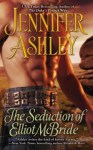
The Seduction of Elliot McBride
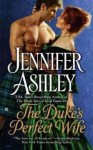
The Duke’s Perfect Wife
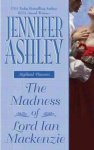
The Madness of Lord Ian Mackenzie

Donna Fletcher

Wed To A Highland Warrior
A Warrior’s Promise
Loved By A Warrior
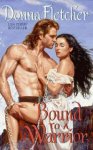
Bound To A Warrior

Amanda Forester

A Midsummer Bride
A Wedding In Springtime
True Highland Spirit
The Highlander’s Heart

Karen Hawkins

How To Entice An Enchantress
How To Pursue A Princess
How To Capture A Countess
The Taming Of A Scottish Princess

Hannah Howell

Highland Master
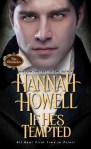
If He’s Tempted
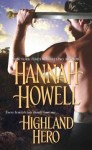
Highland Hero
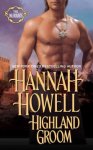
Highland Groom

Julianna Maclean

Seduced By The Highlander
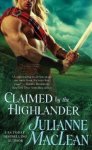
Claimed By The Highlander
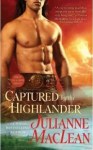
Captured By The Highlander
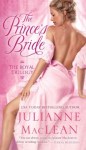
The Prince’s Bride

Monica McCarty

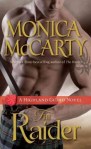
The Raider
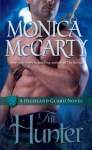
The Hunter
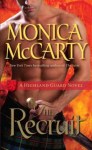
The Recruit
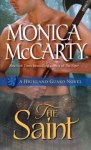
The Saint

Connie Mason

Between A Rake And A Hard Place
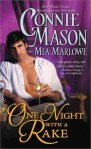
One Night With A Rake
Waking Up With A Rake
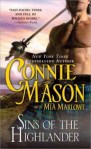
Sins Of The Highlander

The Cheshire Library has many more titles by each author in addition to those listed.  Additional authors with the Scottish Romance theme are, Karen Ranney, Amanda Scott, and Samantha James.


Recommended Books for Newly Independent Readers

If you have a young reader that is able to read independently (for the most part) and ready to make the change from the more difficult easy readers to chapter books then this is the list to take note of. When a child begins reading fluently their efforts are more automatic and exploring a wider variety of subjects and authors and showing less reliance of the illustrations to glean the meaning of new words and phrases. They are using more expression and taking pauses to coordinate with punctuation and the natural flow of language. Their energy is devoted to understanding, have good command and use of the various comprehension strategies, and can correct their own mistakes most of the time while still being willing to ask for assistance as needed.

Here are some suggestions, including some I brought home for my son this week. As usual, I am 20140303-164915.jpgsure I missed some perfectly wonderful books for this reading level, and if I missed your favorites please mention them in a comment so others can check them out. If you are browsing our fiction shelves in the children’s room looking for books for these readers, I can give you some quick hints to find even more. The transitional chapter books have a yellow dot sticker on the spine with the call number. This makes spotting one or two when you are browsing with no specific author in mind super easy. Do not rule out books in the Easy Reader or Easy Non Fictionsection at this stage either- some books here do have  vocabulary that can help your young reader continue to grow.
Ashanti to Zulu: African Traditions by Margaret Musgrove.
Explains some traditions and customs of 26 African tribes beginning with letters from A to Z.

Dinosaurs Before Dark (Magic Tree House, #1) by Mary Pope Osborne.
Eight-year-old Jack and his younger sister Annie find a magic treehouse, which whisks them back to an ancient time zone where they see live dinosaurs.

Fantastic Mr. Fox by Roald Dahl.
Three farmers, each one meaner than the other, try all-out warfare to get rid of the fox and his family.

Mrs. Noodlekugel by Daniel Pinkwater.
Nick and Maxine have a new babysitter–the eccentric Mrs. Noodlekugel who lives in the funny little house behind their drab high-rise apartment building along with her feline butler, Mr. Fuzzface, and three myopic mice.

Mercy Watson to the Rescue (Mercy Watson #1) by Kate DiCamillo.
After Mercy the pig snuggles to sleep with the Watsons, all three awaken with the bed teetering on the edge of a big hole in the floor.

The Case of the Lost Boy (The Buddy Files, #1) by Dori Hillestad Butler.
While searching for his mysteriously lost human family, Buddy the dog is adopted by another family and helps solve the mystery of their missing boy.

26 Fairmount Avenue  by Tomie dePaola.
Children’s author-illustrator Tomie De Paola describes his experiences at home and in school when he was a boy.

Other titles or series starters that I would recommend are: Ivy and Bean (Ivy and Bean, #1) by Annie Barrows, The One in the Middle Is the Green Kangaroo by Judy Blume, The Beast in Ms. Rooney’s Room (The Kids of the Polk Street School #1) by Patricia Reilly Giff, Never Glue Your Friends to Chairs (Roscoe Riley Rules, #1) by Katherine Applegate, Ruby Lu, Brave and True by Lenore Look, Ellray Jakes is Not a Chicken by Sally Warner, Nate the Great (and the entire Nate series) by Marjorie Weinman Sharmat, Snake and Lizard and Friends  by Joy Cowley, Wonder Kid Meets the Evil Lunch Snatcher by Lois Duncan, Stinky: a Toon Book by Eleanor Davis, Bink & Gollie, Best Friends Forever by Kate DiCamillo, and The Big Something by Patricia Reilly Giff.

Not Your Typical Princess Picturebooks

My little princess is much more likely to get dirty playing in the mud than her big brother, but still enjoys the occasion frilly dress and ruffles. She is far from the typical princess, and I relish that. Like her, I was more likely to be found playing ‘boy’ games then rocking the pick dresses I was often decked out in. I love the independent nature and rough and ready style of my little girl, and want to encourage her to continue being herself and help both of my kids ignore the standard gender roles and do what makes them happy rather than conforming to the roles of pretty princess and brave knight.

In my efforts to find books that break the stereotypes, I have found a large number of books that feature princesses breaking the standard image. Some of the princess are up to saving themselves, and sometimes saving the prince as well, others are just content in being who they really are and encourage readers of all ages to do the same.

Lovabye Dragon by Barbara Joosse; illustrated by Randy Cecil. When a lonely dragon follows a trail of princess tears, a beautiful friendship is born. They march and sing, roar and whisper, hide and seek, then settle into snug companionship at bedtime.

The Pirate Princess by Sudipta Bardhan-Quallen; illustrated by Jill McElmurry. Tired of the royal life, Princess Bea boards a pirate ship and sets out for adventure on the high seas but soon finds she is not good at swabbing decks, cooking in the galley, or keeping watch from the crow’s nest.

Princess Peepers by Pam Calvert; illustrated by Tuesday Mourning. When the other princesses make fun of her for wearing glasses, Princess Peepers vows to go without, but after several mishaps–one of which is especially coincidental–she admits that she really does need them if she wants to see.

Part-Time Princess by Deborah Underwood; illustrated by Cambria Evans. A girl escapes her annoying little brother and the drudgery of school and home life when she travels to a magical kingdom each night and embarks on a series of adventures.

Princess Smartypants by Babette Cole. Not wishing to marry any of her royal suitors, Princess Smartypants devises difficult tasks at which they all fail, until the multitalented Prince Swashbuckle appears.

Thankfully books like these are becoming easier to find, books where a princess (or any girl) is measured by more than her looks and ability to be sweet and quiet. Here are some more great books about princesses that break the mold; The Barefoot Book of Princesses retold by Caitlín Matthews; illustrated by Olwyn Whelan, The Storytelling Princess by Rafe Marti; illustrated by Kimberly Bulcken Root, The Apple-Pip Princess by Jane Ray, Do Princesses Have Best Friends Forever? by Carmela LaVigna Coyle; illustrated by Mike Gordon and Carl Gordon, Not All Princesses Dress in Pink by Jane Yolen and Heidi E.Y. Stemple; illustrated by Anne-Sophie Lanquetin, Princesses are Not Quitters! by Kate Lum; illustrated by Sue Hellard, Princess Pigsty by Cornelia Funk ; illustrated by Kerstin Meyer; translated by Chantal Wright, The Paper Princess by Elisa Kleven, The Paper Bag Princess written by Robert N. Munsch; illustrated by Michael Martchenko, and Princess Hyacinth: The Surprising Tale of a Girl who Floated by Florence Parry Heide; illustrated by Lane Smith.


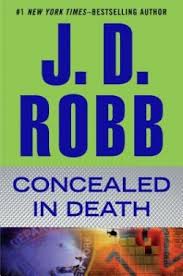
Linda Reads: Concealed In Death by J.D. Robb

conceal inI hesitated to read this book because I was very disappointed in Ms. Robb’s last ‘In Death’ title, Thankless in Death.  There have been rumors that her last few books (as J.D. Robb and Nora Roberts) were ghost written and there are arguments galore debating that topic.   But Concealed In Death was a great story.   It’s true the style of writing is a little different from earlier In Death books.  Many comments have been made about the main characters of Eve and Roarke being different.  But there have been over 50 stories written about Eve and Roarke and readers should expect that they are getting older, settling down, and wouldn’t have the same dynamic as before.

The book does lack the depth, excitement, and suspense of other In Death books.  It’s a quieter suspense, more thoughtful and introspective, with a lot more focus on the victims.  I actually found that a nice change.  There were a few twists in the story that gave the book a jolt when needed.  All in all, it was a very enjoyable read.

Summary of story:

In a decrepit, long-empty New York building, Roarke begins the demolition process by swinging a sledgehammer into a wall. When the dust clears, there are two skeletons wrapped in plastic behind it. He summons his wife, Eve Dallas immediately—and by the time she’s done with the crime scene, there are twelve murders to be solved.

The place once housed a makeshift shelter for troubled teenagers, back in the mid-2040s, and Eve tracks down the people who ran it. Between their recollections and the work of the force’s new forensic anthropologist, Eve begins to put names and faces to the remains. They are all young girls. A tattooed tough girl who dealt in illegal drugs. The runaway daughter of a pair of well-to-do doctors. They all had their stories. And they all lost their chance for a better life.

Then Eve discovers a connection between the victims and someone she knows. And she grows even more determined to reveal the secrets of the place that was called The Sanctuary—and the evil concealed in one human heart.