Susan Reads: The Riddle of the Labyrinth by Margalit Fox

Every now and then a book comes along and all you can say is, “WOW!”

That’s my reaction to The Riddle of the Labyrinth: The Quest to Crack an Ancient Code, by Margalit Fox.

Ever hear of the minotaur, the half-man, half bull that lived in the center of the labyrinth, built by King Minos on ancient Crete?  As with most myths, this was one of those partly based on fact.  There was a palace of Knossos, on ancient Crete (which lies in the middle of the Mediterranean), and there was a King Minos, although the name seems to have been a general title, not a specific person. His palace was huge, hundreds of rooms built, well, in a maze-like fashion. For reasons unknown, the palace burned down sometime between 1450 and 1400 BCE, or about 3400 years ago, and that marked the end of the great Minoan civilization. And this we know for fact because Arthur Evans dug up the palace in Heraklion, Crete, in 1900.

And he found a storeroom.

With more than 2000 written clay tablets, baked by fire, still sitting there.

But what script was it? It wasn’t Egyptian hieroglyphics. It wasn’t Phoenician. It was too old for Ancient Greek. Unraveling the mystery would shed light on Bronze-age European civilization.  Scholars worked on it for years, including one Antiquities professor of Brooklyn College, Alice Kober. Kober, with incredible intelligence, scientific method, and a knack for languages that was almost frightening, through extreme perseverance managed to work out the basics, realizing that the mysterious language – known as Linear B – was written left to right, had different endings for masculine and feminine, and was a syllabary – a language where each symbol (read ‘letter’, if you wish) stood for a syllable of a word, not an individual letter, much like Japanese kana does. Kober poured her life into decoding the script. She came very close, but died before she could finish it.

Enter Michael Ventris, a quirky little upstart twenty years younger, a lonely child prodigy who, like Kober, mastered languages the way a sponge absorbs water (because everyone should know ancient Hittite and Etruscan). Ventris had been intrigued by Linear B since he was 14, if not outright obsessed.  Untrained (he went to a trade school to become an architect, but never took a college class at all), he corresponded with some of the greatest scholars of ancient civilizations, read Kober’s papers, put ideas together, sometimes wrong but sometimes right, and just 18 months – 18 heartbreaking months after Kober’s death, broke through the code of Linear B – a writing system native to Crete, but bent to write an ancient Greek dialect 400 years older than Greek was thought to be. The discoveries of other, similar tablets also written in Linear B on the mainland of Greece and surrounding territories corroborated the information. A whole new era in historical understanding was broken open, and the timeline for civilization had to be pushed back to accommodate it.

This book reads like a fascinating detective novel.  I could not put it down.  It’s like watching the film of Titanic – you know the ending, but you’re gripping your seat the entire time anyway. Fox’s style is extremely easy to follow and to read – she drops little hints about what’s to come and then speeds ahead, and you can’t stop reading.  If you love ancient history, if you love languages, cryptology, biographies of women in science or just a really good story, then read this book. It was truly a pleasure to read it.

Recommended Wordless Picturebooks

A great picturebook does not always need words to make it worth sharing. Wordless picture books can still help a young child learn to love books and set them on the path to being a great reader. Enjoying a well-done picturebook with no words can help a child build their comprehension skills, predict what will happen next, and enhance their ability to take words and meaning from pictures. These are important tools to have as reading skills develop and grow.
Most importantly, they can show even the youngest and most challenged readers the beauty of being drawn into a new world through the pages of a book.

Chalk by Bill Thomson
A wordless picture book about three children who go to a park on a rainy day, find some chalk, and draw pictures that come to life.

Shadow by Suzy Lee
A little girl uses her imagination and a light bulb to go on an adventure in a dark attic.

The Lion & the Mouse by Jerry Pinkney
In this wordless retelling of an Aesop fable, an adventuresome mouse proves that even small creatures are capable of great deeds when he rescues the King of the Jungle.

Journey by Aaron Becker
Using a red marker, a young girl draws a door on her bedroom wall and through it enters another world where she experiences many adventures, including being captured by an evil emperor.

Robot Dreams by Sara Varon
The enduring friendship between a dog and a robot is portrayed in this wordless graphic novel.

Where’s Walrus? by Stephen Savage
In this wordless picture book, follow Walrus on a happy-go-lucky spree through the big city, as he tries on different hats to disguise himself from the chasing zookeeper.

Tuesday by David Wiesner
Frogs rise on their lily pads, float through the air, and explore the nearby houses while their inhabitants sleep.

The Arrival by Shaun Tan
In this wordless graphic novel, a man leaves his homeland and sets off for a new country, where he must build a new life for himself and his family.

If you are still looking for more you might also want to check out; Unspoken: A Story From the Underground Railroad by Henry Cole, Inside Outside by Lizi Boyd,  Pancakes for Breakfast by Tomie dePaola, Daisy Gets Lost by Chris Raschka, The Line by Paula Bossio, The Snowman by Raymond Briggs, Bluebird by Bob Staake,  The Adventures of Polo by Regis Faller, Home by Jeannie Baker,  Rainstorm by Barbara Lehman, Time Flies by Eric Rohmann, Wonder Bear by Tao Nyeu, The Red Book by Barbara Lehman, The Secret Box by Barbara Lehman, Flora and the Flamingo by Molly Idle, Free Fall by David Wiesner, or  Flotsam by David Wiesner.

The “I Survived” Series and Related Book Suggestions

Is historical fiction or survival fiction something that intrigues you or your child? Then you have probably heard of the I Survived series of children’s chapter books by Lauren Tarshis:

This series consists of historical fiction that is plot driven and faced paced. It grabs the attention of most willing readers with stories about courage and survival. According to Scholastic the books are best suited to those reading and a second grade reading level and up, with Lexile ratings around 600 and higher. For more information on the I Survived series check out the Scholastic’s webpage dedicated to the series. The series includes:

1. The Sinking of the Titanic, 1912
2. The Shark Attacks of 1916
3. Hurricane Katrina, 2005
4. The Bombing of Pearl Harbor, 1941
5. The San Francisco Earthquake, 1906
6. The Attacks of September 11, 2001
7. The Battle of Gettysburg, 1863
8. The Japanese Tsunami, 2011
9. I Survived the Nazi Invasion,1944 will be released in late February but you can place a hold on it now!

If you have read all of the books currently available in this series or are looking for more books about courage, hope, and survival for children then I would recommend also checking out: Al Capone Does My Shirts by Gennifer Choldenko and its two sequels, Pirate Hannah Pritchard: Pirate of the Revolution! by Bonnie Pryor and its sequels, Will at the Battle of Gettysburg, 1863 by Laurie Calkhoven and the entire Boys of War series, Survival in the Storm: the Dust Bowl Diary of Grace Edwards by Katelan Janke (part of the Dear America series), The Winter of Red Snow: the Revolutionary War Diary of Abigail Jane Stewart by Kristiana Gregory (part of the Dear America series), Rex Zero by Tim Wynne-Jones and its sequels, The Journal of Jesse Smoke: a Cherokee Boy by Joseph Bruchac (part of the My Name is America series), Sophia’s War: a Tale of the Revolution by Avi, and Waiting for Anya by Michael Morpurgo.

I know that I have barely touched the surface of historical fiction that deals with children facing times of war, environmental catastrophe, and other situations with include a struggle to survive. Do you have a favorite, series or stand alone, that you would recommend?

Book Club Picks – Humor

smileIs your book club looking for some titles to cheer them up during the dreary winter season?  Here are a few titles they might enjoy reading.

The Rosie Project by Graeme Simsion – Meet Don Tillman, a brilliant yet socially challenged professor of genetics, who’s decided it’s time he found a wife. And so, in the orderly, evidence-based manner with which Don approaches all things, he designs the Wife Project to find his perfect partner: a sixteen-page, scientifically valid survey to filter out the drinkers, the smokers, the late arrivers.

Where’d You Go Bernadette by Maria Semple – Bernadette Fox is notorious. To her Microsoft-guru husband, she’s a fearlessly opinionated partner; to fellow private-school mothers in Seattle, she’s a disgrace; to design mavens, she’s a revolutionary architect, and to 15-year-old Bee, she is a best friend and, simply, Mom.

Little Bitty Lies by Mary Kay Andrews –  A tantalizing tale about an abandoned Atlanta housewife and mother who tells one tiny white lie that sets her world spiraling outrageously out of control.

Very Valentineby Adriana Trigiani – The adventures of an extraordinary and unforgettable woman as she attempts to rescue her family’s struggling shoe business and find love at the same time.

Bridget Jones: Mad About The Boyby Helen Fielding –  Bridget Jones stumbles through the challenges of loss, single motherhood, tweeting, texting, technology, and rediscovering her sexuality in—Warning! Bad, outdated phrase approaching!—middle age.

The Good House by Ann Leary – Hildy Good is a lifelong resident of a small community on the rocky coast of Boston’s North Shore, she knows pretty much everything about everyone.  A successful real-estate broker, mother, and grandmother, her days are full. But her nights have become lonely ever since her daughters, convinced their mother was drinking too much, sent her off to rehab.  Now she’s in recovery—more or less.

Bad Monkey by Carl Hiaasen – A tale at once fiercely pointed and wickedly funny in which the greedy, the corrupt, and the degraders of what’s left of pristine Florida—now, of the Bahamas as well—get their comeuppance in mordantly ingenious, diabolically entertaining fashion.

Truth In Advertising by John Kennedy – Finbar Dolan is lost and lonely. Except he doesn’t know it. Despite escaping his blue-collar Boston upbringing to carve out a mildly successful career at a Madison Avenue ad agency, he’s a bit of a mess and closing in on forty. He’s recently called off his wedding. Now, a few days before Christmas, he’s forced to cancel a long-postponed vacation in order to write, produce, and edit a Superbowl commercial for his diaper account in record time.

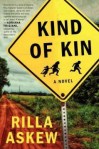
Kind of Kin by Rilla Askew – A funny and poignant novel that explores what happens when upstanding people are pushed too far—and how an ad-hoc family, and ultimately, an entire town, will unite to protect its own.

This Is When I Leave You by Jonathon Tropper – A riotously funny, emotionally raw novel about love, marriage, divorce, family, and the ties that bind-whether we like it or not.

Louise Reads: The Rosie Project by Graeme Simsion

The Rosie Project by Graeme Simsion

Don Tillman, 39 and a professor of genetics, has never been on a second date. His lifelong difficulty with social rituals has convinced him that he is simply not “wired” for romance. Logically, though, he concedes to the statistical probability that there is someone for everyone, and he embarks upon The Wife Project. In the orderly, evidence-based manner with which he approaches all things, Don sets out to find the perfect partner through an exhaustive 16-page survey he has designed to scientifically eliminate all incompatible candidates.

Rosie Jarman would never make it past page one of Don’s survey. A smoking, drinking, disorganized vegetarian, she is completely unsuitable. Yet Don feels somehow compelled to use his expertise in DNA analysis to assist her with a project of her own – identifying her biological father. An unlikely friendship develops between them as they work together on The Father Project.

In The Rosie Project, Don is our narrator, and seeing the story from his point of view is part of the charm of this book. Similar to The Curious Incident of the Dog in the Night -Time and Silver Linings Playbook, the narrator of this story is wired differently than most people.  To say Don has social difficulties is an understatement.  In an early scene, Don is discussing a lecture he’d recently given at the university:

“Claudia asked whether I’d enjoyed the Asperger’s lecture… [I] told her I had found the subject fascinating. “Did the symptoms remind you of anyone?” she asked.  They certainly did. They were an almost perfect description of Lazlo Hevesi in the Physics department.”
 

Fans of the television series “The Big Bang Theory” may notice some similarities to the character Sheldon Cooper from that show.  For example, in a scene where Don is explaining his scheduled meal system to Rosie after a meeting at a restaurant goes comically awry:

“So you cook this same meal every Tuesday, right?”
“Correct.” I listed the eight major advantages of the Standardized Meal System:
  1. No need to accumulate recipe books.
  2. Standardized shopping list – hence very efficient shopping.
  3. Almost zero waste – nothing in the refrigerator or pantry unless required for one of the recipes.
  4. Diet planned and nutritionally balanced in advance.
  5. No time wasted wondering what to cook.
  6. No mistakes, no unpleasant surprises.
  7. Excellent food, superior to most restaurants at a much lower price (see point 3).
  8. Minimum cognitive load required.

Debut novelist Graeme Simsion has written a warm-hearted, laugh-out-loud funny, and surprisingly poignant story. No huge surprises, The Rosie Project follows many of the tropes that are the stock-in-trade of romantic comedies,  but I was still caught up in the story from the first words and it never lagged or disappointed. A feel-good book that delivered!  Audiobook listeners will enjoy first-time narrator Dan O’Grady’s performance, his Australian accent (the story is set in Melbourne) added an authentic touch.

If you like The Rosie Project, you may also enjoy:

The Big Bang Theory starring Johnny Galecki, Kaley Cuoco, Jim Parsons, Simon Helberg, and Kunal Nayyar

The Silver Linings Playbook by Matthew Quick

The Curious Incident of the Dog in the Night-Time by Mark Haddon