Today we are featuring a guest post by Cassie Peters:

Crime novels offer glimpses into the minds of those who choose to either take the law into their own hands or ignore it entirely. Through the author’s words, we are able to contemplate, observe, and judge the motivations that make the criminals tick. If learning about the underworld is within your literary interests, here are some of the best crime novels of 2018. Following a long tradition of crime-based literature, many of these novels are brilliant subversions of the well-known and popular genre. Get ready to take a harrowing leap into the minds of 2018’s fictional criminals.
The Outsider by Stephen King
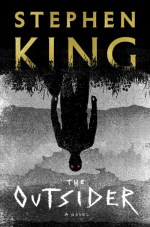 Terry Maitland is a Little League coach, family man, and all-around beloved pillar of the community who was arrested for the mutilation and murder of a young boy. Honest cop Detective Ralph Anderson struggles with deciphering all available evidence for fear of convicting the wrong suspect, until his wife Jeannie asks all the right questions that leads the investigation to the truth. Meanwhile, time-warping details both obscure and provide glimpses into hidden, deeper truths. Stephen King’s The Outsider is a masterful twist on the classic crime genre. A smooth and effortless tale of modern day crime with just the right amount of noir, politics, and psychedelics. Not a lot of writers can so pleasurably disorient readers like King.
Hellbent by Gregg Hurwitz
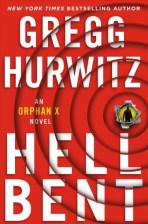 An orphan who at 12 was enrolled in a top-secret government training program for assassins escapes to become an unlikely vigilante in Hellbent. The novel is the latest in author Gregg Hurwitz’s international bestselling series of books in the Orphan X series. It’s a sordid look into the all-too-fragile lives that evolve on their own amid government motives and conspiracies. Crime and conspiracy take on a humanitarian form via bullet train-paced prose.
The Perfect Nanny by Leila Slimani
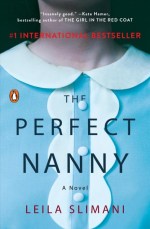 What if Mary Poppins was a sociological suspense-thriller that didn’t hold anything back? There’s nothing mystical or magical about Leila Slimani’s The Perfect Nanny, but she manages to masterfully subvert expectations via her sublime prose. It’s no secret that the lives of the characters in the story are in danger, including young children. The mystery is whether or not you’ll be able to make it through the slow simmer of how a wholly trustworthy figure can transition into a rationally irrational monster. Library Journal says, “What initially feels like routine, unremarkable women’s fiction morphs into a darkly propulsive nail-biter overlain with a vivid and piercing study of class tensions”. Peppered with social realist truths amid subtle but constant mounting dread, The Perfect Nanny submits a poverty-stricken view of Paris that culminates in one of the most satisfyingly horrible endings yet.
Into the Black Nowhere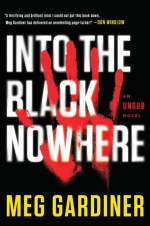 by Meg Gardiner
FBI rookie Caitlin Hendrix is assigned to the FBI’s elite Behavioral Analysis Unit to find a serial killer who leaves behind grisly clues. In this dark, disturbing portrait of murder from the perspective of a career forensic psychologist, Agent Hendrix works with the FBI’s serial crime unit and a legendary FBI profiler to dissect the motivations behind a killer based on the available evidence. Into the Black Nowhere is a gripping novel that doubles as a crash course in sociology, critical thinking, crime research methodology, psychological testing, and criminal theory. Based on the exploits of the infamous Ted Bundy, Gardiner’s novel succeeds at a creating a realistic depiction of how serial killers function that is horrendous and unflinchingly educational at the same time. Don’t worry – you won’t need an actual degree in forensic psychology to enjoy this book. However, you should be prepared to learn a thing or two about the criminal mind – insights that might be too dark or true to be forgotten. Watch your step.
This feature post written for Cheshire Library Blog by Cassie Peters.



 If you’re like me, you’re cringing every time you turn on the news, ope
 ure, Clinton’s affair caused a major row, but flings among presidents are almost as common as presidents eating cheeseburgers. John F. Kennedy’s affairs were kept out of the press, but half the country was winking at his activities.
 America in 1893 was caught in a severe Panic – the pre-1930 name for a Depression. Cleveland felt that a president with a potentially life-threatening issu
 Men of power get to the top position by wielding their power, and the office of the president is no different (I suppose we could let Jimmy Carter off the hook. He’s an anomaly to the rule, and no doubt why he was a somewhat wishy-washy President and often considered not strong enough during the
  Icons come and icons go. Coca Cola survives, but Woolworth’s, the standard of the early 20th century, is now history. What’s popular today may not make the cut to the next generation – few kids today play with Cabbage Patch Dolls, despite the
  wrote first a book of children’s poems (
 between studios? This type of inter-studio film wars has happened numerous times, most recently with
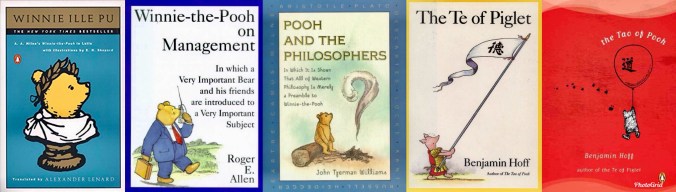
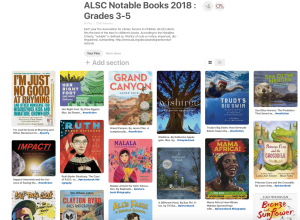
 Each year a committee of the ALSC identifies the best of the best in children’s books. According to the Notables Criteria, “notable” is defined as: Worthy of note or notice, important, distinguished, outstanding. As applied to children’s books, notable should be thought to include books of especially commendable quality, books that exhibit venturesome creativity, and books of fiction, information, poetry and pictures for all age levels (birth through age 14) that reflect and encourage children’s interests in exemplary ways.


 The Cheshire Library Blog