Diverse Romance

People of all ethnicities, body types, sexual orientations, and interests fall in love every day in real life, but until pretty recently it hasn’t been easy to find romance books that reflect that reality. While straight white male/female protagonists are still the mainstay of the romance genre, more diverse authors and story-lines have been getting some attention lately, which is all for the good. Here are some recent examples of love stories with different perspectives.

Party of Two by Jasmine Guillory

The Trouble With Hating You by Sajni Patel

Spoiler Alert by Olivia Dade

Boyfriend Material by Alexis Hall

The Duke Who Didn’t by Courtney Milan

How to Catch a Queen by Alyssa Cole

Girl Gone Viral by Alisha Rai

You Had Me at Hola by Alexis Daria

The Marriage Game by Sara Desai

Something to Talk About by Meryl Wilsner

Passing the Bechdel Test

Have you given anything a Bechdel test? Have you ever heard of the Bechdel Test?
I’d never heard of it either (and I went to a women’s college!) until it popped up on an internet group I belong to, and I had to look it up.

The Bechdel test (or Bechdel-Wallace test) is a measure of representation of women in fiction. It first appeared in Allison Bechdel’s 1985 cartoon strip, Dykes to Watch Out For (I didn’t name it) commenting on films, brought on by a quote from Virginia Woolf, in that women in fiction might sometimes be mother and daughter, but rarely are two women friends in literature. Almost always, women were viewed by their relationship to men – wanting a man, chasing a man, depending on a man, chasing off a man, etc. (Hence Jane Austen, “It is a truth universally acknowledged, that a single man in possession of a good fortune, must be in want of a wife.”). Real women in real life talk to other women about more than just men (even if it’s only about their cat or dog).

Therefore, Bechdel gave three commandments for films to be considered women-friendly (and by default, TV and books):

  1. It must have at least two women in it (preferably with names)
  2. Who talk to each other (preferably for at least 60 seconds)
  3. About something besides a man

And the off-hand comment in a sarcastic lesbian cartoon strip surged until it’s become an almost a standard metric for the industry.

Seems pretty simple, right?

Various groups have researched more than 8000 films, and concluded that 42-50% of films cannot pass the test, and half of those that do pass do so only because two women are discussing marriage or babies. Being a female-oriented show about women does not mean the film or program can pass the test. Even female-cast TV shows such as Sex in the City don’t pass, because almost all the discussion is about men. Big-budget female-lead action films such as Lucy or Atomic Blonde or Salt fail, because the secondary characters are almost always men – there are no other women. Star Trek, which broke many TV taboos, can’t pass the test – there are many women, and they talk quite a bit, but almost never to each other. Lost in Space had three women trapped in a tin can together, and they almost never spoke to each other for more than one or two lines, occasionally. Firefly, for its very brief run, hits the mark more often than not. Okay, I Love Lucy wins for most realistic female friends ever, as does Gone With the Wind, thanks to Miss Melly, so time period is not a decisive factor. We haven’t necessarily gotten better with age, despite feminism.

Various groups have researched more than 8000 films, and concluded that 42-50% of films cannot pass the test, and half of those that do pass do so only because two women are discussing marriage or babies. Being a female-oriented show about women does not mean the film or program can pass the test. Even female-cast TV shows such as Sex in the City don’t pass, because almost all the discussion is about men. Big-budget female-lead action films such as Lucy or Atomic Blonde or Salt fail, because the secondary characters are almost always men – there are no other women. Star Trek, which broke many TV taboos, can’t pass the test – there are many women, and they talk quite a bit, but almost never to each other. Lost in Space had three women trapped in a tin can together, and they almost never spoke to each other for more than one or two lines, occasionally. Firefly, for its very brief run, hits the mark more often than not. Okay, I Love Lucy wins for most realistic female friends ever, as does Gone With the Wind, thanks to Miss Melly, so time period is not a decisive factor. We haven’t necessarily gotten better with age, despite feminism.

Not passing the Bechdel test does NOT make a film bad, nor does it make it not worth watching. Not every movie is going to center around women – Dunkirk, for example, a splendid movie about a specific battle in World War II. Women were just not involved in that. Stand By Me – a magnificent story of four young boys on a quest. Girls aren’t in the story, and if you skip this movie because of that, then you’re missing one of the best American movies. Nor is every film required to pass the Bechdel test. Casino passes two of the three qualifications, but women are mistreated throughout the film. Inclusion is just that – inclusion, not a judgment of how women are treated by the story, not a judgment of female competence, not a judgment of feminism (Gravity, with a female astronaut who saves the day, can’t pass the test, though The Martian, with a male lead, does). A woman may love a movie that can’t pass the test, and a man can certainly love a film that does. Movies of every genre pass or fail; there is no specific type of film to look for.

All the Bechdel test does, really, is point out films in which women – a full 50% of the population – are a larger focus of the story, and even if they aren’t, they’re portrayed as real, well-rounded people who speak to each other about real subjects, even if it’s about burning a roast, not just love-starved buttercups who are nothing without a man. So, if you’re on the lookout for films that show women – important or background characters – in a more realistic light, here are 15 various films that do pass the Bechdel test:

The Finest Hours

Little Miss Sunshine

Wonder Woman

Mad Max: Fury Road

The Last Jedi

Girl, Interrupted

Hidden Figures

Kill Bill

Thelma and Louise

The Exorcist

Chicago

Frozen

Birds of Prey

Bill and Ted Face the Music

Knives Out

Teen Volunteer Book Reviews: One of Us is Lying and Dread Nation

Teens: did you know that you can earn community service credit for writing a book review and submitting it to us? Today, we’ll hear from two teens who did just that. Find out more about how to earn community service hours from home at cheshirelibrary.org/teens/.

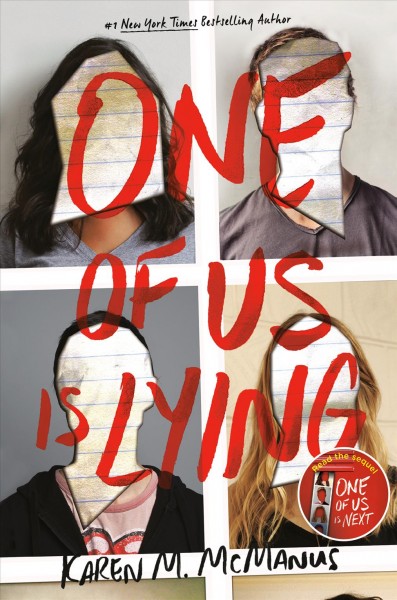
One of Us is Lying by Karen A. McManus, reviewed by Julia F.

If you enjoy a mix of realistic fiction, mystery, high school drama, and social media intrigue, One of Us is Lying, by Karen M. McManus, is for you.

Who murdered Bayview High School’s Simon Kelleher? Was it Bronwyn, the bright academic who wishes to attend Yale? Or could it have been the Cooper, the group’s “jock”? Maybe you will suspect Addy because she is popular and social? Or was it the troubled Nate who already has a checkered past? You may be wondering why someone would want to kill Simon in the first place. He ran the school’s widely followed juicy gossip app ABOUT THAT, which was set to reveal secrets about each of the suspects. All four had skeletons in their closets, but was someone’s secret devastating enough to warrant a murder?

We find out that Bronwyn has gone to interesting lengths to protect her academic future and her family’s legacy. Cooper has a baseball career in the balance, and his tangled web of lies threatens to take away his opportunity to be a star. Addy is not who she seems to those around her and now she stands to lose those closest to her. Nate doesn’t have as much to lose, but the post could land him in jail. Simon’s death causes new alliances to form between the suspects as they scramble to protect their secrets and prove their innocence. As you read this book you will find yourself suspecting each of the four students at one point or another.

This book will keep you on the edge of your seat until the very last page. If you are looking for an exciting thriller and quick read, be sure you have a chunk of time available because you won’t want to put it down! Good news— there is a sequel (One of Us is Next) that follows Bronwyn’s younger sister Maeve and it is just as captivating.

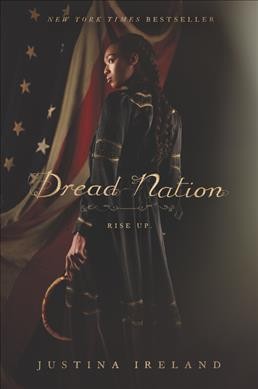
Dread Nation by Justina Ireland, reviewed by Stephanie D.

Dread Nation is a historical fiction novel that takes place during the American Civil War… with one important twist. In this alternate history universe, the fighting stops halfway through, around the year 1863. Why? The answer is simple but terrifying: the soldiers don’t stay dead anymore. The Civil War is postponed as Northerners and Southerners alike grapple with a zombie apocalypse, and our story focuses in on a teenage girl named Jane. Jane is sent from her mother’s plantation to one of the recently opened combat schools. These have been springing up around the country as African and Native American teenagers are forced to learn to fight zombies (or “shamblers”, as they are called in the book). Dread Nation follows Jane and her classmate Katherine as they are sent to defend Summerland, a frontier town under the constant siege of shamblers. Once in Summerland, Katherine pretends to be a wealthy white woman and Jane her Attendant (someone who is responsible for their employer’s life in the event of a zombie attack). Unfortunately for the inhabitants of Summerland, the town is soon overrun by shamblers, and Jane and Katherine must flee to save their lives.

I gave this book a solid four stars. I really enjoyed the universe building and detailed description of historical events, because I could compare it to the version of history I had learned in history class and the fictional zombie version. It was fast-paced, which I enjoyed, but I also felt that the pacing was rather inconsistent. The first part of the book felt much slower than the second, even though the latter seemed like it was supposed to be the focus of the story, as it contained a majority of the action. In short, there was too much build up to the climax of the book, and in the wrong places. I would have liked to hear more about Jane’s life on the plantation and the story of her family, which was revealed piece by piece throughout the novel and provided an interesting side plot. Additionally, I would have preferred a more complete ending. I understand that this is the first of a series, but the conclusion did not feel nearly concluding enough to tie up all the loose ends left by the big zombie invasion and battle of the final chapters. One final criticism is that I found the character of Jane to be a very typical YA heroine: a rebellious tomboy, always the best at everything, and generally “different from everybody else”. These characters can certainly contribute a lot to a story, but they seem to be everywhere and therefore Jane did not earn this book any points in the protagonist department.

May is Mental Health Month

One in every five people in the US carry some sort of “mental Illness” diagnosis – 20% – making it almost twice as common as killer heart disease, yet people hear the term “mental illness” and pictures of unshaven, alcohol-soaked homeless men and babbling old women with uncombed hair and too many cats come to mind (Don’t judge me!).

In reality, that’s far from the common truth. The umbrella term of “mental illness” includes everyone from your depressed cousin, your churning anxiety over political situations, and Uncle Louie, who served in Iraq and spends most days with his friend Jack Daniels. It includes the teen with autism who works down at the laundromat (don’t jump on me; a strong majority of autism includes OCD and anxiety, with phobias topping the list at 30%), the hoarder you drive past on your way to work, that girl on the cheerleading team who wears a baggy size 0, and that guy at work who stays four hours later than anyone else and talks so fast you can’t follow him. It includes celebrities, like Robin Williams, Margot Kidder, Robert Downey Jr, Brittney Spears, Carrie Fisher, Brooke Shields, and so many more.

“Mental Illness” is more common than COVID.

While some introverts have fared well through the pandemic and quarantines, many people have not. Rates of depression in adults went from 8% pre-pandemic to 28% – almost one in three – after. For those who lived alone, the rates approach 40%. Isolation, job loss, poverty, loss of loved ones, anxiety, and long-haul COVID symptoms all play their part in feeling crushed by a microbe. Among children, who can’t always understand the details of what’s going on, rates of depression and anxiety straddled 40%.

Unfortunately, our image of “mental illness” is tainted by historic images of schizophrenia, the king of all mental illnesses, and often the most resistant to treatment. We watch movies such as One Flew Over the Cuckoo’s Nest and I Never Promised You a Rose Garden, while not remembering that these movies depict mental illness treatment from as much as 70 years ago, when diagnoses were vague, medications were ineffective and dangerous, people believed in insulin comas and the disaster of lobotomies, and there were no PET or MRI scans to show exactly what the problem was. There was a time not very long ago when the number one treatment for syphilis was mercury. Times have changed, and chances are there’s actual help for that now.

How can something affecting 30% of the population be abnormal? Here’s a fact: it’s not, but our refusal to admit it keeps people feeling ashamed and afraid to seek treatment. If you feel down, if the social distancing and anxieties are getting to you, if your child is fearful and withdrawn and having trouble sleeping, reach out! Help is just a phone call away. No insurance? No worries. There are places to help you get medical coverage, and places that work on a sliding scale. There IS help, for everyone. Don’t be afraid to ask.

If you feel like life is overwhelming you, if you are worried about a loved one, if you are struggling with just getting through your day, CALL the CT ACTION line (Adult Crisis Telephone Intervention and Options Network). It’s available 24 hours a day, because the worst thoughts usually happen during the night.  1-800-467-3135,  or just call 211, which is the general help line for state services.

Don’t want to feel like you’re the only one on the planet feeling down? Check out these popular books and films on people having difficulties. Chances are, yours aren’t that bad.

It’s National Teacher Appreciation Week!

Teacher Appreciation Week is celebrated during the first full week of May each year. In 2021, it’s May 3-7, with Teacher Appreciation Day falling on Tuesday May 4. As anyone who’s  tried to teach their kids during times when the schools were closed, or has observed the many hoops teachers must jump through to keep their students engaged and learning remotely will surely agreed, TEACHERS ROCK!

Educators have had to hit the ground running during the pandemic, re-inventing the way they teach on the fly, so to speak. Let your teachers know how much you appreciate all they do – here are some ideas:

  • Write an email to your child’s teacher expressing your gratitude for all they’ve done this year, especially while adapting to so many changes in the way they teach.
  • Write an email to the principal, letting them know how much you appreciate your teacher.
  • Show appreciation on Social Media, use the social media hashtag #ThankATeacher from the National PTA and share how educators have brightened your or your child’s life.
  • Donate books for your teacher’s classroom library.
  • Send your teacher a gift card for food or classroom supplies.
  • Have your child a write special letter, e-mail, recorded video message, or drawing to send to their teacher.

Teacher Appreciation Week also brings to mind some of our favorite fictional teacher like:

  1. Ms. Frizzle from The Magic School Bus series
  2. Miss Clavel from the Madeline books
  3. Miss Nelson in Miss Nelson is Missing!
  4. Mr Falker in Thank you, Mr. Falker
  5. Mr. Browne from Wonder
  6. Miss Honey from Matilda
  7. Mr. Terupt from Because of Mr. Terupt
  8. Minerva McGonagall from the Harry Potter series
  9. Miss Stacy from Anne of Green Gables

Who are some of your favorite teachers from fiction? Let us know in the comments!