 Some people love winter, love the brisk air, the blinding glare, the crystal-clear night skies, soft fluffy snow and cups of steaming hot chocolate. Other people hate the freezing cold, the knifing winds, the treacherous roads, bare trees, and endless brown mud and slush clinging to shoes, cars, and pet feet tracking through the house.
For me, winter is a romantic time, curled by a fireplace (wood, gas, or electric) before a window with long velvet  drapes (one of my favorite possessions), reading a book in a favorite chair while snow swirls outside the window and an animal lounges at my feet. It means a stew bubbling on the stove, fresh bread in the oven, or perhaps fresh shortbread cookies and a cup of Earl Gray tea by that fire. Perhaps it’s a holiday, with candles and lights and decorations, waiting for company to make it through the snow. Yeah, yeah, there’s no groundsman to shovel the walks when it’s over, I have to do it myself, but for a few hours I’m lost in an old English fantasy, there’s a mystery in the air, a challenge ahead, but love and fortune win in the end (note: I have never achieved this fantasy, but I keep hoping).
 English Tales of Winter
Which made me think: why are all those images we cling to English fantasies? Sure, that period of literature is within what’s called the Little Ice Age, which ran from the 1300’s to the 1890’s, killing off the Vikings in Greenland and creating all those iconic Currier and Ives scenes, but it also put those chunks of ice in Washington Crossing the Delaware, and in 1816, with the dust of the exploded volcano Mount Tambora in the air, summer never arrived, and temperatures were still below freezing in June. Where is the American winter tale? American stories tend to be about blizzards, hardship, starvation, and ghosts. Nathaniel Hawthorne, Edgar Allen Poe, and Washington Irving are hardly on par with Jane Eyre or Wuthering Heights. Reading about the Donner party probably isn’t a good idea before eating stew.
American Tales of Winter
The only American “winter” tales I know well are children’s literature: The Long Winter by Laura Ingalls Wilder, Left By Themselves by Charles Paul May, the semi- historical Seven Alone by Honore Morrow, and the absolutely timeless endearing tale of Mandy, by Julie Andrews Edwards (Yes, Mary Poppins herself. Adults will love this, too!). But where are the adult books? Problem is, not much adult American literature of that period gives off that type of security.
That period of literature we think of is called the Romantic movement and includes Gothic literature, dealing with mystery, spiritualism, ghosts, hauntings, and torturous love – Frankenstein, Les Miserables, Dorian Gray, Hunchback of Notre Dame, A Christmas Carol, Oliver Twist – some of our most famous classics, running from about 1760 through the Victorian age, around 1890. America in 1776 was not only new and still forming, it was mostly unsettled, and people in the colds of Fort Duquesne, Fort Niagara, and Fort Cumberland were more concerned with staying alive than writing literature. Of course you still had authors, but not to the degree England – a stable civilization for 1200 years – did. While Heathcliff was brooding the lonely moors, Americans were exploring and giving us stories like Last of the Mohicans, Legend of Sleepy Hollow, Moby Dick, and The Scarlet Letter. Not the same, and certainly not the same as being snowed in and wringing one’s hands on the family estate. The American experience is uniquely American in that regard.
 Just because our snow stories don’t go back to King Wenceslas (ok, Wenceslas was Bohemian/ Czechoslovakian, but the song, 900 years later, is English) doesn’t mean American literature isn’t good, it just means it’s different. Maybe you’ll have to settle for cotton twill drapes and a medium double-latte with a space heater and a Snuggie. If you love gothic literature, delve into a classic or something newer; there are hundreds of books (and films!) to choose from. If you love reading about snowy days while curled in a chair listening to the winds howl, try some of these modern tales (and films):

Office Girl by Joe Meno
The Lazarus Project by Aleksandar Hemon
Then We Came to the End by Joshua Ferris
Snow by Orhan Panuk
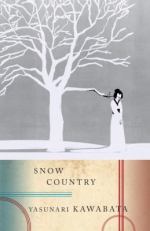 Snow Country by Yasunari Kawabata
The Snow Child by Eowyn Ivey
Wolf Winter by Celia Ekback
Winter Solstice by Rosamunde Pilcher
The Book Thief by Markus Zusak
Snow Falling on Cedars by David Guterson
The Shining Stephen King
Smilla’s Sense of Snow by Peter Høeg, 
Winter’s Tale by Mark Helprin
Game of Thrones by George R. R. Martin
 It’s almost impossible to get through the winter without hearing about the flu. While we often use the word flu to describe any miserable feverish head cold, a cold (rhinovirus) is NOT the same as the flu (influenza). A head cold is 10 days of misery. Flu will disable you for weeks, if not outright kill you.
 H2N3’s, H6N4’s. Now, not all of these can be caught by people (some are limited to animals), but viruses can mutate and change very rapidly. With all those combinations, the Centers for Disease Control have to make a best guess at what flu will prevail that winter, and make enough vaccine a year in advance. If your shot is for N1H1, and you catch H2N3 – you’ve got flu. Better flu shots (called trivalent or quadravalent) will give you immunity to the top three or four likely flus, quadrupling your chances of staying healthy. Even if you do manage to get a flu, your partial immunity will give you a much milder case.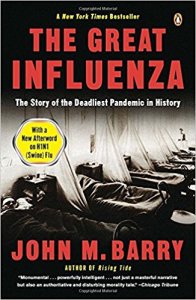
 people, chickens, and pigs are often living in close or crowded conditions, and many Asian cities are very densely populated. Pigs are very similar to people in their genetic makeup (surgeons can use pig organs in people for short times). A bird flu can mutate and jump to pigs, and from pigs it doesn’t take a lot of mutation to become a Human flu. This is why scientists worry every time there’s a breakout of swine flu or bird flu, and millions of animals may be slaughtered to keep it from spreading. All it takes is a new mutation to start a mega-deadly 1918-style pandemic.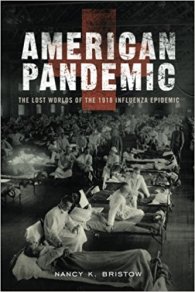




 Sometimes a literary character – and an author – just doesn’t quit, staying popular generation after generation. Sometimes we call that a classic – Scarlett O’Hara, Oliver Twist, Jane Eyre, Robin Hood and Maid Marian. Sometimes we call that Hercule Poirot.
 Marple), a retired Belgian police officer with peculiarly meticulous habits and a brilliant mind for solving crimes, well-known for his thick black curling mustache – the only fictional character to ever have an obituary on the front of the New York Times. Poirot first appears in
  Numerous film and television adaptions of both Orient Express and
  screen on November 10, 2017, with a – dare I say it? – killer cast. Kenneth Branagh, British superstar of myriad films including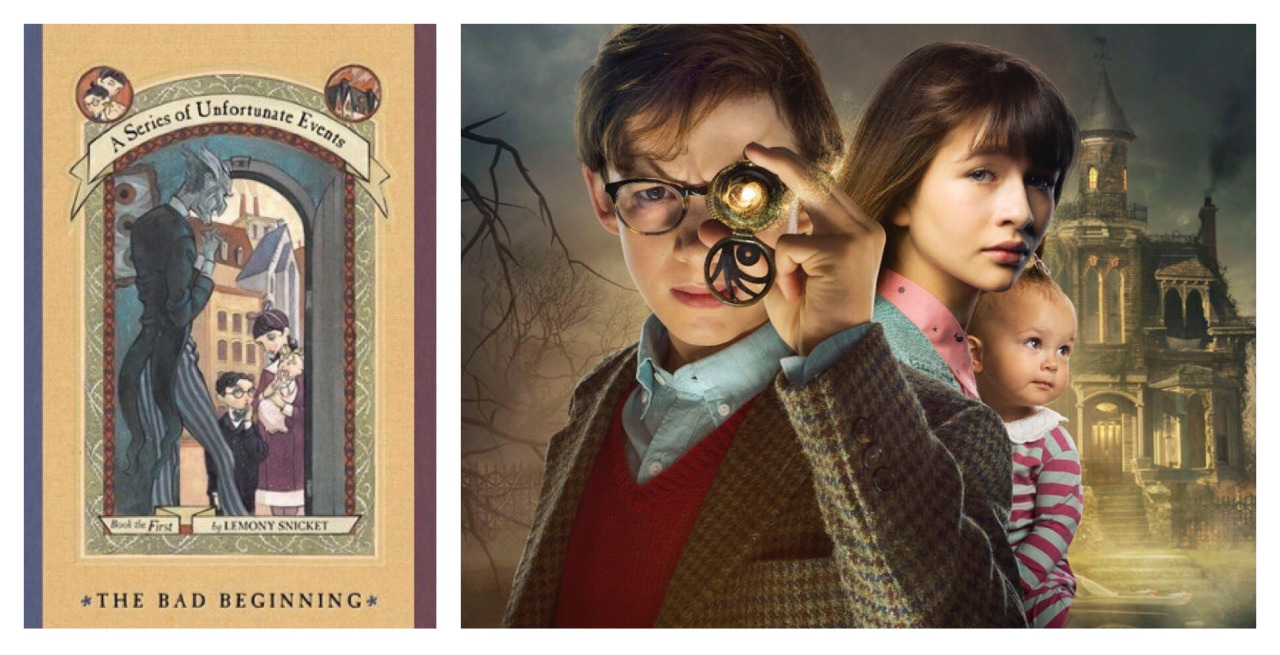




 The Cheshire Library Blog