Looking for something to read this summer? Let us help! Our Reader’s Depot has new book lists every month, so you’ll never run out of books to read. For even more recommendations, visit the Reader’s Depot display on the library’s main level.
 City of Girls by Elizabeth Gilbert – Eighty-nine-year-old Vivian recounts her life after being kicked out of Vassar College, living in Manhattan with her Aunt Peg and the personal mistake that resulted in a professional scandal.
The Wedding Party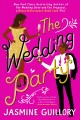 by Jasmine Guillory – After mistakenly spending a night together, Maddie and Theo uncomfortably share bridal party responsibilities for their best friend’s wedding, but despite the sharp barbs they toss at each other, a simmering attraction lingers that just won’t fade.
The Mistress of the Ritz by Melanie Benjamin – The director of the luxurious Hotel Ritz in occupied Paris and his courageous American wife, Blanche Auzello, risk their marriage and lives to support the French Resistance during World War II.
Resistance Women by Jennifer Chiaverini – Resisting the power grabs of an increasingly formidable Nazi Party in 1930s Berlin, the courageous American wife of a German intellectual and her circle of women friends engage in a clandestine battle to sabotage Hitler’s regime.
The Farm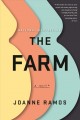 by Joanne Ramos – Ensconced within a Hudson Valley retreat where expectant birth mothers are given luxurious accommodations and lucrative rewards to produce perfect babies, a Filipino immigrant is forced to choose between a life-changing payment and the outside world.
The Last Time I Saw You by Liv Constantine – In the aftermath of her mother’s murder, Dr. Kate English reaches out to her estranged best friend Blaire Barrington, a mystery author, who decides to investigate when Kate starts getting anonymous texts from the killer.
The Never Game by Jeffery Deaver – Colter Shaw is an itinerate “reward-seeker,” traveling the country to help police solve crimes and private citizens locate missing persons. When he learns of a reward for a missing college student in Silicon Valley, he takes the job.
Queen Bee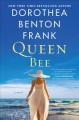 by Dorothea Benton Frank – A woman wounded by her past comes to Sullivan’s Island, South Carolina to find new meaning in life and to find herself.
Meet Me In Monaco by Hazel Gaynor and Heather Webb – Set in the 1950s against the backdrop of Grace Kelly’s whirlwind romance and unforgettable wedding to Prince Rainier of Monaco.
 The Night Before by Wendy Walker – A tale told through parallel accounts of the days before and after a fateful blind date follows a woman’s revelatory investigation into her sister’s disappearance and complicated nature.
The Paris Diversion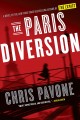 by Chris Pavone – After a leisurely start to a normal day, American expat Kate Moore finds herself partnered with a French agent to investigate a bombing threat in Paris.
The Night Window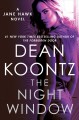 by Dean Koontz – When people under Arcadian control begin showing signs of instability, Jane Hawk and her supporters confront the center of power in a showdown that will determine America’s future.
The Tenth Muse by Catherine Chung – From childhood, Katherine knows she is different, and that her parents are not who they seem to be. But in becoming a mathematician, she must face the most human of problems—who is she?
The Turn of the Key by Ruth Ware – When a high-paying nanny job at a luxurious Scottish Highlands home ends with her imprisonment for a child’s murder, a young woman struggles to explain to her lawyer the unravelling events that led to her incarceration.
The Book Woman of Troublesome Creek by Kim Michele Richardson – A last-of-her-kind outcast and member of the Pack Horse Library Project braves the hardships of Kentucky’s Great Depression and hostile community discrimination to bring the near-magical perspectives of books to her neighbors.
Under Currents by Nora Roberts – Returning to his hometown of Lakeview where his father’s abuse made his childhood a nightmare, Zane Bigelow begins a relationship with Darby McCray, a landscape designer, but his dark past comes back to haunt Zane and threatens their happiness.
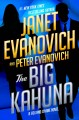 The Big Kahuna by Janet and Peter Evanovich – When unlikely partners FBI agent Kate O’Hare and con man Nicholas Fox investigate a missing Silicon Valley billionaire known as the Big Kahuna, they go undercover as a married couple in Paia, Maui, to find the man’s son.
Anna of Kleve by Alison Weir – Chosen as his fourth wife by England’s infamous Henry VIII, Anna of Kleve, a princess from a small German duchy, hides a desperate secret in a hostile foreign court.
The Daughter’s Tale by Armando Lucas Correa – A tale of love and redemption based on the 1944 Oradour-Sur-Glane massacre follows an octogenarian’s receipt of a cache of letters, written by her mother during World War II, that uncover decades of secrets.

 In a bizarre coincidence, Thomas Jefferson and John Adams both died on July 4, 1826 — the nation’s 50th birthday. The two founding fathers and political adversaries died within five hours of each other.
  The Declaration of Independence wasn’t signed on July 4, 1776.









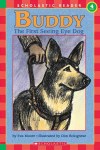
 It’s not just a snappy title – I really do have enormous faith and trust in a dog. My husband is blind and he (and I) depend every day upon the amazing skills of his guide dog Becca to help him navigate his world. I can go off to work and not worry about him, because I know he and Becca will manage perfectly well. They’re not stuck at home and are never bored. They go on long walks, golf, visit friends… at this point they actually have a much richer social life than I do! I am filled with wonder every time I see the two of them working together – she warns him of curbs, cars, and dangers both underfoot and at head height, she finds doors, counters, empty seats, and me (!) whenever needed and with great determination and enthusiasm.
 Once we were shopping at the grocery store, and a family with children walked by. The parents conscientiously cautioned their kids about not distracting Becca while she was working, telling them that she was a service dog. The littlest child wasn’t quite sure what a service dog was, but he used his own best judgement, and looked out for us for the rest of our shopping trip. He alerted everyone: “Don’t bother that dog- she’s a serious dog!” every time we crossed paths. It was adorable, but he was absolutely correct- Becca is a very serious dog when she is working.
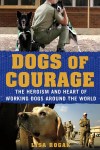
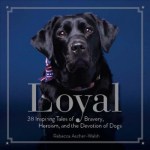
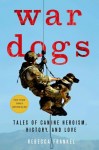
 members of the military with their operations. Police dogs, often called K-9s, are trained specifically to assist police and other law-enforcement personnel in the line of duty. Search and rescue dogs have high energy, great stamina and focus. These highly trained animals serve in many different fields, including tracking, specialized search, avalanche rescue, and cadaver location. Therapy dogs offer emotional support to sick or injured persons, often visiting hospitals, schools, hospices, nursing homes and more. Service dogs are working dogs that have been specially trained to assist persons with disabilities.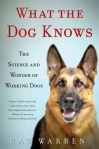




 Mars, our nearest planetary neighbor, has always fascinated science fiction writers here on planet earth. Science fiction about Mars began with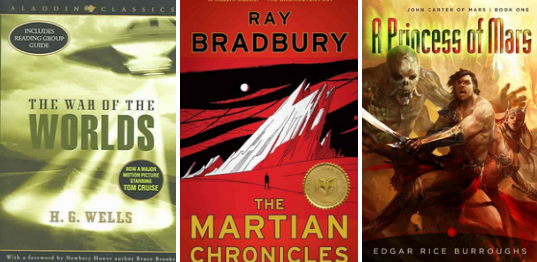
 Beginning in the 1970s, the first NASA and Russian probes and rovers obtained real scientific data about Mars. Once sci fi writers realized that there were no little green men on Mars, science fiction tackled more realistic Martian topics and focused on the challenges of human colonization on the red planet. A major sci fi theme was terraforming Mars to make it into a self-sustaining environment that was fit for life that developed on earth. Another major theme was what type of society and governmental structure might exist in a Mars colony.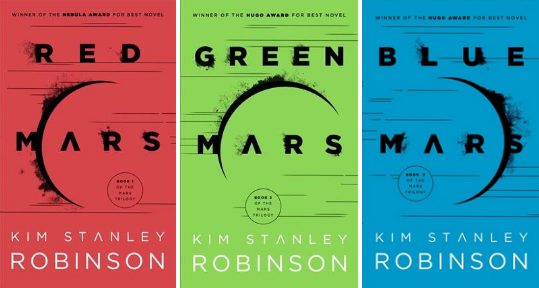
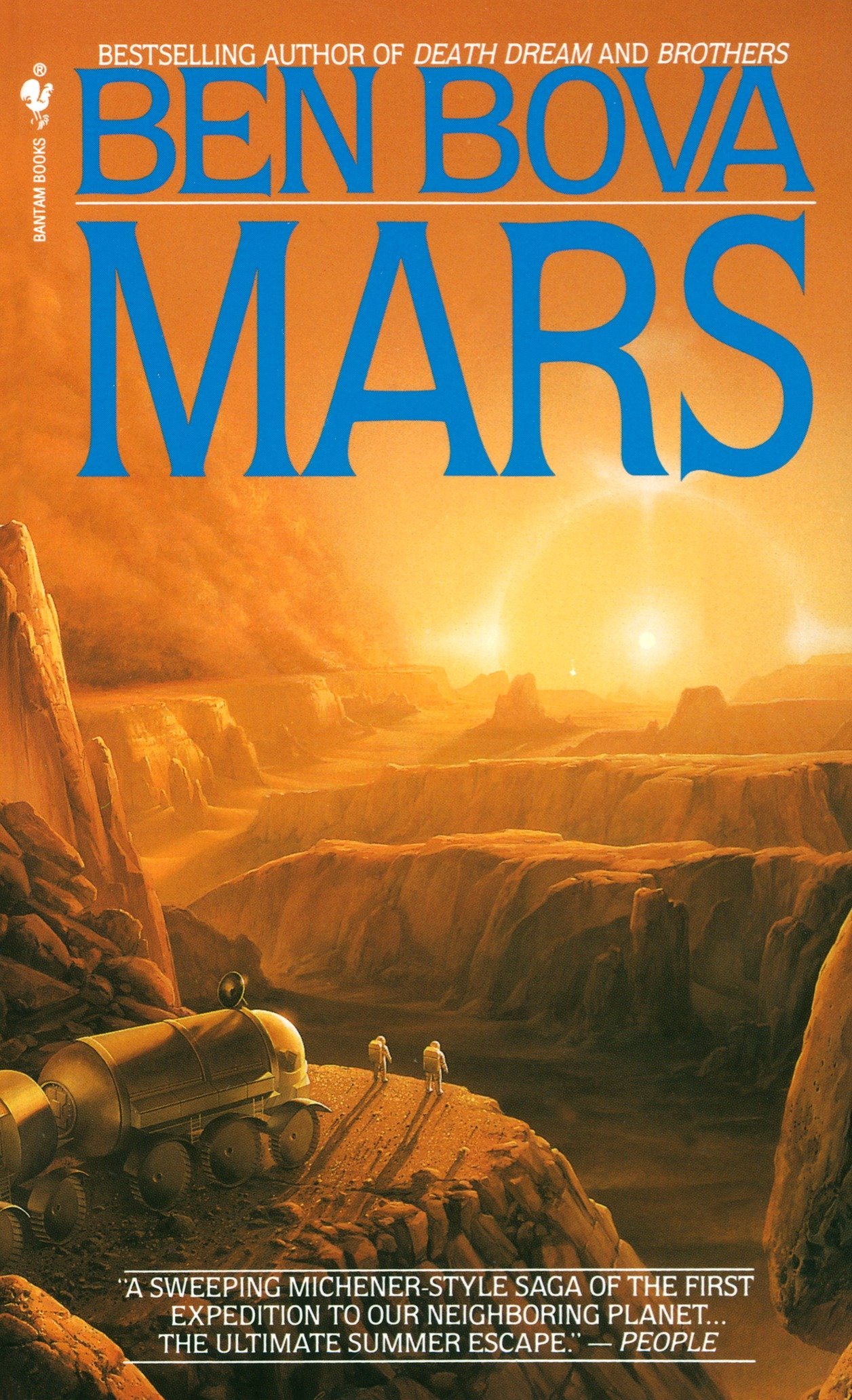 Ben Bova has written four related novels about Mars:
  The Martian
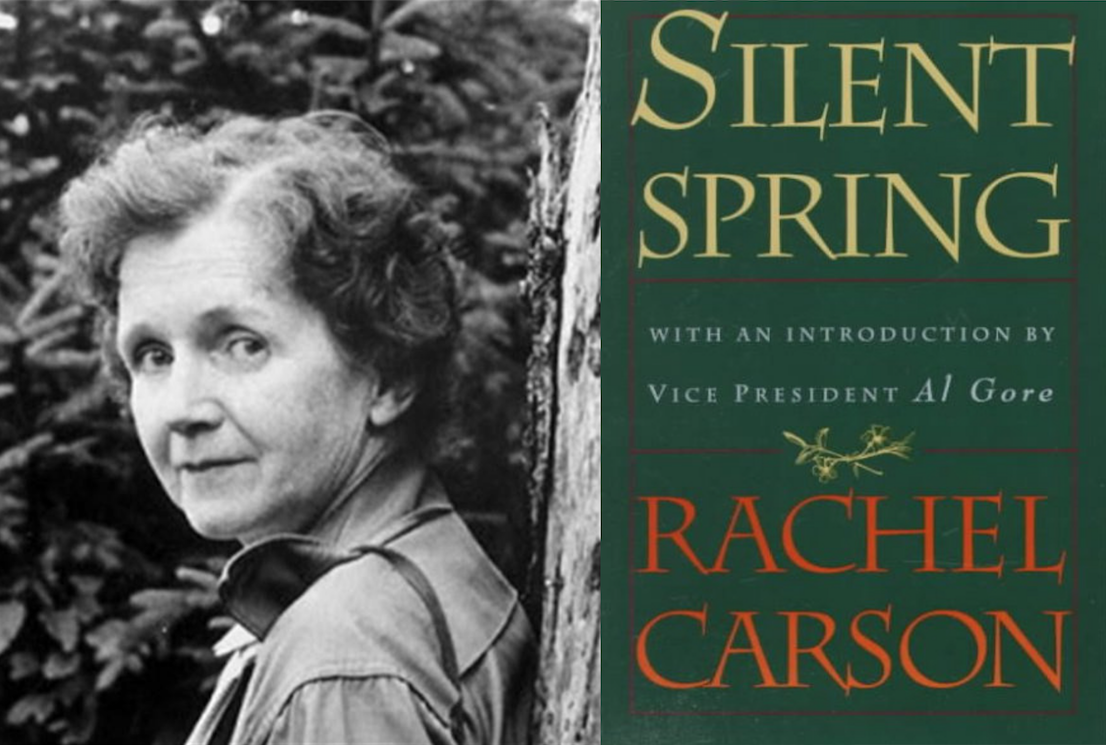
 The first Earth Day was celebrated on April 22, 1970, with the intention of bringing awareness to environmental issues. The first Earth Day events drew millions of participants across the U.S. and around the world. This was the scene in New York City. Since 1970, celebrations have grown, with Earth Day becoming a global event in 1990.
 The library is a vital place for citizens to become educated and informed about environmental issues, from fracking, to plastic bags and straws, to carbon emissions, so that that they may approach their elected representatives with their concerns. The environmental impact of plastic straws is a topic that has been in the news a lot recently: