Solving Cheshire Mysteries at the Library

A couple of months ago, I fielded a reference question about 1410 Highland Ave, the current location of The Butcher Bros Steakhouse. This patron wanted to know which restaurant was there about 35 years ago.

Questions like these are not uncommon, but there’s usually enough information online to find a quick answer. Searching online, I uncovered what many Cheshire-ites already know: 1410 Highland Ave became The Butcher Bros in 2023, Bone in Prime opened there in 2021, and Perfectly Prepared Catering had a run from 2018-2020, closing due to COVID-19. At some point before Perfectly Prepared, that location was Cugino’s Pizza (a fact some helpful staff members were able to help me out with). Everything before Cugino’s was a dead end, so I turned to our local history collection on the library’s lower level. It was time for some good old-fashioned research!

My reference resources of choice were the local directories. These directories were published yearly and our collection includes most editions from 1965 to 2020, covering Cheshire, Hamden, North Haven, and the entire New Haven County at various points in its publication history. These books, and our entire local history collection, are available for anyone to use in-library on the lower level.

The directories are filled with all kinds of fun information. Did you know Cheshire had 3,253 telephones in 1956? And 8,404 telephones by 1968?! Okay, maybe not the best example of how fun this information can be… Still though, quite a few telephones!

But back to the research question: What’s the history of 1410 Highland Ave? I flipped to the Cheshire section of these directories and searched by street name. I was thrown for a loop in 1984 and 1983, which is when that portion of Highland Ave was still called Milldale Rd. You’ve got to be on your toes with this kind of thing.

I narrowed my search between the years of 1983 and 1997 to get a comfortable range around the “35ish years ago” goal. Even within this 15 year period, there’s a lot of action!

I got in touch with the patron who requested this information and we decided the restaurant they remembered was likely Vigilio’s. The best kind of mysteries, however, only lead to further questions—this one is no different. What happened between 1991 and 1993 when there was no information submitted to the directory? What is Spindrift? Where is Michael Anthony now? And most importantly, what is Twilight Zone? A coworker vaguely remembers a club called Twilight Zone, but I can find no information to back that up. Whatever the case, this research shows that even the most unassuming of questions can be an adventure.
Dragon Cards, Dueling Decks, and a Packed House: Reading Dragons Soar at Cheshire Public Library

This summer, the Cheshire Public Library turned up the heat (and the magic) on our Summer Adventure by introducing a wildly fun and fiery addition: Reading Dragons!

Originally developed by the Dover Public Library in Ohio, Reading Dragons is a free, card-based reading incentive program that rewards kids with collectible dragon cards for each hour they read. Thanks to the collaborative efforts of librarians nationwide, the program has taken flight, now used in over 400 libraries across 42 states and 5 countries—and we’re thrilled to be part of the dragon-loving fun.

How It Works

At its core, Reading Dragons inspires kids to read more by tapping into their love of collecting, creativity, and games:

  • Finish 3 levels of the Cheshire Library Summer Reading Adventure and get a complete starter deck of Dragon Duel Cards—it is that simple.
  • Each card features original artwork of dragons and mythical creatures.
  • Gameplay is similar to Rock, Paper, Scissors, except with dragon types (fire, water, and leaf).

Cheshire’s Dragon Dueling Decks: Our Fiery Twist

We decided to take the Reading Dragons concept and add our own twist to the cards and the program. Originally, the program called for giving readers a individual trading card for each hour they read. At first, we planned to follow the program as designed but we quickly realized this would overwhelm our staff. Instead, we decided to give participants who completed the first three levels of our program, a full starter deck of 24 custom-designed cards.  

This not only freed up staff for programs, collection maintenance, and development but it also allowed our summer readers to get their cards at the halfway point. This allowed us to recapture our summer readers attention. We are hoping this will lead to more kids to finishing the program this year. 

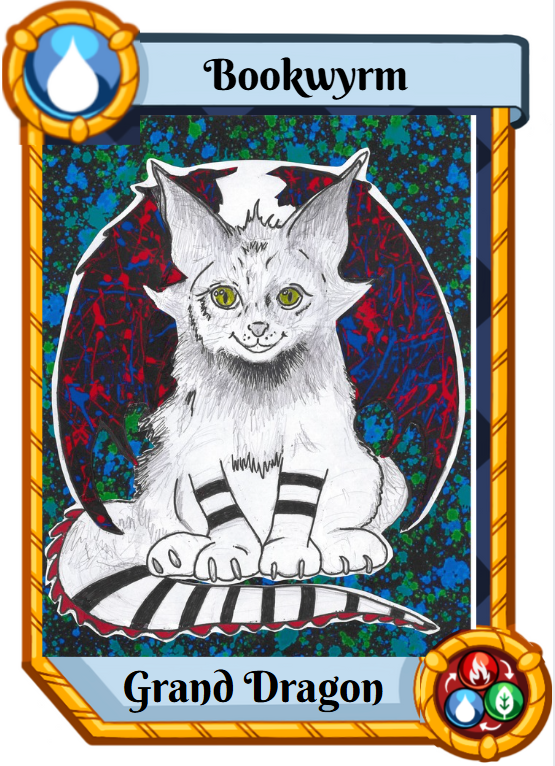
One of our proudest additions? The Bookwyrm Dragon set, lovingly designed by our talented staff member Laurie Lee, who previously created the Cheshire Cat logo for last year’s registration prize. This year, Laurie stunned us again with her imaginative Cheshire Cat/Dragon hybrid—one of the stars of the starter deck! Laurie is an incrdible artist who always goes above and beyond for the library.

Game On: Our First Dragon Duel Tournament

This week, the dragons truly came to life with our first-ever Dragon Duel Tournament—and the turnout was amazing! Our library was packed with excited young readers-turned-card battlers, eager to put their decks to the test! Their goal defeat their opponent’s dragons and win special edition cards with game changing powers!

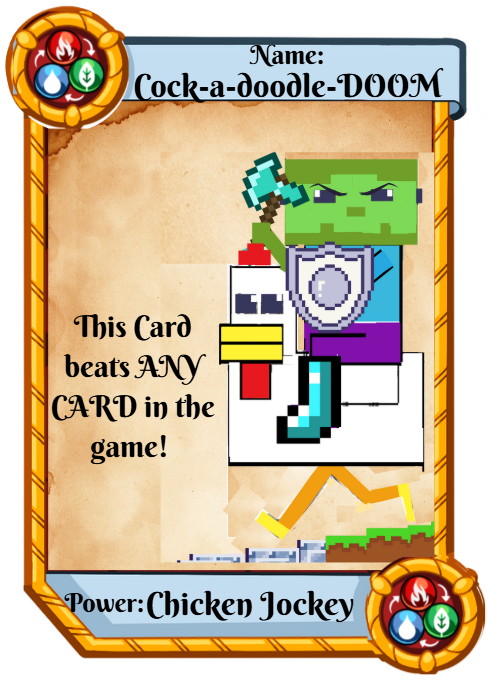
All of our participants received a special edition card, however our tournament champions walked away with the most powerful card we have unveiled so far:

The dreaded and coveted Cock-a-doodle-DOOM card! A card that harnesses the massive power of the Chicken jockey and defeats any card in the game. Needless to say, this will be a very limited edition card.

What’s Next for Cheshire Library and Reading Dragons?

This is just the beginning. We are already brewing up plans to continue the Reading Dragons experience into the fall and winter, with:

  • All-new cards
  • New game changing powers
  • Even more duels, events, and excitement

Reading has never been so mythical—or so much fun.

A huge thank you to the creators of the Reading Dragons program, local artist and library staff member Laurie Lee, and to our own amazing team here in Cheshire. We’re thrilled to bring reading and creativity together in such an unforgettable way.

The Library of Congress Needs Your Help!

I recently took a class on archives and manuscript management- as one does- and learned about a problem in the world of museums and archives. Many of them have large numbers of old documents they have scanned into their digital collections for preservation, but they’re not searchable. What do I mean by “searchable?” Let’s say you’re doing research online, looking for information on feral pigs in North America in the 19th century. Now, it turns out the Library of Congress had a bunch of letters donated to them that discuss precisely this, and you could read all about the problems Matilda had on her farm in Cheshire as she writes to Cletus in Middletown. Unfortunately, you’re not likely to find these letters by blindly sorting through the images that make up the archives’ massive collection. Those letters first need to be transcribed, where someone looks at the pictures taken of the letters and types what is written there. Once this text has been typed, the computer is able to match your search for “feral pigs, North America, 1800s” with the text that was entered via transcription.

Here’s the problem: it takes a lot of time to transcribe all those old historical records. The solution? You.

That’s right! There are all kinds of archives and other historical organizations looking for volunteers to transcribe and review old documents. What does this look like in action? Here’s an example from a transcription I did on the Library of Congress’s We the People website:

Above is an article written by Frederick Law Olmsted, the “father of landscape architecture in the United States,” best known for designing Central Park in New York City. Here, he enthuses about the “Lungs of London,” another term for London’s Royal Parks. Even within this brief two-page document, there is so much to sink your teeth into. He describes the necessity of public parks that do not exclude the working class:

Money, and their legs, will carry [genteel people] whither they will; but with the poor artisan or labouring man it is not so. He cannot afford time or means to set out with his wife and children on a Sunday voyage of discovery – and to find the shades of night, perhaps, falling around him just as he has succeeded in refreshing his eyes with a bit of anything green.

Poetic! And relevant 185 years later… When opening up a new document to transcribe, there’s no telling what you may find.

This kind of project is perfect for history buffs, puzzle hounds, those interested in volunteering their time, or anyone who has ever thought, “Gee, I bet I’d make a good code cracker.” Each organization has slightly different guidelines for transcription, so definitely peruse those before you get started. Generally, these institutions want to make it easy for volunteers to provide their help, so it doesn’t take more than a few minutes before you’re transcribing your first document.

Here are a few of my favorites:

The Library of Congress– Probably the quickest to get started, with the easiest-to-use interface. You don’t have to have an account to transcribe, but if you create one (it’s free), you can track your hours.

National Archives– Volunteers here are called “Citizen Archivists,” and have more options outside of straightforward transcription like their “Outside the Box Missions.” This one wins for coolest branding.

Historic New England– They’re focusing on transcribing the Casey Family Papers right now, and from what I can tell this is a family with decent handwriting, great for beginners.

There are also many other smaller institutions looking for transcription help, along with international archives. Try googling “archives transcription volunteers” or “digital transcription volunteers” if none of the above suggestions tickle your fancy.

Questions? Did you try it? What did you think?

One Book, One Town, One Difficult Choice!

The Cheshire Public Library is planning on hosting a One Book, One Town program in 2025. For those unfamiliar with this concept, the idea is to select a book the whole town can read “together”. The library will host a kick-off party and plan programming based on the book’s narrative and themes. We are so excited for this chance to bring the community together under one book, and we’ve been giving the selection process a lot of thought. As a fun peek behind the curtains, I would like to talk a little about the books that we thought could be potential contenders and the reasons why they weren’t selected.

The first novel we considered for this program is Overstory by Richard Powers. This is a dense novel both in size (512 pages) and in content. The story follows 9 characters spanning from the 1950s through the early 2000s as their stories overlap. It’s difficult to say exactly what Overstory is about. It’s a novel about trees, but really, it’s a novel about people, nature and how closely these two worlds overlap. It’s a novel about the importance of paying attention to nature as well as tackling questions about what we can do, both as individuals and collectively, to protect nature and each other. It is beautifully written, each character given their own story and arc. It is also a powerful love letter to trees.

Ultimately, we decided not to choose this book for our program because of its length and concerns about being able to secure the author for an author talk. Powers will be busy with press for his new book titled Playground about oceans, which I am sure is as masterfully written as Overstory. If you can carve out time to read this novel, I highly recommend it.

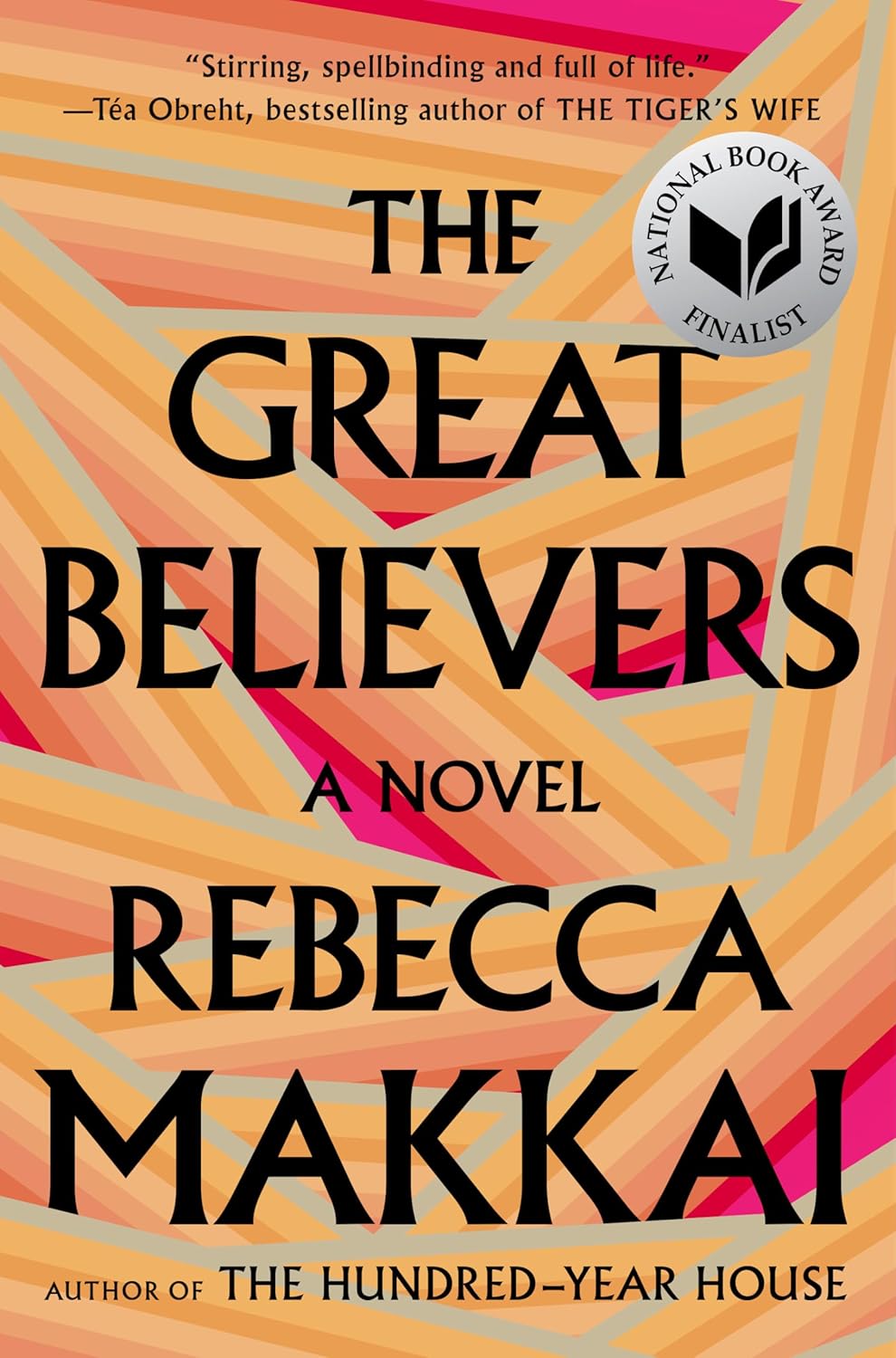
The second novel in the running for this program was The Great Believers by Rebecca Makkai. Like Overstory, The Great Believers also made it onto the New York Times list of the best 100 books of the 21st century. The story jumps in time; one part is set in Chicago between 1985 and 1992 and the other in Paris in 2015. The novel is about a group of friends, predominantly gay men, navigating the AIDS crisis in its early days. This is the strongest part of the novel. Makkai captures the fear, loss, and grief from this era while still managing to tell a beautiful story about love and friendship. As the reader, it is easy to fall in love with these characters and feel tremendous sadness about the senselessness of their deaths.

Unfortunately, the parts of the novel that take place in 2015 are less effective. Much of these chapters, which concern survivor’s guilt and lasting trauma, feel extraneous and only serve to distract from the gripping 80s narrative. We decided against this book partly because of these jarring time jumps, as well as concern about the overall heaviness of the subject matter. That being said, if you are looking for something on the power of love and friendship, please don’t hesitate to pick up this book.

The last novel strongly considered for our One Book program was The Women by Kristin Hannah. The hype around this novel has been almost as big as the number of patrons requesting it at the library. The story is about combat nurses in Vietnam and their lives after the war. It’s a difficult read, particularly in its depiction of post traumatic stress disorder. The resources for soldiers returning from the Vietnam war were abysmal and the resources for returning female combat nurses were non-existent. The novel deals with the struggles of settling back into civilian life while having your war experiences repeatedly minimized or even denied.  

This book would appeal to a wide audience, particularly those who lived during the Vietnam War, those who served in the war, or those who are interested in the history of that era. We decided against selecting this book because Kristin Hannah’s speaking fees are prohibitively expensive.

We are hoping to finalize the book selection for the program by the end of this month so be sure to keep an eye out early next year for the book unveiling as well as a list of programs. We can’t wait to read with you!

Behind the Scenes: The Mark Twain American Voice in Literature Award

I never really need an excuse to read. It is my favorite pastime. I typically have an expanding “to be read” list and my nightstand is always covered by an unwieldy pile of books. At the start of this year, however, I was in a reading funk and couldn’t seem to finish any book I started. It was right around that time that I received an email from someone at the Mark Twain House looking for readers to help create the long list for the Mark Twain American Voice in Literature Award. The Mark Twain House has been giving the award out since 2016 to works of fiction that “speak with an American voice about American experiences.” I signed up to be a judge, hoping that this commitment to judging at least three titles on the list would motivate me to start reading again.

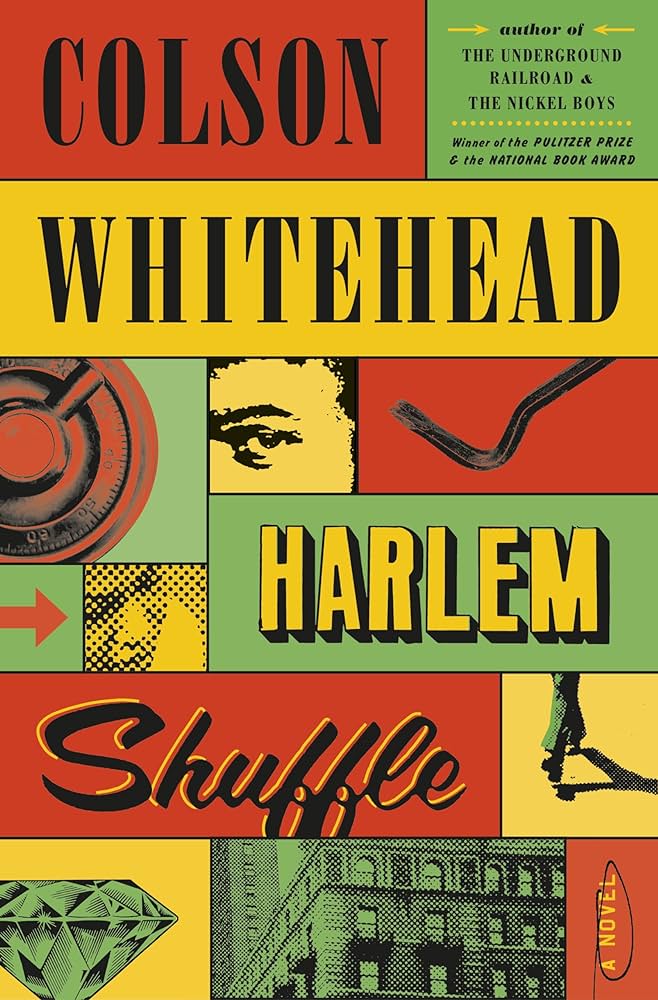
The list of titles to choose from was long and extensive so I decided to pick a variety of different genres. Crook Manifesto by Colson Whitehead was first on my list but to read that book, I needed to read the first in what will eventually be a three-part series, Harlem Shuffle.  Harlem Shuffle is set in Harlem from 1959-1964. For anyone who has read Colson Whitehead, it is a departure from his heavier works like The Nickel Boys. Harlem Shuffle follows the life of Ray Carney, a furniture salesman in Harlem with a dubious past, desperately trying to live a crime-free life. It is a funny, clever, and breezy crime novel, reminiscent of Chester Himes’s Harlem Detective Series.

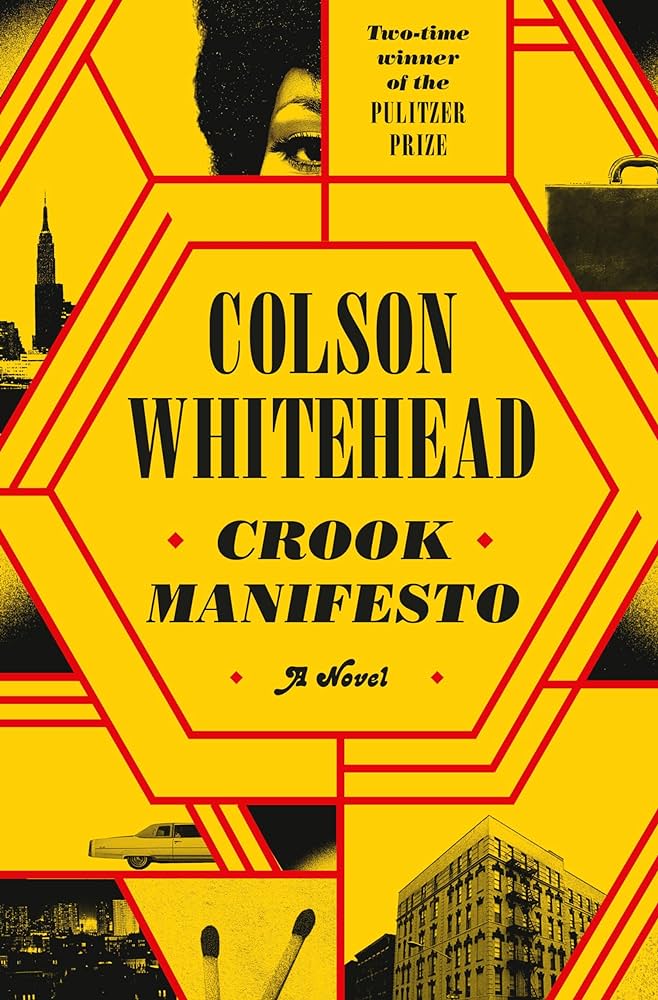
The second in Whitehead’s series, Crook Manifesto takes place in the early 70s and the plot is centered around the protagonist, Ray Carney trying to score impossible to find Jackson 5 tickets for his daughter. Crime, violence, and comedy ensue. The two books in the series are both fun reads that give a great snapshot of New York City in the 60s and 70s. Whitehead still manages to portray issues of race, class, and police brutality, particularly during his description of the Harlem race riot of 1964 and the tension between the police and those active in the Black Power movement in the 1970s. There is no date set for the publication of the final book in the series, but I am awaiting its release to see if Ray Carney does eventually manage to stay on the straight and narrow.

The next book I read was a debut novel titled A Haunting in Hialeah Gardens, by Cuban American author Raul Palma. I was immediately intrigued by the title having grown up in Miami. The story follows Hugo Contreras who is mourning the sudden death of his wife as well as dealing with mountains of debt. Deeply immersed in the world of Santeria since he is a Babalawo, Hugo agrees to help the debt collector who has been tormenting him, who is in turn being tormented by a ghost, in exchange for clearing his debt. It is an absurd story, but also a very Miami story. The novel is a modern gothic tale, complete with hauntings, demonic possession, and highly accurate descriptions of the oppressive heat in Miami and endless rows of strip malls. It is scary at times with an ending easily left up to interpretation by the reader and a good read for anyone who wants a different kind of supernatural novel.

The last book I chose to read was Dearborn, a collection of short stories, also written by a debut author, Ghassan Zeineddine. I love short stories as a genre, so I was excited to dive into these ten stories chronicling the Arab American experience in Dearborn, Michigan. The stories were funny, sweet, poignant, and at times heartbreaking. Though focused on Arab American life, the stories often told a greater story about the immigrant experience more broadly. This was the book that I most enjoyed out of all the ones that I read and the one I chose to be considered for the prize’s long list. Zeinedine writes beautifully and I hope he chooses to publish more in the future.

The long list for the Mark Twain American Voice in Literature Award is up on their website. Unfortunately, Dearborn didn’t make the list but I am grateful for the experience of being a reader for this prize. I was able to discover novels I might not have read otherwise and it got me reading again.