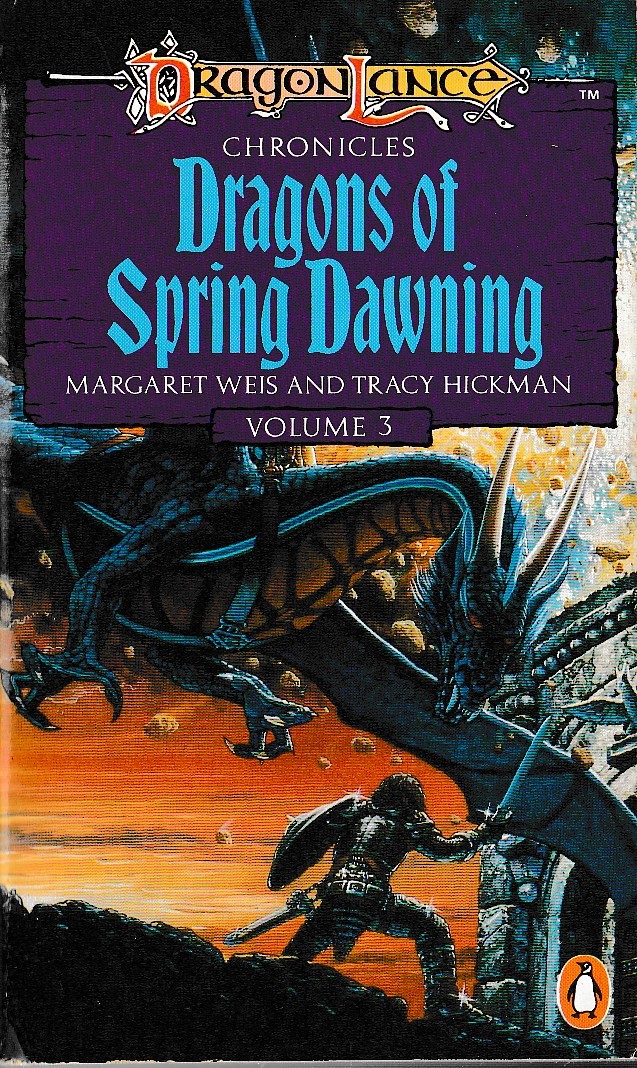
They tell you not to judge a book by its cover, but a book cover can make or break a book’s success. While browsing a used bookstore decades ago, I fell utterly in love with the covers of a book series I’d never heard of before – DragonLance, by Margaret Weiss and Tracy Hickman. I had to buy them, even just to look at the covers. The cover paintings were done by Larry Elmore, one of the premiere fantasy artists of the time. I’d never gotten too much into sword and sorcery books, but I devoured these. The second trilogy was still being written, and it was agony waiting for the next book in the series. I love those books to this day; they influence my own writing and imagination, and all because I had to have that book cover.
And nothing, of course, is more infuriating than when they change that book cover you know and love, and not usually for the better. Have you read this book? The title looks familiar, but not the cover … and then you start to read and find out yes, you’ve read it before, they changed the cover on you. Why?
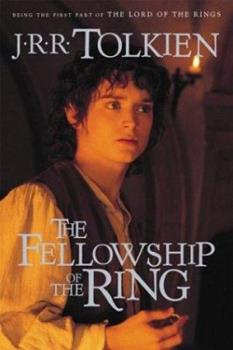
There are many reasons a book gets a new cover. It may have changed publishers. It may be the paperback edition of a hardcover, or a school edition, or an audiobook – and audiobook companies, who often have a middleman, don’t always get permission to use the same cover. It may be a new printing – if a book contract agrees to a run of 5,000 copies, and 6,000 are ordered, the book may get a new distribution run, resulting in a new cover. The book may have been sold to a new publisher – such as Bantam Books being sold to Random House. Random House will then reissue a strong seller with their own brand of cover. If a movie or TV series is made from the book, a new edition will be released with a cover that reflects the new media, as happened with Lord of the Rings and Ready Player One. Sometimes the publisher gets flack because the cover has absolutely nothing to do with the story, and they rework it.
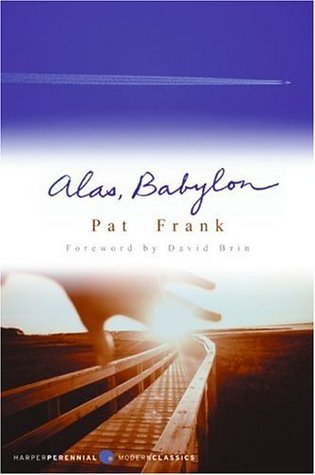
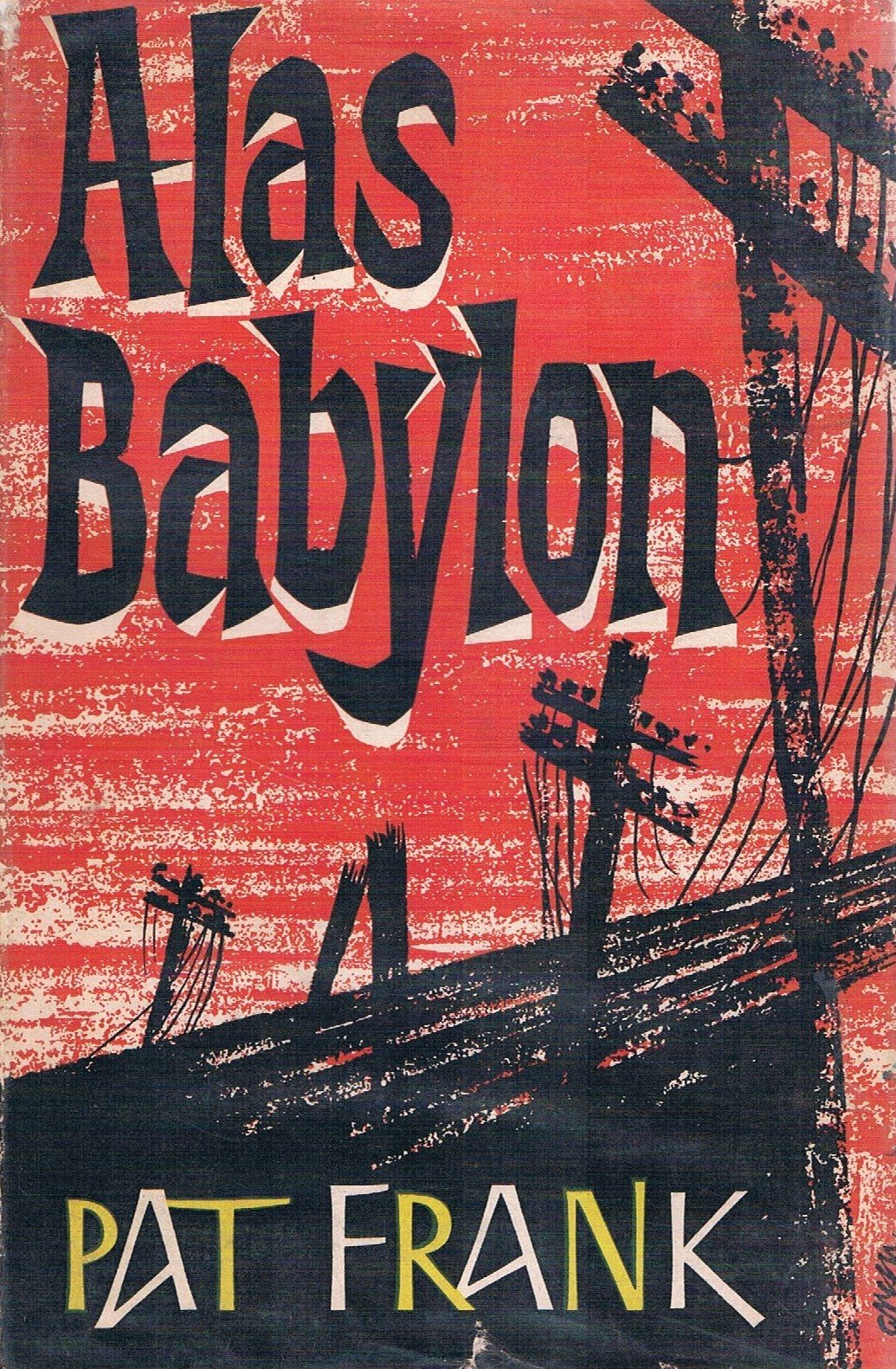
Sometimes, it’s hard to keep up, and sometimes, the cover art makes you scratch your head. Take, for example, the book Alas, Babylon, a 1959 novel of nuclear apocalypse that, if it’s not still my absolute favorite novel, it’s in my top three. First below is the cover I read it with – sensible, with the red/orange color of disaster and warning and nuclear fire, and people walking out of it. Compare that with the many covers it’s had since 1959:
The current one, number two above, a fourth edition by Harper Collins, to me, is puzzling – small font, an empty boardwalk, and a hand? This is not a cover that invites me to read, tells me a single thing about the story. Perhaps, after so many editions, they run out of ideas. Another fact: it’s very rare an author gets to choose the cover of their book – or have any input at all. You may submit your perfect dream cover along with your manuscript, and the publisher will toss it and give the work to one of their contracted artists. This is how you wind up with a blonde, blue-eyed heroine on the cover when the main character has short black hair.
The “girls rolling around on the ground” phase.
Book covers also reflect what seems to be popular – a few years ago it seemed every book had a girl rolling around on the ground. If one sells, then everyone wants to copy that success. The bottom half of a face? Those are popular. Romance novel covers were almost interchangeable – how many were based on the model Fabio? This year, pink is supposed to be “in” for covers again, as well as layered graphics and bold lettering.
Don’t like a book cover? Let the publisher know! Editors read the books, not the artists, or the publisher. If they’ve missed the mark, tell them. Authors depend on good covers to grab readers; if the cover isn’t intriguing, it’s wasting money.
What book covers have hit the mark, reached out and grabbed you so you had to read it?
Say Science Fiction, and most readers will make a face as images of bad 50’s movies, computers and technobabble, and Star Wars arguments come to mind. “I don’t read Science Fiction,” but chances are, you do. Science Fiction simply means a story that more or less follows the laws of science as we know them, as opposed to fantasy, which drags in magic and elves and things that don’t normally exist on Earth. The material is as broad as anything else in fiction.
Science Fiction has come a long way since 1977, and is almost unrecognizable to the campy 50’s tin-can imagery. Like rock music, science fiction has a hundred sub-categories, and chances are you’ve read – and liked – at least one. Here are some of the newest trends you may not know about.
Gender-Focused: These stories explore cultures and people who may have a single gender, multiple genders, or are genderless entirely. Check out Ancillary Justiceby Ann Leckie, Seveneves by Neal Stephenson, Mask ofShadows by Linsey Miller, or the Grandmama of them all, The Left Hand of Darkness by Ursula K. LeGuin.
International: There’s a huge influx of stories being translated from other countries. While America may be stuck on space opera and predictable heroes, other countries aren’t, and offer a refreshing break from the Same Old Thing. Try The Three-Body Problem by Liu Cixin, Master and the Margaritaby Mikhail Bulgakov, The WitcherSeries (yeah, the TV one) by Andrzej Sapkowski, The Lost Villageby Camilla Sten, or Shadow of the Wind by Carlos Ruis Zafon.
Generation Ship fiction: No faster than light ships here, but pressure-cooker stories onboard ships making a long haul. Dangers take on a whole new meaning when you’re dependent on your ship for years on end. Check out Across the Universe by Beth Rivis, Rendezvous with Ramaby Arthur C. Clarke, Aurora by Kim Stanley Robinson, or Ship of Fools by Richard Russo.
New Space Opera: Space opera traditionally involves weapons, danger, heroes, and rescued damsels (Star Wars being a perfect example, among many), but newer stories are throwing in more gritty realism. They’re a higher quality of writing, more scientifically plausible, and tend to address more social issues under the guise of “fiction.” Grown-up SF. Try the Leviathan Falls series by James Corey, Hail Mary by Andy Weir, the Thrawnseries by Timothy Zahn, The Echo Wifeby Sarah Gailey, or Winter’s Orbit, by Everina Maxwell.
Climate SF: With the doomsday clock ticking down the moments to an expected 6th mass extinction, climate SF may be the most relevant wave of stories to hit shelves, and can fully include apocalyptic virus stories. Read them! State of Fear by Michael Crichton, New York 2140 by Kim Stanley Robinson, The Overstory by Richard Powers, Oryx and Crakeby Margaret Atwood, The Bone Clocks by David Mitchell, Flight Behavior by Barbara Kingsolver.
Science Fiction isn’t the same old trope you’re used to, but a growing, evolving body of literature with numerous authors, styles, and focus – and guaranteed there’s one right for you!
It’s hard to live in America and not know who Martin Luther King Jr. was. If you’re reading this from out of the country, MLK was a black Baptist minister who became the driving force in the 1960’s fight for civil rights, and for the equal treatment of black citizens in America. His call was for peaceful protest and non-violence – always non-violence – and he was awarded the Nobel Peace Prize in 1964. For his outstanding efforts, Mr. King was assassinated on April 4, 1968. James Earl Ray was charged with the murder, a white troublemaker with a 7th grade education and a long rap sheet. Ray admitted to the crime, had a strong timeline leading up to the crime, had fingerprints on the weapon, but because he lied numerous times and changed pleas and facts all over the place, conspiracy theories abound.
Kings death no doubt played a major role in the passage of the 1968 Civil Rights Act, just a week later, in an effort to help quell the riots that followed his death. His examples reached into South Africa and Northern Ireland, areas of long hostilities, and a statue of him stands in Westminster Abbey in London.
King’s beliefs and activities created as many conflicts as they tried to solve. While the racially charged South saw him as too progressive, so far as to call him a communist, many in the black community, such as Malcolm X, thought he didn’t go far enough and demanded radical action, not peaceful protests. King alienated himself from the US government by opposing the war in Vietnam. Herbert Hoover, head of the FBI, considered King a radical and sent him threatening letters. It wasn’t until 1986 that Ronald Reagan enacted Martin Luther King Day as a Federally recognized holiday.
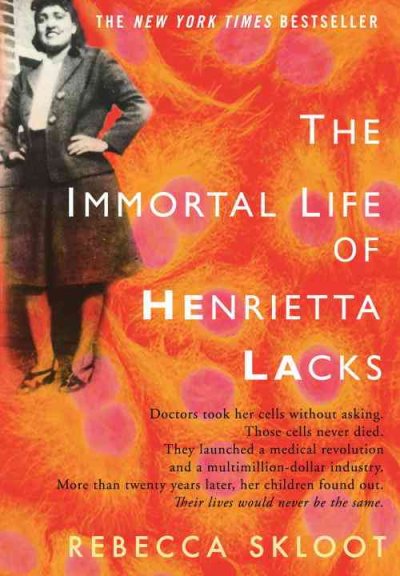
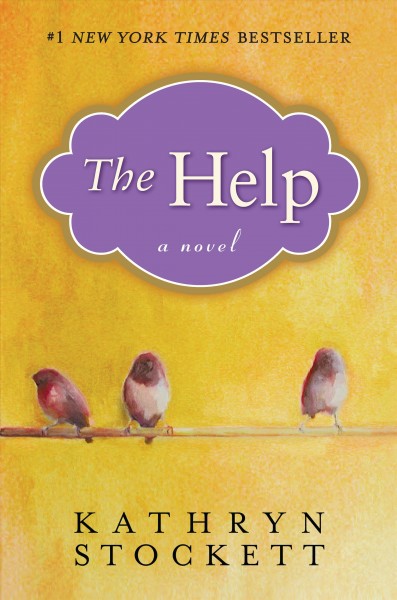
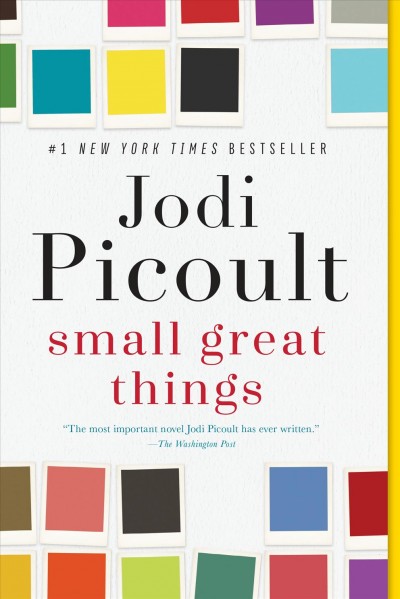
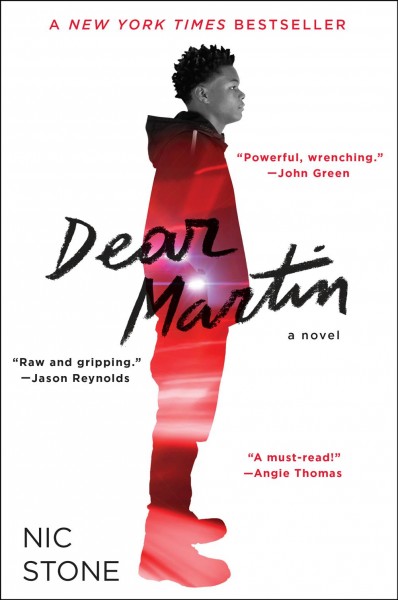
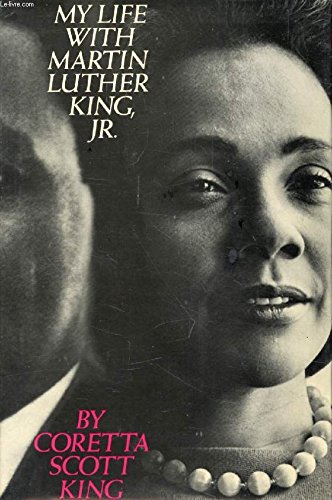
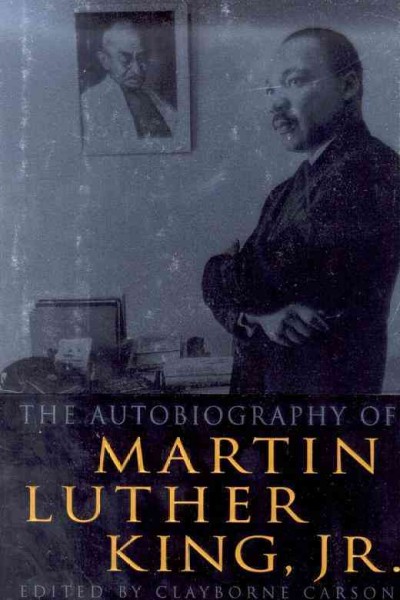
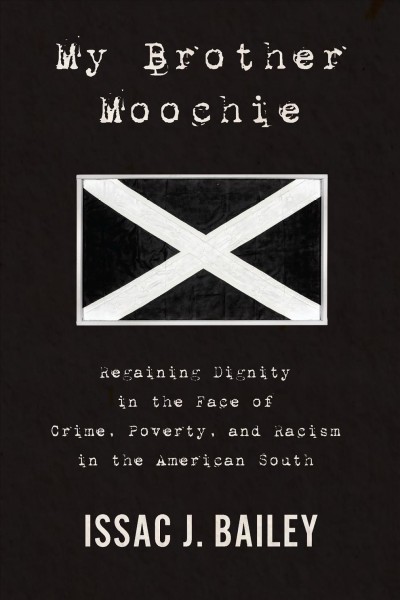
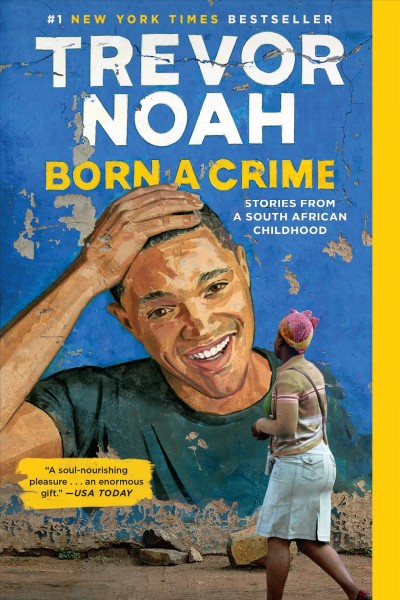
Biographies will give the standard information on Martin Luther King, and while White Trash (warning: FaceBook will jail you for discussing this book) and Caste are excellent books which will open your eyes to issues you never considered, they’re heavy on sociology and can be difficult to slog through at times. If you’d rather read about the issues he fought against, and where we stand today on Civil Rights in an easier fashion, check out these non-fiction books that will give you a good perspective of the issues. If non-fiction isn’t your thing, try these novels about modern issues as well, and realize we still have a long way to go.
Raise your hand if you’re traveling for the holidays! Road trips to Pennsylvania are a regular part of the holidays for my family, and good listening material is the key to keeping everyone in the car happy and sane (or as sane as you can be, when traffic stops for no apparent reason). In situations like this, I often turn to fantasy, adventure, and sci-fi audiobooks. The plots move fast enough to keep my attention engaged for long periods, and they’re usually hefty books that will keep me occupied for a while. Plus, otherworldly settings mean that not only can I disconnect from my everyday worries, but it makes it easier for multiple generations to enjoy the same story. You don’t necessarily get that with realistic fiction, which is a popular genre here in the Children’s department, but it’s much more targeted to its specific age group. Four straight hours of fictionalized minutiae of elementary school? Most adults I know would rather spend that time listening to politics podcasts. But four straight hours of a kid who’s raised by ghosts in a graveyard? Tell us more. No, please – make it eight hours.
The following titles have various runtimes to get you to wherever your holiday destination might be – and we’ll even give you some ideas of cities whose travel time from Cheshire is about the same as the book’s runtime. As a bonus, almost all of them are available in our Playaway format, which is a self-contained audiobook player. All you provide is an auxiliary cord with a 3.5mm jack to connect to your car’s stereo, or a regular set of headphones for solo listening. For those of you lucky enough to have Bluetooth connectivity in your car, look for downloadable audiobooks that you can play through your phone.
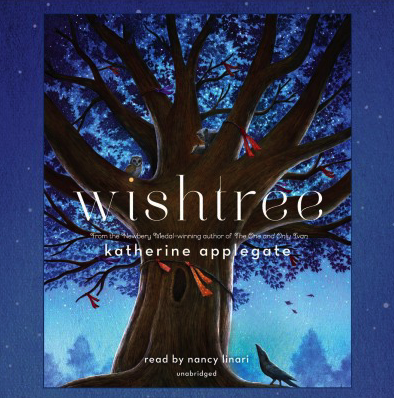
Red is an oak tree who is many rings old. Red is the neighborhood “wishtree”—people write their wishes on pieces of cloth and tie them to Red’s branches. Along with her crow friend Bongo and other animals who seek refuge in Red’s hollows, this “wishtree” watches over the neighborhood.You might say Red has seen it all. Until a new family moves in. Not everyone is welcoming, and Red’s experiences as a wishtree are more important than ever.
Listen while you drive to: Philadelphia, Pennsylvania
Roz the robot discovers that she is alone on a remote, wild island with no memory of where she is from or why she is there, and her only hope of survival is to try to learn about her new environment from the island’s hostile inhabitants.
Many years have passed since the Jedi Knight Luke Skywalker and the Rebel Alliance were victorious over the evil Empire, and the galaxy has been at peace. But now a darkness is rising. The brave men and women of the Resistance must stand against Kylo Ren and the villainous First Order.
The city of Ember was built as a last refuge for the human race. Two hundred years later, the great lamps that light the city are beginning to flicker. When Lina finds part of an ancient message, she’s sure it holds a secret that will save the city. She and her friend Doon must decipher the message before the lights go out on Ember forever!
In 2041 twelve-year-old Dashiell Gibson is a resident of Moon Base Alpha, and at the moment he is faced with a number of problems: coping with the nasty Sjoberg twins, finding out how the commander of the base has managed to disappear from a facility no bigger than a soccer field, and dealing with the alien Zan who communicates with him telepathically from afar–and who is hiding a secret which may threaten the whole Earth.
Listen while you drive to: Pittsburgh, Pennsyvlania
Joining her family in her community’s annual New Year’s Day magic-capturing ceremony, a 12-year-old girl who has always been lucky captures just one tiny jar of magic, revealing the true nature and beliefs of her loved ones.
Through the mysterious powers of a cherished book of stories, twins Alex and Conner leave their modern world behind and find themselves in a foreign land full of wonder and magic where they come face-to-face with the fairy tale characters they grew up reading about. But after a series of encounters with witches, wolves, goblins, and trolls alike, getting back home is going to be harder than they thought.
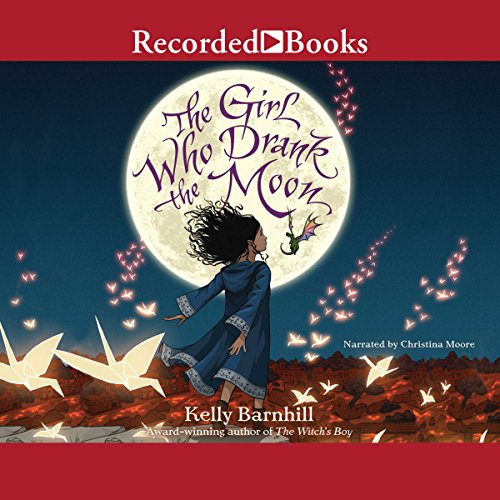
Every year, the people of the Protectorate leave a baby as an offering to the witch who lives in the forest. They hope this sacrifice will keep her from terrorizing their town. But the witch in the Forest, Xan, is kind. She shares her home with a wise Swamp Monster and a Perfectly Tiny Dragon. Xan rescues the children and delivers them to welcoming families on the other side of the forest, nourishing the babies with starlight on the journey. One year, Xan accidentally feeds a baby moonlight instead of starlight, filling the ordinary child with extraordinary magic. Xan decides she must raise this girl, whom she calls Luna, as her own. As Luna’s thirteenth birthday approaches, her magic begins to emerge—with dangerous consequences. Meanwhile, a young man from the Protectorate is determined to free his people by killing the witch.
Listen while you drive to: Kitty Hawk, North Carolina
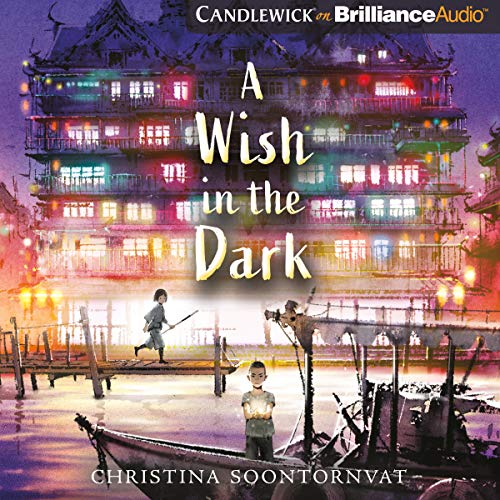
All light in Chattana is created by one man – the Governor, who appeared after the Great Fire to bring peace and order to the city. For Pong, who was born in Namwon Prison, the magical lights represent freedom, and he dreams of the day he will be able to walk among them. But when Pong escapes from prison, he realizes that the world outside is no fairer than the one behind bars. Nok, the prison warden’s perfect daughter, is bent on tracking Pong down and restoring her family’s good name. But as Nok hunts Pong through the alleys and canals of Chattana, she uncovers secrets that make her question the truths she has always held dear. Set in a Thai-inspired fantasy world, this twist on Victor Hugo’s Les Misérables explores the difference between law and justice.
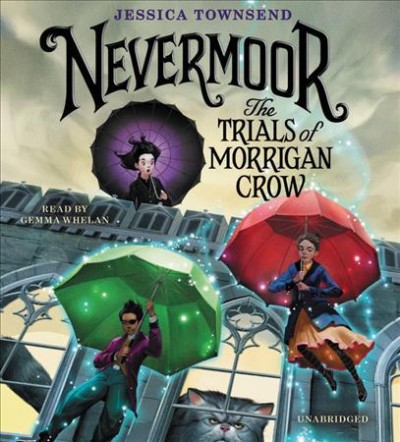
Born on the unluckiest day of the year and blamed for all misfortunes that occur in her community, Morrigan Crow is doomed to die at midnight on her 11th birthday. That is, until she is unexpectedly whisked away by a stranger on horseback who brings her to the magical city of Nevermoor, where she learns she has been chosen to compete for a position with an organization comprised of highly talented individuals. To stay in the safety of Nevermoor for good, Morrigan will need to find a way to pass the tests–or she’ll have to leave the city to confront her deadly fate.
Listen while you drive to: Charlotte, North Carolina
Haunted by the bus accident that ended his best friend’s life, seventh grader Tristan Strong dreads a visit to his grandparents’ Alabama farm before a bizarre living doll snatches away his friend’s notebook and draws him into a world of burning seas, iron monsters and Black folk heroes exhausted from battle. In order to get back home, Tristan and his new allies will need help from the god Anansi – but bartering with the trickster always comes at a price. Can Tristan save this world before he loses more of the things he loves?
At age 12, Sophie learns that the remarkable abilities that have always made her different from others actually identify her as an elf. After being brought to Eternalia to hone her skills, she discovers that she has secrets buried in her memory for which some would kill.
The first use of the word “robot” dates back to the 1920’s (robotnik or similar being a term for factory worker in many slavic languages), but the word “android,” meaning a miniature human-like automaton, is older, as far as 1863. A robot – a disembodied piece of machinery – does work for you – like a Roomba, or the useless rolling pest in the grocery store that spies on people who might steal things (at least Roomba can clean up a mess it finds, and doesn’t cost $35,000). An android looks like a human, moves like a human, interacts like a human (more or less), but inside is a machine.
That fact has led to a huge amount of introspection – how do we define Human? Is a self-aware, English-communicating Gorilla a person? What about our AI creations? When a computer becomes self-aware, does it have a soul? Is it “human”? At that point, is the use and ownership of an android slavery? That question was battled in the Star Trek: The Next Generation episode “Measure of a Man,” where Starfleet claimed to own Data the android and control him like equipment, while the case was made he was sentient and free. The movie(s)Blade Runneralso focused on that question.
I’m not a techie. Computers are great if they do what I need, but I couldn’t care less about future tech, AI interfaces, androids, or streaming. Anyone who knows any science fiction knows you never trust AI or give it too much power. I like Data, I don’t love Data. C3PO is annoying. I hated Marvin the Paranoid Android. No matter how many times I watch Blade Runner, I think it’s one of the most boring movies ever (I still love The Six Million Dollar Man, but he was a bionic human, not android). So I was really, really surprised that I even picked up the book All Systems Redby Martha Wells, also known as The Murderbot Diaries #1. Not my kind of book. But from the first page, I could not put the book down. I read it while cooking. I read it while my kids were in the tub. I read it while walking. I had to finish it in one day. Thankfully, it’s a short novella, and that’s entirely possible.
Murderbot, as it calls itself (it has no gender. Murderbots are not built for sex; that’s a sexbot), is a Security Unit (SecUnit), a partly organic robot/android construct built to provide security detail for whoever rents or buys it. Of course, mostly what security entails is killing whatever might harm the persons it’s hired to protect, hence the term Murderbot. Murderbot, however, manages to hack its own governor module, releasing itself from control by the company who owns it.
This starts Murderbot on a soul-searching (or soul-developing?) quest to find out exactly who or what it is now, all while working hard not to let anyone realize it’s free, because an uncontrolled killing machine is a very, very dangerous thing (to quote Kyle Reese from Terminator, “That terminator is out there, it can’t be bargained with, it can’t be reasoned with, it doesn’t feel pity or remorse or fear, and it absolutely will not stop… EVER, until you are dead!”). But Murderbot isn’t fond of killing. He’s fond of soap operas and TV serials (like The Rise and Fall of Sanctuary Moon). All he wants is to be left undisturbed to watch his shows while he tries to figure out the human race. Life never lets him, and he feels obligated (like the heroes in the soaps he watches) to help while trying to solve the mystery of who is trying to kill the people he was hired to protect.
Murderbot is sarcastic, droll, funny, depressed, almost autistic in his stilted approach to emotion and interaction with people. He’s a fast thinker and an opportunist. He says s**t a lot more than Data. He doesn’t want to be human, yet is fascinated by them and can’t stop studying them. And he makes mistakes, just like a human. The innovative – and logical – adaption/hijacking of computer systems has opened my eyes to issues I’ve never given a thought to, such as the power of drones. With all the issues currently happening via ransomware, spying, and breaches, and the mass-market and miniaturization of drones, maybe we should be thinking more along the lines of Murderbot, as our military is also controlled by computers, and nothing but nothing is hack-proof. People mistrusted the NYPD robodog so much they had to send it back.
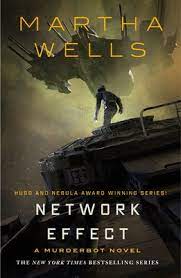
I had to read the second book Artificial Condition (possibly my favorite, because of ART, Murderbot’s name for the “A*****e Research Transport” ship computer), whipped through the third, Rogue Protocol, flew through the fourth Exit Strategy, (also possibly my favorite), and am now reading the fifth, Network Effect. The sixth and current volume is Fugitive Telemetry, with three more commissioned by the publisher, and a TV version is in the works (please, please don’t mess it up!). All Systems Red has won the Nebula Award, the Hugo Award, the Alex Award, and the Locus Award. Yes, the stories are simple (good guy must take down bad guy) but the humanity and humanism throughout the series will keep you emotionally invested to the very end.
Pure enjoyment, with no other agenda. Murderbot is my favorite android ever.

























 The Cheshire Library Blog