Louise Reads: The Good House by Ann Leary

I happily dove into into The Good House. I’ve been a fan of Ann Leary (wife of comedian/actor Denis Leary) since her 2004 memoir, An Innocent, a Broad.  Her 2009 fiction debut, Outtakes From a Marriage, was equally enjoyable., and her blog, with peeks into her life with her family and menagerie of animals  in rural Connecticut, is a lot of fun to read. I am happy to report The Good House did not disappoint.

Leary’s second novel is told from the point of view of Hildy Good: 60-year-old realtor extraordinaire, alcoholic-in-denial, and lifelong resident of the quaint seaside town of Wendover, MA. Having lived more than half of my life on Massachusetts’ North Shore (where fictional Wendover is located), I was pleasantly surprised by how authentic the author’s portrayal of the area felt, the town is almost another character in the story.  As Wendover’s most successful businesswoman, Hildy knows how to work a room, bend the truth, and keep a secret. And there are secrets aplenty in Wendover. Soon, those secrets have Hildy drinking again (albeit alone, at home), and things spiral out of control from there.

As the novel progresses the story takes a dark turn, yet this book made me laugh out loud several times. Hildy’s voice has a dry wit that softens the sometimes difficult subject matter. Despite the fact that she gets less and less reliable as the novel progresses, Hildy can be quite a bit of fun (at first) when she’s off the wagon.  When she enlists a lonely newcomer in town as a covert drinking buddy, however, it sets off a series of events with dire consequences.

The Good House is a fantastic read, especially if you are partial to character-driven novels. The character portrayals in the book are so vivid you truly feel like you know this small town and its quirky but relatable inhabitants. Hildy is a fascinating, flawed character, and an interesting choice as narrator.  If you are an audiobook listener, I highly recommend the audio version read by Mary Beth Hurt – she was perfection as the voice of Hildy. On a related note, it’s been announced that The Good House is being adapted for the screen with Meryl Streep and Robert DeNiro set to star.  Not too shabby!

A recent review by The Examiner said of The Good House, “…humor meets harsh reality in this irreverent look at a non-recovering alcoholic navigating the murky waters of small-town Massachusetts. The Good House is a paragon of New England Fiction.” I would have to agree, it was wicked good – it gets 4 ½ out of 5 stars from me.

Susan vs. the Wizards + Warriors

      The long-bearded ancestor of all wizard, warrior, and chivalrous knight stories is arguably Le Morte d’Arthur, compiled by Sir Thomas Mallory and first published in 1485 – not bad, considering the printing press was only invented in 1450. These tales of King Arthur and his Knights of the Roundtable was later worked by T.H. White into The Once and Future King, published in sections between 1938 and 1958, and taken up by Disney in 1963 as The Sword in the Stone.  In the same time period (1937-1954), J.R.R. Tolkien was busy pounding out The Lord of the Rings, his infinitesimally detailed trilogy (The Fellowship of the Ring, The Two Towers, The Return of the King) that set the bar for most fantasy novels to come, so massive in scope that ten hours of movie magic can’t encompass it all.

Tolkien helped shape Dungeons and Dragons (1974), the endlessly successful fantasy game – wizards, warriors, dwarves with their battle axes, elves, orcs, checking for traps and spells – they all started with Tolkien.  Dungeons and Dragons, however, is directly responsible for creating several lines of worthy novels, perhaps the best being the two original Dragonlance trilogies, Chronicles (Dragons of Autumn Twilight, etc) and Legends (Time of the Twins, etc). While some have complained that “you can hear the dice rolling in the background,” these are the novels that set my brain on fire.  I had the misfortune to read them as they were being released, having to wait anxious months for each delicious installment. While Chronicles sets up the characters and sends them off on a very D&D-type adventure, Legends runs with the developed characters and explodes with adventure.  These trilogies are clean enough for the 11-15 year old crowd, and a great place to send them after (or in preparation for) Lord of the Rings. There are more than 200 novels under the Dragonlance umbrella (and a film), so let them read!

The modern crown of medieval fantasy, however, must go to George R. R. Martin (what’s with all those R’s?).  His Song of Ice and Fire series, better known as Game of Thrones, the first title of the series, is Tolkien grown up dark and twisted (yes, darker than Mordor, where evil is only ever alluded to). Dragons, kingdoms, sex, murder, warfare, dwarves, incest, murder, swords, traitors, child brides, sex, murder, backstabbing, murder, sex, murder – Game of Thrones is nothing short of a massive soap opera set in a fantasy world of medieval powerstruggles.  While the HBO series consists heavily of nudity and violence, it is not a tenth of the amount of extreme brutality and sexual depravity of the books – these are NOT chivalrous tales for the young, but bloody and too-realistic horror stories of warfare. Yet, they will suck you in with compelling characters in a story that is too painful to read further, and too engaging and dramatic to ever put down. Each volume runs 800-1200 pages, so unless you can clear your schedule (you won’t want to stop), you may want to check out the audiobooks instead.

Read them. Savor them. Imagine them.  Then go beat up a tree with a sword. Just make sure it’s not an Ent first.

What’s an MP3-CD Audiobook?

cd

Many of our newer (and a few of our older) audiobooks are labeled “MP3-CD AUDIOBOOK – THIS WILL ONLY PLAY ON AN MP3-CD PLAYER”. This label often creates instant panic and confusion – “I want this audiobook, but I don’t think I have an MP3 player.”

Without getting into the deep technicalities of it, chances are, you probably do.  As Blu-Ray is just a little different than a DVD (bandwidth, essentially), so MP3 (short for MPEG) discs are almost, but not quite, the same as a regular CD. It’s the same files, just squishedrealtight.

Anyone familiar with putting music on an iPod (or an MP3 player, which is any iPod-like music player that isn’t made by Apple) is familiar with MP3 files. When you listen to your iPod, you are generally listening to an MP3 file. An MP3 file is merely the same sound file found on an audio disk, squished tighter, so you can fit more into a small space.  That’s why a regular audiobook may have 12 discs, but the MP3 audiobook only has one or two.  Technically, the sound quality is a little poorer on the MP3 disc, but unless you have an extremely expensive, high-tech system, you will never notice the difference. Audiobooks aren’t listened to over subwoofers and boomboxes, cranked to the max.

   Like the BluRay disc, not all players can handle this tight format.  Your computer can. Any new CD player probably can.  A new DVD player or Blu-Ray player can probably handle it. The biggest problem is with older CD players in older cars – if your car is more than 7-8 years old or so, its CD player may not be able to read the discs.  Look carefully at the CD player – it will probably tell you right on the dashboard, as my 2007 Honda does. (note:  WMA, or Windows Media Audio files are Microsoft’s attempt to create their own MP3 monopoly.  Just know that if you used the Microsoft Windows Media Player, the built-in music system on your computer, to make discs, the player can handle them).

What can yo011u do?  If you have a computer, you can download the discs to the computer and listen to them there.  You can load the discs onto an iPod or MP3 player (which is what they’re designed for).  If you’re desperate, you can download them to the computer, download a program to change them back, and then burn them to many disks – just don’t expect the highest quality. The alternative is to buy a newer CD player that will handle them.

Give one a try. If it works, great!  You’re all set.  If it doesn’t, check the manual for your car or ask your mechanic if the player supports MP3’s. If not, then try a different player you may have.

PS – Don’t forget your DVD player also plays CDs!  Just remember, you have to turn the TV on if you want to hear the sound.


Jenn Reads: Main Street

I am continually awed by the power of classics, a genre so often scoffed by those who think classics have no importance or relevance in our contemporary lives.
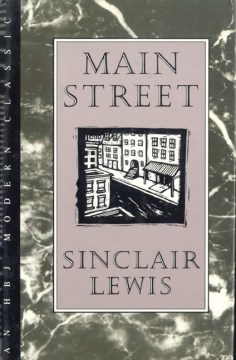
Main Street by Sinclair Lewis

How wrong they are.

Our September pick for the Cheshire Cats Classics Club was Main Street by Sinclair Lewis, not to be confused by Upton Sinclair, who wrote The Jungle. Main Street is the story of Carol Kennicott, a city girl who dreams of making over a small town. She has high ideals, lofty thoughts, and big hopes.

She marries Will Kennicott, a small town doctor and they move to the Midwest town of Gopher Prairie, Minnesota (based on Lewis’ hometown of Sauk Center). When Carol first see Gopher Prairie, she is horrified- it’s so small town, ugly, and provincial. She immediately hates her new home.

Main Street is essentially the story of Carol and her foibles, misdoings, and failed attempts at making Gopher Prairie more modern and less offensive, in her opinion. But more than that, it is the story of one young woman and her attempts at fitting in, a task she never accomplishes. In her efforts to modernize and bring culture to Gopher Prairie, Carol offends, bulldozes, and in general doesn’t understand the ways of the town.

There is a lot to Main Street, many characters and stories, all of which are rich and full. You know these people, because these people are in your town, your city, your village. Yes, Lewis does stereotype and characterize, but stereotypes so often have truth behind them.

Lewis writes in a contemporary voice, witty, and satirical in a way that is meant to hit you at your core. Which in Gopher Prairie are you? Are you Vida? The Red Swed? Mrs. Bogart? Lewis attacks the “perfect” small town lifestyle that people told still hold dear. The ideal that everything is SO much better in suburbia, nothing bad ever happens, and everyone just loves one another. Oh, how wrong we are to still believe this falsity. Lewis cleverly attacks gender roles, government and bureaucracy, religion, friendship, marriage, and the bonds that tie us together.

Lewis made me laugh, made me rage, made me think, and came pretty darn close to making me cry, when several main characters die (small spoiler alert!).
I haven’t been touched, angered, or thought so much by a book in a while. Highly recommend.

Rating: 5 stars (and you know how stingy I am with my 5 stars!)

See you in the stacks,
Jenn
On Our Shelves: New Audiobooks

Who says you can’t read and drive? Here are some new audiobooks available at CPL that can help liven up a dreary commute…

MaddAddam by Margaret Atwood, read by Bernadette Dunne, Bob Walter and Robbie Daymond. The conclusion to the dystopian trilogy that includes Oryx and Crake and The Year of the Flood.  Months after the Waterless Flood pandemic has wiped out most of humanity, Toby and Ren have rescued their friend Amanda from the vicious Painballers. They return to the MaddAddamite cob house, accompanied by the Crakers, the gentle, quasihuman species engineered by the brilliant but deceased Crake. At the center of this novel is the extraordinary story of Zeb’s past, which involves a lost brother, a hidden murder, a bear, and a bizarre act of revenge.

The People in the Trees by Hanya Yanagihara, read by Arthur Morey , William Roberts, and Erin Yuen. In 1950, a young doctor signs on with an anthropologist for an expedition to a remote island in search of a rumored lost tribe. They succeed, finding not only that tribe but also a group of forest dwellers they dub ‘The Dreamers,’ who turn out to be fantastically long-lived but progressively more senile.

The Cuckoo’s Calling by Robert Galbraith, read by Robert Glenister. A brilliant mystery in a classic vein: down-on-his-luck private detective Cormoran Strike investigates a supermodel’s apparent suicide. The Cuckoo’s Calling is a crime fiction novel by J. K. Rowling, published under the pseudonym Robert Galbraith.

Mistress by James Patterson and David Ellis, read by Kevin T. Collins. After the beautiful Diana Hotchkiss is found murdered outside her apartment, an obsessive man, Ben, discovers she was leading an illicit double life.

W is for Wasted by Sue Grafton, read by Judy Kaye. Wasted lives, wasted time, and wasted opportunities are at the heart of this twenty-third entry in the long-running Kinsey Millhone series, which reveals how the deaths of two very different men impact Kinsey’s life.

True Love by Jude Devereaux, read by Tavia Gilbert.  Jude Devereaux launches the brand-new Nantucket Brides series. The story follows young Alix Madsen, a brokenhearted architect student, who unexpectedly becomes the owner of a quaint little Nantucket property, and she soon starts falling for the charming architect living in the guest house. But even with all the romance in the air, she becomes aware that Kingsley left the house to Alix in order to help solve an old family mystery.

Still Foolin’ ‘Em  : Where I’ve Been, Where I’m Going, and Where the Hell are My Keys by Billy Crystal, read by Billy Crystal. Hilarious and heartfelt observations on aging from one of America’s favorite comedians as he turns 65, and a look back at a remarkable career.