Disappearing Authors

Barbara Newhall Follett was a writer who disappeared. Not fell out of favor or faded out of print, but disappeared. Considered a child genius who published a successful novel at the age of 12, The House Without Windows (it helped, of course, that her father was an editor at Alfred Knopf publishers), Follett was emotionally destroyed by her father’s divorce when she was 14, and never did much more. In 1939, Follett had a fight with her husband, walked out her door in Boston, and was never seen again…

Some authors are known for being extremely reclusive – J. D. Salinger, for one. Salinger had numerous personal and family issues, many, his daughter believed, stemming from PTSD from serving in World War II, and he hid from the intense fame he acquired from Catcher in the Rye. He seldom gave interviews or made appearances.

Thomas Pynchon is another, not having given an interview or even having a photo published in more than fifty years. He has no media accounts. In his late 80’s, it’s believed he’s living in Mexico, but no one except perhaps his publisher knows for certain.

Some authors aren’t lost, they’re just taking forever on that next novel – sometimes 10 years or more (staring right at you, George R. R. Martin). There are only a handful who have actually disappeared, becoming their own mystery.

Agatha Christie is perhaps the most famous. The Queen of Mystery herself disappeared in 1926, after a fight with her husband over his request for a divorce. Her car was discovered, empty. More than 15,000 people turned out to look for her, with Sir Arthur Conan Doyle going so far as to hire mediums. Eleven days later, she turned up in a hotel, 185 miles away, with no memory of what happened. Some publicists called it revenge against her husband that backfired when so many people got involved, while doctors said she had a nervous breakdown from the strain.

Solomon Northup is a name you may be familiar with. His memoir was made into an Oscar-Winning film, Twelve Years a Slave. Northup, who was born free in upstate New York but kidnapped and sold into slavery, wrote and published his memoir in 1853. Then, in 1857, he seems to disappear from historical records. Some thought he may have been kidnapped again, but his age at the time (around 50) made it unlikely. A Methodist minister in Vermont claimed to have worked with him in the early 1860’s, and last saw him in 1863. It’s assumed he died sometime between 1863 and 1864.

Elena Ferrante is a well-known author of more than 30 books, some of which have been made into movies or TV series, such as My Brilliant Friend. It’s also a pseudonym. Her true identity is a secret and almost nothing is known about her, except that she was born in Naples. In interviews, she claims it’s from shyness and fear of coming out of her shell. Speculation claims the author is actually Anita Raja, or her husband. Both people, and Ferrante’s publisher, deny it emphatically.

Antoine de St. Exupery is most famous for the timeless classic, The Little Prince, which was partly based on an airplane crash he and his navigator survived in the Libyan Desert. St. Exupery became a pilot in the 1920’s, joining the French Army, and later the French Air Force. Much of his writing has an aviation theme. When France was pulled into World War II, St. Exupery was assigned to reconnaissance missions, as an experienced pilot. On July 31, 1944, he left the airbase on Corsica in a Lockheed P-38, and was never heard from again. It wasn’t until 1998 – 54 years later, that a fisherman found a bracelet with his name on it. No one believed it, as it was some distance away from his intended flight plan. In 2000, a diver near the same area discovered wreckage of a Lockheed P-38. In 2003, the pieces were recovered and tested, proving indeed it was St. Exupery’s plane, downed in the war, though the details remain a mystery.

Ambrose Bierce was a short story writer and Civil War veteran, most famous for the story An Occurrence at Owl Creek Bridge. His stories influenced Stephen Crane and Ernest Hemingway, and he is considered one of America’s best satirists. At the age of 71, he went on a trip to visit his old Civil War battlegrounds, crossed over into Mexico, and wound up joining Pancho Villa’s army, documenting the battles. His last letter is dated December 26, 1913. His secretary believed he threw himself into the Grand Canyon in a suicide move, but witnesses saw him in Chihuahua in January of 1914.  Mexican legend has it he was executed by a firing squad.  Either way, it’s a great story!

Jack Black is one rough figure- no, not the actor! A drifter and burglar born around 1871, his 1926 autobiography You Can’t Win described his life of crime on the road. Disenchanted with both “genteel” life and that of the judicial system, he spent 30 years as a traveling criminal (15 of which he spent in prison). The book was influential for William S. Burroughs, a pioneer of the Beat Generation. Another odd fact: The author who helped him with his autobiography was none other than Rose Wilder Lane, the daughter of Laura Ingalls Wilder. You Can’t Win was adapted into a movie starring Michael Pitt and Jeremy Allen White, but has been in a liminal post-production stage for years. Black himself disappeared in 1932, and is believed to have committed suicide.

Returning to Barbara Newhall Follett’s story, there is something of a conclusion. After her disappearance, her husband didn’t report her missing for two weeks. The police eventually put out a bulletin – four months later. They used her married name, not her maiden name. A body was found, then determined not to be hers but a woman who had been missing years before. Thirteen years later, her mother insisted the police look harder, but nothing new was found. In 2019 – eighty years later – writer Daniel Mills proposed a theory that her body had been found in 1948, just not properly identified. The body had been found in New Hampshire – just a half mile from where she had a rental property and not terribly far from her home in Boston. The possessions found with the body were things Follett was known to have. The cause of death was barbiturate overdose, a substance Follett had taken before. The police in New Hampshire had no idea she’d been missing.

Authors, even the most famous ones, are still people, with the same dramas as everyone else. Does art imitate life, or does life create the art?

For books on “prodigies” who turn away from their potential, check out Outliers by Malcolm Gladwell, or Off the Charts: The Hidden Lives and Lessons of American Child Prodigies by Ann Hulbert.

Making Sense of Book Awards

Has this ever happened to you? You’re in a library or book store, minding your own business, when a ray of light blinds you, stopping you in your tracks. You think, “Is this aliens? Is this the rapture? What is going on?” You catch your breath and realize it’s just the gleam of one of those shiny emblems that says, “Booker Prize.” You pick up the book and even more questions flood your mind: “Who’s this Booker fella and what right does he have to tell me what to read?!” I’ve been there, I get it. But there’s no need to dismay. Once you make sense of book awards, they can be helpful tools in the eternal search for your next book.

Booker Prize

The Booker Prize (formerly the Man Booker Prize) is awarded to a book written in English and published in the United Kingdom or Ireland. A panel of five, made up of “creative peers,” choose the winning book. The award skews towards British and Irish authors, but winners hail from around the world, like Sri Lankan author Shehan Karunatilaka or Jamaican author Marlon James. These books land on the literary side side of things, and some recent winners include George Saunders’ Lincoln in the Bardo, Margaret Atwood’s The Testaments, and Bernadine Evaristo’s Girl, Woman, Other.

The International Booker Prize is also worth noting. These books are translated into English and must be published in the UK or Ireland. The Vegetarian by Han Kang, Flights by Olga Tokarczuk, and Time Shelter by Georgi Gospodinov won in 2016, 2018, and 2023 respectively.

Nebula and Hugo Awards

The Nebula and Hugo Awards are the two big names associated with science fiction and fantasy (SF/F) literature. The biggest difference between these awards is the voting body. To vote on the Nebula, you need to belong to the Science Fiction and Fantasy Writers Association. Essentially, you need to be a SF/F writer yourself. For the Hugo Award, all you need is a membership to the World Science Fiction Convention, which costs $50. Despite this difference, it’s not uncommon for a single title to win both awards. Some recent examples of this feat are Network Effect by Martha Wells, The Stone Sky by N. K. Jemisin, and This is How You Lose the Time War by Amal El-Mohtar and Max Gladstone.

Edgar Award

The Edgar Award is named after (who else but) Edgar Allen Poe to honor the best of the mystery genre, and chosen by the Mystery Writers of America. In the past, some familiar names have won: Stephen King for Mr. Mercedes and Noah Hawley (writer of the Fargo television series) for Before the Fall. But overall, The Edgar Award stands out to me because the winning books tend to be less well known; it’s a good way to find underappreciated gems. Some recent winners include Notes on an Execution by Danya Kukafka, Djinn Patrol on the Purple Line by Deepa Anappara, and The Stranger Diaries by Elly Griffiths.

National Book Award and Pulitzer Prize

The National Book Award (courtesy of the National Book Foundation) and the Pulitzer Prize for Fiction (courtesy of Columbia University) are both meant for American authors. The Pulitzer Prize is awarded to novels that “deal with American life” and tend to be fairly popular, often getting the television or movie treatment in the years after its win. The National Book Award has more lofty goals, and is designed to “ensure that books have a prominent place in our culture.” These winners don’t generate as much buzz, but they’re just as profound and moving.

Winners of the Pulitzer Prize for Fiction include The Nickel Boys by Colson Whitehead, All the Light We Cannot See by Anthony Doerr, and The Goldfinch by Donna Tartt.

Winners of the National Book Award include Blackouts by Justin Torres, Sing, Unburied, Sing by Jesmyn Ward, and The Good Lord Bird by James McBride.

Nobel Prize in Literature

The Nobel Prize in Literature is voted for by the Swedish Academy and stands out in a couple ways: Authors from any country are eligible for the award, and awards are based on an author’s body of work as a whole. This means that the winning author can put the “Winner of the Nobel Prize in Literature” stamp on any book in their back catalogue and any future book they write. Sounds like a good deal to me! Past winners include Kazuo Ishiguro, Alice Munro, and Toni Morrison.

Women’s Prize for Fiction

The last award I’ll touch upon is the Women’s Prize for Fiction which is voted on by a panel of five notable women. This award, along with the Booker Prize and the now defunct Costa Book Awards, at one point made up the “trinity” of UK’s literary prizes. Recent winners include Piranesi by Susanna Clarke, Hamnet by Maggie O’Farrell, and An American Marriage by Tayari Jones.

It can also be interesting to look at the notable awards of non-English speaking countries. Winners usually have an English translation available, and their relative obscurity makes it feel like you’ve uncovered some esoteric text. Compass by Mathias Énard was a great find of mine that won the French Prix Goncourt Award in 2015.

At the end of the day, it’s important to remember that these awards are all made up. They were all chosen by people, and people have their own tastes, their own mercurial and indecipherable preferences. There is no trait–not intelligence, success, nor clout–that makes one person a better “book judge” than another. If you find an award that speaks to you, great! But otherwise, take them all with a grain of salt and keep in mind the only book award that truly matters: The (insert your name here) Award.

P.S. If you really want to dive into the dramatic side of the book award world, there is always heated discussion about each year’s Booker Prize shortlist. This year, the six shortlisted books will be announced on September 23rd, and the more bookish parts of the internet will be a-buzz, defending their favorites and attacking the books they deem unworthy. It’s a bit messy, but good fun.

Unconventional Ghosts

I love ghosts. I’ve never met a ghost myself, so the best I can do is read about them. Why ghosts? Well, they don’t have to follow our rather tiresome rules of gravity and thermodynamics! They could do a loop-de-loop in the air, just for the fun of it. Maybe I’m a bit jealous…
There are many shades of ghost: vengeful ghosts, poltergeists, ghosts with the intent to improve the life of a living person à la A Christmas Carol… These are all fun in their own way, but I find it especially delightful when ghosts are given roles that betray their traditional raisons d’être–ghosts that are not strictly malicious, nor are just around to aid the protagonist. These ghosts are maybe just as complicated and multi-faceted as the humans who begat them.

It’s also interesting to see how authors answer fundamental ghost questions like: Why has the ghost come into existence? What makes the ghost different from a living person? What does the ghost want? The answers to these questions change dramatically from author to author and story to story. They also feel substantial, weighty. Making assumptions and declarations about ghosts is not so different from making assumptions and declarations about life. Like a Rubin vase, where the negative space around a subject becomes its own subject, writing about ghosts and death is a clever way of writing about life.

Anyway, here are some exciting and not-quite-traditional portrayals of ghosts.

Ghostwritten by David Mitchell

David Mitchell’s first novel is ghost-obsessed. “Ghost” is even in the title! But instead of offering a treatise on ghosts and ghostliness, Mitchell’s ghosts, or “noncorpora,” are hard to pin down. They come in many forms, sometimes existing independently and other times hopping from human to human, using bodies as a kind of macabre public transport. For part of the book, we follow one such noncorporum as it travels through rural Mongolia in the body of an American tourist. This particular noncorporum is a self-described “inhuman humanist” and provides some delightfully empathetic insights into the human condition.
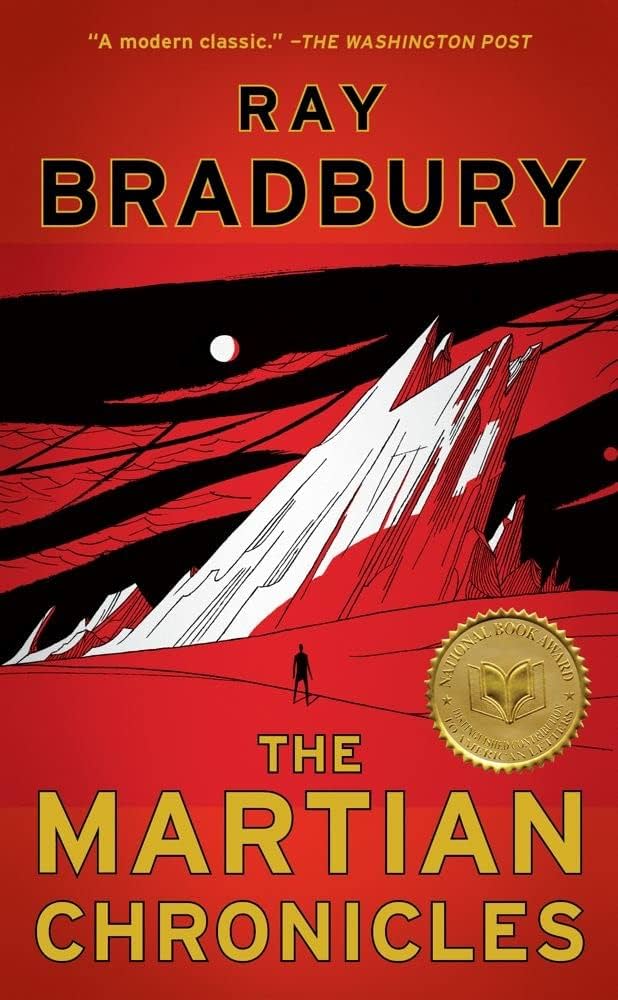
Lincoln in the Bardo by George Saunders

Sometimes when driving home, I’ll hang out in the left lane even if the right lane is moving faster. In my head, I’m thinking, “I know the left lane is faster!” when that’s clearly not the case. People are stubborn, and George Saunders doesn’t see any reason why ghosts wouldn’t be stubborn as well. The ghosts in Lincoln in the Bardo are so stubborn, in fact, they cannot come to terms with the reality of death. Their “sick-forms” (read: corpses) lie in “sick-boxes” (read: coffins) and only need rest. With just a bit more rest, they’ll emerge in tip-top shape and be able to resume their prior lives (read: they won’t). These circumstances may seem hopeless and wretched, but Saunders is able to deliver one of the most affecting and life-affirming conclusions I’ve read. A jewel of a book.

Her Fearful Symmetry by Audrey Niffenegger

Her Fearful Symmetry is a hoot. Unlike some of the other books mentioned here that use the otherworldly to contrast comically with the mundane, Her Fearful Symmetry wholeheartedly commits to flights of fancy. Romance and death intertwine and are taken to their melodramatic extremes. There are envious ghosts, faked deaths, identical twins posing as one another: everything you could possibly want in a story. It’s often absurd and always sublimely entertaining.

100 Years of Solitude by Gabriel García Márquez

In 100 Years of Solitude, characters are haunted by their lineages. Decisions and dispositions repeat from generation to generation, entire lifetimes become ghostly echoes of the past. It is no surprise, then, that actual ghosts occasionally show up to haunt the residents of Macondo. Touchingly (and thematically), isolation is what brings several ghosts back from the dead. They return because they “could not bear the solitude,” or in another case, “the yearning for the living was so intense, the need for company was so pressing.” Human connection is so fundamental a force that not even death can stand in its way.

Welcome to the Monkey House by Kurt Vonnegut

Kurt Vonnegut is a famed humanist, but he has mixed feelings about human bodies. Take Breakfast of Champions for example: the protagonist’s rapidly declining mental health is due to an abundance of “bad chemicals” in the brain. Or both Slaughterhouse-Five and Sirens of Titan, where characters’ cannot even rely upon their bodies to stay rooted in space-time. It’s no surprise then that he was interested in a world where humans are not subservient to their oft-malfunctioning bodies. Such is the conceit of the short story, “Unready to Wear,” found in the collection, Welcome to the Monkey House. A mathematician discovers a technique that allows one’s soul to be separated from their physical being and float about unburdened by corporeal whims.

Beloved by Toni Morrison

Ghosts can represent trauma, guilt, love, regret, suffering, anger, dehumanization–really anything if an author can realize their vision. But since ghosts can mean so many things, they have the potential to become unwieldy, or conversely, underbaked. Toni Morrison does not have this problem. The ghost in Beloved is loaded with nuanced meaning, compelling but elusive. This is a literary balancing act and a depiction of ghostliness so unique that it stands alone. Brutal, beautiful, and haunting.

Unorthodox Aliens

Reading science fiction can be overwhelming — what on earth is a chrono-synclastic infundibulum? Despite the tough jargon and speculative concepts, it’s quite an inward-looking genre. These stories typically loop back around to reflect something about ourselves — an assumption or expectation or fear that could use some interrogation. Aliens are possibly the most overt display of this narrative device. They are funhouse mirror versions of ourselves: the same but different. Aliens carry all the social, cultural, and political baggage we tend to associate with Otherness, but evoke sympathy too. At the end of E.T., are we not puffy-eyed to see that strange creature, who’s been nurtured and accepted, finally return home?

And don’t we all feel like E.T. — an alien, a pariah — in some way?

Here are some novels and stories that feature subtle and unconventional alien characters.


Sirens of Titan by Kurt Vonnegut

Kurt Vonnegut loves his unorthodox aliens. Hand-shaped Tralfamadorians play a significant role in Slaughterhouse-Five, but I’d like to mention a minor alien race from Sirens of Titan. In a slight deviation from his main journey, protagonist Malachi Constant crash-lands on a planet populated by harmoniums: flat, kite-shaped beings that cling to cave walls and only perceive the world through touch. They communicate with limited telepathic abilities and are able to send two possible messages:


The first is an automatic response to the second, and the second is an automatic response to the first.
The first is, “Here I am, here I am, here I am.”
The second is, “So glad you are, so glad you are, so glad you are.”


Hyperion by Dan Simmons

Hyperion borrows its framing device from The Canterbury Tales. Its narrative unfolds as each of six pilgrims tells their portion of the story on their way to the time tombs, where they plan to confront the omnipotent Shrike. The Shrike fits your evil-monster-alien archetype (with some twists along the way), but there are other alien beings that populate the many planets of Hyperion. Most poignant is Simmons’ depiction of a human race that has lost its home: the Earth. They become aliens in their own right, establishing new civilizations around the galaxy but ultimately “alienated” in one way or another.


Stories of Your Life and Others by Ted Chiang

“Story of Your Life,” from the short story collection Stories of Your Life and Others, is about language, specifically the field of science known as linguistic relativity. Researchers in this field try to determine whether the language we use affects the way we think. For example, some languages describe time using distance terms (like “short” and “long”) and others describe time using quantity related terms (like “much” or “little”). A study from 2017 concluded that, under certain circumstances, these language differences result in actual differences in time perception.

Chiang takes this idea to its extreme and introduces an alien race that communicates in a completely circular language. As a result, these aliens perceive time as though it were a circle, living the entirety of their lives simultaneously- past, present, and future.

What if a human were to learn their strange and powerful language? “Story of Your Life” was adapted into the 2016 film Arrival.


The Paper Menagerie by Ken Liu

Some might be familiar with Ken Liu’s translation work. He’s best known for the English translation of The Three-Body Problem, a sci-fi epic by Liu Cixin (now a Netflix Original). He also writes novels and short stories that blend sci-fi, fantasy, and folklore.

His short story collection Paper Menagerie opens with “The Bookmaking Habits of Select Species.” The title says it all — how might alien races create persistent representations of their language and thoughts? I particularly like how he describes the Allatians: they stick their proboscis onto an impressionable surface, and as they speak, their proboscis vibrates and etches a groove into the surface. To read what another Allatian has written, one drags their own proboscis through the groove, and a hollow part of their skull amplifies the sound; the voice of the writer is recreated.


The Book of Strange New Things and Under the Skin by Michel Faber

Aliens are a recurring theme in Michel Faber’s writing. His 2014 novel, The Book of Strange New Things, takes place on a far-away planet that has been introduced to Christianity. Missionary Peter Leigh becomes the new minister of a docile alien congregation but struggles to reconcile his ecclesiastical commitment and the guilt of leaving his wife back on Earth, where climate change and political turmoil conspire to topple civilization.

Under the Skin, Faber’s first novel, paints a darker portrait of humanity (or alienity, ha). It’s the kind of book that holds its cards close and lets the reader marvel (and shudder) as the story progresses.

Faber presents a kaleidoscope of Otherness; themes of exploitation, gender, immigration, class politics, and animal cruelty are woven throughout and explored with satirical levity. The book was loosely adapted into a movie of the same name in 2013 with Scarlett Johansson.


Which “Unorthodox Aliens” am I missing? Let me know in the comments section below.

Haunting Fiction: 10 Dark Tales to Chill You This Fall

My backyard is full of fallen leaves, and the home improvement stores are full of animatronic skeletons. It’s the time of year when I can unabashedly indulge in my love of horror. Gothic horror. Psychological horror. Cosmic horror. Anything that lets me experience tension and dread, at least within the safe little confines of fiction. Gore and gross-out horror doesn’t really do it for me. I prefer the supernatural, the otherworldly, stories that tap into the basic human fear of the unknown. There’s nothing like the existential terror that comes when you dare to look into the void – and you see it looking back at you. But it’s still fiction. You still get to put it back on the shelf and go about your life after you read that last page.

Or do you?

Here are the stories that have haunted me the most: tense and dark tales that unfurl like a beautiful piece of black silk.

The Turn of the Screw by Henry James (1898)

A governess is sent to an isolated country manor to care for a pair of young orphans, and she begins to believe that the children are being visited by spirits with malevolent intent. This is a classic ghost story whose ambiguity has provided more than a century’s worth of analysis and adaptation, most recently in the form of Netflix’s The Haunting of Bly Manor in 2020.

The Haunting of Hill House by Shirley Jackson (1959)

You may know Shirley Jackson from your 11th grade reading assignment of her short story The Lottery, but this novel set the bar for modern gothic horror. It’s a classic haunted house story that has influenced writers like Carmen Maria Machado, Stephen King, and Neil Gaiman.

Ghost Story by Peter Straub (1979)

A group of aging men gathers once a week to tell ghost stories – but one ghost from their shared past seems to be coming back for revenge. Straub hooks you in from the first scene and builds masterfully in one of the best-written horror stories you’ll ever read.

Everything’s Eventual by Stephen King (2002)

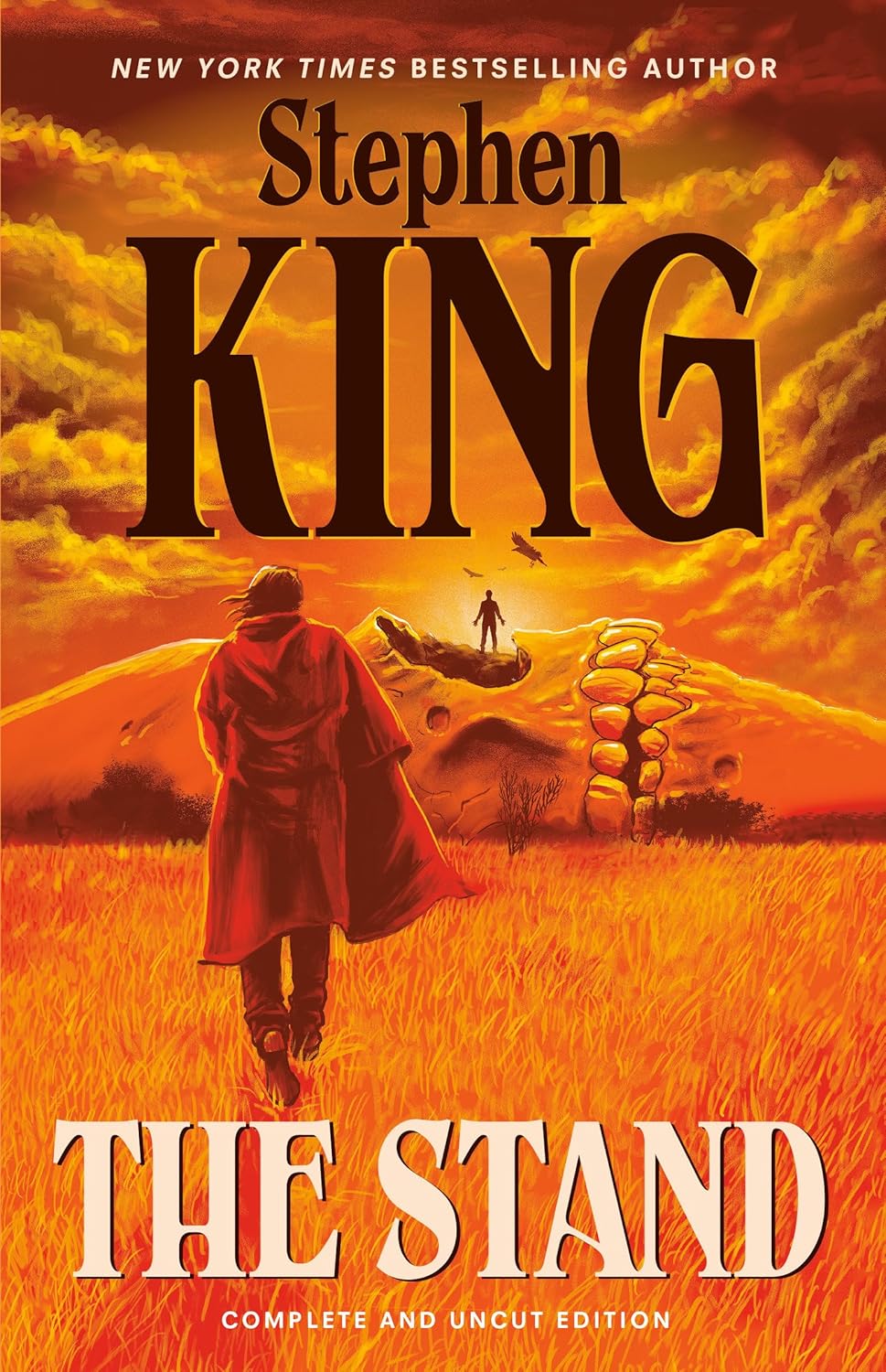
Some point to The Shining and The Stand as King’s best works, but I have always been a fan of his shorter fiction, such as the terrifying novella The Mist. Everything’s Eventual is a strong contender for my favorite of his short story collections. Its best tales are about a boy who meets the devil, a painting that keeps changing in disturbing ways, and a skeptic’s night in a supposedly haunted hotel room.

House of Leaves by Mark Z. Danielewski (2005)

The core story of House of Leaves involves a family who moves into their new house and discovers it’s bigger than they think. Their story is told in a documentary video, which is described and analyzed in an unfinished academic manuscript by another person, which itself is transcribed and footnoted by yet another person. It’s a structurally weird book that’s just as disorienting as the house itself.

The Hollow Places by T. Kingfisher (2020)

It’s no coincidence that the horror genre – that safe box of fiction where you can explore fear without real-life consequences – exploded in the wake of the very real global pandemic, and the last few years have borne plenty of new and terrible places to explore. This story revolves around a recently-divorced woman who discovers a hidden door in her uncle’s museum of curiosities. The door leads to an alternate reality that is not quite right. It’s thoroughly creepy in a Lovecraftian way, and the quirky characters inject some humor into this otherwise unsettling read.

The Only Good Indians by Stephen Graham Jones (2021)

Four Blackfeet men break a promise during elk hunting season, and now that promise is coming back to haunt them in a very real way, picking them off one by one. It’s pretty gory, but not gratuitously so, and the supernatural elements, the nuanced treatment of Native culture, and the quality of writing were compelling enough for me to overlook the more graphic parts. It’s also one of those stories that surprises you by ending with love and unexpected tears. (Yes – it’s okay to cry at horror.)

Summer Sons by Lee Mandelo (2021)

Andrew is haunted by the revenant of his best friend Eddie, who suddenly died right before Andrew was about to join him in Nashville. Andrew takes Eddie’s place in his house, his graduate program, and his circle of fast-living friends as he tries to uncover the truth of what happened. There’s a Southern gothic setting, romantic tension so thick you could slice it up and eat it, and a host of queer characters who are not punished for their queerness, but whose acceptance of themselves leads them to happiness. This slow burn is more moody than scary, and it’s a refreshing and thoroughly enjoyable read.

The Last House on Needless Street by Catriona Ward (2021)

In a boarded-up house on a dead-end street lives a family of three. A teenage girl who isn’t allowed outside, not after last time. A man who drinks alone in front of his TV, trying to ignore the gaps in his memory. And a house cat who loves napping and reading the Bible. An unspeakable secret binds them together, but when a new neighbor moves in next door, what is buried out among the birch trees may come back to haunt them all. The parent in me found some parts difficult to read, but I needed to keep going and find out what was going on – and the ending completely turned it upside-down.

Our Wives Under the Sea by Julia Armfield (2022)

Miri thinks she has got her wife back, when Leah finally returns after a deep sea mission that ended in catastrophe. It soon becomes clear, though, that Leah may have come back wrong. Whatever happened in that vessel, whatever it was they were supposed to be studying before they were stranded on the ocean floor, Leah has carried part of it with her, onto dry land and into their home. Remember how I said it’s okay to cry at horror? Get your tissues ready, because this is also a heartbreaking story about love and grief.