Susan Reads: The Year Without Summer: 1816 by William Klingaman

Think winter’s lasting too long?  Imagine 18 straight months of cold and snow.

I’ve always liked books on natural disasters, and exploding volcanoes are about the biggest you can get. They spawn earthquakes and tsunamis, send pyroclastic flows racing down hillsides to poison and bury entire towns (Pele, Vesuvius, Pinatubo), blow entire islands away (Thera, Krakatoa), appear overnight (Parícutin), or ooze for years (Kilauea). They can also create spectacular sunsets for months afterward, or, if they’re really determined and throw huge amounts of ash too high into the air, they can change the climate of the entire Earth in a matter of weeks. This is what happened in 1816, when Mount Tambora, a fiery grumbling volcano, blew up in Indonesia, with the largest volcanic eruption in recorded history. The Year Without Summer: 1816 tells how this single volcanic eruption in the tropics had far-reaching effects around the world.

Mount Tambora didn’t just explode, like Krakatoa. It blew like a fountain, throwing so much ash into the air that it blackened the sky for thousands of miles and created a cloud of dust that blocked out the sun. This just happened to occur while the sun was at its coolest point in its cycle anyway (the Maunder Minimum). The resulting cooling of the ground (a 7-degree difference) brought on dire climate changes (parts of New Hampshire didn’t receive a drop of rain for more than 3 months, while Switzerland experienced horrific flooding), wild swings in temperature (July temps would hit 95 one day and it would snow the next), but mostly an unrelenting cold that prevented seasonal changes and destroyed most crops as far south as the Carolinas. It created dire famines and unrest through most of the British Isles and western and central Europe that lasted through 1818, beginning a wave of immigration that helped spread America westward.

Klingaman explores in great detail the effects of the climate change on political structures  in America and Europe, from the election politics of young America to disruptions in France, England, and Ireland. He spends a great deal of time discussing the travels of  Lord Byron, Percy Bysse Shelley, and Mary Wollstonecraft Shelley through Europe and Switzerland, who all wrote oodles of letters fretting about the weather. The darkness and seclusion caused by the weather gave rise to Mary Shelley’s famous masterpiece, Frankenstein.

Myself, I did not care for the book. Unlike Winchester’s Krakatoa, Klingaman barely discusses the volcano; it’s a cause for the book, not a main character, more like a shadowy villain behind the scenes. Instead, most of the book is about the American and European political fallout because of the climate change. I understand most of the voluminous information comes from primary sources, and because it’s 1816 there is a lot of relevant written information of the time, but I picked up the book wanting to read about a volcano. If you like history and politics, or biographies of Mary Shelley, you might enjoy the book.  If you’re looking for stories of volcanic glory and the birth and death of islands, go read Krakatoa.

Susan Reads: The Smartest Kids in The World

America’s schools are abysmal; in the world arena, our students barely break the top 20, ranking down there with Lichtenstein – and private prep schools aren’t significantly better.  In fact, America scores only seven points higher than dead center. We blame poverty, we blame spending, we blame teachers, parents, curricula, lack of diversity – but no one has come up with an actual plan that works.

               In The Smartest Kids in the WorldTime journalist Amanda Ripley follows three American exchange students of different backgrounds to some of the highest-scoring countries in the world – laid-back Finland (#3), the pressure-cooker of South Korea where students are in school more than 14 hours a day (#2), and upcoming Poland (#15), which, despite poor standing as a poverty-stricken, post-communist country, managed to climb from the bottom to the top ranks in only three years because of drastic and ongoing reforms.

                Not everything is rosy in all places; there are still pitfalls to each system, but one thing remains common to all good systems: value the education.  When anyone in America becomes a teacher because they want to be a sports coach, there’s a problem. All top countries made it extremely difficult to become a teacher – thus, only the top teachers actually make it to the classrooms.  Sports are not included in school; they are strictly extra-curricular.  Teachers are paid very well for making it that far – and if their students slide, they can be fired far easier than in America  – why keep a bad teacher?  Seriously – why do we do that? In most of these places, the teacher is not the focus. It is not about holidays, or length of day, or passing endless standardized tests: it’s about imparting learning to the child.  Education is about the child’s learning, and nothing else.

Ms. Ripley’s research illuminates what is wrong with our educational system, and lays out a course  to work towards fixing it. This book is a fantastic wake-up call to educators of all children, from Pre-K to college. It’s a fast, easy read that will leave you very angry with the status quo. – a must-read for anyone concerned about the state of education in America.

Go. Read it. And start bugging your schools.

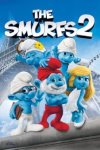
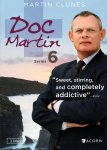
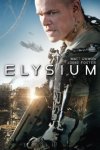
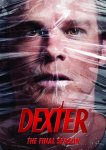
Coming Soon on DVD

Missed it in the theater?  Saw it but can’t wait to see it again?  Trying to think of something to buy someone for a gift, or what to ask for?  Here’s a list of some of this year’s biggest films and shows being released on DVD just in time for the holiday season. Just remember, while the library orders items as fast as we can, we, too, are limited by the release date, so always allow at least two weeks AFTER the release for us to have the DVD’s out and ready for you to watch.  Until we enter the item into the computer, we cannot place holds on it. Still don’t see it in the computer?  Request that we order it!  We love to know what people are looking for.


To browse our online catalog for the latest DVDs, visit our website http://www.cheshirelibrary.org

and select “CATALOG” from the top navigation bar:

Screen_Shot_2013-11-20_at_2.27.29_PM

Then select “DVD/Video Search“, sort by “New to Old“, and click “Search

Screen_Shot_2013-11-20_at_2.23.31_PM

10 Great Movies That Take Place in Autumn

Summer may be a time for huge blockbuster action flicks, but as the kids settle back into school, autumn is a time for more peaceful reflection.  Grab a cup of hot chocolate, some fresh-baked cookies, your favorite warm blanket, and curl up with one of these films that take place in the fall. You’ll be glad you did!

Dead Poet’s Society – Robin Williams as an inspiring teacher in a prep school. One of his best roles.

Rudy – Sean Astin in a true story about a boy who wanted to play football for Notre Dame.

On Golden Pond – Henry Fonda’s Oscar-winning role as a family tries to come back together before it’s too late.


The Four Seasons – an all-star cast leads this sweet Alan Alda film about a group of friends vacationing through a year.  Gorgeous autumn scenery set to a soundtrack of Vivaldi’s Four Seasons.

Hannah and her Sisters –  Woody Allen directs this film about a family, beginning and ending with Thanksgiving.

The Big Chill – A group of old friends gather together for the funeral of one of their own, accompanied by a fabulous soundtrack.


Sweet November – a sweet little love story starring Keanu Reeves and Charlize Theron.

The Trouble with Harry – Alfred Hitchcock’s frightful comedy about a body that won’t stay buried.

Planes, Trains, and Automobiles – a John Hughes comedy starring Steve Martin as a man trying to make it home for Thanksgiving, when the world seems out to get him.

Far From Heaven – Connecticut in the fall of 1957, and the prejudices that existed.

Susan reads: The Queen of Katwe

Wow – two books on chess in the same year?  Odd, yes, but this book fed my brain AND my sense of social welfare at the same time. In The Queen of Katwe, Phiona Mutesi is the poorest of the poor – poorer than the Indian children of Behind the Beautiful Forevers, poor as only the poor of war-torn Uganda can be, yet through her own uneducated analytical mind, she rises above everything as a sort of chess savant, traveling to Siberia to compete on a world level – at the age of 15, a girl who has never even seen a flush toilet, who does not even know when her birthday is.

Much of the book is taken up not with Phiona – how I wish more of the book focused on her, her thoughts, etc. – but with everyone around her, and just how the circumstances formed for her to shoot her star so incredibly high. Throughout, Phiona is a shadowy figure, almost a mentally disabled girl who for a few brief moments is able to see and understand clearly, and then is sent back down to the depths of her dull & hopeless life. Is it crueler to leave her mindless in the mud of the streets or to show her the glory of the rest of the world, and then send her back to nothing? I’m not sure. It’s a real “Flowers for Algernon” conundrum.

And I can’t help but wonder what the author could/did do for some of these people – you see them trying to teach chess with boards missing pieces, so crudely carved you can’t always tell a knight from a rook – did you buy them a few chess sets, when what to us is $10 and to them is a year’s salary? Did you donate so the club could continue to feed the starving children who come there to learn? I myself could not look upon such conditions without trying to help, but the author is silent as to how he himself was moved by the situation. A good book, an incredible story, but I wanted so much more, both for me and for Phiona.