One of the fun things about reading non-fiction is you learn things about subjects you never knew anything about. Such is what happened when I picked up Room 1219: The Life of Fatty Arbuckle, the Mysterious Death of Virginia Rappe, and the Scandal That Changed Hollywood by Greg Merritt.
I am not a silent-movie fan; my tolerance for old films extends to occasional forays into Marx Brothers comedies, so I knew nothing about Fatty (Roscoe) Arbuckle but his name, and a vague notion he’d committed a crime. I discovered a story that could have easily been ripped from today’s headlines, perhaps with far more scandal but as much unfounded public shredding of a popular figure as happens today.
Roscoe Arbuckle was one of the biggest names and biggest money-makers in the silent films of the early industry (1913-1921). He earned the equivalent of millions when the average worker made a thousand dollars a year. His persona was of a sweet, bumbling round man and his movies full of slapstick gags and stunts that made people laugh, and his box-office receipts were consistently high. His enduring and close relationship with Buster Keaton didn’t hurt. He was charitable with his time and money, showing up unannounced for appearances, in parades with his custom-built cars (in an era where a car cost $800, Arbuckle’s cost $34,000), and was fond of children (he had none of his own). He was cinematic royalty.
Until 1921. Arbuckle, estranged for several years from his wife, was on vacation in San Francisco with several lackeys. An impromptu party erupted, including Prohibition-illegal alcohol and several second-rate actresses, friends of friends. At some point during the party, Virginia Rappe (pronounced Rappay), disappeared into Arbuckle’s bedroom and was struck ill, so ill she died in agony several days later. Autopsy results showed a ruptured urinary bladder.
Wild rumors erupted about what Arbuckle did, most of which revolved around bizarre sexual tactics involving icicles and Coke  bottles, none of which were physically possible based on the autopsy, and spoken lines worthy of the worst film noire. What was known for fact was that Rappe had a long history of bladder infections and gonorrhea, in a time before antibiotics had been discovered. Arbuckle was arrested for murder. The country erupted in scandal, and Arbuckle, right or wrong, was immediately deemed guilty of extreme perversion and his movies banned in every theater in the country.
It took three trials to finally win an acquittal, but the damage was done. A star was destroyed, and Arbuckle was banned from films for several years. He never regained his royalty status. Out of the ashes rose an effort to censor movies, lest they corrupt the morals of the country. While a huge backlash rose in the industry against it, eventually we did wind up with the current rating system (G, PG, R, etc) to warn viewers what they might expect, a direct result of his scandal.
Roscoe Arbuckle was tried and found guilty in the court of uninformed and vindictive public opinion and died a heartbroken, and most likely innocent, man. A hundred years later, are we any smarter and more forgiving?

 Cast in Bronze, who do exactly that on the first carillon with a portable frame. Cast in Bronze’s carillon consists of thirty-five brass bells, with a total weight of four tons. Founded by master carillonneur Frank DellaPenna, Cast in Bronze actually tours around the country. They have played at Disney’s Epcot center, played a concert in New York for Pope John Paul II, played as part of Alice Cooper’s “Christmas Pudding” show, and played for NBC’s Today Show. I saw the bells in action myself at the New York State Renaissance Festival in Tuxedo, New York, several years ago. As a college bellringer who spent three years throwing levers in a tower, adapting music by Elvis and Journey to an octave of bells, I was enchanted.

 big blackness. This is North Korea. It is not black because they block out satellites, or by treaty.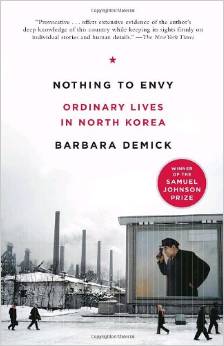


 So how do you like your movies? If you’re a casual watcher who just wants to say “Yes, I saw that,” then carry on with your regular player. DVDs are still very much in the market and aren’t going anywhere very fast. If you live and breathe your movies, nitpick them scene by scene for trivia or like a freeze-frame that’s clear enough to hang on a wall, you may prefer Blu-ray. My husband himself thought it was all hype until he watched Star Wars in Blu-ray, and suddenly saw things he never noticed before. The larger your TV screen, the larger the difference in clarity you will notice with Blu-ray, because of the increased resolution. The picture won’t look like you want to adjust the antenna.


 The Cheshire Library Blog