Front Row Seating

“The play’s the thing wherein I’ll catch the conscience of the king.”     – Hamlet, Act 2, scene 2

Back in the 80’s, when we still had a Shakespeare Theater down in Stratford, CT, there was a performance of Shakespeare’s Macbeth that was put on for all the high schools to come and see. Of all the plays, Macbeth seemed like it would be the most interesting, with witches and murder and blood, and big velvety Elizabethan costumes. I was excited – anything for a field trip and a day out of class. Until we got there. Some idiot had decided the best way for 1,500 rowdy high school kids to understand Shakespeare was to imagine it, with a play that had no scenery and no costumes – the entire set was draped in billowing soft blue nylon fabric, like the green-screens of modern movie-making, and the actors all wore tight-fitting outfits of the same blue, as if they’d just escaped from some monochromatic ballet. That was it. It was a total disaster. The audience was so bored and riled you couldn’t hear the dialogue for the catcalls. That is NOT the way to introduce children to Shakespeare.

The good thing is, you don’t have to be a Shakespeare scholar to enjoy a good play. Whether you’ve had to suffer through drudging high school productions of Thornton Wilder’s Our Town or been dazzled on Broadway by Patrick Stewart and Ian McKellan performing Waiting for Godot, a play is not a bad thing. Perhaps your only exposure to waiting-for-godot-ian-mckellen-patrick-stewarttheater has been dragging yourself through Oedipus or Antigone in school, not caring a flying duck about the role of the Chorus in Greek tragedy, just glad you scraped by and passed the test. The real tragedy of teaching plays as literature is that they are meant to be performed, not just read in a monotone like a stumbling seventh-grader who has no idea how to pronounce 15th century British comedies, let alone understand them. When performed, they come alive, like listening to a good movie on the television from the next room over. Even my five year old, with occasional explanations, could follow the movie version of Romeo and Juliet.
drama-collection_FRONT_349x349-300x300So if you’re a theater lover, or just a student struggling to understand Ibsen, Cheshire Library is ready to help! Our newest precious addition is a 25-volume audiobook collection of 250 plays and dramatic adaptions by L.A. Theaterworks. You won’t just hear the play, you’ll feel it, as you were meant to. The plays aren’t just read to you, but fully performed by an all-star cast of more than 1,000 actors you are probably familiar with – George Clooney, Calista Flockhart, Dan Castellaneta, Mark Ruffalo, Richard Dreyfus, Jean Stapleton, John de Lancie (who also wrote one of the Doyle adaptions), and so many, many more. Leonard Nimoy performing War of the Worlds with fellow Star Trek actors? Yeah, that’s in there too. Neil Simon, Chekhov, O’Neill, Miller, Shakespeare, Sophocles – they’re all here, ready to keep you entertained for a solid year of performances. Listen to one or listen to them all – you’ll be glad you did.

quote-it-does-not-follow-that-the-right-to-criticize-shakespeare-involves-the-power-of-writing-better-george-bernard-shaw-333385

Rocking Rock Opera

fuddEven in High Society, there aren’t many faster ways to clear a room politely than bring up the subject of Opera. Everyone gives a nod, a panicked smile, and then slowly backs out, unable to name a single one. If we took a poll, most people would probably say their exposure to opera consists of what they learned from Bugs Bunny http://www.dailymotion.com/video/x2mjbrz, or perhaps Animaniacs. Don’t worry, I’m not going to change your mind. You won’t get me to sit through an entire one, either, except maybe Aida. Any play with live elephants and camels is awesome.

So, what IS opera? Opera is a play, usually in acts, where all the dialogue is sung in an operatic style (and you know what that sounds like). The music is big, heavy, foreign, and so are the singers. Operetta is still an opera but usually much shorter, and they are often comedies. A musical is just a play where people burst into songs, or songs and dance now and then.

So where does Les Miserables fall? I liked that movie, and I hateles-miserables-dvd-cover-48 opera! Les Mis is a bone of contention. It is not an opera, because the songs are not sung in the operatic style. It’s more than a musical, because all the dialogue is sung and there’s certainly nothing to dance about, like Oliver! dreaming of a real meal. So at best, for lack of a better term, the experts call Les Mis a sung-through, meaning there is some non-song dialogue, but the lines are sung without being part of a song (think of Javert and Jean Valjean’s confrontation in singsong https://www.youtube.com/watch?v=I8WSysB5vKM). Some call Les Mis a “popera,” or pop-opera, but those aren’t exactly songs that will climb record charts, and others try to call it a rock-opera, which it is also definitely not.

So what then IS rock opera? At some point in your life, on some radio station, you’ve heard a version of “Pinball Wizard,” or “We Don’t Need No Education” (the technical title is “Another Brick in the Wall part 2”). Those songs come from the two most well-known Rock Operas, Tommy, and The Wall. A rock opera consists of a full-length story in which the story is told through song, but the music is entirely modern and popular.

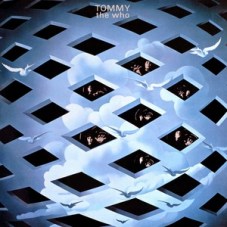
TommyalbumcoverTommy, by The Who, was the first work known as Rock Opera (1969). Purists will say it is not opera because it is not sung in opera fashion; the fact remains, it is a full story told entirely in song. In short, as a child, Tommy witnesses his father kill his mother’s boyfriend, retreats into an autistic-like trance, and endures much abuse as his parents look for ways to break him free. They discover that, even though it doesn’t appear he can hear, speak, or see, he is a master at pinball, which they use to draw him out and return him to society. Yes, there are differences between the album, the play, and the movie version, but the flow of the story remains the same. The movie includes Tina Turner, Elton John, and Peter Frampton. ‘Nuff said.

Fastforward ten years. The Brits hit again, with the release of Pink Floyd’s The Wall inB000006TRV 1979. The Wall is a masterpiece of modern music, the story of a rock singer (Pinkerton Floyd) who builds a mental wall to insulate himself from the outside world, which he feels has abandoned him. The death of his father in WWII, his overbearing mother, his abusive teachers, his unfaithful wife are all bricks in his wall, until, isolated and alone, he festers until the court of his peers orders the wall be torn down and he be returned to the world. It’s a masterpiece of suffering, death, and rebirth, without a word of dialogue. The movie had mixed reviews, but remains faithful to the vision. Check out the concert version here.

Green_Day_-_American_Idiot_coverA third, more modern piece (2004) that can be considered Rock Opera is Green Day’s American Idiot, which chronicles the “disillusionment and dissent experienced by (Jesus of Suburbia) a generation which came of age during various turmoil including the Iraq War.” What is it with wars creating Opera? Admittedly heavily influenced by The Who, the only real difference I see with American Idiot from its predecessors is it seems to be a LOT LOUDER. Songs like “Wake Me Up When September Comes” are just as worthy and beautiful.

Sure, some people try to lump Ziggy Stardust in here, and Lamb Lies Down on Broadway, but there is a difference between a “concept” album and a rock opera. Think of a concept album as a book of short stories around a theme, whereas a rock opera is an entire novel.

So if ladies in Viking horns screeching for the ophigh notes aren’t your style, try a rock opera. Drama, intrigue, murder, drug addiction, infidelity, and rebirth, all set to some pretty catchy music – and sometimes a pretty good movie, too. What more can you ask for?

I (Finally) Read “It”

I am not a fan of horror. I would not shut the shower door for ten years because Kolchak: The Night Stalker scared the daylights out of me. My father’s description of the movie Killdozer made me terrified of construction equipment – as if I wasn’t already, from a preschool nightmare involving dump trucks. I watched the original 1931 Dracula and got a bloody nose in sympathy. I won’t sleep in a room with a vacuum cleaner thanks to Zenna Henderson. I like sleeping at night, and I don’t need any more anxiety in my life. I have kids for that.

ZX0AYe8 It was my mother who got me reading Stephen King. I was about twelve, sick in bed, and Night Shift, his book of short stories, came out. Wouldn’t you know it, the light from the bathroom at night struck every knob on the dresser at just the right angle so each one looked like an eye staring at me, just like the cover story. I only dared read half of them, and never enjoyed going to the dry cleaners again. But I read The Shining (I will NOT go into a hotel bathroom without a light on), read The Stand (his best, I think), Cujo, The Dead Zone (more my style), Firestarter (I needed a book for the train back from Canada) and Christine (Like I didn’t suspect that already). One thing you can say about King without ever reading his books: he doesn’t write short volumes.

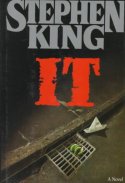
Jacket.aspxBut by Christine, I was Kinged out. The books were were getting to be too similar, and I moved on. That was how I missed reading It, the book everyone seems afraid of. I avoided it for the longest time, but it popped up in a series of references this year, and I decided the time had come to tackle it. I’d re-read The Stand, and The Shining, but nothing new of King’s in 30 years.

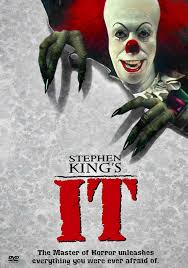
“It” tells the story of an evil presence that takes over4775612-3278691654-IT.jp the town of Derry, Maine, until a ragtag band of seven misfit children decide to take it on. Although the entity takes the shape of what scares a person most (werewolves, mummies, giant birds, etc), it often lures children to their deaths by taking the shape of a clown, Pennywise. I’ve never been afraid of clowns, though I understand the psychology behind it (like Daleks, you can’t read a clown’s frozen face, and it makes some people uneasy). I’m still not afraid of clowns; but I’m now nervous about balloons. Calling the evil “It” is a brilliant stroke of semantics – think of all the times you use the pronoun It: It was calling me. I tripped over It. It snuck up on me. I’m scared of it. You can’t help it; you can’t escape it. You talk about it all the time. Because you know it’s there. “It” can be anything, and you know it to be true.

But for everything anyone told me about the book, I think this is his worst that I’ve read. He’s written 55 novels, 200 short stories, comic books, films, has awards oozing out his ears – he knows what he’s doing. I don’t mind the back and forth nature of the story, bouncing between 1958 and 1985. The characters and style are classic King, but it is soooo long (1100+ pages), it really, really could have had sections of character description cut. It drags in places. It’s not the length: Game of Thrones is 1200 pages, scatmanbut I read it with more gusto. King’s name-dropping of characters from his other works grated on me. One is cool, but not several. Don’t stick Dick Hallorann in your book, a man with a strong sense of Shining (or, if you’re a Simpsons fan, Shinnin’), and have a catastrophe or a presence about that he doesn’t get ESP on. You laid Hallorann out in detail in The Shining; you let him drift in It. Sometimes the action is too cartoonish: having a victim’s head pop out of a box on a spring and go boing ruins my tension. I understand it might be appropriate to scare a child, but I’m not a child. Dolores Claiborne smashing my ankles with a sledgehammer makes me lie awake in a sweat all night. Cartoon boings don’t. I won’t tell the ending, but after fighting tooth and nail to wade through 1100 pages, I wanted more of a bang for my effort. The original Stand was 800 pages or so, and that ended with a nuclear explosion.

Yeah, yeah, I shouldn’t criticize King because he’s one of the most successful novelists images itof our time, and I don’t disagree with his talent. But perhaps he set his own bar too high. No one – not even Shakespeare – hits the nail of perfection every time. From the man who brought you Stand By Me, The Green Mile, Under the Dome, and so many, many wonderful tales, I just don’t think it’s his best.

What do you think is King’s best work – book or film?

Same Old Tune

unnamedI am a semi-hard-core Pink Floyd fan. I’ve likely spent more hours listening to them than any other musical group, and I think I know the entire Wall album from memory – lyrics and orchestration. So when David Gilmour, who, along with Roger Waters wrote many of their greatest hits, came out with a new album, Rattle that Lock, of course I had to listen to it.

The album, I must admit, left me with mixed feelings. It’s a varied album, with some pieces (The Girl in the Yellow Dress) being almost classical jazz, and others being such classic Floyd in tone you can almost recognize lines from Learning to Fly (Echoes), and riffs straight from The Wall. Parts of it are cranking rock, and other parts are very ethereal and New-Agey in feel – not unlike inventive Floyd tracks from Dark Side of the Moon. There are even two instrumental tracks. It was good, it was fresh, but I’m still not sure if I liked it. I’m not a jazz person, no matter how hard I try, and though I love my Floyd, it’s 2015, not 1979, and I want to say, “Yes, it’s good, but what are you doing now?”

Which got me to thinking: Why is it often so easy to pick out a band/singer on the radio? Because they are often stuck in the same style that made them famous. Their songs are caught in a groove of sound – it’s a good sound, but it doesn’t change. Sometimes they try but the fans turn away, because it’s not “their” sound. Sometimes they do and it works beautifully (how many heavy metal bands have one or two incredible slow ballads, like Kiss’s Beth, or the Scorpions’ Still Loving You?). Listen to The Police’s Every Breath You Take – the first four songs are almost identical in format, all hits, but identical. I love R.E.M., but they get monotonous if you listen to six albums in a row. As George Thorogood said, “I only know four chords on the guitar, so of course all my songs sound alike.”27club-660x300

According to the internet, some of today’s popular bands are guilty of unoriginality and being one-trick ponies. Not even getting into Boy Bands, or Brittney, or other manufactured stars (it’s fair to place The Monkees here, too), too many artists sound – well, too much like themselves. Pete Townshend’s last albums drifted song to song like a dream; you couldn’t tell where one ended and the next began, and he’s a music legend. Ed Sheeran, Oasis, Ke$ha, Flo Rida, and the often-unfairly picked on Nickelback are among the worst offenders, by internet polls. Having a trademark “sound” is good, but a truly talented musician masters versatility.

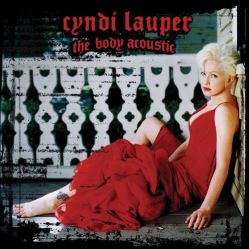
So who, then, has successfully changed their tunes and embraced versatility over the CyndiLauperBodyAcousticyears? Both Paul McCartney and Billy Joel have attempted branching out into classical music, but classical music doesn’t rake in money on radio ads. One I would consider would be Cindy Lauper – she’s older than you think. Before she was a shock-haired icon of the 80’s, she fronted a rockabilly band called Blue Angel. They put out one album, Blue Angel (duh), which did well in the Netherlands, but you could see the genius. Check it out here: https://www.youtube.com/watch?v=36MgP5Hg6KU. To go from Money Changes Everything to Above the Clouds on her Body Acoustic album – she has an impressive range. What a Broadway career she could have had! Oh wait – she wrote all the music for Kinky Boots, winner of 6 Tony awards, including Best Musical and Best Score!  She’s not as ditzy as she looks.

Robert_Plant_and_Alison_Krauss_-_Raising_SandAnother would be Robert Plant – the former lead singer for hard-rocking Led Zeppelin. Post-Zeppelin he formed the R&B group The Honeydrippers in 1981, and they shot up the charts with their # 3 slow-dance hit Sea of Love. If that wasn’t different enough, he’s recorded several folksy albums with Allison Krauss – my personal favorite being “Trampled Rose” from the album Raising Sand. Truly, no one would guess this soulful folk singer is one of heavy rock’s legends.

A third I would nominate would be David Bowie (yes,ZiggyStardust I’ve chosen all older musicians, because 40-50 year careers are living, breathing entities). Ziggy Stardust is a far cry from his later success with Suffragette City, and another layer removed from 2013’s The Next Day album, let alone his (in)famous duet with Bing Crosby on The Little Drummer Boy – and the soundtrack to Labyrinth.

So now we know David Gilmour can write and play good jazz, even if it feels like the jazz is being played in the dance hall of a Pink Floyd dream. Is it progress or stagnation? You have to decide that for yourself.

A Playlist for the Road

My family is all over the place, more in summer, perhaps, but it’s almost a guarantee we’re out of state at least once a month. Just between August and September, we’ll log Baltimore, Boston, New York City, Maine, and a couple of days in California. In October, it’s Minnesota for a wedding. If it’s on the eastern coast, we’ve driven it. Nothing makes time pass faster than listening to good music, so here is a compiled playlist of songs about cars and the open road.

Now, before you start listing all the songs I didn’t include, know that there are HUNDREDS of songs about cars and driving, from John Denver’s Country Roads to Dr. Dre all the way back to Roger Miller’s King of the Road, which, honestly, makes my hair stand on end. Maybe it’s because it was on too many K-Tel or Time-Life albums that were pushed at every single commercial break back in the 70’s & 80’s. If you search the internet, you can find several lists, some of which are actually about cars and driving, and others that make no sense at all to me (Hey Jude? Psycho Killer?).

My criteria for the list were, yeah, songs about cars, but more so songs that make me want to hit the open road, that make me wish for an empty highway so I can drop the stick down to third and wind that engine out, that make me feel the wind in my hair and the sun on my face, songs that make a ride seem exciting. And I added a few fun songs at the end, too.

1) On the Road Again (Willie Nelson) This is practically our theme song every time we get in the car. Even if you don’t like country music, this one is quite tolerable.

sm2) East Bound and Down (Jerry Reed) This is the theme song from Smokey and the Bandit, and there probably isn’t a better long-distance driving movie than that. So stick a six-pack of Coors in your trunk, load the dog, open the windows if you can’t take off the roof, but don’t let Sheriff Justice catch you.

3) Life is a Highway (Rascal Flatts) – Again, don’t be fooled by the singer. This is perfectly good rock, without a bit of twang. Your kids will know it from the movie Cars.

4) Thunder Road (Bruce Springsteen) One of my favorites for driving. Upbeat, nostalgic – makes you want to run away from home and never look back.

5) Rockin’ Down the Highway (Doobie Bros) – Old school, fast moving, something that’s been on the radio forever.

6) The Passenger (Iggy Pop, or Alison Mosshart and the Forest Rangers) Choose your version. I know the song by Mosshart, from the Sons of Anarchy soundtrack, but Iggy Pop sang it long before. Iggy’s version is a little plainer, while Mosshart’s is harder and has a more driving beat (no pun intended).

7) Truckin’ (Grateful Dead) You know that steady beat you get on some concrete highways (like I-684), where there’s a definite thump as you hit each and every expansion gap? This song has that same beat, adding to that illusion of cruising down the road.

8) Greased Lightnin’ (John Travolta, on the Grease soundtrack) Who wouldn’t want to cruise the streets in Greased Lightnin’?

GLEE: The boys perform in the "Glease" episode of GLEE airing Thursday, Nov. 15 (9:00-10:00 PM ET/PT) on FOX. L-R: Harry Shum Jr., Samuel Larsen, Chord Overstreet, Blake Jenner and Jacob Artist. ©2012 Fox Broadcasting Co. CR: Adam Rose/FOX

9) Fast Car (Tracy Chapman) Another song you can feel, racing through the dark, laughing, carefree, someone’s arm around your shoulder, not giving a hoot at that exact moment to the pressures and responsibilities waiting to crush you when you finally stop.

10) Little Red Corvette (Prince) – This was SO overplayed when it was new it kind of scrapes my nerves, but who wouldn’t love to drive one? I love Fire-Engine Red, even though it attracts speed radar, but I’d prefer one in Candy Apple Heavy Metal Flake.

11) Cars (Gary Numan) – the epitome of that 1980 technofunk that shifted over to what’s considered modern “dance” music. It came out around the same time as “Funky Town,” and I always pair the two.

12) Convoy (C.W. McCall) – more properly it’s talking blues with a chorus, and the movie was filmed so badly you can spot the microphone in some scenes, but the premise remains good – a ticked off trucker who accidentally picks up a convoy, and the media takes it to mean a message. Nothing like a hundred semi’s (and “eleven long-haired friends of Jesus in a chartreuse microbus”) to say Road Trip. And fear not, the line is truckin’ convoy.

And just for Fun:

13) Batman theme – the old 1960’s version will give you more nana nana’s for your money, but who doesn’t want to drive like Batman, especially if you’re in the car alone and no one can see you? Crank it up.bond

14) James Bond theme – if Batman’s not dignified enough for you, if you’re wearing a suit and not a cape, if your car is European, crank this one and go practice your corners on the Saw Mill River Parkway, one of the squiggliest little roads I’ve ever seen.

15) Beep Beep (Little Nash Rambler) (The Playmates) Yes, it starts out slow, but that’s the gag. Stick with it to the end. Your kids will love it.