Tales of Shipwreck & Survival

Everyone knows about the Titanic since they found the wreckage and made a movie about it, but shipwreck is usually the last thing on anyone’s mind when they book a cruise. In reality, only 24 cruise ships have ever sank, and many of those had been pressed into service as warships at the time. Cruise ships, despite their top-heavy appearance, are quite safe. 

There are an estimated 3,000 shipwrecks off the coast of the Outer Banks, NC

There are an estimated three million shipwrecks under the waters, not counting small craft. Some of these date back as far as 2500 BCE, when the Mediterranean Sea was a hotbed of trade from Egypt and North Africa to the coasts of Italy, Greece, and Spain. The rate of commercial shipwrecks has been declining throughout this century, from 200 in 2000 to only 26 in 2023, and most of those are cargo ships, which are often in poor repair, overloaded, badly balanced, and cross some of the most difficult waters (releasing rubber ducks and sneakers). This does not include the fishing industry, which is nearly unregulated, especially in Asia and South America. It is estimated there are 100,000 deaths from fishing each year, due to poor industry standards and almost no oversight.

When we think about historical ships, we think back to Roman biremes, Viking longboats, and primitive rafts like Thor Heyerdahl’s Kon Tiki long before we come to the glory days of Spanish, British, French, and Portuguese galleons vying for naval power, leading to spectacular – and expensive – shipwrecks. The Bermuda Triangle, The Skeleton Coast, The Cape of Good Hope, and several rocky coastal areas around the continents were famous for wrecking ships, let alone the risk – then and now – for icebergs in the North Atlantic, and the real though rare possibility of rogue waves – lone giant waves of up to 100 feet, with no warning and no precursors, which have been implicated in a number of wrecks. There’s also the 1958 Lituya Bay, Alaska tsunami, which, due to the funneling nature of the bay, created a wave 1700 (yes, one thousand seven hundred) feet high, lifting a fishing boat, whose crew miraculously survived.

Like all natural disasters, ship disasters make for fascinating reading and occasionally a great movie. Here are some excellent works on the misfortunes of ocean-bound ships, some of which you may not have heard of, but really happened.

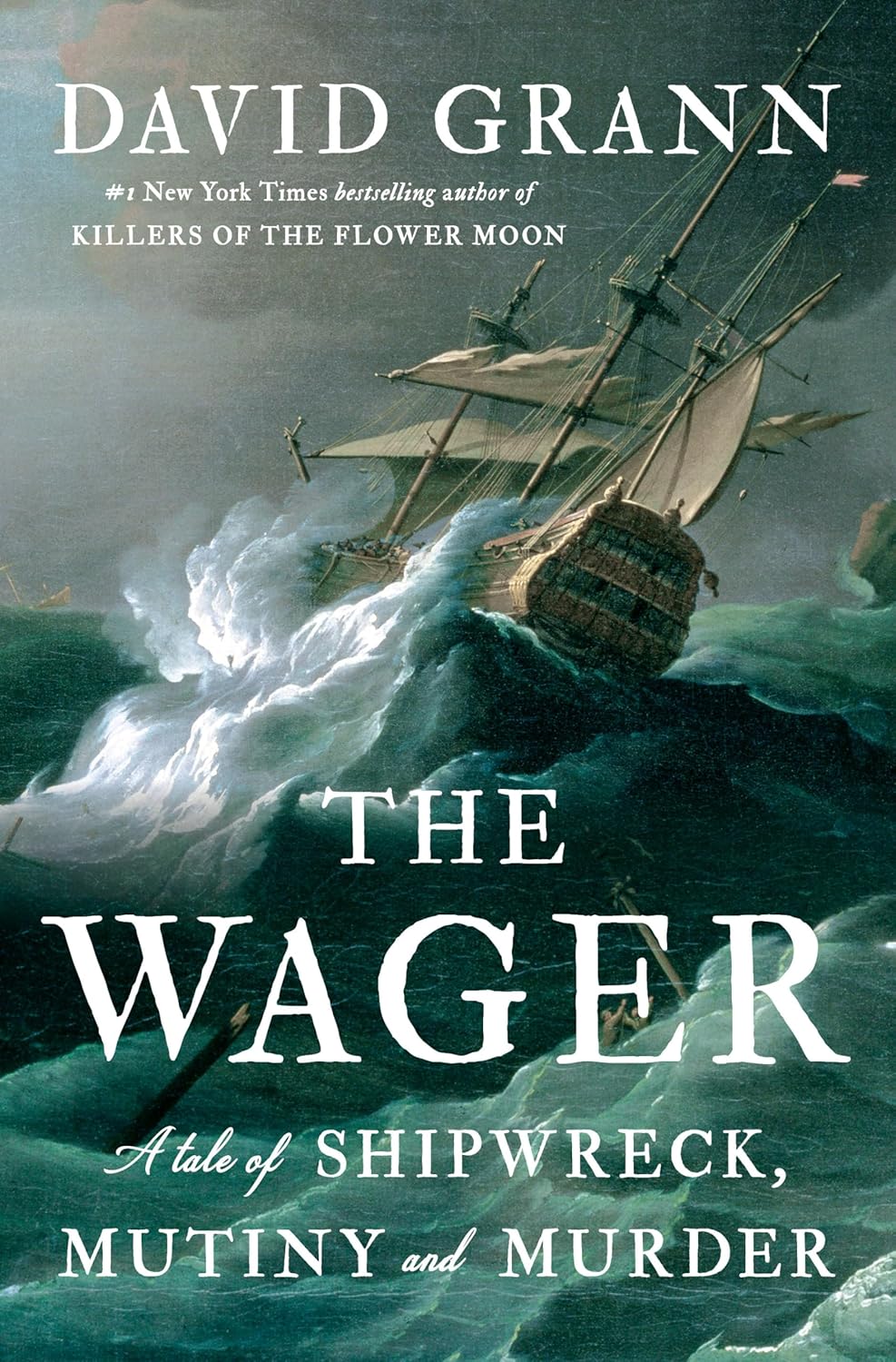
The Wager, by David Grann

If you haven’t yet read The Wager, you need to. A true tale of murder, mutiny, greed, heroism, and unbelievable survival in the harshest of conditions. Against better judgment, the Wager tries to round the dangerous Cape Horn in 1741, smashing against rocks in a gale. In a barren wasteland, with nothing to eat, the crew splits, half commit mutiny, some commit murder, and half of them will make it back to tell the riveting tale. A must read.

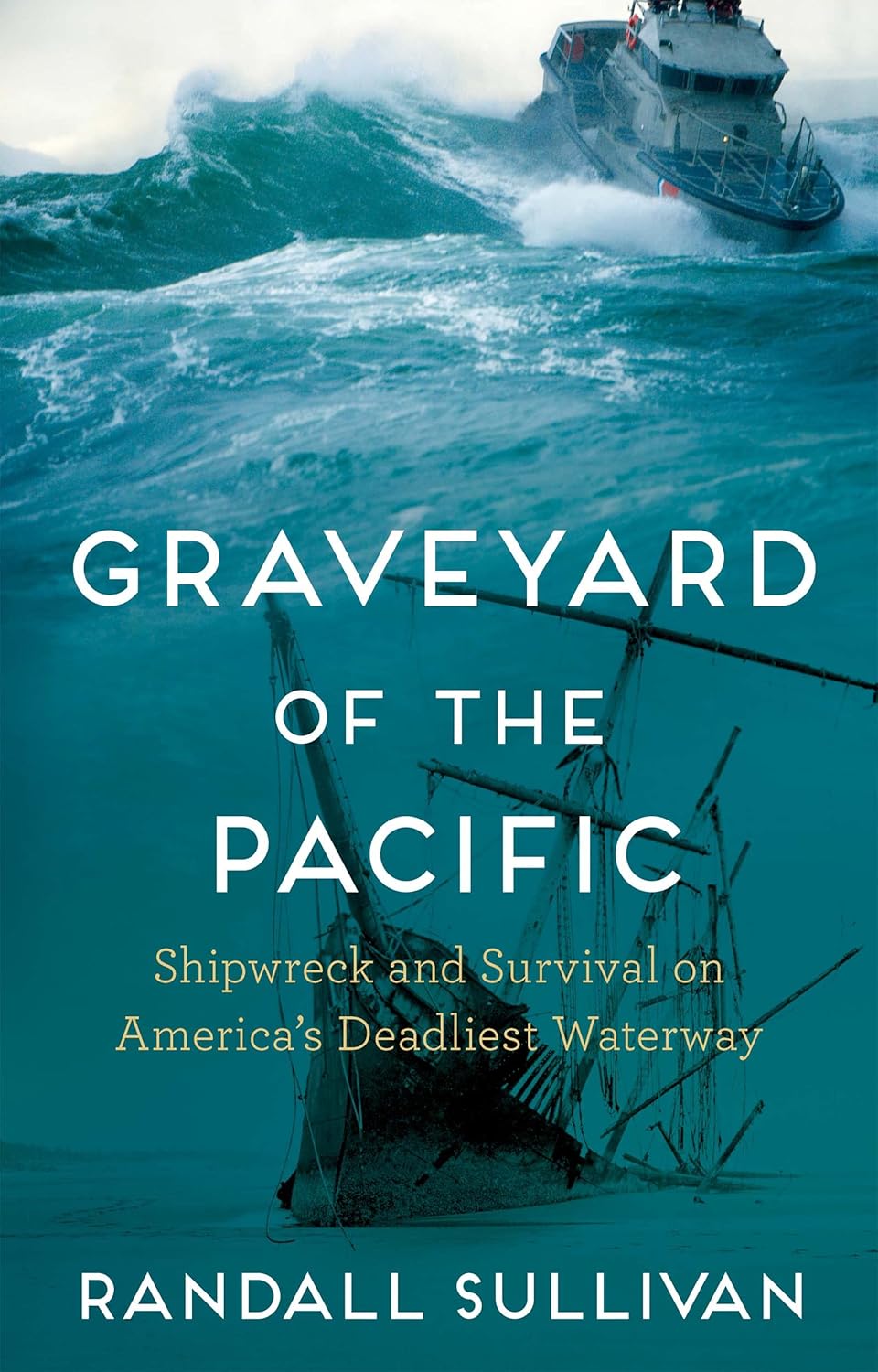
Graveyard of the Pacific, by Randall Sullivan

Who knew that more 2000 ships have been wrecked on the corner of the Oregon/Washington coast? Fierce storms, fog, reefs, sandbars, and tidal rips from the incoming flood of the Columbia river are so bad that there are specific ships and captains who must steer commercial ships through the area. While the book is partially taken up by one man’s quest to kayak through this deadly area, the rest of the book is quite fascinating.

Ghost Ship, by Brian Hicks   

There are many theories as to why the ship Mary Celeste was found abandoned at sea in 1872, with no clue as to what happened. The lifeboat was missing, and the crew abandoned ship so rapidly that food was still on the table and a sleeping child’s form was still outlined on the captain’s bed. Hicks combs through details to provide a solid, scientific reason, the best theory anyone has come up with yet, and the horrible fate of the crew.

In the Heart of the Sea, by Nathaniel Philbrick. 

The foundering of the whaleship Essex in 1820 became the inspiration for Melville’s novel Moby Dick. The Essex was sunk by a sperm whale in the Pacific, killing most of the crew. A handfull survived in a whaleboat for five months, surviving on cannibalism and rainwater. Melville allegedly met the son of survivor Owen Chase while at sea, and later met surviving Captain Pollard, who was considered bad luck after two lost ships, and no one would hire him. The combined diaries of the survivors were later made into a film.

When the Dancing Stopped, by Brian Hicks.

If Ghost Ship wasn’t enough, Hicks covers the perfect storm of disaster on the Morro Castle, a top of the line 1934 cruise ship traveling between Cuba and New York’s Pier 13. With horrific odds, the ship faced a tropical storm gaining on them, a nor’easter barreling toward them from the opposite direction, a murdered captain, an arsonist’s chemical fire underneath a ceiling filled with gunpowder, a crew that had never performed a fire or lifeboat drill, lifeboats whose launch mechanisms were painted closed, and a crew that fell apart at the first sign of trouble. How anyone survived (besides the crew, who abandoned ship without helping passengers) is a miracle. A book that reads like a novel, and is very hard to put down.

Deadliest Sea: The Untold Story Behind the Greatest Rescue in Coast Guard History, by Kalee Thompson

More fish are caught in Alaskan waters than almost everywhere else, yet many fishing boats remain virtually unregulated as to safety, and there are powerful political groups that push against it. In 2008, the Alaska Ranger meets with bad weather and too much ice, loses its rudder, and starts to sink. As in every disaster, few are trained, shortcuts were taken, lifeboats don’t work properly, wetsuits have holes, and they are more than 200 miles from the Coast Guard rescue planes. Thompson creates a tense tale of survival and aggravatingly poor working conditions as the Coast Guard rushes to save the crew. A lot of names, but hard to put down.

Futility, or, The Wreck of the Titan, by Morgan Robertson

Okay, this one is short fiction, and because it’s so old it’s hard to get a copy of (you can read it for free on Project Gutenberg, here), but it’s mentioned in so many memes as “The Titanic Foretold!” that I wanted to include it here. Published in 1898, the book, yes, involves an “unsinkable” ship called the Titan, that, in its second collision in two days, hits an iceberg and capsizes. The unlikable protagonist rescues a little girl in order to get a seat on a lifeboat, then plots to use her to extort money from her family, and most of the book is about him whining about being stuck with the kid. There is almost nothing in this novella that compares with the Titanic, beyond a name (common enough. It would have been more compelling if the name was Carpathia or something) and an iceberg (also common in those waters). It’s short, you can read it, but it’s trite, simplistic, outdated, boring, and sometimes painful to read. But, truly, it in no way predicted the wreck of the Titanic.

If you’d prefer, check out these films of ocean disasters:

In the Heart of the Sea

The Perfect Storm

Finest Hours

The Poseidon Adventure

Titanic

The Life of Pi

All is Lost

Lifeboat

Serial Solving

I never know what I’ll read next. What ever sparks my interest, either by title, by book cover, or by subject. I have no special direction or particular interest, but if I found one book on a subject interesting, I’m far more likely to read another on the subject, or by the same author.  Hence I’ve read an inordinate amount of books on Ebola, fast fashion, tea, books on the making of various movies, and, well, serial killers.

We know the names. Son of Sam. Ted Bundy. Green River Killer. BTK Killer. Long Island Killer. 

I have no fascination with them, find most of them repellent and frightening beyond description, and did not shed a tear when Jeffery Dahmer died in prison, but I find the psychological processes and forensics involved in tracking them down utterly intriguing. The science end, not the murder end. And there is SO much to be fascinated about. 

Most recently, I read the book American Serial Killers: The Epidemic Years, by Peter Vronsky, and I was blown away by the premise. America – which has more serial killers than any other country (well, that are reported and connected. Other countries have mass murders by corrupt governments, so maybe we’re better off) – had a major epidemic of serial killers (those that intermittently kill more than three people, as opposed to a spree all at once) from around 1970 to the mid 1990’s – more than 600 a year, and then it tapered off sharply. Why? Why did we have terrible trails of serial murders for 25 or 30 years, and then few?  Vronsky makes a very strong, documented  case for the fact that most of these killers were born in the late 40’s and early 50’s (25 or 30 by 1975) and their fathers fought in World War II. Vronsky documents that many of these fathers came back damaged from the war – PTSD, violent, depressed, alcoholic, received no help, and were unable to nurture their children. These boys – coming of age with violent sex images in men’s magazines, pulp fiction novels, and comics – grew up with attachment issues, poor self-image, and violent fantasies about sex, which they slowly began to work up the nerve to carry out. Why did things taper off? Most of those killers were either dead, in prison for other crimes, or had worn themselves out and were living a quiet life until something might trigger them again, unknown to their neighbors. Vietnam Vets received more services than soldiers in the 40’s, there was more public support, it wasn’t as big a deal to divorce a man, and those children did not have the same issues their grandfathers did. Those children of Vietnam vets would have been 25-30 in 1990-95 – years when serial killers were in decline.

Another utterly fascinating book – one that sent me down a long, long wormhole of research – is Barbara Rae-Venter’s I Know Who You Are: How an Amateur DNA Sleuth Unmasked the Golden State Killer and Changed Crime Fighting Forever. The Golden State Killer was alleged to have killed 13 people and committed more than 50 rapes across California between 1974-1986. Because police departments didn’t talk to each other or share information, no one was ever able to piece together all the information. Enter Rae-Venter. Rae-Venter spent her days helping people trace their genealogy and find their families using her home computer. Asked if she could do the same for a suspect, Rae-Venter needed 63 days and $200 to make a genetic profile of the killer from her dining room – something 30 years and $10 million of taxpayer money had never been able to do, leading directly to the apprehension of the killer. Since Rae-Venter, a huge number of backlogged, dead-end cases have been solved and cleared (like the Long Island Killer) due to the methods she used.

Spurred on by her methods, I fell down a rabbit-hole of genealogical research, aided by ancestry.com (free at the library), and in a week was able to trace my mother’s ancestry back 12 generations, connect some gaps, discover my grandmother had an older sister we never heard of (probably because she died at 5 months), and my grandmother’s younger sister was four when she died, not the two my grandmother remembered. Sometimes books are dangerous!

Through both of these books, several names kept popping up, and I realized I’d already read books by both men. John Douglas was the first real FBI criminal profiler, starting in the 1980’s, creating many of the procedures we use today. His book, Mindhunter, chronicles how he began, in a time where every department wanted the glory of solving the case, and thus no one ever shared information, and no one ever solved the cases. 

Unmasked: My Life Solving America’s Cold Cases by Paul Holes, is another. Holes learned the business under Douglas, pursuing cold-case investigations from the 1990’s into the 2000’s.  Some of the cold cases that perplexed them the most and they were never able to solve were later solved by Barbara Rae-Venter’s methods, like the Long Island Killer and the Golden State Killer.

If you don’t care so much about crime but like psychology and sociology, and want to find out why people kill, try I Am a Killer, by Danny Tipping.  It’s a sad book that dwells on the murderers and not so much the crime. Time after time, the horrific backgrounds of these killers are revealed (one father, to hide the bruises and welts on his kid when Social Services was coming, tied him to a mattress, poured lighter fluid on him, and set his back on fire). Many did not deserve the sentences they received, responding to unimaginable abuse. There are no winners in this book. 

Though he technically didn’t kill anyone, if you want local flavor, read Incendiary: The Psychiatrist, The Mad Bomber, and the Invention of Criminal Profiling, by Michael Cannell. Many people claim to have invented criminal profiling, but this was an early case. In the 1940’s, a bomber went around exploding devices all over New York City, then teasing the police through letters. After twenty years, he was determined to be George Metesky – from Waterbury, Connecticut, and the criminal profiling was eerily correct.

If you like crime stories and investigations, these are excellent books. If you like psychology and deviant behavior, these are also excellent books. The difficult part is that they had to be written at all.

Plant Intelligence

For thousands of years, Man considered himself the only sentient being in the universe, the only one capable of higher thought, understanding, and language and communication.

We now know that isn’t true. Higher primates, such as gorillas and chimps, are certainly capable of learning not only their own forms of communication, but American Sign Language as well. Dogs, it turns out, are capable of understanding human language at the level of a three year old human child, with some breeds (like German Shepherds) able to differentiate up to a thousand different words. We know that octopi can perform complex tasks (of their own planning, nonetheless), recognize people, and have a functional IQ of about 40. Dolphins and whales have complex languages and not only communicate, but show empathy.

Hence, many people choose not to eat animals, and dine only on plants.

But what about plants? What about their feelings?

Plants? What does a plant know? Corn has ears, but that doesn’t mean it’s listening.

Turns out, plants know more than you think. Plants have been caught communicating in numerous ways, understand when danger is near, and sympathize with other plants.

Yes, really.

This communication is known as phytosemiotics. One way is through chemical signals. A wounded plant will give off a volatile chemical compound (something you can smell) that other plants can sense. The receiving plant can then roll up its leaves or lean away. That wonderful fresh-cut grass smell we love in the summer? Yeah, that’s a hundred thousand blades of grass screaming in agony and warning other plants to beware that something is damaging them. Plants also communicate through ultrasonics – noises above our hearing range but which can be detected and recorded on audio equipment (ultrasonic vibration of 20–105 kHz). Some of this may be due to tiny air bubbles being released due to chemicals triggered during stress. Trees, it turns out, communicate under the soil as well, using certain types of fungi in the dirt to communicate through their roots. Are they discussing algebra? No. But they can tell each other about dangers, or fresh rain, or the pain of bark beetles, and other plants can ‘arm’ themselves accordingly. Just the sound of insects chewing can cause plants to release chemicals that deter insects (caffeine, by the way, exists in plants as a natural insect repellent).

Perhaps the Druids were on to something, thanking plants for sacrificing their leaves.

If that’s not weird enough, plants – even those without ears – apparently respond to music. Sure, houseplant lovers will tell you they’ve always known this, but numerous studies have turned up actual results. As early as 1962, studies showed that plants exposed to classical music had a 20% growth increase and a 72% increase in biomass over controls. Violins gave the best result. This was repeated by a Canadian researcher, with 66% increase in wheat yields using Bach’s violin sonatas. Duckweed, a water plant, exposed to Bandri’s Purple Butterfly, five hours a day for seven days at 60-70 decibels, showed a 10% increase in leaf growth and a slightly higher protein content compared to silent plants. Roses love violin music. Heavy metal tends to induce stress. Devendra Varol of the Institute of Integrated Study in India found that plants can not only distinguish between genres of music, but also nature sounds and traffic noises.

Oh, those poor weeds on the highway!

And while you laugh and scoff, know that in 2004 the TV show MythBusters attempted similar experiments in seven greenhouses. In their experience, Death Metal produced the best growth, second was classical, and third was positive spoken words. The silent greenhouse had the worst growth.

How can this possibly be?

The best theory is that the vibration of music may aid plants in transporting their nutrients more efficiently, shaking things through faster. 

Next time you pull a carrot, remember those mandrakes in Harry Potter shrieking piteously when pulled from the pot.

In the meantime, check out these books on the wisdom of plants, and be kind to your root-footed friends!

Finding the Mother Tree by Suzanne Simard

The Serviceberry by Robin Wall Kimmerer

Listen to the Language of Trees by Tera Kelley

Aromatherapy Garden by Kathi Keville

Secret Wisdom of Nature by Peter Wohlleben

Flora by Helen Fewster

The Light Eaters by Zoe Schlanger

I Heard There Was a Secret Chord: Music as Medicine by Daniel Levitin

Healing at the Speed of Sound by Don Campbell

How Shostakovich changed my mind by Stephen Johnson

Violin Music:

Shatter Me by Lindsey Stirling

David Garrett by David Garret

Vivaldi for Dummies

The Ultimate Most Relaxing Mozart in the Universe

Get Your Kicks with Martial Arts Films

Ever wonder how much of movie fight scenes are staged and faked, and how much is real? Today, so much is done on a green screen, even the locations are unconvincing. You can be sure, however, that martial arts films are very real.

Martial arts films have some of the best action and fight choreography you can find in film, and they often span multiple genres. Some are written specifically for comedy (most American Jackie Chan films, like Rush Hour), while others are mind-bending (The Matrix). Some are more realistic (Enter the Dragon), while others are not (John Wick 4. Thirteen consecutive hits by cars? I think not. Don’t get me wrong – the John Wick series is in my top 20 films, but this pushes credibility.) Foreign films tend to focus more on the art and less on a story line (sorry, subtitles or overdubbing, the dialogue in Jackie Chan’s Police Story is downright painful, even though the action and car chases are superb), while American films tend to have a story line that is stretched to make room for the action scenes (If John Wick can kill three men with a pencil, does that make the Joker, who kills one, also a martial artist?). Some movies are very good (Ip Man 2, which is a lot like Hong Kong Rocky) while others are cringeworthy and forced (American Kickboxer, for one).

Few martial arts movies are “pure” – there are few “karate” or “judo” or “jiu jitsu” films. Most martial arts films use mixed martial arts, as the actors are usually multiply trained. Bruce Lee, the granddaddy of martial arts stars, didn’t hold a black belt in anything, but invented his own school called Jeet Kune Do. Lee studied under the actual Ip Man, Yip Kai-Man, who invented the school of Wing Chun. The incredible Donnie Yen, whose greatest American films have been Star Wars: Rogue One and John Wick 4, has black belts in Wing Chun, Judo, a sixth-level black belt in Tae Kwon Do, and a purple belt in Jiu Jitsu. Keanu Reeves, of John Wick and Matrix fame, holds a black belt in Jiu Jitsu, as well as black belts in Judo and Karate.

What’s the difference between all the different martial arts forms? Generally, they’re very minor. Some use open hand, some used closed. Some are meant to deflect and defend, others to overpower (Krav Maga). Some emphasize hand work over kicks. Aikido deflects the energy of an attacker, rather than responding. Jiu Jitsu is about pinning and dominating an opponent. Wing Chun focuses on the center of the body and rapid-fire punching, similar to boxing. A second difference is the concept of “belts.” The “belt” level concept is Japanese in origin, while the Chinese systems don’t always use it. This is partly why some of the greatest martial artists of film – such as Bruce Lee – don’t have black belts in any denomination.  Traditionally, the forms using belt levels are karate, tae kwon do, judo, and jiu jitsu.

You might be surprised to know there are a number of western action actors who are more than proficient at various martial arts, including Iron Man actor Robert Downey Jr. (Wing Chun), Wesley Snipes (5th level black belt in karate, 2nd level black belt in Hapkido, plus jiujitsu, kickboxing, kung fu, and capoeira), and Steven Seagal, a 7th-level black belt in Aikido. Chuck Norris has a tenth-degree blackbelt in Tang Su Do. Jean-Claude Van Damme has black belts in karate and kickboxing. Sean Connery, the first James Bond, had a black belt in karate. Jason Statham has a brown belt in jiu jitsu. Even Willie Nelson is a fifth-degree black belt in Korean Gongkwon Yusul, which he has studied for more than twenty years.

On the other hand, Michelle Yeoh, who stars in many martial arts-action films, has no formal training at all, but chalks up her moves to dance training. On film, no one can tell.

Don’t skip a movie just because it’s in a foreign language. Movies like Ip Man 2 and Seven Samurai are well-worth reading captions. Whether you like your action cheesy and fun, or serious and deadly, check out these films that feature martial arts or martial artists, and be careful what you kick or punch!

8 Movie Action Pack

Big Trouble in Little China

Art of Self Defense

As Good as Dead

Big Trouble in Little China

Blade

From Russia With Love

Embattled

Everything Everywhere All At Once

Fearless

Forbidden Kingdom

Foreigner

Hero

Jiu Jitsu

John Wick 1-4

Karate Kid

Keeper

Kill Bill

The Matrix

Mulan

Rush Hour

Pistol Whipped

Red Cliff

Rogue One

Rush Hour

Sakra

Seven Samurai

Shang Chi

Spy Next Door

The Assassin

XXX Return of Xander Cage

Getting Cult-ured

We’ve all heard the term, “It’s a cult classic,” “It’s a cult film,” but what actually is a cult film? For one thing, it has zero to do with charismatic leaders or brainwashing. Cult films can be weird, but some are wildly popular.

While the definition itself is elusive, and films can theoretically lose their cult status if they become mainstream, there are several factors that help define which films can fall in that category. For one, it has to bomb at the box office. This doesn’t mean it was a bad film – Donnie Darko did lousy because the film revolved around a plane crash, and it was released just weeks after 9/11, and all the advertisers pulled out. The Princess Bride became a wildly popular film that did poorly in the theaters, mostly because the studio didn’t know how to market it – kid flick, or adult? Love story, fantasy, or comedy? With no marketing, it didn’t fare well.

A second common requirement is the movie has to be unconventional. It’s not something that will appeal to everyone. Quentin Tarantino films are widely lauded, but Pulp Fiction and Reservoir Dogs aren’t for everyone. Neither are David Lynch films. I love Eraserhead, but it’s a bizarre, trippy, nightmarish film of a man trapped in a dystopian Philadelphia, caring for his grotesquely deformed infant. It is not going to be a runaway hit. Lynch’s TV series Twin Peaks falls in this category, too.

A third is a wildly loyal fan base, who not only quote the film but can often recite most of the dialogue. Many films, of course, fall in this category, but don’t meet the other criteria. Thousands of people are rabid Star Wars fans, or Wizard of Oz fans, or Casablanca fans, but those are mainstream films that appeal to the masses. Fight Club can fall in here. Also Jim Henson’s Labyrinth and The Big Lebowski.

Some claim a cult film must be subversive – this opens the door to a host of horror (Human Centipede, Nosferatu), exploitation (Freaks), pornography, over the top documentaries (like Reefer Madness), and more, but that’s not always the case. Traditionally, cult films gained their popularity from midnight movie showings. Now thanks to streaming, any film on the internet can become a cult film.

Other films fall into the campy, grade-B (or -C) genre films under the guise of “It’s so bad, it’s good.”  Jane Fonda’s Barbarella can fall under here. Attack of the Killer Tomatoes was written specifically that way. Also Attack of the 50-foot Woman, Forbidden Planet, and Plan 9 From Outer Space – a movie credited with being the worst motion picture of all time. You have to laugh at how bad it really is.

The Granddaddy of all “Cult” films, of course, is Rocky Horror Picture Show. It checks every box – subversive (open sexuality!), midnight showings, camp (Tim Curry vamping it up in leather and lace), a guilty pleasure, definitely not mainstream, and a rabidly loyal fan base who can sing and quote the entire movie from memory, while throwing toast and raising umbrellas depending on the scene. It’s a great, if strange, film with a fabulous soundtrack, but not family friendly. It struggled in theaters initially, but Rocky Horror is currently the seventh highest grossing rock film when adjusted for inflation, and at 49 years old, it is the oldest continuously released movie in history – you can still find it playing in a theater somewhere. It now on the National Registry of films as culturally important.

So much for non-mainstream and subversive.

TV shows can be cult as well.  The original Star Trek would qualify – a show with such poor ratings it was cancelled after two seasons, only to have a huge outcry from a fanbase that got it renewed for a third season … and then a mega-empire of movies and TV series. Firefly too – a show of only 14 episodes with a fan base so active it spawned a motion picture (Serenity) – as are Buffy the Vampire Slayer, Lost, Arrested Development, South Park, and The Simpsons. While both South Park and The Simpsons were wildly popular, they’ve been in production for 26 and 36 seasons, respectively, which puts them into cult status.

You probably already love a “cult” film, but give some of these a try and see if you agree!

Eraserhead

The Man Who Fell to Earth

Plan 9 from Outer Space

Princess Bride

Barbarella

Big Lebowski

Big Trouble in Little China

Boondock Saints

Brazil

A Clockwork Orange

Elephant Man

Escape from NY

(TV) Firefly

Freaks

Harold & Maude

Kill Bill

Labyrinth

Monty Python and the Holy Grail

Napoleon Dynamite

Night of the Living Dead

Pulp Fiction

Reservoir Dogs

Rocky Horror Picture Show

This is Spinal Tap

Tommy

Kung Fu/ martial arts films such as Enter the Dragon

Hocus Pocus