Sifting for Truth in Media


Feeling bombarded? Feeling like every minute of every day someone is throwing information at you, demanding your attention? Do you feel like you have to “Like” everything, or that you want to hide in a closet just to catch your breath? If it’s not a skewed news headline, it’s an unwanted advertisement. Throw in AI-generated content, and how do you even know what’s real and what’s fake anymore?

Deep breath. 

You aren’t alone.

And there are ways around it.

Cheshire Public Library recently hosted a talk by John B. Nann on exactly that – Navigating the News, and how to trust what you’re hearing and seeing is real. It doesn’t matter if you swear that headline makes total sense. It doesn’t matter if you’ve seen similar photos on the news. It doesn’t matter where you fall on the political spectrum – anyone can be easily manipulated by false or heavily biased information. Here’s an example: Would you approve of your seven year old’s school class watching a movie about a girl who kills an old woman, then joins up with a bunch of dysfunctional friends to kill again – on screen, in technicolor? 

No? Opposed to that? Angry that some people would be okay with that? 

That’s the plot of the movie The Wizard of Oz. It’s all in the wording, and you’re not alone if you fell for it.

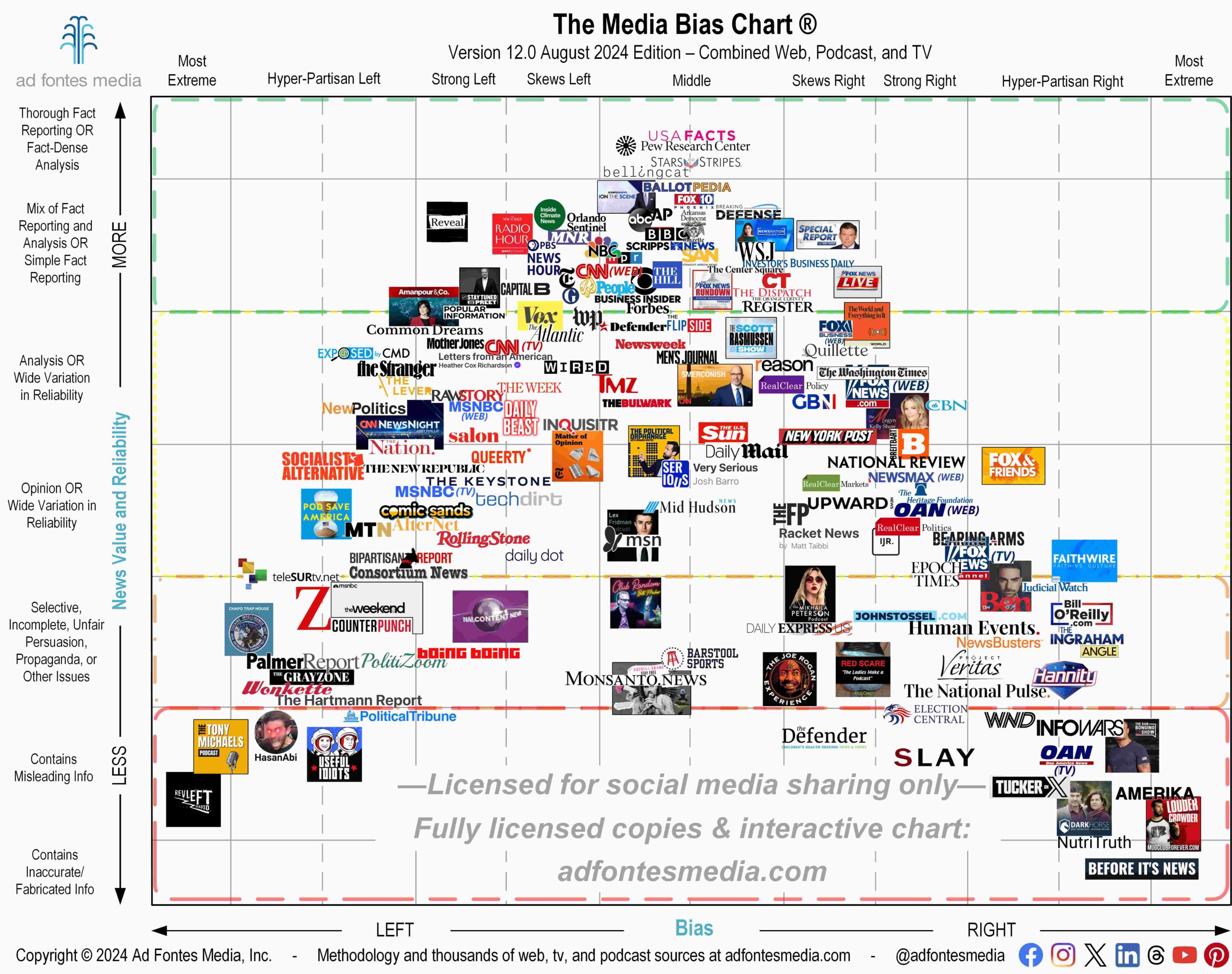
If you’re on social media, you may have seen the Media Bias Chart. Professional media analysts have decided (in sometimes hard to read print) where a source is on the spectrum of a) fact and b) political bias. The further you get from the middle – either side – the less likely what you’re reading is actually true, and more likely you’re reading propaganda deliberately meant to upset you. Let’s face it – calm, soothing news doesn’t sell copy or clicks. Mainstream, respected media such as Time, Newsweek, Wall Street Journal, The Hill, MSN, Forbes, BBC, tend to be factual and reliable. If the headlines on your paper start with “Bigfoot Gives Birth to Alien Werewolf Baby,” you should probably consider it suspect.

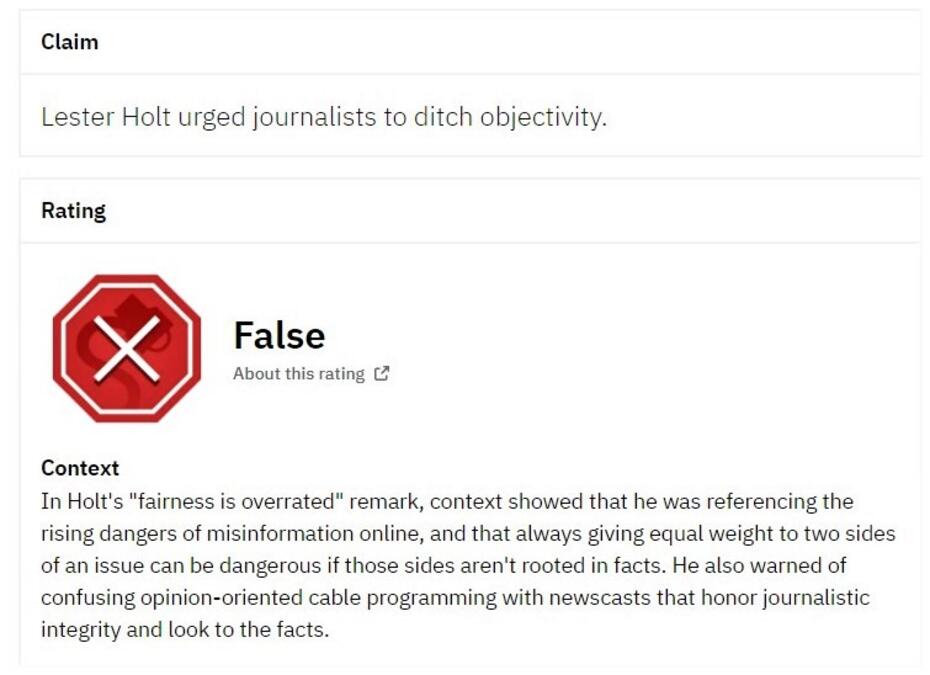
Don’t feel like digging for truth? Run the idea past Snopes.com, which relentlessly searches for facts, and facts only.

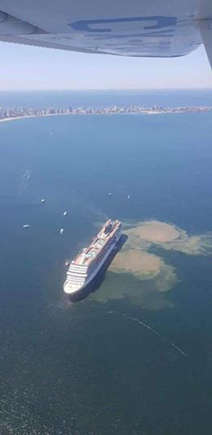
If a photo looks sensationalized or “off”, do a reverse photo search (Google image search). It’s possible the photo has nothing to do with the claim, or is outdated, or happened somewhere else. Here, in a viral photo, the ship is not dumping waste into the ocean, but churning up sediment with its turbines before anchoring. Check the dates on articles – articles can sometimes reappear ten years later. Sorry, that celebrity died 8 years ago. It’s not news.

Another way to check for devious sites involves looking at the URL – the website address in the search bar. Look at the last letters. If there’s a two-letter ending after a dot, the source is questionable. Every country has a country code, or domain. You won’t see it on domestic sites, but the code for America is .us.  Russia is .ru, China is .cn, Rwanda is .rw, Moldova is .md, not to be confused with Maryland. If it’s not coming from the US, it could be a scam. The .co code is technically for Colombia, but it’s often used when companies or organizations can’t get the .com address they want. Approach these sites with an extra grain of salt.

On The Media, a podcast by WNYC, New York Public Radio 93.9 FM, lists the following points to think about:

  • Big red flags for fake news: ALL CAPS, or obviously photoshopped pics.
  • A glut of pop-ups and banner ads? Good sign the story is pure clickbait.
  • Check the domain! Fake sites often add “.co” to trusted brands to steal their luster. (Think: “abcnews.com.co”)
  • If you land on an unknown site, check its “About” page. Then, Google it with the word “fake” and see what comes up.
  • If a story offers links, follow them. Garbage leads to worse garbage. No links, quotes, or references? Another telltale sign.
  • Verify an unlikely story by finding a reputable outlet reporting the same thing.
  • Check the date. Social media often resurrects outdated stories.
  • Read past headlines. Often they bear no resemblance to what lies beneath.
  • Photos may be misidentified and dated. Use a reverse image search engine like TinEye to see where an image really comes from.
  • Gut check. If a story makes you angry, it’s probably designed that way.
  • Most importantly, if you’re not sure it’s true, don’t share it! Don’t. Share. It.

Finally, here are the resources included on the handout Mr. Nann passed out after his presentation at CPL. Stay informed!

Navigating the News, a presentation at the Cheshire Public Library
John B. Nann, MSLS, JD, LLM, retired law librarian

Organizations and other resources

Sources used in presentation

Disappearing Authors

Barbara Newhall Follett was a writer who disappeared. Not fell out of favor or faded out of print, but disappeared. Considered a child genius who published a successful novel at the age of 12, The House Without Windows (it helped, of course, that her father was an editor at Alfred Knopf publishers), Follett was emotionally destroyed by her father’s divorce when she was 14, and never did much more. In 1939, Follett had a fight with her husband, walked out her door in Boston, and was never seen again…

Some authors are known for being extremely reclusive – J. D. Salinger, for one. Salinger had numerous personal and family issues, many, his daughter believed, stemming from PTSD from serving in World War II, and he hid from the intense fame he acquired from Catcher in the Rye. He seldom gave interviews or made appearances.

Thomas Pynchon is another, not having given an interview or even having a photo published in more than fifty years. He has no media accounts. In his late 80’s, it’s believed he’s living in Mexico, but no one except perhaps his publisher knows for certain.

Some authors aren’t lost, they’re just taking forever on that next novel – sometimes 10 years or more (staring right at you, George R. R. Martin). There are only a handful who have actually disappeared, becoming their own mystery.

Agatha Christie is perhaps the most famous. The Queen of Mystery herself disappeared in 1926, after a fight with her husband over his request for a divorce. Her car was discovered, empty. More than 15,000 people turned out to look for her, with Sir Arthur Conan Doyle going so far as to hire mediums. Eleven days later, she turned up in a hotel, 185 miles away, with no memory of what happened. Some publicists called it revenge against her husband that backfired when so many people got involved, while doctors said she had a nervous breakdown from the strain.

Solomon Northup is a name you may be familiar with. His memoir was made into an Oscar-Winning film, Twelve Years a Slave. Northup, who was born free in upstate New York but kidnapped and sold into slavery, wrote and published his memoir in 1853. Then, in 1857, he seems to disappear from historical records. Some thought he may have been kidnapped again, but his age at the time (around 50) made it unlikely. A Methodist minister in Vermont claimed to have worked with him in the early 1860’s, and last saw him in 1863. It’s assumed he died sometime between 1863 and 1864.

Elena Ferrante is a well-known author of more than 30 books, some of which have been made into movies or TV series, such as My Brilliant Friend. It’s also a pseudonym. Her true identity is a secret and almost nothing is known about her, except that she was born in Naples. In interviews, she claims it’s from shyness and fear of coming out of her shell. Speculation claims the author is actually Anita Raja, or her husband. Both people, and Ferrante’s publisher, deny it emphatically.

Antoine de St. Exupery is most famous for the timeless classic, The Little Prince, which was partly based on an airplane crash he and his navigator survived in the Libyan Desert. St. Exupery became a pilot in the 1920’s, joining the French Army, and later the French Air Force. Much of his writing has an aviation theme. When France was pulled into World War II, St. Exupery was assigned to reconnaissance missions, as an experienced pilot. On July 31, 1944, he left the airbase on Corsica in a Lockheed P-38, and was never heard from again. It wasn’t until 1998 – 54 years later, that a fisherman found a bracelet with his name on it. No one believed it, as it was some distance away from his intended flight plan. In 2000, a diver near the same area discovered wreckage of a Lockheed P-38. In 2003, the pieces were recovered and tested, proving indeed it was St. Exupery’s plane, downed in the war, though the details remain a mystery.

Ambrose Bierce was a short story writer and Civil War veteran, most famous for the story An Occurrence at Owl Creek Bridge. His stories influenced Stephen Crane and Ernest Hemingway, and he is considered one of America’s best satirists. At the age of 71, he went on a trip to visit his old Civil War battlegrounds, crossed over into Mexico, and wound up joining Pancho Villa’s army, documenting the battles. His last letter is dated December 26, 1913. His secretary believed he threw himself into the Grand Canyon in a suicide move, but witnesses saw him in Chihuahua in January of 1914.  Mexican legend has it he was executed by a firing squad.  Either way, it’s a great story!

Jack Black is one rough figure- no, not the actor! A drifter and burglar born around 1871, his 1926 autobiography You Can’t Win described his life of crime on the road. Disenchanted with both “genteel” life and that of the judicial system, he spent 30 years as a traveling criminal (15 of which he spent in prison). The book was influential for William S. Burroughs, a pioneer of the Beat Generation. Another odd fact: The author who helped him with his autobiography was none other than Rose Wilder Lane, the daughter of Laura Ingalls Wilder. You Can’t Win was adapted into a movie starring Michael Pitt and Jeremy Allen White, but has been in a liminal post-production stage for years. Black himself disappeared in 1932, and is believed to have committed suicide.

Returning to Barbara Newhall Follett’s story, there is something of a conclusion. After her disappearance, her husband didn’t report her missing for two weeks. The police eventually put out a bulletin – four months later. They used her married name, not her maiden name. A body was found, then determined not to be hers but a woman who had been missing years before. Thirteen years later, her mother insisted the police look harder, but nothing new was found. In 2019 – eighty years later – writer Daniel Mills proposed a theory that her body had been found in 1948, just not properly identified. The body had been found in New Hampshire – just a half mile from where she had a rental property and not terribly far from her home in Boston. The possessions found with the body were things Follett was known to have. The cause of death was barbiturate overdose, a substance Follett had taken before. The police in New Hampshire had no idea she’d been missing.

Authors, even the most famous ones, are still people, with the same dramas as everyone else. Does art imitate life, or does life create the art?

For books on “prodigies” who turn away from their potential, check out Outliers by Malcolm Gladwell, or Off the Charts: The Hidden Lives and Lessons of American Child Prodigies by Ann Hulbert.

The Write Stuff: 9 Books to Make You a Better Writer

Books require readers, but they also require writers. And not just books – writers are required for things you never think of, from greeting cards to the labels on your cough syrup and face cream jars. Writers put words in the comic book superhero’s mouth. Writers help K-Mart ship their pants, the Geico Cavemen get insurance, and made Downton Abbey so intriguing.

For a small town, Cheshire has a large number of published writers, and for every published author, we have at least four who are either dreaming of writing, or struggling with the actual task. Good writing – like acting, like music, like fine art, like athletics – starts with a natural talent. You have an ear for speech. You have a knack for conversation. Grammar was easy for you. This doesn’t mean that if you’re dyslexic, or can’t spell, or have no idea when to use a semicolon, that you can’t be a writer. That’s what an editor is for. What’s important is getting that idea out.

But how? How do you know what you need to do, when you haven’t had an English class in 20 years? You don’t remember a past perfect subjunctive case? And what do you mean by third person unreliable narrator? I just want to write a story – why is this so complicated?

Writing a story your mom loved is a good start, but to reach a larger audience, you will need grit, determination, skill, and a steel spine. But I don’t know any writers! you wail. Workshops are so expensive! I can’t take three weeks off my job for a retreat in Washington State!
Few people can, and that’s why libraries are so important! Ray Bradbury – Pulitzer winner, multiple Hugo-award winner, Emmy winner, and more – told the story of how he was too poor to afford college, so instead he read every book in his hometown library – every one – and got the education he needed that way. There are so many good books out there to help you with writing, depending on what level you’re at, what you want to know, and how you need to do it. Let’s explore a few of the best ones:

Writer’s Digest Magazine

This is a great resource if you’re just starting out. You’ll find helpful hints, articles by authors, agents, publishers, and vague contests (caution: most cost money to enter, which is how they get the prize money. They aren’t exactly a scam, but your chances of winning are low). You’ll learn about genres and what other authors are doing. This is great for a year, but after that, you realize they run the same information over and over again every year.

Sol Stein: Stein on Writing

To this day, my favorite book on writing. If you only have the patience to read one book on writing, read this one. Stein will walk you through every aspect of writing, from making the characters real to creating tension to love scenes, and he does it in everyday language you will understand. This is your college class on writing. If you’re starting out or still in school, this book will turn you into a writing powerhouse.

Ursula LeGuin: Steering the Craft  

This is probably the best book on the practice of writing I’ve ever read. LeGuin states this isn’t for beginners – she’s not going to give you the basics like Stein does; she digs a level deeper. This is your Writer’s Workshop in a box. LeGuin will walk you through the various aspects of writing, from multiple points of view, to tense, to use of adjectives and adverbs, dialogue, and the rest. She will assign you writing exercises, some easy, some not. Find a buddy, even online, and do the exercises. This is a full creative writing class for zero cost . I wound up buying myself a copy (a whopping $7).

Donald Maass: Writing the Breakout Novel 

I went into this one with a swagger, and landed on my butt. Donald Maass, owner of one of the premiere literary agencies in the country, sent me crawling back to my manuscript like it was fit for nothing but lining the litter box. Maass discusses the death of the mid-level writer, and takes you point by point illustrating what makes a novel not just good, but brilliant. I ran right back to my manuscript and dug deeper, and was so pleased with the result. This was far more useful than I’d ever hoped, and I read it with actual interest. This is a must-read, but, published in 2001, some of it is woefully dated: He says The Handmaid’s Tale is not believable, no one can follow more than one subplot (he obviously never read Game of Thrones), and to never submit by email, when that’s all agents and publishers accept today.

Annie Dillard: The Writing Life

Dillard’s another Pulitzer Prize winner, with lofty prose that requires a lot of thinking. If you are a beginner, just starting out, trying to see if this is the career you want, this is not the book for you. You’re not going to get the deeper story. If writing is burning your soul with a searing pain that keeps you awake night and day, if you can think tangentially and in leaps and in metaphors, then you will appreciate this book and take comfort in it. In short, writing is not a straight line, and the story you think you want to write will probably not be the one you wind up with as the story twists out of your control. It’s a book for the writer’s soul. 

Ray Bradbury: Zen in the Art of Writing

Bradbury, as a short story writer more than a novelist (he said the goal is to write one short story a week; going by the law of averages, at least 10 a year should be really good), isn’t going to bore you with “Do This.” Instead, this is a collection of essays delving into how he writes, and his thought processes. It’s painless and inspirational, will boost your creativity, and is one you should be reading.

Anne Lamont: Bird by Bird: Some Instructions on Writing and Life

This is another surprise book I wound up purchasing. Lamont frees you from the guilt of writer’s block by giving you permission to write one word at a time. That’s how books are written: one word at a time. She’ll drag you through all the pitfalls of writing while holding your hand, patting you on the back, and inspiring you all at the same time. 

John Mullan: What Matters in Jane Austen

Okay, this isn’t a book on writing – but if you ignore the fact that it’s Austen, and the fact some of it dates from the late 1700’s, and PBS has ground the stories into the dirt, there is a LOT of writing advice to be found in this book. Mullan picks apart Austen’s stories, discussing how she shows characterization, dialogue, even class in between the lines, describing things without ever coming out and saying them. Whether or not you’re an Austen fan (I’ve only read one, and that was 40 years ago), this is a treasure-trove of writing information if you don’t mind feeling like a total failure in her shadow.

Stephen King: On Writing

This is the first book everyone runs to, and then squeals about. I’m going to commit heresy here: Don’t bother. This book is not going to help you become a writer. It’s going to help you sympathize with King for having all the same highs and lows and writer’s blocks that you do, but primarily, this is a book on King’s journey into writing. It’s not a self-help guide. It’s a biography.

Want to improve your writing? Track down Sol Stein, Ursula LeGuinn, and Donald Maass. They will not fail you. Dean Koontz’s book, How to Write Best Selling Fiction is widely regarded as an excellent book, but is out of print and used copies go as high as $500(?!?). However, you CAN access the material (or other bits on Youtube and such) through a PDF here on Scribd.com (beware of frequent ads).

The Top 100 Films of All Time

What makes a fantastic film? You might as well ask what makes a good red wine, or abstract painting, or an attractive face.

Not every blockbuster is a “quality” film, and certainly not every “quality” film is a blockbuster. Some films are held in high regard, but are so “artsy” that it can be difficult to enjoy them (Eraserhead). Some movies are wildly popular (Die Hard), but hated by critics. A film can have a great script, but bad director, or a great director but the worst possible actor (Denise Richards in The World is Not Enough). Sometimes the special effects are awful (Howard the Duck, and let’s not forget the unfinished production on Cats). Sometimes the budget is practically zero (the $400,000 budget of Monty Python and the Holy Grail was partially financed by the rock bands Pink Floyd, Led Zeppelin, and Jethro Tull), while others have tremendous budgets and huge followings and are so awful they still fail (Solo, A Star Wars Story had a budget of $250 million and couldn’t break even—how can you lose with Star Wars?). When all these things come together—a good story, good writing, good actors, good directors, good marketing, and sometimes good timing (even Lilo and Stitch had to be retrofitted because of a plane and building scene right after 9/11)—you can hit a home run clear out of the park. 

Obviously, everyone has different tastes. Porky’s is my go-to when I need a stupid laugh. Yeah, it’s not high-brow. Forty years later, I still don’t understand the humor in Ghostbusters. 2001: A Space Odyssey is an incredibly beautiful movie, far ahead of its time, but with zero dialogue for the first 20 minutes, and I think it’s one of the most boring movies I’ve ever seen. I have endlessly tried to understand the hoopla of Blade Runner, read all the discussion on it, and I’m still missing the genius. I’ll just agree it’s an important film, and carry on. My favorite romance movie is Raiders of the Lost Ark—not generally on any romance list. 

So, anyone trying to pick the top 100 films of all time is truly facing an endeavor in futility, whether you’re the American Film Institute or a bunch of friends at dinner. I gathered results from eight different polls, and tried to tabulate the results. AFI, no surprise, is a bit snooty and prefers their films pre-1950, and doesn’t care much for popularity or genre films. Rotten Tomatoes focuses on user recommendation and critic reviews. Empire Online focuses more on popularity, artistic merit, and cultural impact. IMDB uses user ratings. British Film Institute includes far more foreign-language films than we get exposure to, with the ratings of more than 1600 critics, academics, and curators. Sight & Sound, which is run by the Criterion Channel, uses more than 1500 critics choices. Overall, drama far outweighed comedies, and musicals and animated films were few all around.

How many of these have you seen? Which ones would you recommend?

1.   12 Angry Men

2.  2001 a Space Odyssey

3.   400 Blows

4.   Alien

5.   All About Eve

6.   All the President’s Men

7.   Annie Hall

8.   Apocalypse Now

9.   Battle of Algiers 

10.   Battleship Potemkin

11.   Beau Travail

12.   Bicycle Thieves

13.   Blade Runner

14.   Bonnie and Clyde

15.   Breathless

16.   Bringing Up Baby

17.   Brokeback Mountain

18.   Casablanca

19.   Chinatown

20.   Citizen Kane

21.   City Lights

22.   Close Up (1990)

23.  Do The Right Thing

24.   Double Indemnity

25.   Dr. Strangelove

26.   Duck Soup

27.   ET

28.   Fellowship of the Ring

29.   Forrest Gump

30.   Get Out

31.   Godfather

32.   Godfather II

33.   Gone with the Wind

34.   Goodfellas

35.   In the Mood For Love (2000)

36.   Intolerance

37.   It Happened One Night

38.   It’s a Wonderful Life

39.   Jaws

40.   Jeanne Dielman, 23, Quai du Commerce, 1080 Bruxelles

41.   King Kong

42.   Lawrence of Arabia

43.   M

44.  Mad Max Fury Road

45.   Maltese Falcon

46.  Metropolis

47.   Modern Times

48.   Moonlight

49.   Mulholland Drive

50.   Nashville

51.  Network

52.   North By Northwest

53.   On the Waterfront

54.   One Flew Over the Cuckoo’s Nest

55.   Parasite

56.   Passion of Joan of Arc (1928)

57.   Pather Panchali  

58.   Persona

59.   Psycho

60.   Pulp Fiction

61.   Raging Bull

62.   Raiders of the Lost Ark

63.   Rashomon  

64. Rear Window

65.  Rules of the Game

66.  Saving Private Ryan

67.   Schindler’s list

68.   Seven Samurai

69.   Shawshank Redemption

70.   Silence of the Lambs

71.  Singing in the Rain

72.   Some Like it Hot

73.   Sound of Music

74.  Spirited Away

75.   Star Wars: A New Hope

76.   Sunrise: Song of Two Humans  

77. Sunset Boulevard

78.   Taxi Driver

79.   The Dark Knight

80.   The General 

81.   The Searchers

82.  The Shining

83.   Titanic

84.   Tokyo Story

85.   Toy Story

86.   Vertigo

87.   Wizard of Oz

88.   American Graffiti

89.   Cabaret

90.   A Clockwork Orange

91.   French Connection

92.   The Empire Strikes Back

93. Easy Rider

94.   The Deer Hunter

95.   MASH

96.   Platoon

97.  Spiderman: Into The Spiderverse

98.   No Country for Old Men

99.   Up

100.  West Side Story (original)

Just to push myself, I tried, tried to pick my 100 top films, but couldn’t get further than 50. Do I pick the ones I’ve watched the most times (Star Trek: The Wrath of Khan)? Do I pick the ones I think are technically perfect (Casablanca)? Do I pick the ones I felt most deeply? (I cried for two hours after Edward Scissorhands) The most mind-bending (Dr. Strange)? Something sentimental I remember from childhood (The Poseidon Adventure)? It becomes too difficult to choose. So, these are the first ten films I’d pick to be stranded on a desert island with (assuming I had the means to watch them) (and I’d prefer more):

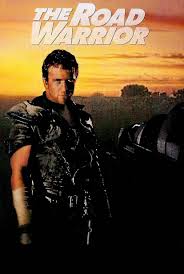
The Road Warrior

Serenity (2005)

Rogue One

Casino Royale (2006)

Casablanca

Raiders of the Lost Ark

Lord of the Rings

The French Connection

Planet of the Apes (1968)

Terminator 2

Able and Willing

Disability is a loaded word. 

I won’t debate the semantics of the term, what the current politically correct term is, or how to make your workplace more variant friendly.

Let’s talk about something far more inflammatory. The rights of the disabled to carry out adult relationships. At best, a disabled person is able to find a partner despite their difficulties, marry (or not), and live a happy adult life together, with or without kids (popular example: the TV show Little People, Big World). Sometimes, it’s disabled people fighting in court for the right to marry or raise their own children (the movie I Am Sam). At the very worst, it’s vulnerable people being preyed upon, taken advantage of, or controlled to the point of involuntary sterilization.

I grabbed the book Hunchback, partly because it was short, and partly because I’ve been in the field of disabilities for 40 years. Hunchback, a novella by Saou Ichikawa, was not the book I’d expected, despite winning multiple awards. Ichikawa’s character, Shaka, suffers from congenital myopathy (same as the author—write what you know), which has left her with progressively weak muscles. Her back is so hunched over she can’t breathe when holding a book, and she spends half the day using a ventilator. She can walk short distances, but her body is twisted and one leg is far shorter than the other. She has a tracheostomy, which makes talking difficult, so she uses a lot of alternative communication devices. Shaka spends her time writing erotica online, the money from which she spends on food for poor people and women. 

Winner of several Japanese awards, Hunchback calls out ableism on many levels. Ichikawa considers it political: Disabled people are hidden away by society, never considered because they’re never seen. People in wheelchairs are rarely mentioned in literature at all, unless they’re being “cured,” like in Heidi or A Secret Garden. Disabled people are portrayed as a drain on society, dependent on charity, so by making a wealthy disabled character (who generates income through pornography), she pokes a hornet’s nest.

Another book that touches on the subject of sexual autonomy is James Cole’s Not a Whole Boy. Cole was born in the 60’s with a severe case of exstrophy – most of his organs were born outside his body, and his pelvis malformed. Most babies with this condition do not survive. Due to Cole’s mother’s determination and a great team of doctors, Cole managed to thrive despite severe obstacles. While he seemed more or less normal to other kids, Cole hid the fact that he had double ostomies – all his waste was collected in bags, as he didn’t have the needed parts and couldn’t use a toilet. As he got older and puberty kicked in, it became necessary to undergo multiple surgeries just to have a sense of comfort, normalcy, and proper biological function. Cole’s book documents his struggles with medieval children’s hospitals, lack of pain management, and his eventual success with a career in art and film – certainly not hidden away.

A book that took me by complete surprise was Riva Lehrer’s Golem Girl, a golem being a creature formed from dirt or clay. Riva was born with Spina Bifida in 1958, a time when most afflicted infants did not survive, and almost certainly didn’t walk. She suffers dozens of painful surgeries to keep her mobility, most of which do nothing to ease her issues – she’s just a guinea pig for the surgeons. Although she attends a grade school for the disabled (disability laws hadn’t been written yet), she attends a mainstream high school, then university, where she gets a degree in fine art, all while dealing with surgeries and intense feelings of revulsion toward herself. Amplifying it is her mother’s overprotective codependency, spitting out helpful comments such as “You don’t need a nose job. No one wants to marry a cripple,” and “You shouldn’t have children; pregnancy will just mess up your spine worse,” – culminating in an involuntary hysterectomy at 15 on the mother’s order. 

Riva goes on to have multiple affairs with both men and women. While some relationships work out, many times she’s still hit with prejudice – “I can’t love a cripple.” Riva remains unstoppable. She becomes more comfortable with herself through meeting up with other people – often activists – with disabilities. As an artist, she gains renown (and awards) through her paintings of disabled people (and others) she has met. 

This book was so hard to put down, and read like you were in the middle of a conversation with her. Lehrer doesn’t go into detail on her disability or surgeries; she talks about herself, not her medical issues. After doing time as an anatomical artist, she sees people not so much as disabled, but as human variants – no one is “normal,” there is no “normal,” just human variations. But everyone has a right to love and happiness.

At the heart of it, people with physical disabilities are still people. It doesn’t mean they don’t have the same dreams, desires, or feelings as people who aren’t. All of these books will give you deep new insights into the strength of humanity.