It’s been almost six years since YA uber-author John Green has published a new book (something we wrote about a while back). That’s almost generation’s worth of his target audience – many teen readers will have been too young for his last book, The Fault in Our Stars, when it was published in 2012. The rocket-like success of that book (and subsequent movie) was both a blessing and a curse for Green: his books were being read by millions more people, but that success resulted in a period of crippling anxiety for the author. The expectations for his next book felt so overwhelming, that for a while he could not write at all.
Green has not made a secret of the fact that he’s wrestled with Anxiety and Obsessive-Compulsive Disorder most of his life, and what it’s like to live with mental illness is the overriding theme of Turtles All the Way Down. Aza Holmes, the narrator of the book, struggles mightily to control the obsessive thoughts that often consume her, which she calls “thought spirals” that grow more and more tightly coiled until she is driven to a compulsive behavior to quiet them.
The ostensible plot of the book is a mystery: the famous father of a childhood acquaintance has has skipped town to avoid legal troubles, and Aza’s BFF Daisy is convinced the two of them can figure out where he is and collect the $100,000 reward. TATWD has all the John Green-isms we’ve come to expect: the quirky best friend, the seemingly impossible task, the sweet love story, and everyone’s got a poem or literature quote ready to go at a moment’s notice, (John Green characters are a bit more well-read and well-spoken than the general teen-aged public). But the real journey the reader is taken on is what it’s like to live in a hijacked mind.
Aza has a dread of germs. One of the first compulsions we witness is Aza forcing open a wound on her fingertip, so that she can clean and sanitize it before covering it up with one of her constant supply of band-aids, a ritual she performs so often that the wound never completely heals. Hand sanitizer is used combatively – at one point she even starts drinking it. Aza’s helplessness in the face of these thoughts and compulsions can be painful to read, and there’s no “all better now” resolution at the end – the prevailing takeaway is it’s ok not to be ok sometimes. Green has managed to paint a picture of mental illness that is more matter-of-fact than sensational, and the writing is evocative and mature. It’s a thoughtful novel that will appeal to adults as well as teens, and well worth the six-year wait.
Five stars.

 HOW much do you read? If you read a lot of ebooks, you may want to keep them on a device that’s just for reading. If you’re only an occasional ebook reader, having a couple of books stored on your computer or tablet may be more convenient.
 WHERE do you do most of your reading? Do you need a lighted screen because you like to read in bed when the lights are off? A tablet is best for this. Do you like to read outdoors in the daytime, where an LCD screen can be difficult to see clearly? A black & white e-ink reader is what you need.
 WHAT are you going to read on your device? Will it be for text-only books, or will you be using it for magazines or children’s books, as well? Magazines and children’s books with pictures will look much better on a color tablet than a black & white e-reader, and many interactive children’s books will only work with a touch-screen tablet.
 What about EYE STRAIN? If you spend a lot of time staring at an LCD screen for work, reading on another LCD screen like a tablet may may bother your eyes. The softer display of an e-ink reader may be more comfortable. Similarly, if you read for long stretches of time, you may find it more comfortable to read on an e-ink reader.


 Not to mention the online project that started it all, a little something called
  Add in that he has two young childen, and one can see that it might have been challenging to find the time to write recently. About his new book, he’s said: “This is my first attempt to write directly about the kind of mental illness that has affected my life since childhood, so while the story is fictional, it is also quite personal”. Green has talked about dealing with OCD and anxiety in his own life, and in the new book , 16-year-old Aza Holmes grapples with mental illness as she investigates the disappearance of a billionaire.
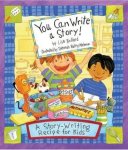
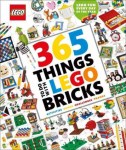
 During National Keep Kids Creative Week, parents are encouraged to eliminate or at least cut down on kids’ screen time, and help them brainstorm creative activities instead. Write a story or create a recipe together. Challenge them to come up with their own superhero, cool invention, or fun game to play.




 The Cheshire Library Blog