8 Reasons to Love Audiobooks (Or Give Them a Try)

Ever notice how your list of books to read never seems to get any shorter? For every title I cross off my list, three more appear, and at this rate it’ll take me at least 20 years to completely finish (I know because I’ve calculated it). I lose precious reading time to obligations like commuting, feeding myself, and keeping my living space somewhat clean. But I recently started listening to audiobooks, and I was able to turn those obligations into perfect opportunities to whittle down my list. I can now go through a book in one day and still get the laundry done!

We have a bunch of books on CD here at the library, but I prefer downloading audiobooks with the OverDrive app on my smartphone. I hook up my phone to my car stereo and don’t have to fumble with CDs while I’m on the highway, and I can keep listening indoors without having to drag a pile of discs with me. Another upside to downloading: no fees! Digital items disappear automatically when the loan period expires so you’ll never get hit with late charges, plus you can’t scratch them up or lose them under a car seat.

Here are some more reasons to love audio:

1) Multitask like a boss. Start up an audiobook and chores will suddenly become much more enjoyable. You can spend an afternoon reorganizing your closets while also tackling titles on your to-read list, like Graham Greene’s The End of the Affair read by Colin Firth. You may even find yourself actually seeking out more chores so you can continue listening!

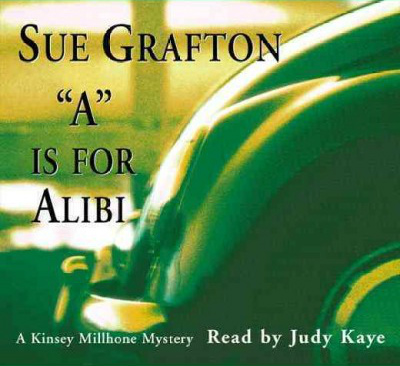
2) Cut your screen time. After a long workday in front of a computer screen, do you really want to veg out in front of another glowing blue screen? Light mysteries like the books in Sue Grafton’s Kinsey Millhone series (A is for Alibi, B is for Body, etc.) offer nice background noise without disrupting your sleep.

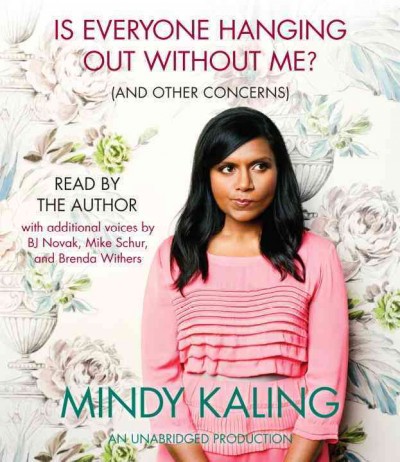
3) A good narrator enhances your experience of the book. Mindy Kaling’s Is Everyone Hanging Out Without Me? is a funny book, but it’s even better when you hear her narration. An adept narrator enhances humor, drama, and other emotions in ways that you can’t replicate when your eyes are zooming across the page. Augusten Burroughs’ memoir Dry had me laughing hysterically one minute, then weeping the next.

4) Long drives seem shorter. It’s tough to stay alert when you’re driving alone, at night, on a really boring road (I’m thinking of you, New Jersey interstate). Picking up something long like The Book Thief by Marcus Zusak will keep your brain engaged and will make any long drive more endurable. Similarly, long workouts on the treadmill are less arduous when you have a plot to engage your mind.

5) Audiobooks are interactive. Have you been on the waitlist for the print copy of The Life-Changing Magic of Tidying Up by Marie Kondo? You can download it right now through Hoopla and experience the magic by listening to the audio – while simultaneously tidying up! I’ve also found myself talking out loud to characters in suspenseful audiobooks like Tana French’s The Secret Place.

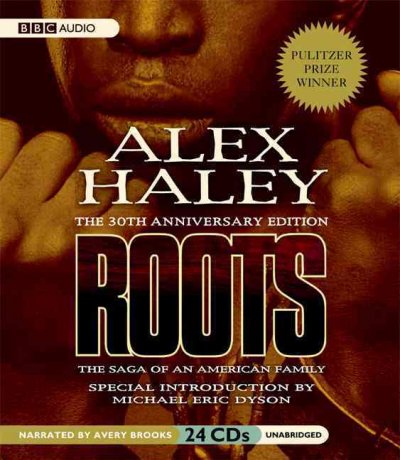
6) Long, difficult books can be less daunting in audio. Everyone has those “I’d like to read it, but I probably will never get around to it” books. I would never realistically have finished the 917-page behemoth of Roots, but it only took me a couple weeks to reach the end of disc 24.

7) You might actually retain more. There’s a theory that you retain more information when listening because your brain doesn’t have to work as hard at creating imagery. I used to think I would have a problem remembering what happened in audiobooks, but then I remembered all the times I’d looked up from reading a printed book and realized I didn’t remember any of the last six pages. It’s just bound to happen, I think (no pun intended).

8) You’ll realize you’ve been pronouncing a word wrong your entire life. Interminable. Prerogative. Indefatigable. Cache. Aluminum has five syllables?! Oh wait, nevermind, the narrator is British.

Now here’s how to get the audiobooks mentioned:

Do you currently listen to audio books? If not, do you think you’ll give them a try?
Three Holidays to Celebrate, Three Shows to Binge Watch

There are sparkly decorations everywhere, peppermint mochas are appearing at the coffee shop, and your mailbox is crammed with ads for door-buster sales. Yep, it’s the season for the gift-giving celebrations of Christmas and Hanukkah! But you don’t have to belong to any religion to have some fun this season. Here are a few cultural holidays that anyone can enjoy, along with television series to watch for hours on end while you’re off from work and school.

December 23

Festivus

Way back in December of 1997, millions of Seinfeld fans tuned in to watch the episode “The Strike” and were introduced to Festivus, a made-up holiday celebrated by Frank Costanza as a rebellion against the commercialism of Christmas. Fast forward to the present, and lots of people have taken to celebrating Festivus in their homes, dorms, and workplaces. The common rituals of Festivus are as follows:

1) Displaying the Festivus Pole – an unadorned aluminum pole. (You can actually buy these online!)
2) A celebratory Dinner – make anything you like, as long as it’s celebratory.
3) Airing of Grievances – this takes place immediately after dinner is served. Participants take turns complaining about how everyone has disappointed them in the past year.
4) Feats of Strength – after dinner, the head of the household selects a person to challenge to a wrestling match. Festivus officially ends when the head of the household is pinned.

Fun fact: Festivus actually goes back to 1966 when Seinfeld writer Dan O’Keefe’s father first instituted the tradition to celebrate an anniversary, and the family continued to celebrate it whenever Papa O’Keefe felt like it. Instead of an aluminum pole they had a clock in a bag, and they shared a Pepperidge Farm cake decorated with M&Ms

Binge Watch: Seinfeld. What else?

December 26

Boxing Day

Maybe you’ve seen Boxing Day on your wall calendar and had no idea what it was. Let’s Return Unwanted Gifts Day? A fisticuffs tournament over the last piece of pie? Nope! It’s a holiday in Great Britain and almost every place the British settled, except for the U.S. Nobody is sure where the name originated, though some believe it comes from the alms boxes set up in churches during the Advent season (which were then broken open and distributed on the 26th), or from the gift boxes presented to servants who had to work on Christmas but had the following day off.

Whatever purpose it once had, Boxing Day is now a relaxing day off to visit relatives, sit around and eat leftovers, and watch soccer. Among the wealthy, fox hunting used to be a popular Boxing Day activity before the practice was banned in 2004. Those with disposable income now hunt for bargains instead – it has become a huge shopping day, comparable to our Black Friday.

Binge Watch: If you’re not going to tune in to one of 10 Premier League games, pick up a Blu-Ray of The Paradise, a BBC series following a shop girl in Britain’s first department store.

December 26-January 1

Kwanzaa

Born out of the Black nationalist movement, Kwanzaa is a relatively young holiday, created in 1966 by Black Studies professor and activist Maulana Karenga as a way for African American to celebrate their heritage and connect to their community. It fuses elements from numerous African cultures – the term Kwanzaa derives from the Swahili phrase “matunda ya Kwanza” or “first fruits of the harvest,” and draws from the harvest celebrations of the Ashanti, Yoruba, Ibo, and other West African tribes (from which most African Americans have descended). There’s feasting and singing, of course, but the most important part of Kwanzaa is celebration of the seven principles – things like creativity and self-determination – that are represented by lighting one candle each night of the holiday.

Kwanzaa reached its height in the 1980s and 1990s, and about 2% of the U.S. population celebrates the holiday today. However, Americans of any heritage can set out a kinara on the mantle and celebrate our country’s diverse history.

Binge Watch: Roots, Alex Haley’s award-winning exploration of his family’s background.


Which holidays are you celebrating this year?

November = National Novel Writing Month

Shield-Nano-Side-Blue-Brown-RGB-HiRes

How many of us have ever thought it would be pretty cool to write a novel? Most of us, right? Maybe you’ve had a story idea you’ve been carrying around for years, revisiting it from time to time to add a detail or think through a character, like a pensive twist at an unsolved Rubik’s Cube. Or, maybe you just like the idea of having something that you’ve created and completed yourself. Whatever category you find yourself falling into, November is National Novel Writing Month, and the perfect time to get writing.

Known to insiders as NaNoWriMo (na-noh-RYE-moh), it’s an annual challenge to write 50,000 words during the month of November. It’s free to join and open to any adult: the only requirements are that you must start with fresh material and only work from midnight on November 1st to 11:59pm on November 30th. If you’re under 18, NaNo runs a special Young Writer’s Program for kids and teens with slightly different word goals.

If 50,000 words sounds like a huge number, you’re right. It works out to 1667 words a day, about the same as five typed pages of 12-point double-spaced text. It’s nearly impossible to write anything other than a very rough first draft of a novel, and that’s completely by design: to get to 50,000 words, you have to shut off your inner editor and become a high-velocity writing machine for 30 days. It doesn’t have to be good. It just has to be.

So what do you win if you reach the goal of 50,000 words? Mainly bragging rights and the satisfaction of knowing you were able to complete the challenge. There’s no monetary prize or anything, but you do get coupons for some writing products. And at our NaNoWriMo 101 program on October 16th, Diane Scarponi, the Municipal Liaison for the CT Shoreline area, informed us that one particularly sweet coupon from CreateSpace entitles you to two free printed paperback copies of your novel if you hit the 50k word goal. Hooray!

For many NaNoWriMo writers, two copies isn’t enough: they want to share their novel with the world. Those who want to publish their work – after editing the daylights out of that first draft, of course – have a choice between self-publishing and traditional publishing. (It’s the same in the music industry: think musicians selling CDs out of a van, versus getting a contract with a major label.) It’s a tough game, but lots of authors who started their drafts during NaNoWriMo have gotten their finished projects into print via traditional publishers, and several of those novels have even gone on to become bestsellers.

The following titles all started as NaNoWriMo drafts, and against the odds, they’ve been published by major publishing houses and have made it onto the bestseller lists – and onto our shelves here at the library. Maybe you’ve already read them!


Water for Elephants by Sara Gruen
Perhaps the best known NaNo novel of them all, this was made into a film a few years back that starred Robert Pattinson and Reese Witherspoon.

 The Night Circus by Erin Morgenstern
Another circus-themed read that has been making the book discussion rounds since it came out in 2011.

Cinder by Marissa Meyer
The first installment of a super-popular YA series that features cyborgs, plagues, and outer space. You’ve got our attention!

Fangirl by Rainbow Rowell
The author of the bestselling Eleanor & Park didn’t rest on her laurels after it began appearing on bestseller lists. No, she decided to write 100,000 words during NaNoWriMo 2011.

Anna and the French Kiss by Stephanie Perkins
Perkins’ debut novel and the first in a series of three young adult romances, NPR called it one of the best teen reads for 2010.

The Darwin Elevator by Jason M. Hough
Before you start thinking NaNoWriMo writers are only doing chick lit and teen books, you have to know there’s some hardcore science fiction writers out there cracking their knuckles and then frantically typing. Hough’s Dire Earth Cycle, a trilogy of sci-fi thrillers starting with The Darwin Elevator, got its start during NaNoWriMo.


Are you doing NaNoWriMo in 2014? Let us know in the comments, or stop by during one of our scheduled Write-In Wednesdays on 11/5 from 5-9 pm and 11/19 from 5-9 pm!