This Must Be the Place: New Books and Documentaries to Stoke Your Musical Nostalgia

There’s this article from The Onion that my husband and I keep chuckling over. The joke headline is “Cool Dad Raising Daughter on Media That Will Put Her Entirely Out of Touch with Her Generation,” and it’s followed by a photo of a middle-aged man presenting a girl with a vinyl copy of the Talking Heads Remain in Light as she regards the album in her hands with utter skepticism. We may or may not have played that very album for our kids before heading to New Haven to watch former Talking Heads members—now septuagenarians—perform it live. That joke article is about us.

Anyone who’s interrupted a Disney playlist to subject their progeny to a few excruciating minutes of A Very Important Music Thing can relate. We want to share the things we love with the people we love. We want them to know who we are. It could be music or movies, hobbies, sports teams, longtime vacation spots. For me, it’s reggae and Joni Mitchell’s Blue and Neil Young’s Harvest, all of which I heard as a kid on weekend mornings. It’s hurtling down the interstate in a car full of teenagers scream-singing along to Jimmy Eat World’s “Sweetness” or Jay-Z’s “Dirt Off Your Shoulder” or Underworld’s “Born Slippy.” It’s the first two Decemberists albums, played as my future husband and I aimlessly wandered the backroads near the town we were so very desperate to leave. This music is as much me as the cells in my body. So now I sing “Heart of Gold” and “The Crane Wife” to my kids as bedtime lullabies, and for background noise I play Bob Marley and classic R&B songs that were sampled by rappers.

Until the kids are old enough for evening concerts, I’m passing my limited free time by reading and watching documentaries about music, especially the scenes and artists that have dimmed the stage lights for the last time. Did you know that emo was a product of the suburbs? (Thanks, Andy Greenwald!) Or that Carrie Brownstein, half of the hilarious duo on Portlandia, was part of Olympia’s feminist Riot Grrrl movement in the early 90’s? Here’s some recent media if you’re feeling nostalgic for the sounds of the past.

Night People: How to be a DJ in ’90s NYC by Mark Ronson (2025)

From the publisher: Organized around the venues that defined his experience of the downtown scene, Ronson evokes the specific rush of that decade and those spaces—where fashion folks and rappers on the rise danced alongside club kids and 9-to-5’ers—and invites us into the tribe of creatives and partiers who came alive when the sun went down. A heartfelt coming-of-age tale, Night People is the definitive account of ’90s New York nightlife and the making of a musical mastermind.

Tonight in Jungleland: The Making of Born to Run by Peter Ames Carlin (2025)

From the publisher: From the opening piano notes of “Thunder Road,” to the final outro of “Jungleland”—with American anthems like “Born to Run” and “Tenth Avenue Freeze Out” in between—Bruce Springsteen’s seminal album, Born to Run, established Springsteen as a creative force in rock and roll. With his back against the wall, he wrote what has been hailed as a perfect album, a defining moment, and a roadmap for what would become a legendary career. Peter Ames Carlin, whose bestselling biography, Bruce, gave him rare access to Springsteen’s inner circle, now returns with the full story of the making of this epic album. Released in August, 1975, Born to Run now celebrates its 50th anniversary.

Hip-Hop Is History by Questlove (2024)

From the publisher: Questlove traces the creative and cultural forces that made and shaped hip-hop, highlighting both the forgotten but influential gems and the undeniable chart-topping hits-and weaves it all together with the stories no one else knows. It is at once an intimate, sharply observed story and a sweeping theory of the evolution of the great artistic movement of our time. Questlove approaches it with both the encyclopedic fluency of an obsessive fan and the unique expertise of an innovative participant. Hip-hop is history, and also his history.

Psst: If you prefer to watch a documentary, Questlove’s Hip-Hop Evolution (2016) runs along similar lines. It’s available on Netflix.

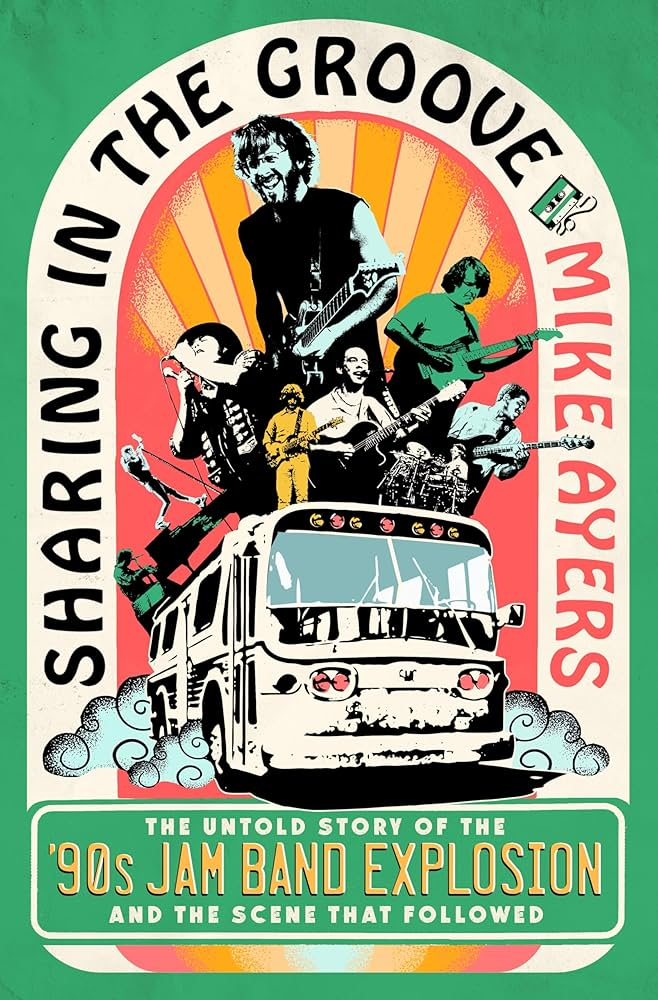
Sharing in the Groove: The Untold Story of the ’90s Jam Band Explosion and the Scene that Followed by Mike Ayers (2025) 

From the publisher: Sharing in the Groove is a rich examination of an underdog genre that helped define the 1990s musical landscape―a scene that paved the way for modern-day cultural institutions such as the Bonnaroo Music Festival and kept the Grateful Dead ethos alive. It was also a world with its own values and its own unique interactions with fame, record labels, MTV, drugs, and success.

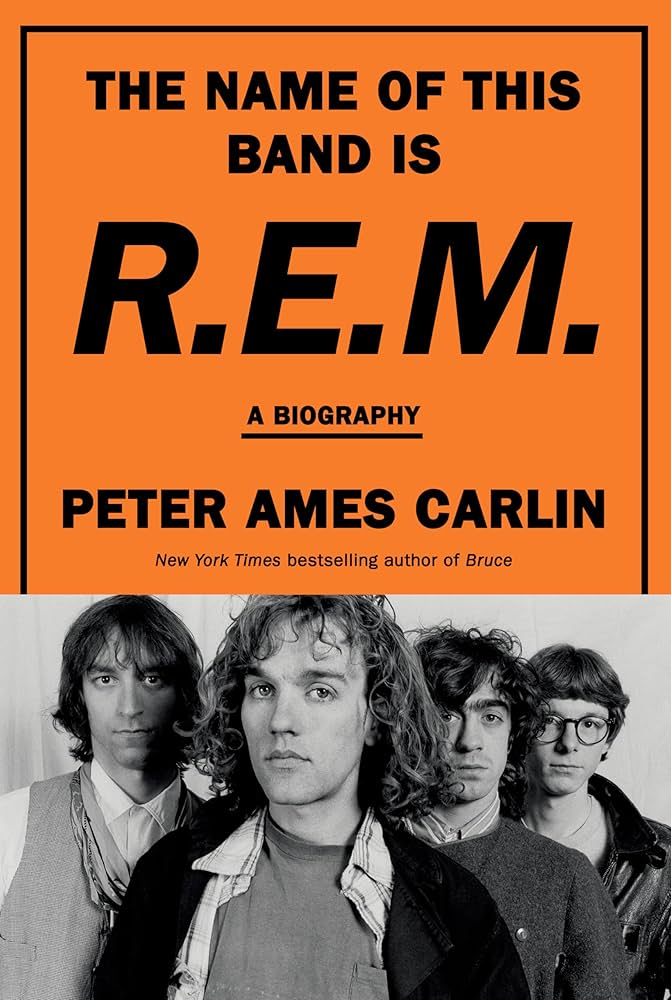
The Name of This band is R.E.M.: A Biography by Peter James Carlin (2024)

From the publisher: Deeply descriptive and remarkably poetic, steeped in 80s and 90s nostalgia, The Name of This Band is R.E.M. paints a cultural history of the commercial peak and near-total collapse of a great music era, and the story of the generation that came of age at the apotheosis of rock.

The Harder I Fight the More I Love You by Neko Case (2025)

From the publisher: Case brings her trademark candor and precision to a memoir that traces her evolution from an invisible girl “raised by two dogs and a space heater” in rural Washington state to her improbable emergence as an internationally-acclaimed talent. In luminous, sharp-edged prose, Case shows readers what it’s like to be left alone for hours and hours as a child, to take refuge in the woods around her home, and to channel the monotony and loneliness and joy that comes from music, camaraderie, and shared experience into art.

How Women Made Music: A Revolutionary History from NPR Music edited by Alison Fensterstock (2024)

From the publisher: Drawn from NPR Music’s acclaimed, groundbreaking series Turning the Tables, the definitive book on the vital role of Women in Music—from Beyoncé to Odetta, Taylor Swift to Joan Baez, Joan Jett to Dolly Parton—featuring archival interviews, essays, photographs, and illustrations.

The Jazzmen: How Duke Ellington, Louis Armstrong, and Count Basie Transformed America by Larry Tye (2024)

From the publisher: This is the story of three revolutionary American musicians, the maestro jazzmen who orchestrated the chords that throb at the soul of twentieth-century America… What is far less known about these groundbreakers is that they were bound not just by their music or even the discrimination that they, like nearly all Black performers of their day, routinely encountered. Each defied and ultimately overcame racial boundaries by opening America’s eyes and souls to the magnificence of their music. In the process they wrote the soundtrack for the civil rights movement.

Rebel Girl: My Life as a Feminist Punk by Kathleen Hanna (2024)

From the publisher: An electric, searing memoir by the original rebel girl and legendary front woman of Bikini Kill and Le Tigre… As Hanna makes clear, being in a “girl band,” especially a punk girl band, in those years was not a simple or safe prospect. Male violence and antagonism threatened at every turn, and surviving as a singer who was a lightning rod for controversy took limitless amounts of determination. But the relationships she developed during those years buoyed her–including with her bandmates, Tobi Vail, Kathi Wilcox, and Johanna Fateman; her friendships with Kurt Cobain and Ian MacKaye; and her introduction to Joan Jett- were all a testament to how the punk world could nurture and care for its own.

Music by John Williams (2024) Produced and directed by Laurent Bouzereau

My favorite music documentaries fill me to the brim with joy (see: Twenty Feet from Stardom)  and this journey through the most iconic music in cinema history does just that. Williams wrote the scores for Star Wars, Jurassic Park, Indiana Jones, E.T., Harry Potter, Jaws, and lots of other movies that are memorable in part due to Williams’ mastery. It’s only available on Disney+, but it’s worth a trial if you aren’t already a subscriber.

Summer of Soul: (…Or, When the Revolution Could Not Be Televised) (2022) Directed by Questlove

I’m cheating a little here when it comes to “recent” releases, but this is another piece of joy. It follows the 1969 Harlem Cultural Festival, which was overshadowed by Woodstock and hardly made a blip on the radar. You’ll get the context of the almost-forgotten festival, along with footage of Stevie Wonder, Nina Simone, the 5th Dimension, and Sly and the Family Stone (rest in peace) doing what they do best. If you don’t start moving to Gladys Knight and the Pips’ upbeat rendition of “I Heard It Through the Grapevine,” then I can’t help you. Borrow the DVD from the library or stream it from your preferred service.

Not-So-Scary Halloween Reads for Kids

Now that the temperatures have dropped, I’m kicking my horror obsession into high gear. I’m going through my Audible audiobook purchases and listening to anything remotely paranormal, and I’m watching as many delightfully flawed 1970s horror films as I can find on my streaming services. The rest of my household, though, isn’t quite on board with my level of horror. My four-year-old gets up and starts to leave the room during particularly tense moments of Sofia the First. My two-year-old cries when he wakes up at 6:30am and it’s still dark.

Even though they’re not ready for it, my kids are still drawn to the spooky stuff. They’re fascinated by ghosts and skeletons. We’re a long way off from listening to the Spooked podcast together, but they can handle the horror equivalent of a balance bike and a sturdy helmet. These are some of the not-so-scary titles we’ve been enjoying this fall, in no particular order.

Leo: A Ghost Story written by Mac Barnett, illustrated by Christian Robinson (2015)

Leo is a little ghost who finds himself unwanted and unappreciated by his house’s new (living) residents, so he decides to wander the city and discovers a lasting friendship. Mac Barnett is one of my favorite authors to read out loud, and Robinson’s signature cutout-style illustrations are adorable with just the barest hint of spookiness from the blue color palette.

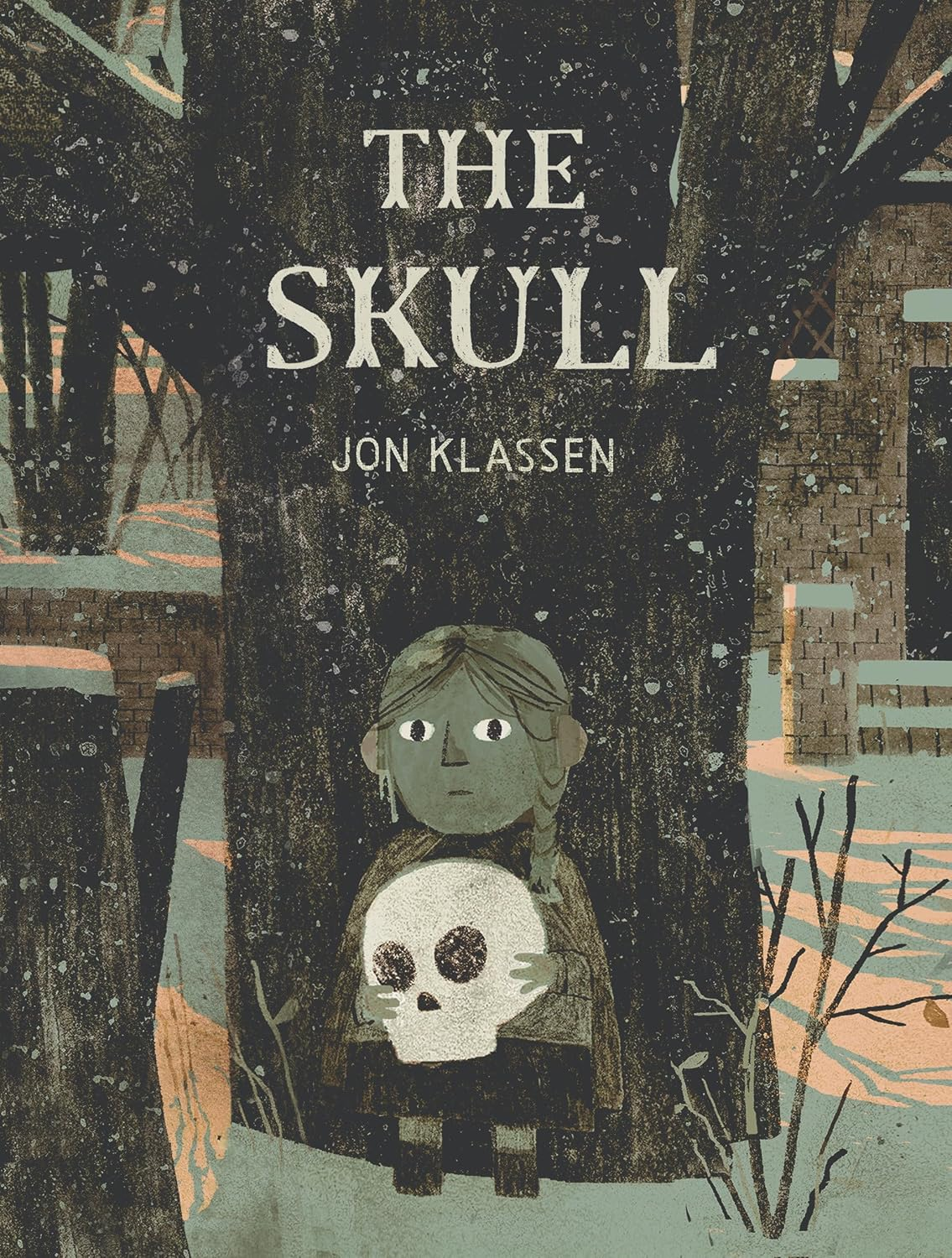
The Skull: A Tyrolean Folktale by Jon Klassen (2023)

You’ll recognize Klassen’s signature monochromatic palette and impactfully sparse prose from picture books like I Want My Hat Back. The Skull is a more substantial chapter book about a girl who runs away from home and befriends – you guessed it – a skull. Both my kids adore this book, which has a creepy-not-scary vibe and takes 15 to 20 minutes to read out loud. Even my two-year-old will sit for the whole thing. As for me, I have been haunted by the story’s unanswered questions that don’t seem to cross the kids’ minds. (If you’ve read Sam and Dave Dig a Hole, you know what I mean.)

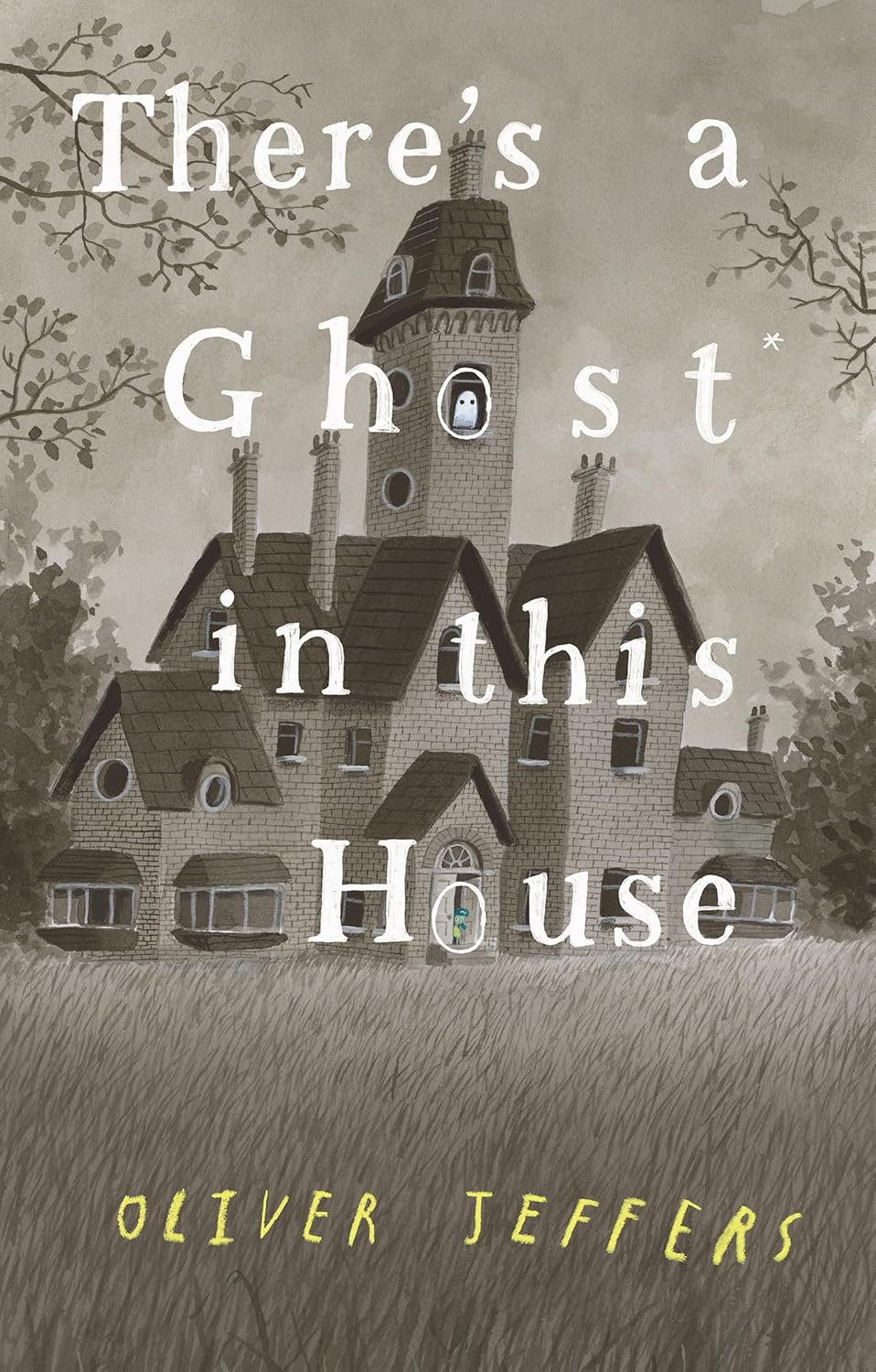
There’s a Ghost in This House by Oliver Jeffers (2021)

Here’s another picture book for kids obsessed with ghosts. This one follows a girl around her house as she looks for the ghosts that supposedly live in her house. She can’t seem to see them – but the reader can, with help from transparent pages that overlay the old-fashioned photographs of rooms. It’s a clever and entertaining book that we’ve been re-reading from cover to cover. (I mean it. You only get the full story if you look at the endpapers.)

In a Dark, Dark Room: And Other Scary Stories retold by Alvin Schwartz, illustrated by Dirk Zimmer (1984)’

You probably read this classic book yourself as a kid, or had somebody read it to you. Are the stories as satisfying as Schwartz’s Scary Stories to Tell in the Dark? No, but this smaller tome won’t accidentally give your kids nightmares if you pick the wrong story. (Not that I know from experience or anything. Cough cough.) My two-year-old lights up with anticipation of the jump scare I insert at the end of the title story.

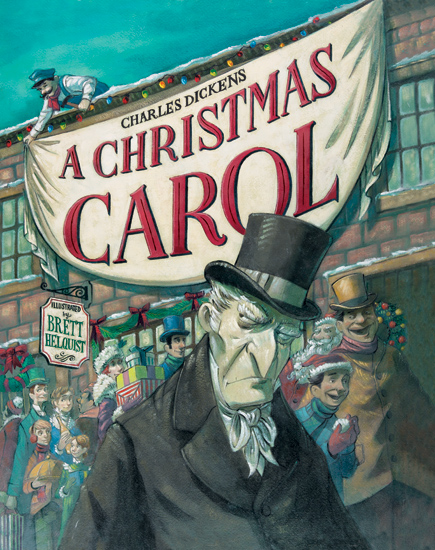
A Christmas Carol by Charles Dickens, illustrated by Brett Helquist (2009)

There’s a tradition in the UK of telling ghost stories at Christmas, and what better story to turn to than the GOAT of Christmas ghost stories? The illustrations are what make this book work. You’ll recognize the style of Brett Helquist from the gloomy covers of A Series of Unfortunate Events by Lemony Snicket. The prose seems to go over my kids’ heads, but as an adult it’s loads of fun to read Scrooge’s dialogue aloud and give it the weight of King Lear mourning the dead Cordelia.

Gustavo, the Shy Ghost by Flavia Z. Drago (2020)

If you thought Leo was cute, then Gustavo might take the cake – or rather, pan de muerto. Gustavo is too shy to talk to the other monster kids, so he decides to put on a violin concert instead. It’s a relatable story in beautiful colors inspired by Mexico’s Day of the Dead celebration. Fans of the movie Coco will enjoy the color palette and musical theme, but this sweet picture book thankfully won’t require adults to grab a tissue. (Not that I know from experience or anything. Cough cough.) 

Scary Stories for Young Foxes by Christian McKay Heidicker (2019)

My four-year-old knows the creepy stuff is out there. To scratch the itch that the cute ghost stories can’t satisfy, we’ve been dabbling in some middle-grade books like Scary Stories for Young Foxes. It’s a series of interconnected stories about two juvenile foxes and the horrors they endure as they try to get back to their families. There’s a beloved teacher who turns rabid, a murderous father, and a terrifying take on a classic children’s author. Nothing is gratuitous, though, and it all builds to a satisfying ending. If you’ve been reading Hansel and Gretel with nary a nightmare, it might be worth a try.

The Graveyard Book by Neil Gaiman (2008)

We’re also giving a try to this middle-grade book authored by dark fantasy master Neil Gaiman. It’s the story of Bod, a boy who is raised from infancy by the inhabitants of a graveyard after his family is killed. Despite the gloomy premise, the fantasy elements outweigh the horror parts; readers of Gaiman’s adult works like Norse Mythology will be familiar with the tone. And each chapter is episodic like Scary Stories for Young Foxes, making it a good match for younger attention spans.

Make Your Voice Count in the Upcoming Election

In case you haven’t noticed the candidate yard signs scattered among the scarecrow and skeleton decorations, it is voting season here in Cheshire. In a couple weeks, eligible residents will get to cast their vote on 22 positions including Town Clerk, Town Council, Planning and Zoning Commission, and the Board of Education. There are also seven referendum questions covering funding of road improvements, construction of a town splash pad, a new fire truck, and improvements at the high school. This is an excellent opportunity to get your voice heard and directly shape the community you live in!

If you’re a little confused on how, where, and when to vote, we’re here to demystify the process. 

Step 1: Make sure you can vote

Are you eligible to vote? U.S. citizens living in Connecticut who will be 18 years or older on election day (and who are not currently incarcerated on a convicted felony) are eligible to vote in the town of their residence. The CT Secretary of the State has excellent details on voter eligibility, as well as general information for voters.

Step 2: Register to vote

Not registered? you can 1) complete an application in-person at Town Hall, here at the Library, or at the DMV; 2) grab a blank application from one of those locations and mail it to Town Hall at 84 S Main St, Cheshire, CT 06410 by Friday, October 17; or 3) register online. If you need help navigating the process, don’t hesitate to call the Registrars of Voters at 203-271-6680 or stop by their office at Town Hall.

If you wait until the last minute, same-day registration is available on election day at Town Hall. The lines can get long, so it’s recommended only as a last resort.

Already registered? You can use the online Voter Registration Lookup tool at any time to check your registration status, party affiliation (if any), and your polling location.

Step 3: Find out what you’re voting on with a sample ballot

Now that you’re registered, it’s time to see what you’ll be voting on. Every address in town has an assigned voting district, and every voting district has a slightly different ballot. Find your 2025 voting district by locating your street address on this chart. According to this chart, if I lived at the library, I would be in District 7.

Now that you know your district, you can view your 2025 sample ballots on the Cheshire Elections webpage. Scroll down and click to see your full sample ballot. These are exactly the choices you’ll see when you go to vote.

Step 4: Research your ballot choices

You’ll notice from your sample ballot that there are lots of choices. How do you learn about the candidates and the issues that are important to them? A great starting place is going to the political party town committees. The Republican candidates are profiled by office on the Cheshire Republican Town Committee website, and you can get bios of the Democratic candidates on the Cheshire Democratic Town Committee website. These websites are as close to one-stop shopping as you’ll get for voting information.

You can also do an old-fashioned google search for candidates. Many of them have Facebook pages, and some have news articles or other mentions.

As for the seven referendum questions, the town put out an explanatory text so you can know a little more about what you’re voting for.

Step 5: Decide on your voting method

Now that you (hopefully) have an idea of how you’ll vote, it’s time to actually vote! You have the choice of voting on election day in-person, voting early in-person, or mailing in an absentee ballot.

To vote on election day, bring yourself and your identification to your designated polling place on Tuesday, November 4, 2025 between 6am and 8pm. As long as you’re in line by 8pm, you’re covered!

To vote early, bring yourself and your ID to the Council Chambers at Town Hall from Monday, October 20 to Sunday, November 2, 2025. Early voting hours are 10am to 6pm, with extended hours of 8am to 8pm on October 28th and 30th. Last year was the first time we Connecticans had the ability to vote early, and it’s a welcome option that’s here to stay.

Under special circumstances, you may be eligible to vote by absentee ballot. You can apply online, by mail, or in-person at the Town Clerk’s office at Town Hall.

Do you need accommodations to help you vote in-person? You have options, including using a ballot marking device, bringing or requesting an assistant, curbside voting, and having a line placeholder if you can’t stand for long periods.

Do you need transportation to your polling place? Please reach out to either the Democratic or Republican town committees. No matter your party affiliation or how you intend to vote, they will help you get to the polls!

Do you have other questions or concerns? Contact the Registrars of Voters, who oversee municipal elections and ensure the integrity of the voting process. We have two elected Registrars – one from each political party – and two deputy registrars. They would love to help you exercise your constitutional right!

With no representatives or presidents on the ballot, it may not feel like a big year, but municipal elections still have a big impact on your community. And with early voting and multiple ways to register, it’s easier than ever to get your voice heard!

Recent Reads for Hesitant Historians

I am surrounded by history lovers. My husband is a history professor who uses me as a sounding board when he’s talking through new articles. A good friend does deep dives into English monarchs, and she shares memes that mash current events together with Medieval art. And I have to confess: I have no idea what they’re talking about.

I’m very useful when you want to assemble some IKEA furniture, or if you want to differentiate between an American crow and a common raven, but listening to me explain the American Revolution is like watching an episode of Drunk History (and sadly, without the negronis). I don’t dislike history. It’s just that the kind of history you get in school – politics, wars, rich people – does nothing for me. What I want is an exhibit of decorative arts, a reconstructed peasant house, a display of medical instruments. Maps of migrations laid over topography or ecological changes. A poster. A piece of metal. I want something that’s alive with meaning and has a story to tell.

If a relaxing evening involves hooks, needles, or rippers:

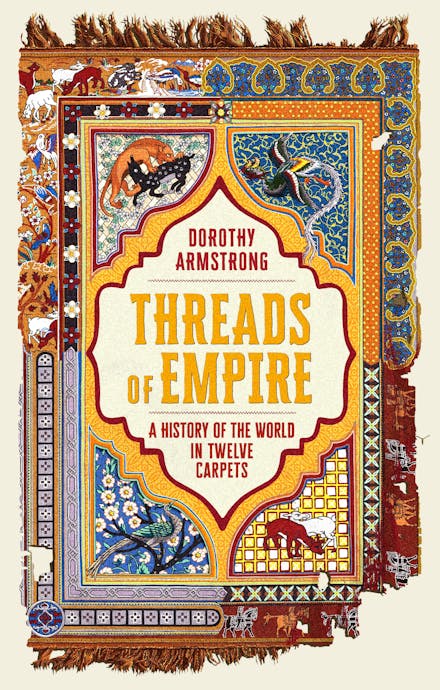
Threads of Empire: A History of the World in Twelve Carpets by Dorothy Armstrong (2025)

I can’t get through biographies of monarchs, but give me a book on how their clothing was constructed and I will drink it up like a chocolate fountain in Versailles. Threads of Empire tickles the same part of me that loves dresses and chain mail at art museums. This isn’t just about who owned history’s beautiful rugs, but the people that made them, the materials and techniques they were working with, and what was going on in their world.

Related read:

Silk: A World History by Aarathi Prasad (2024)

This is another great read that takes a close look at how a prized textile is made, then zooms out to examine its place in time and geography.

If you never got past your childhood fascination with pirates:

The Wager: A Tale of Shipwreck, Mutiny, and Murder by David Grann (2023)

We’re attracted to stories of things gone wrong, whether it’s hikes or music festivals. As you can guess from the subtitle of this book, there are quite a few things that went wrong with the HMS Wager in 1741. This is a true crime novel, a survival tale, and a look into 18th century British naval life – did you know expeditions routinely sailed with dedicated scientists on board? – with a little dusting of world politics. Grann crafts an engaging narrative well worth the hype. 

Related read:

The Wide Wide Sea: Imperial Ambition, First Contact and the Fateful Final Voyage of Captain James Cook by Hampton Sides (2024)

If you can’t get enough of the British Navy, you can circumnavigate again with Hampton Sides’ bestseller from last year. Sides’ narrative doesn’t move with the same momentum as Grann’s book, but it’s a voyage well worth taking.

If you can’t look away from technological disasters:

Challenger: A True Story of Heroism and Disaster on the Edge of Space by Adam Higginbotham (2024)

Nobody synthesizes story and science quite like Adam Higginbotham. Last year he released this book on the Challenger space shuttle, which exploded during liftoff in 1986. He’s on par with the best thriller writers in terms of building suspense, and he’s just as adept at breaking down complex engineering concepts.

This book has haunted me: not only in its emotional impact, but in how amazing it is that we’ve accomplished space travel at all. It compelled me to make a pilgrimage to the Intrepid Museum in Manhattan to get an up-close look at the Enterprise, the very first orbiter NASA made for the space shuttle program.

Related read: 

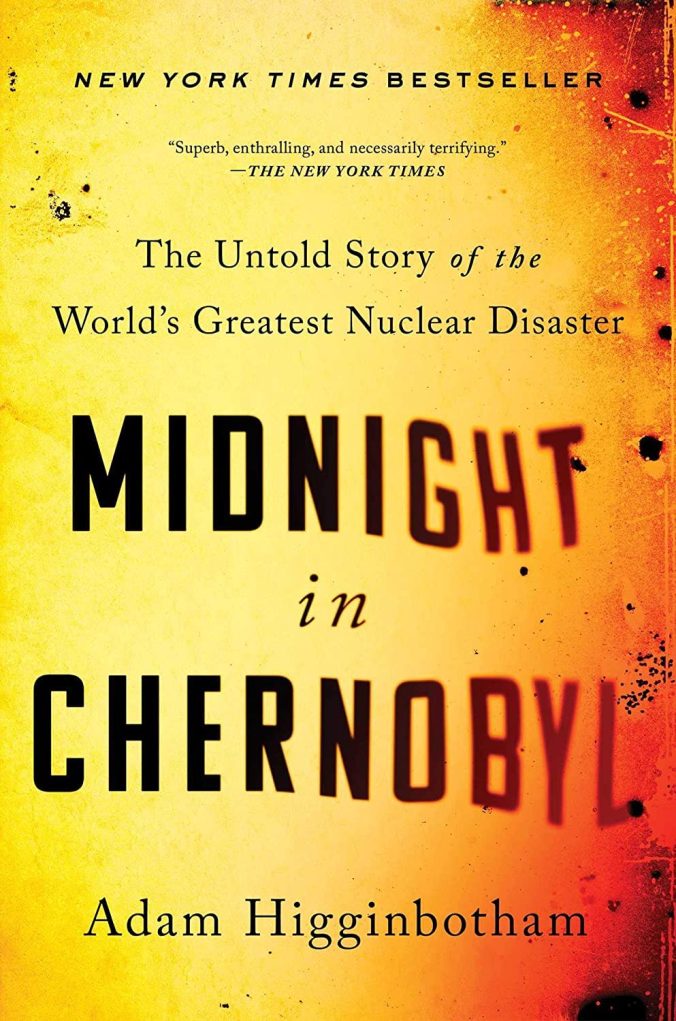
Midnight in Chernobyl: The Untold Story of the World’s Greatest Nuclear Disaster by Adam Higginbotham (2019)

Higginbotham is making quite a name for himself writing about 1980s technological disasters. His award-winning debut focused on the Chernobyl nuclear meltdown, and it’s just as good (and horrifying) as Challenger.

If you’re a news junkie:

Looking at Women Looking at War: A War and Justice Diary by Victoria Amelina (2025)

“I have just bought my first gun in downtown Lviv,” starts the diary of this Ukrainian novelist and mother turned war documenter. Amelina’s diary tells the story of how she and other women – librarians, lawyers, writers – were experiencing the war in Ukraine and participating in the resistance. She was killed by a Russian missile in 2023, and this book collects her unedited and uncompleted notes. It’s a chilling reminder that her life was suddenly cut short at 37 years old.

Related read:

Secondhand Time: The Last of the Soviets by Svetlana Aleksievich (2017)

Alexievich is well-known for her oral histories of the Soviet Union, and this book is an accessible look at how people in Russia experienced the fall of the Soviet period and the emergence of a new Russia. The experiences and viewpoints are as diverse as if you’d selected a random group of Americans and asked them how they viewed the 2024 election. If you’re looking to understand modern Russia, this is a really great place to start.

If David Attenborough narrates your inner thoughts:

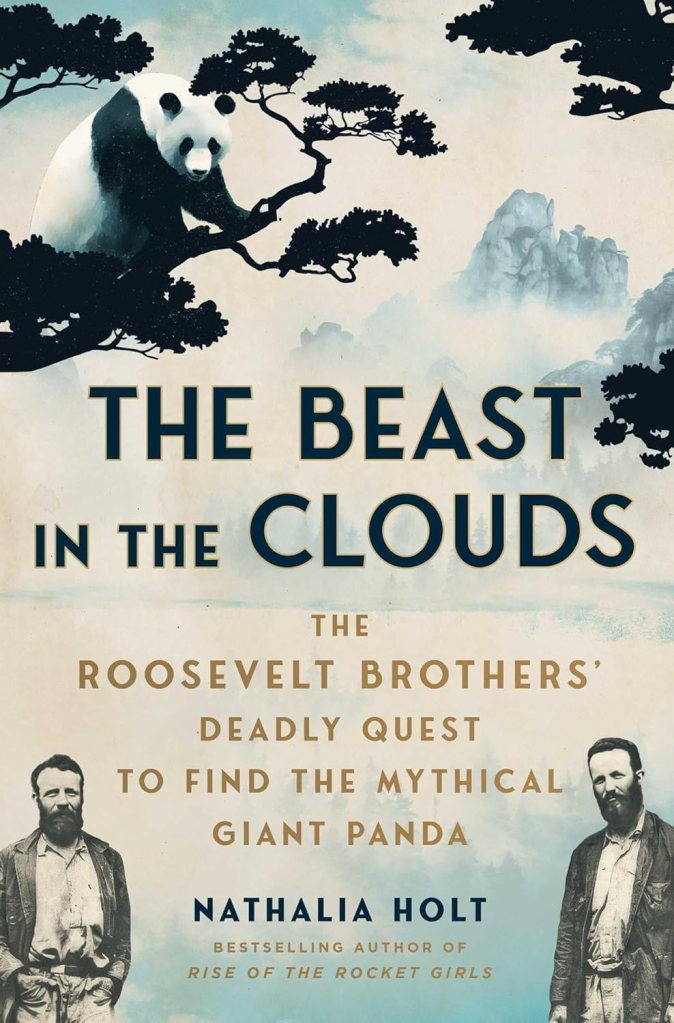
The Beast in the Clouds: The Roosevelt Brothers’ Deadly Quest to Find the Mythical Giant Panda by Nathalia Holt (2025)

Can you imagine a world in which people think pandas are imaginary creatures? Apparently, it was only a century ago. This book chronicles the sons of Teddy Roosevelt (who lent his name to a different type of bear) as they explored the Himalayan mountains in search of this very real animal.

Related read:

Every Living Thing: The Great and Deadly Race to Know All Life by Jason Roberts (2024)

You’ve probably heard of Carl Linnaeus, one of the most famous Enlightenment-era catalogers of the natural world. But have you heard of mathematician and fellow naturalist Georges-Louis Leclerc, Comte de Buffon? There are reasons for one man’s obscurity and the other’s fame, Roberts argues, including the convenience of Linnaeus’ theories of racial hierarchies and Leclerc’s aristocratic status (probably not the best thing to be in 1780s France).

If you’re fascinated by architecture and buildings:

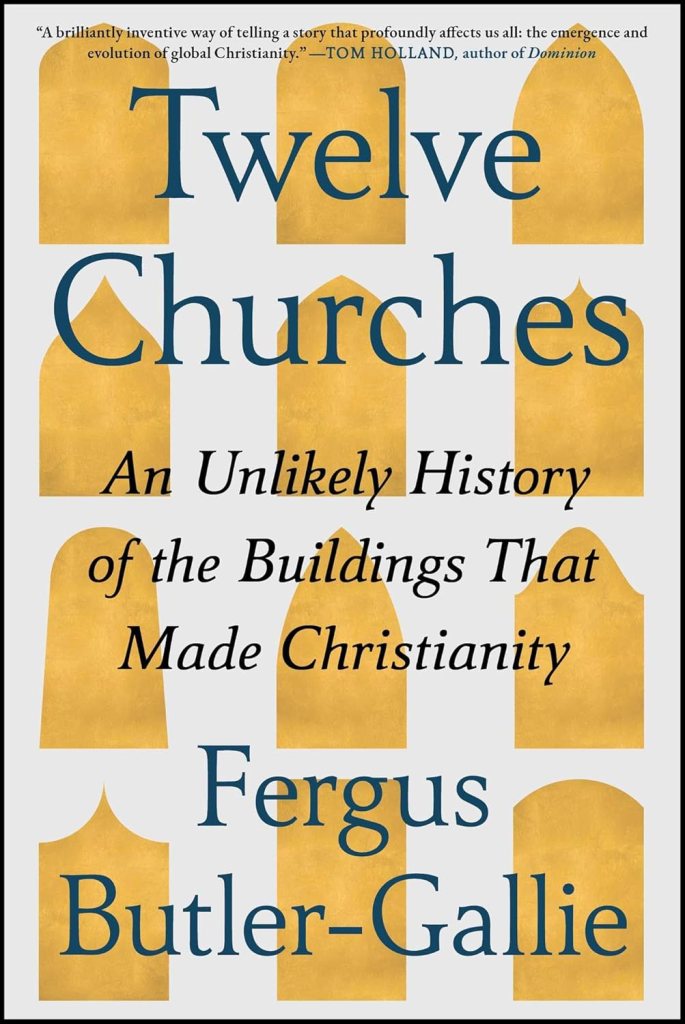
Twelve Churches: An Unlikely History of the Buildings That Made Christianity by Fergus Butler-Gallie (2025)

Butler-Gallie presents a fun and often funny history of the world’s largest religion by focusing on twelve buildings in particular. You’ll visit an amazing church complex in Ethiopia that was carved into volcanic rock with medieval tools, Japan at the cusp of its isolationist Edo period, and the site of a tragic bombing during the Civil Rights movement. Religion is a fascinating way to view world history, and this book has something for everyone regardless of your personal faith.

Related read:

The Bookshop: A History of the American Bookstore by Evan Friss (2024)

From the publisher: “Evan Friss’s history of the bookshop draws on oral histories, archival collections, municipal records, diaries, letters, catalogs, and interviews with leading booksellers to offer a fascinating look at this institution beloved by so many–not just as a merchant, but as a gathering place for like-minded people who cherish books.”

If you held onto your science textbooks from college:

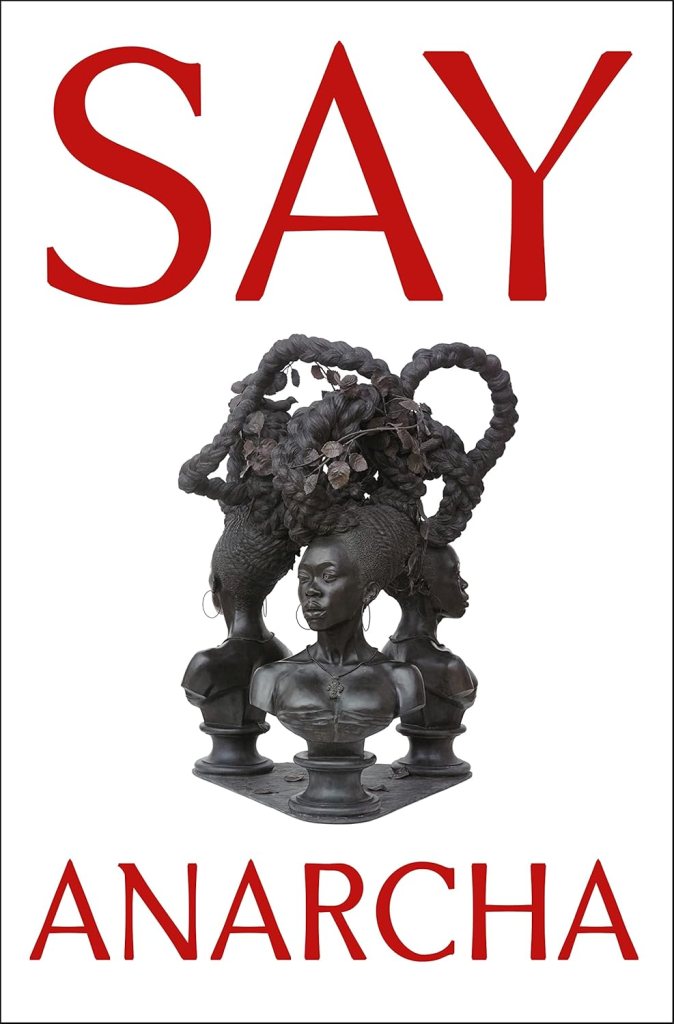
Say Anarcha: A Young Woman, a Devious Surgeon, and the Harrowing Birth of Modern Women’s Health by J. C. Hallman (2023)

If you enjoyed Rebecca Skloot’s The Immortal Life of Henrietta Lacks or the many fistulas in Mary Roach’s Gulp, then this one is for you. Modern gynecology and obstetrics are relatively recent innovations, and their development was due to experimentation on poor and enslaved women, such as Anarcha. This books covers what we know about her, including her life beyond the operating table.

Related read: 

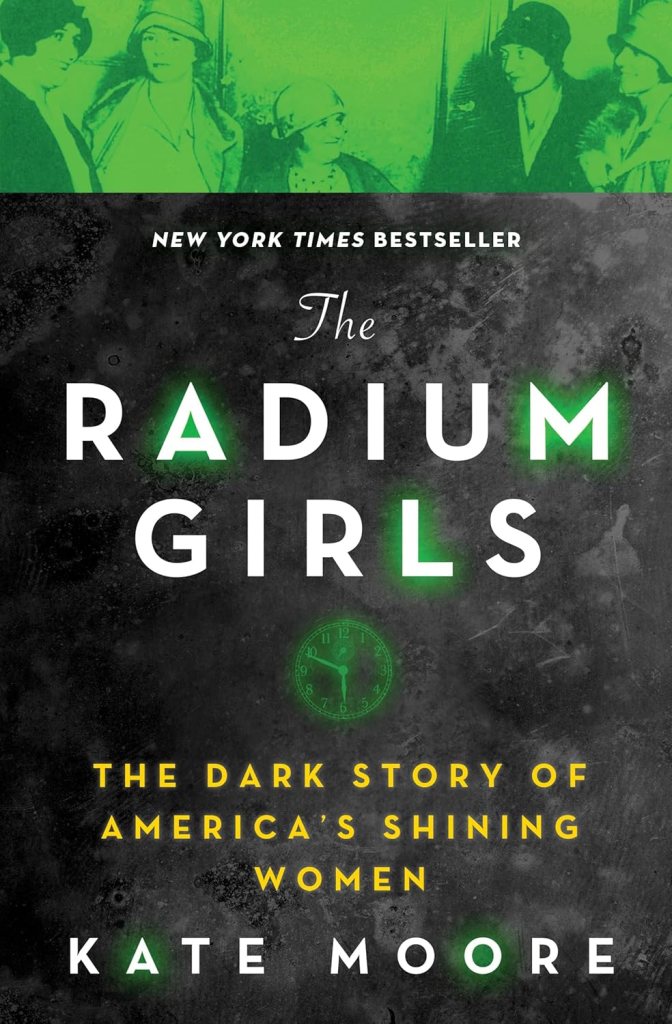
The Radium Girls: The Dark Story of America’s Shining Women by Kate Moore (2017)

Imagine you’re a young woman who just found a great-paying job painting glowing watch faces in Waterbury. Now, imagine you and your coworkers start getting too sick to work – and your employers try to paint you as a promiscuous partier. This is the horrifying true story of the radium girls, factory workers in the early 20th century who were exposed to radioactive material while business owners looked the other way. It’s also the story of the uphill battle for worker protections and safety standards.

And another one just for fun:

A People’s History of the United States by Howard Zinn (1980)

Instead of a triumphant story of great mens’ achievements, Zinn’s history looks at everyday people, such as workers in early factories, immigrants, women, native Americans, slaves, and servants – those whose exploitation arguably fueled the power of those great figures. It’s been republished several times since its release in 1980, and it has influenced hundreds of works (including titles on this list) that take a more critical look at our national narratives.

Best Museum Passes for Families with Young Kids

As a parent of two young kids, my time away from work is a constant stream of requests and/or demands. The 4-year-old: refill my milk cup even though you’re currently buttering my toast and haven’t even made your coffee yet. The 20-month-old: read Trashy Town to me again. The 4-year-old: I just discovered My Little Pony and I love it, so now my name is Princess Twilight Sparkle and my brother is Spike. Spike: read! Twilight: you are no longer Momma, you’re now Princess Celestia. Can you talk like Princess Celestia? Spike: I will scream-cry if you don’t read to me in two seconds.

Sometimes you need a change of scenery in order to prevent your kids (or yourself) from scream-crying. For me, the library’s museum passes have been invaluable when it’s too wet to visit the playground at Bartlem Park or too cold for miniature horses at Brooksvale Park. Museum passes offer discounted or free admission for adults and kids to museums and educational attractions across Connecticut and beyond. You can reserve them up to 30 days in advance and print almost all of them from home anytime, requiring no special trip to the library. For added convenience, many museums will just scan the pass right from your phone. Here’s our young crew’s experience with the passes.

The Children’s Museum

Location: 180 Mohegan Drive, West Hartford

Pass perks: one free admission for every paid admission

Cost before perks: $15/person ages 2 and up, below 2 is free (price info)

We visited The Children’s Museum when Twilight was two years old and Spike was an unhatched egg. The museum accepted the digital pass that was sent to my phone via email, and soon we were in an indoor air-conditioned wonderland. The museum looks like a former school with one long hallway and branching classrooms that have been converted to different activity areas. I appreciated the easy navigation! The woods-themed dramatic play room was a hit, as was the craft room. The dinosaur room was another success.

There’s also a large collection of live animals spread across three rooms: snakes, chinchillas, box turtles, and more, all of whom came to the museum after being given up, injured, or confiscated. The museum has regular demonstrations where kids can meet some of the animals. Twilight wasn’t interested in petting the ball python, but there were so many other activities that kept her engaged that it wasn’t a loss.

KidsPlay Children’s Museum

Location: 61 Main St, Torrington

Pass perks: Half-price admission for up to 6 family members

Cost before perks: $14 for everyone age 1+, free under 12 months (price info)

KidsPlay has become our family’s favorite museum. There are so many rooms and activities here: play vehicles, a climbing wall, air play, a craft room, a music room with a piano, a grocery store, a pioneer cabin with dress-up clothing. We could not possibly visit every area in one trip! We were impressed not only with the breadth of activities, but how clean and well-maintained the space was. We loved this museum so much on our discounted visit that we got a year-long membership, so we’ve gotten to experience rotating play areas like kinetic sand and a hockey rink.

Street parking is a breeze in downtown Torrington, and there’s an off-street lot as well. The only drawback is its limited schedule. As with any museum, check the hours of operation before you visit!

Roaring Brook Nature Center

Location: 70 Gracey Road, Canton

Pass perks: one free admission for every paid admission

Cost before perks: $9 for adults, $7 for children 12 and under (price info)

Our Children’s Museum pass also grants discounted admission to Roaring Brook Nature Center (not to be confused with Roaring Brook Park, the not-for-the-faint-of-heart local trail). The nature center has an indoor section with taxidermy dioramas of our local habitats, live animals, play nooks, and a library, plus an outdoor area with rescued birds and turtles. Twilight enjoyed the scavenger hunt, singing lullabies to Tomasina the black vulture, and looking for turtles in the pond.

The highlight of the trip, though, was a hike along the trails next to the nature center. The trails are free to access and open from dawn to dusk, and a lot of it is hemlock forest (i.e., those really cool dark forests that make you feel like you’re a character in a fantasy book). The kids played Poohsticks from the bridge over the creek and explored a set of lean-tos while their bird nerd of a parent listened to warblers and nuthatches calling in the trees.

Connecticut Science Center

Location: 250 Columbus Blvd, Hartford

Coupon perks: 15% off up to six admissions

Cost before perks: $29 for adults, $23 for ages 3-12, plus $7 per person for butterfly encounter (price info), plus $7 per vehicle for 3 hours of parking in the adjacent garage (garage information)

Twilight loves the CT Science Center. When she was two years old, we could easily spend an hour just in the water play area. (They provide smocks, but it’s still a good idea to bring backup clothes and shoes.) There’s also live animals including a sloth, a butterfly encounter, and lots of interactive science activities that get more interesting as Twilight gets older. A glass elevator lets you look out across the whole museum, and it’s roomy enough for you to indulge in repeat rides without compromising foot traffic.

This is not a reservable pass, but a coupon that you can pick up anytime and use anytime. Even with a coupon, this is admittedly a pricier outing. But if you can swing it, it’s worth a visit.

Dinosaur State Park

Location: 400 West St, Rocky Hill

Pass perks: free admission to the exhibit center for two adults and four kids age 6-12; kids 5 and under are free

Cost before perks: $6 for ages 13+, $2 for ages 6-12, free parking and trail access

The kids recently visited 200-million-year-old dilophosaurus footprints at Dinosaur State Park, where you can visit indoor exhibits for free with the CT Parks Pass. (This is a physical pass that needs to be picked up and delivered back to the library.) The footprints are housed in a geodesic dome that also includes dino dioramas, crafts, and some live reptiles and amphibians. The adults loved it, but Twilight was a little disappointed that dinosaurs were extinct and weren’t there stomping around making the footprints.

Luckily, the nature trails outside the exhibit center are perfect for small legs, and they’re free to use without the pass. We saw a big (and completely harmless) water snake sunning itself near the marsh!

Overall, there are so many activities at each place that you really can’t go wrong with borrowing a pass. And even if your museum outing is more miss than hit, hey – at least it’s a few hours in which your kids aren’t pretending they’re Keith Moon and your living room is a Holiday Inn!

Why don’t all the passes give me free admission?

We would love to offer passes that grant free admission everywhere, but the museums set the terms for their passes and decide what they’re going to make available for libraries to purchase. Sometimes that’s free admission. Sometimes that’s just a discount. It all depends on the museum, but we always get the best discount we can!

Why doesn’t the library offer passes to Beardsley Zoo, Mystic Aquarium, or the Maritime Aquarium?

Good question! Unfortunately, the aquarium passes don’t really offer a good value for most patrons. (Think a percentage off a yearly membership, or a few dollars off if you purchase add-ons beyond general admission.) Instead of disappointing our patrons, we opt to get different passes with better discounts. As for the Beardsley Zoo, they changed their ordering process a couple years ago, and it doesn’t jive with the way we make purchases. However, we’re planning to add more animal-themed passes in 2026. Stay tuned!

What about the Peabody Museum? Why doesn’t the library offer a pass?

We don’t offer a Peabody Museum pass because it’s completely free! They gave it a major overhaul recently, and it’s a gorgeous space. Fossilized skeletons and plants are on the first floor, with minerals and animal dioramas on the third floor. Human history is exhibited on the second floor.

Want to spend more time doing free stuff in New Haven? Enjoy a drive or hike to the top of East Rock Park where you can look out over the city and Long Island Sound, or walk around the grounds of Edgerton Park, which also hosts Shakespeare performances in August and the CT Folk Fest in September. Older kids and adults will enjoy free museums such as the Yale Center for British Art, the Yale Art Gallery, and the Morris Steinert Collection of Musical Instruments (when it reopens to the public). Admission to the New Haven Museum is also free when you borrow our pass!