Exploring The Science of Science Fiction

Are you a science fiction fan curious to see how close scientists have come to understanding or recreating the theories or gadgets of your favorite book or movie? Do you think much of the gadgetry and action of science fiction stories are completely impossible and want to see what we really can do, and what we might be able to do in the future? Here are some books that will help you understand how realistic some time1ideas like time travel really are, and how theories and realities surrounding our universe and the possibilities have changed in recent years.

Time Travel and Warp Drives: a Scientific Guide to Shortcuts Through Time and Space by Allen Everett and Thomas Roman
Lays out what humans really know about time and space and how to bend it to our will, and explains just how close we are to some of the ideas of science fiction novels.time2
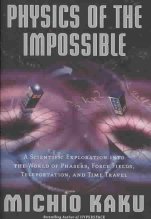
Physics of the Impossible: a Scientific Exploration into the World of Phasers, Force Fields, Teleportation, and Time Travel by Michio Kaku
Looks at the scientific principles behind the technology of the future, examining the theoretical basis, as well as limitations, of the laws of physics to discuss how seemingly impossible devices could become commonplace in the future.time3

Spooky Action at a Distance: the Phenomenon that Reimagines Space and Time and What it Means for Black Holes, the Big Bang, and Theories of Everything by George Musser
Presents a tour of modern physics that examines the new understanding of nonlocality–the ability of particles to affect each other across the vastness of space.
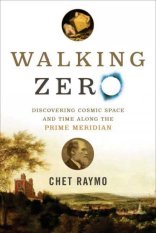
time4Walking Zero: Discovering Cosmic Space and time Along the Prime Meridian by Chet Raymo
A noted science writer and author of The Path offers an illuminating study of the interconnections among science, faith, psychology, and the arts in terms of the evolution of the human understanding of space and time as he walks along the Prime Meridian, the line of zero longitude and the standard for world maps and clocks, from Brighton to the North Sea.

time6What is Relativity?: an Intuitive Introduction to Einstein’s Ideas, and Why They Matter by Jeffrey Bennett
An astrophysicist offers an entertaining introduction to Einstein’s theories, explaining how well they have held up to rigorous testing over the years, and even describing the amazing phenomena readers would actually experience if they took a trip through a black hole.

Once you figure out hoe time travel works, or somehow or other gain a little extra time, you might want to explore further with: The Fabric of the Cosmos: Space, Time, and the Texture of Reality by Brian Greene, A Brief History of Time: From the Big Bang to Black Holes by Stephen W. Hawking, Endless Universe: Beyond the Big Bang by Paul J. Steinhardt and Neil Turok, Cosmos by Carl Sagan, The Science of Star Wars by Jeanne Cavelos, The Physics of Star Trek by Lawrence M. Krauss, or Physics of the Future: How Science Will Shape Human Destiny and our Daily Lives by the Year 2100 by Michio Kaku.

Time Travel Stories, That are NOT Science Fiction

time-travelEver wish you could slip away to another time or place? Want to see how things really were during your favorite era of history or perhaps take a peek at a future that might not yet be written in stone?

I have always been intrigued by the notion, but no matter how much I enjoy science fiction I have never been a fan of books that paired the two. You might think that any book that has time travel is automatically science fiction, but this is far from the truth. While the two often overlap, there are many other kinds of books that feature time travel. There is a genre of time travel romance, sometimes magic or other aspects of the story trigger the travel, and sometimes in fiction it just happens.

Here are some of the best books I have seen that feature time travel, but are not science fiction.timet1

The Impossible Lives of Greta Wells  by Andrew Sean Greer
To alleviate her suffocating depression after the death of her twin brother and the break-up with her long-time lover, Greta Wells embarks on a radical psychiatric treatment that has an unexpected side effect, which transports her to the lives she might have had if she had been born in a different era.

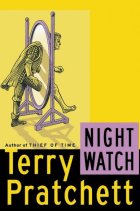
Night Watch: a Novel of Discworld by Terry Pratchett
timet4Flung back in time by a mysterious accident, Sam Vimes has to start all over again. He must get a new name and a job, and there’s only one job he’s good at: cop in the Watch. He must track down a brutal murderer. He must find his younger self and teach him everything he knows. He must whip the cowardly, despised Night Watch into a crack fighting force – fast. Because Sam Vimes knows what’s going to happen. He remembers it. He was there. It’s part of history. And you can’t change history…timet2

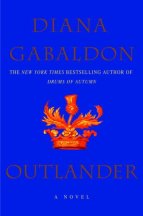
Outlander by Diana Gabaldon
Hurtled back through time more than two hundred years to Scotland in 1743, Claire Randall finds herself caught in the midst of an unfamiliar world torn apart by violence, pestilence, and revolution and haunted by her growing feelings for James Fraser, a young soldier.

11/22/63 by Stephen Kingtimet3
Receiving a horrific essay from a GED student with a traumatic past, high-school English teacher Jake Epping is enlisted by a friend to travel back in time to prevent the assassination of John F. Kennedy, a mission for which he must befriend troubled loner Lee Harvey Oswald.

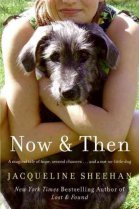
Now & Then by Jacqueline Sheehan
Her life spinning out of control to the point timet5that she wakes up one day among her Irish ancestors in 1844, Anna struggles to find her way home while navigating a time and culture completely foreign to her, a situation that is further complicated by her troubled teenage nephew.

More books that include time travel without being science fiction, but I did not have room for above, include: The Time Traveler’s Wife by Audrey Niffenegger, Station Eleven by Emily St. John Mandel, Orfeo by Richard Powers, The Shining Girls by Lauren Beukes, The House on the Strand by Daphne Du Maurier,  Replay by Ken Grimwood, A Connecticut Yankee in King Arthur’s Court by Mark Twain, Timebound by Rysa Walker, Morrigan’s Cross by Nora Roberts, and 1632 by Eric Flint.

Celebrate Dr. Seuss’s Birthday and Read Across America Day!

reaghatbigRead Across America Day is held on whichever school day closest to March 2nd each year, because March 2nd is the birthday of Dr. Seuss. This year March 2nd falls on a Wednesday. In 1997 the National Education Association decided to create a holiday to promote reading. The very first Read Across American Day was held in 1998.  Schools and libraries across the country use this day to help encourage children to read, and promote the love of reading and books.

Many schools celebrate with Seussian hats, themed parties, and storytimes. I will celebrate with my children by re-reading some of my favorite books and perhaps watching movies based on those books. What actually happens that night will depend on how crazy my elementary school aged children are after the school activities.

rea1I plan on preparing for the day by reading up in Dr. Seuss. There are a number of great biographies and commentaries on his life and works. I have some nonfiction for adults and some for children listed below for those interested in learning more about an author that has delighted, entertained, or inspired so many over the years.

For Adults:rea4
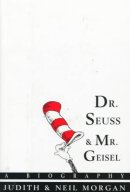
Dr. Seuss & Mr. Geisel by Judith & Neil Morgan

Dr. Seuss Goes to War: the World War II Editorial Cartoons of Theodor Seuss Geisel by Richard H. Linear

rea3The Tough Coughs as he Ploughs the Dough: Early Writings and Cartoons by Dr. Seuss edited and with an introduction by Richard Marschall

For Children:
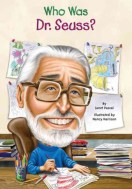
Who was Dr. Seuss? by Janet Pascal

rea10Oh, the Places he Went: a Story about Dr. Seuss–Theodore Seuss Geisel by Maryann N. Weidt

Dr. Seuss by Cheryl Carlson

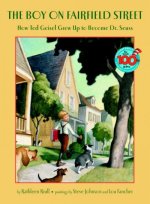
The Boy on Fairfield Street: How Ted Geisel Grew up to Become Dr. Seuss by Kathleen Krull

rea6Dr. Seuss by Charlotte Guillain

Theodor Geisel by Tanya Dean

If you would rather celebrate with something that requires a little less attention, you might want to just sit back and watch some movie adaptations of Seuss’s work. If this is more your speed then relax and enjoy; Dr. Seuss’ Horton Hears a Who!, the cartoon version of Dr Seuss’ How the Grinch Stole Christmas!, or the live action take on Dr. Seuss’ How the Grinch stole ChristmasDr. Seuss Green Eggs and Ham: and Other FavoritesHorton Hears a Who!, or any of our other Dr. Seuss DVD’s. 

Realistic Fiction Offers Young Adults Insight into Tough Situations

Watching the news seems to have become more depressing and disheartening than ever. Things are happening that most adults are having trouble fully understanding and coping with on a daily basis. I think our young adults are especially having trouble not only understanding the events we see on the news, but trying to reconcile their still forming personal views with the world around them and the views of those with whom they have the most contact. I think it is important for parents and teachers to stand up for and with the next generation and help them understand and cope with current events and the violence, injustice, and conflicts that seem all too common today.

Here are some novels for young adults that offer multiple points of view and insights into some of the hardest situations our young people are facing in the real world today. Some of the topics handled by these books include school shootings, suicide, drug abuse, racism, and rape. None of these are light, feel-good reads, and not all of them are tough1new. However, one or more of them might help a teen or adult have more understanding of the problems that I wish were completely unthinkable rather than news headlines or tabloid sensations.

Violent Ends: a Novel in Seventeen Points of View
In a one-of-a-kind collaboration, 17 of the most recognized YA writers come together to share the viewpoints of a group of tough2students who are affected by a school shooting.

All American Boys by Jason Reynolds
When sixteen-year-old Rashad is mistakenly accused of stealing, classmate Quinn witnesses his brutal beating at the hands of a police officer who happens to be the older brother of his best tough4friend. Told through Rashad and Quinn’s alternating viewpoints.

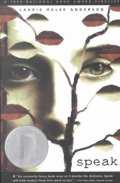
Speak by Laurie Halse Anderson
Melinda Sordino finds herself an outcast at her high school for calling the cops on an end of summer party, and, although she finds comfort in her art class, she still holds a terrible secret.

toughtLittle Peach by Peg Kern
Hospitalized in Brooklyn, New York, fourteen-year-old Michelle recalls being raised in Philadelphia by a loving grandfather and drug-addicted mother before running away and getting lured into prostitution.

Hate List by Jennifer Brown
tough3After her boyfriend goes on a shooting rampage at school, Valerie is implicated because of her involvement in writing the list of names and so now must come to terms with what has happened, her feelings for the boy she once loved, and the part she played that resulted in such tragic events.

The Rules of Survival by Nancy Werlin
Seventeen-year-old Matthew recounts his attempts, starting at a tough6young age, to free himself and his sisters from the grip of their emotionally and physically abusive mother.

tough5There are many books that do a fantastic job of taking extremely difficult subjects and making the characters dealing with them realistic tough7and relatable for readers. More realistic fiction of these tough topics that I would recommend include;  Hold Still by Nina Labour, Out of Nowhere by Maria Padian, My Book of Life by Angel by Martine Levitt, Thirteen Reasons Why by Jay Asher, Diamonds in the Shadow by Caroline B. Cooney, Please Ignore Vera Dietz by A. S. King, We Were Here by Matt de la Peña, What Happens Next by Colleen Clayton, Beneath a Meth Moon by Jacqueline Woodson, The Beast or Monster by Walter Dean Myers, By The Time You Read This, I’ll Be Dead by Julie Ann Peters, Tricks by Ellen Hopkins, Ana’s Story: a Journey of Hope by Jenna Bush, and Go Ask Alice by Anonymous.

Who or What Inspired Your Love of Books?

insp2I have been a reader for as long as I can remember. I have always loved the look, feel, and smell of books. Never mind the way books allow me to learn new things and escape into new worlds and take part in adventures. I was able to read while navigating hallways, no matter how busy they were, and am glad to say that my two elementary school age students are beginning to master that skill as well. I spent countless nights reading well past bed time via flash light, and still stay up way too late reading. How did this love of reading start? For me it was a number of things including seeing the examples of other readers and the easy access to a wide variety of books.
inspire1The library was a second home to me in elementary school. I still remember the stairwell to the children’s department, the cool round window that I would sit in and read while waiting on my mother and brother to pick their books.The library does not look that way now, since it was renovated while I was in junior high, but I am glad to say that I now work in the same building I frequented in my younger days. My favorite chapter books from my elementary school days were the Nancy Drew Mystery series (the original hard covers mind you), the Pern series and anything else by Anne McCaffrey, The Girl with Silver Eyes by Willo Davis Roberts, and the Young Wizard series by Diane Duane.

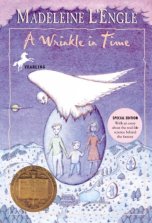
inspire2I was not, and am not, highly coordinated. While I attempted a few sports, singing and reading were the only two activities that I really felt at home doing. Getting lost in a book was much more attractive to me than trying to make it through a practice or game without getting hurt or embarrassing myself. As you might have guessed, I have always been an introvert and was shy as a kid. I found hiding in my books my best defense, and reading helped me do well in school. My favorites in junior high included: A Wrinkle in Time and the rest of the series by Madeleine L’EngleSomething Wicked This Way Comes by Ray Bradbury, To Kill a Mockingbird by Harper Lee, and the multiple series by David Eddings.

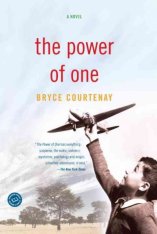
inspire3Growing up I saw my mother, grandmother, and various aunts and friends passing around bags of books. They would trade full paper grocery bags full of books that they have finished and pass them on to the next person. I thought this was great, and frankly delved into those romance novels, thrillers, and mysteries well before any of them intended me to. Having so many books in my grasp made me much more likely to read than watch television, a pattern I still hold to today. Some of the books I remember most from my high school days include; The Power of One by Bryce Courtenay, The God Project by John Saul, the Xanth series and more from Piers Anthony, and the Forgotten Realms series by R.A. Salvatore.

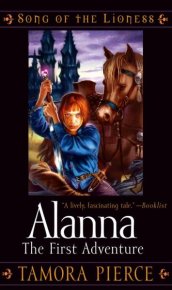
inspI think the combination of family that read, my personality, and the availability of books combined to make me a voracious reader. I have read a little bit of everything, and found something worth while in just about every genre and writing style. I still read children books, young adult books, and adult fiction and nonfiction as much as I can.  Too many books are passed on to the next person, added to the library collection, and/or published every single day. I know I will not get to them all, but it will not stop me from trying. Some of my most recent favorites include: Gail Carrier’s now three steampunk series, Jim Butcher’s Dresden Files series, and the multiple series by Tamora Pierce and Maria V. Snyder.

Who or what got you hooked on reading, or disinterested you from doing so? Do we have any favorites in common, or those that I listed that you hated? Do you have favorites that you remember fondly from your past?